


This article was automatically translated from the original Turkish version.
Puslu Kıtalar Atlası, İhsan Oktay Anar’ın karakteristik style, is recognized in Turkish literature as a work that unites imagination and reality. The novel transports its readers to 17th-century Istanbul under the Ottoman Empire, offering a world enriched with philosophical inquiries and fantastical elements. The author has crafted a multi-layered narrative that deeply examines the individual’s quest for truth and the complexity of human nature.
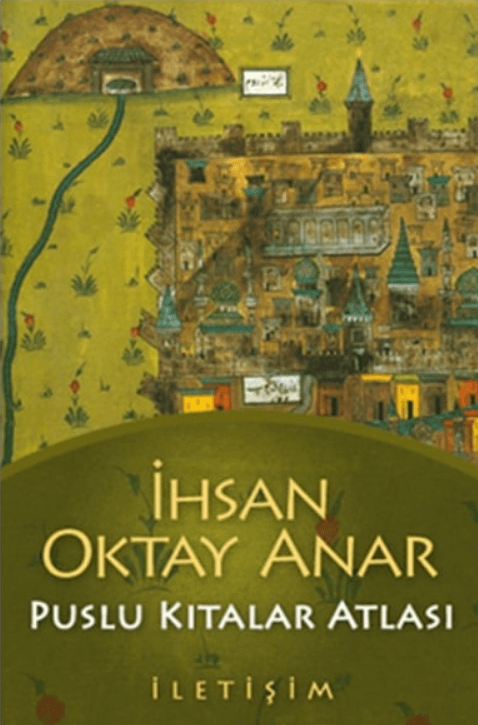
Puslu Kıtalar Atlası
At the center of the novel are Uzun İhsan Efendi, known for his obsession with maps, and his son Bünyamin. The mysterious map titled “Puslu Kıtalar Atlası,” prepared by Uzun İhsan Efendi, sets Bünyamin on both a physical and metaphysical journey. Bünyamin’s pursuit of truth, following in his father’s footsteps, and the people, events, and adventures he encounters along the way form the backbone of the story. The novel treats this journey as a process of enlightenment and self-discovery.
Puslu Kıtalar Atlası reimagines the daily life of Ottoman Istanbul within a magical atmosphere. While the author depicts the bureaucracy, social relations, and societal structure of the era with realistic detail, he weaves these elements with fantastical components. This construction invites the reader into a world that is both historical and imaginary. Guilds of artisans, judges, soldiers, and ordinary people of the streets emerge as richly rendered parts of the novel’s universe.
The novel explores the individual’s quest for truth with philosophical depth. Uzun İhsan Efendi’s maps and Bünyamin’s efforts to decipher their mysteries symbolize humanity’s inquiry into its place in the universe. The author skillfully addresses the difficulties of attaining knowledge, the fine line between truth and illusion, and the complexity of human nature. Moreover, the relationship between the individual’s inner journey and the social structure is prominently developed in the text.
İhsan Oktay Anar’s language is one of the most striking features of Puslu Kıtalar Atlası. A rich vocabulary inspired by Ottoman Turkish and a fluid narrative style impart a unique rhythm to the text. Drawing on the tradition of classical storytelling, the author portrays events and characters in an epic tone. Descriptions stimulate the reader’s imagination, while dialogues and depictions enhance the richness of the narration.
Puslu Kıtalar Atlası is regarded as a successful example of postmodern narrative in Turkish literature. Its intricate structure, layered storytelling, and approach that actively involve the reader in the text embody key elements of postmodernism. Furthermore, the novel’s presentation of local elements through a universal perspective ensures its appeal to a broad readership.
While examining the relationship between the individual and society as well as the self, the novel offers a critical perspective on social structures. Personal interests, moral dilemmas, and social injustices frequently appear as subtexts in the narrative. As the author questions the individual’s place in the universe, he also reveals how the social structure influences this questioning.
Anar, İhsan Oktay. Puslu Kıtalar Atlası. İstanbul: İletişim Yayınları, 2021

No Discussion Added Yet
Start discussion for "Atlas of Misty Continents (Book)" article
Content of the Book
Narrative Framework: The Journey of Uzun İhsan Efendi and Bünyamin
A Fantastical Interpretation of Ottoman Istanbul
Philosophical Themes: Truth, Knowledge, and the Human Condition
Language and Narrative Style
Postmodern Perspective and Literary Significance
Social Critique and the Nature of Humanity