This article was automatically translated from the original Turkish version.
+2 More
Location | Between Afyonkarahisar and Eskişehir Türkiye | ||||||||
|---|---|---|---|---|---|---|---|---|---|
Type | Rock Tomb | ||||||||
Elevation | Approximately 11 Metres | ||||||||
Civilization | Phrygian or Hittite | ||||||||
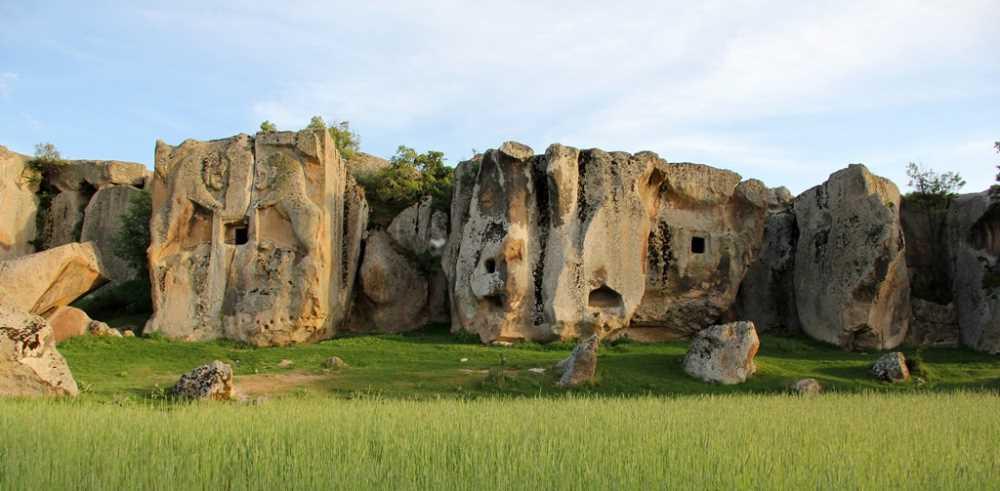
Aslantaş, Afyonkarahisar-Eskişehir boundary area is a monumental rock tomb. Standing approximately 11 meters high, this monument is regarded as one of the oldest rock structures in the region. Although generally classified in scholarly literature as a Phrygian work, some researchers propose that it may be of Hittite origin due to its architectural features and symbolic reliefs.【1】
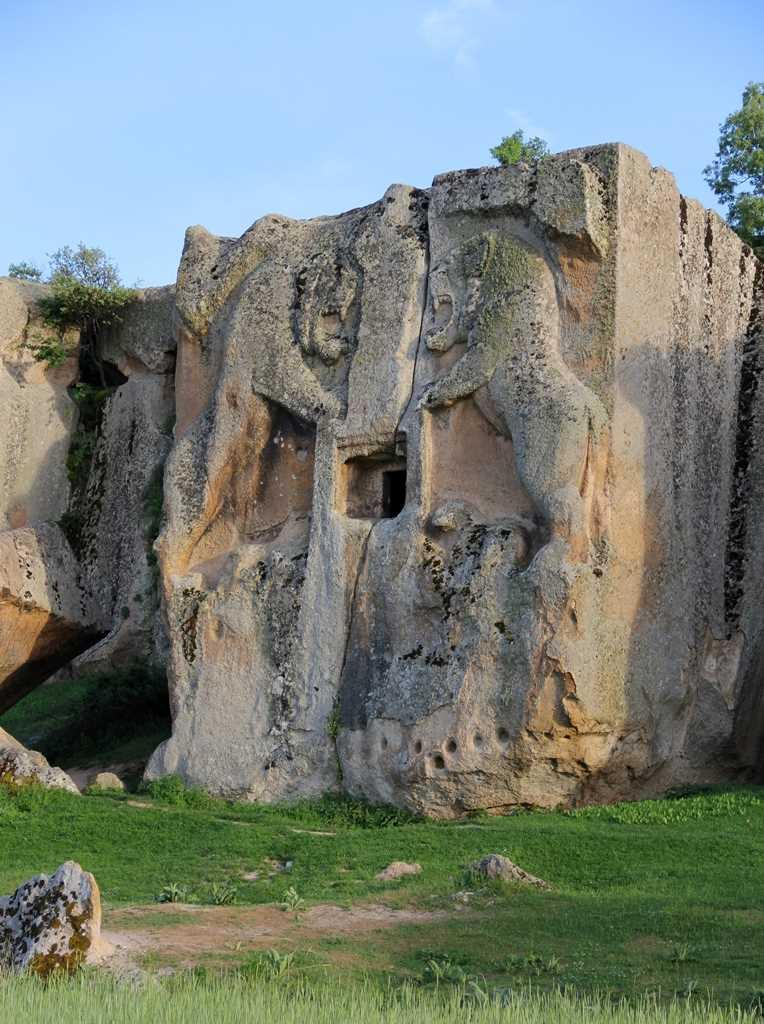
Aslantaş (Kültür Portalı)
Aslantaş occupies a position similar to other rock monuments in the region but differs in its facade arrangement and interior spatial design. The tomb chamber is relatively small with a flat ceiling, a feature that contrasts with the pointed ceiling tradition typical of Phrygian rock tombs. Additionally, the absence of a pediment on the facade further indicates a departure from local Phrygian architectural typology.
The two monumental lion reliefs on the front facade are the defining elements that give the structure its name. The placement of the lions on either side of the tomb entrance recalls Hittite tradition. According to some researchers, the broad horizontal relief at the top of the facade may represent the wings of a winged sun disk, suggesting either Hittite cultural influence or that the monument belonged to a local ruler under Hittite tradition. Furthermore, the absence of geometric decorations and inscriptions characteristic of Phrygian art strengthens the Hittite interpretation.
Scholarly literature presents differing views on the dating of Aslantaş. Some sources suggest the monument was constructed in the 7th century BCE.【2】 Other sources argue that the architectural and iconographic elements point to the Hittite Imperial period, particularly before 1200 BCE.【3】 Hittite hieroglyphic finds in the region and comparable reliefs from nearby sites support the presence of a local Hittite population or at least significant Hittite influence. Consequently, the monument is thought to have belonged to a local ruler in the western periphery of the Hittite Empire or to a regional chieftain under Hittite cultural influence.
Aslantaş is currently preserved as an open-air archaeological monument, with the facade and tomb chamber largely intact. Although surface erosion has diminished some relief details, the overall composition remains legible.
Türkiye Kültür Portalı. "Aslantaş - Afyonkarahisar." Accessed October 18, 2025.https://www.kulturportali.gov.tr/turkiye/afyonkarahisar/gezilecekyer/aslantas
Uyan, Muzaffer. "Aslantaş Mezar Odası." *Türkiye Turizm Ansiklopedisi*, 2019. Accessed October 18, 2025.https://turkiyeturizmansiklopedisi.com/aslantas-mezar-odasi
Şahin, M. Çetin. "Büyük Aslantaş: Frigya'da Bir Hitit Kaya Mezarı." *Archivum Anatolicum-Anadolu Arşivleri* 1 (1995): 137-150. Accessed October 18, 2025.https://dergipark.org.tr/tr/pub/aran/issue/47346/597302
[1]
M. Çetin Şahin. "Büyük Aslantaş: Frigya'da Bir Hitit Kaya Mezarı." Archivum Anatolicum-Anadolu Arşivleri 1 (1995): 137-150. Erişim Tarihi: 18 Ekim 2025. https://dergipark.org.tr/tr/pub/aran/issue/47346/597302
[2]
Türkiye Kültür Portalı. "Aslantaş - Afyonkarahisar." kulturportali.gov. Erişim Tarihi: 18 Ekim 2025. https://www.kulturportali.gov.tr/turkiye/afyonkarahisar/gezilecekyer/aslantas
[3]
M. Çetin Şahin, a.e.

Location | Between Afyonkarahisar and Eskişehir Türkiye | ||||||||
|---|---|---|---|---|---|---|---|---|---|
Type | Rock Tomb | ||||||||
Elevation | Approximately 11 Metres | ||||||||
Civilization | Phrygian or Hittite | ||||||||
Architectural Features
Reliefs and Symbolic Elements
Dating and Cultural Context
Current Condition