


This article was automatically translated from the original Turkish version.
+1 More
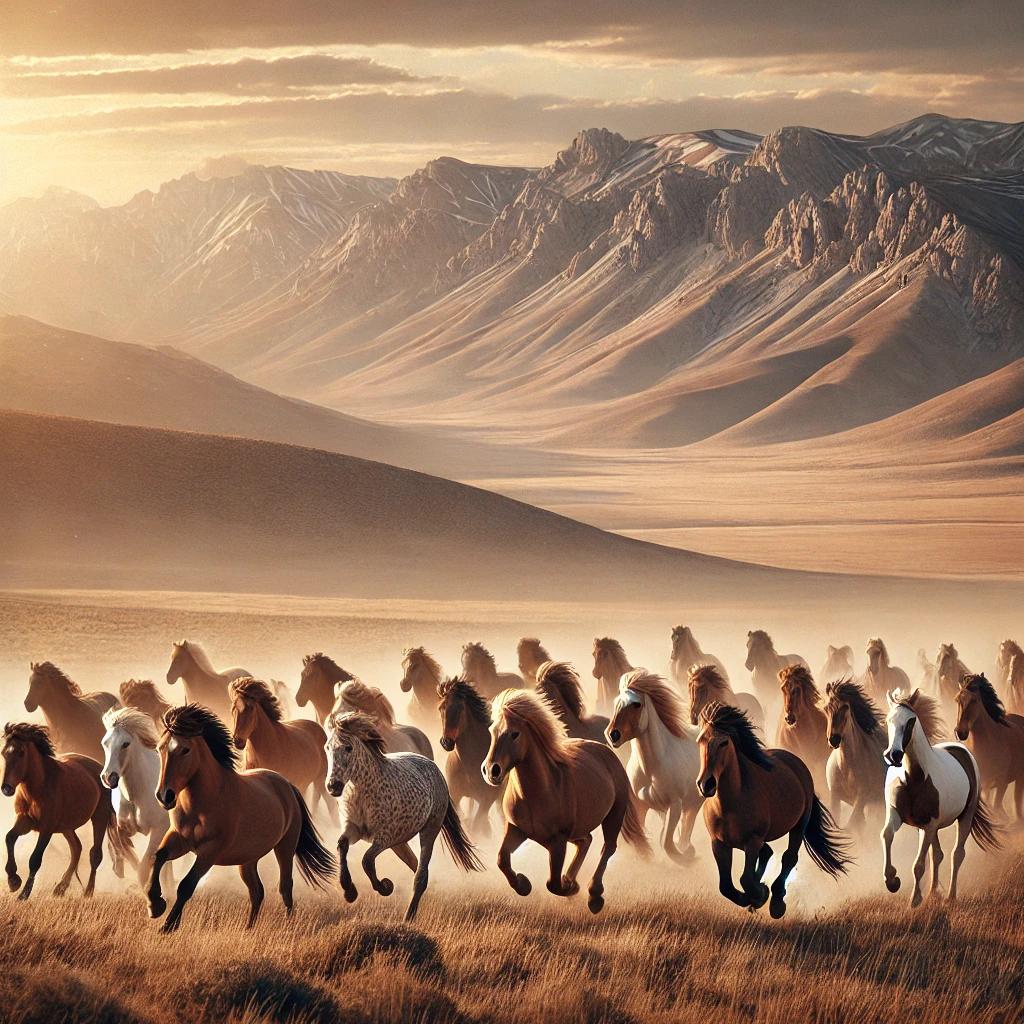
Yılkı Horses
Origin | Wild horses are populations of horses descended from domesticated horses but which have succeeded in surviving in the wild. These horses lived freely in Anatolia and are known for their robust build and ability to adapt to the natural environment. Wild horses originated when various domesticated horses were released into the wild for different reasons. Similar practices were also observed among nomadic Turkic communities in Central Asia and during the Ottoman period | ||||||||
|---|---|---|---|---|---|---|---|---|---|
Sociophysiology | Wild horses have muscular strong bodies with thick coats and resilient digestive systems that enable them to survive in the wild. They live in herds. The hierarchy within the group is led by strong and experienced horses. They are shy and wary of humans feed on grasses in pastures and can migrate seasonally | ||||||||
Current Threats | Their free-living existence in nature supports biological diversity but also creates negative effects such as overgrazing and competition for food with native species. Urbanization is a significant threat to wild horses. They also face threats such as illegal hunting and climate change. Their protection (preservation of genetic diversity) and public awareness are essential | ||||||||
Yılkı horses refer to populations of domesticated horses that have been released into the wild or live feral due to specific reasons, and have adapted to a wild existence. In Turk culture and throughout historical processes, yılkı horses have held an important place. Particularly in the Anatolia region, they are known as resilient horses that have survived through natural selection processes. These horses have drawn attention since ancient times for their free-spirited nature, strong endurance, and ability to adapt to the natural environment.
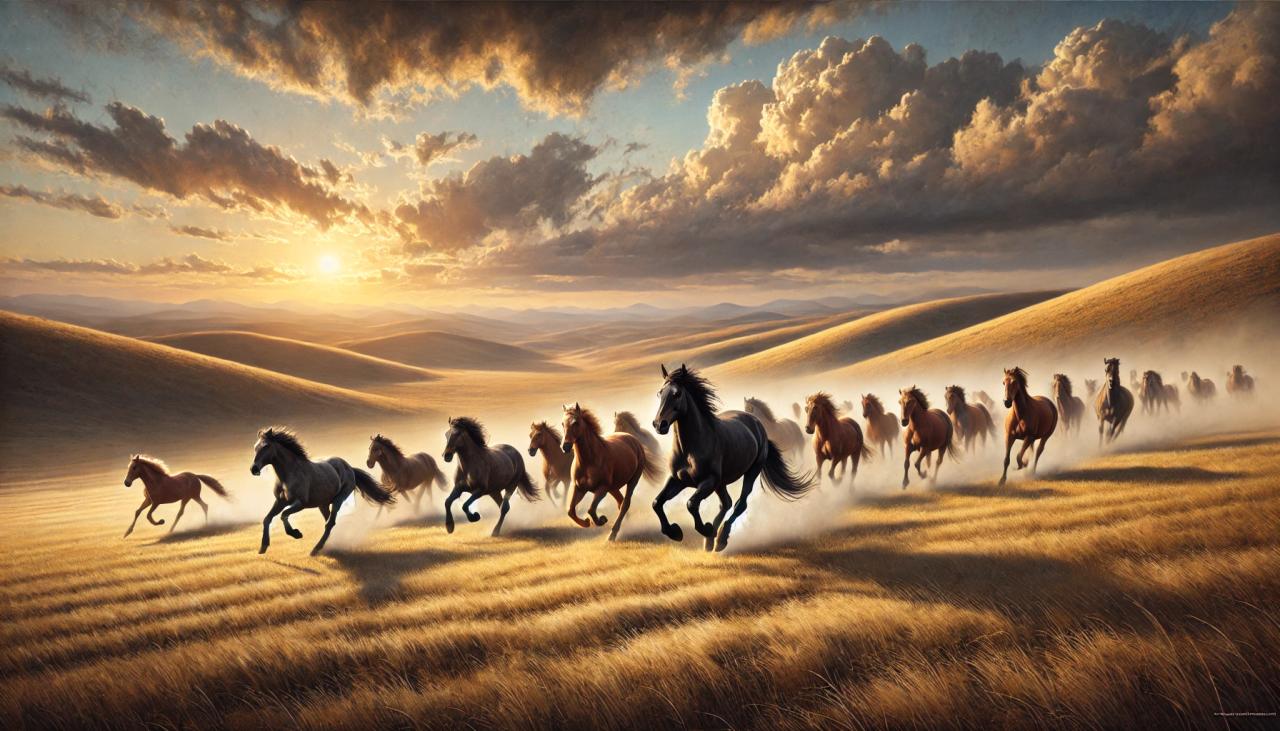
Representative Image of Yılkı Horses (Created with YZ)
The history of yılkı horses extends back to the domestication of horses. It is known that populations of yılkı horses formed in certain regions as a result of early domesticated horse breeds being released back into the wild for various reasons. Nomadic Turkic communities in Central Asia used their horses for war, transportation, and agriculture, among other purposes, but released aging, sick, or unfit horses into the wild. A similar practice continued during the Ottoman period, where horses bred for military use but not deployed were set free. During the Republican era, technological advancements and changes in transportation led to the release of surplus horses, particularly in rural areas.
The tradition of yılkı horses, traceable to the Orkhon Inscriptions, has continued uninterrupted in Anatolia for thousands of years and persists across various geographical regions of Türkiye. Yılkı horses are particularly concentrated in areas such as Ankara-Beypazarı, Samsun-Kızılırmak Delta, Çanakkale-Lapseki, Manisa-Spil Mountain, Bursa-Karacabey, Kayseri-Erciyes Mountain foothills, Afyonkarahisar-Sandıklı, Konya-Karaman, Antalya-İbradı, and the Taurus Mountains. Preserving this cultural heritage is of great importance for ecosystem and biological diversity.
Eynif Yılkı Horses and Genetic Diversity: The Eynif Polyesi in Antalya covers a vast area of approximately 90,000 decares and is home to a notable population of free-roaming yılkı horses. Although they have lost purebred characteristics due to centuries of interbreeding in the wild, they still carry the genetic traces of Anatolia’s native horse breeds.
As horses that have adapted over a long period to natural living conditions, yılkı horses are genetically robust, agile, and sturdy, exhibiting considerable variation in color. Their morphological features include:
• Medium size and muscular build: Their bodies are typically short and powerful, enabling them to endure long-distance running.
• Dense coat structure: They possess thick, dense fur to adapt to cold weather conditions.
• Strong skeletal structure: They have bone structures suited for prolonged walking and running.
• Resilient digestive system: They have stomach and intestinal systems adapted to digest coarse forage, allowing them to survive in environments with limited food resources.
Unlike domesticated horses, yılkı horses live in a more autonomous social structure.
• Herd life: Yılkı horses typically live in small groups with a hierarchical order. The leader is usually the strongest and most experienced horse.
• Wariness toward strangers: Due to minimal contact with humans, they generally exhibit shy and cautious behavior.
• Feeding habits: They primarily feed on grasses in pastures and live near water sources.
• Seasonal migration: Yılkı horses may migrate to warmer or more suitable grazing areas depending on climatic conditions.
The free-living existence of yılkı horses creates both positive and negative effects on the ecosystem:
• Conservation of biological diversity: As herbivores, they prevent overgrowth of pasture areas and contribute to a balanced ecosystem.
• Seed dispersal and vegetation spread: Yılkı horses aid in the dispersal of plant seeds through grazing and feces.
• Overgrazing: Especially in arid regions, large herds of yılkı horses can lead to excessive consumption of pastureland.
• Competition with native species: In some areas, they compete with other herbivores for food, potentially disrupting ecological balance.
• Yılkı horses attract considerable interest from nature enthusiasts, photographers, and tourists, offering significant potential for ecotourism.
Although yılkı horses play an important role as part of natural ecosystems, they are not currently granted any formal conservation status, leaving them vulnerable to serious challenges, particularly during winter months when access to food and water is limited. They face multiple threats:
• Urbanization and habitat loss: Expansion of agricultural land, forest fires, and increasing human settlements are reducing the habitat available to yılkı horses.
• Illegal hunting and capture: In some regions, these horses are illegally hunted or captured in attempts to domesticate them.
• Climate change: Declining water sources and shrinking pasturelands are making survival more difficult for yılkı horses.
Conservation efforts must prioritize designating specific natural areas as protected zones for yılkı horses, increasing scientific research aimed at preserving genetic diversity, and raising public awareness on this issue.
Acar, Gökhan. Türklerde Unutulan Miras: Binicilik ve At Yetiştiriciliği Üzerine Bir Analiz. Accessed 2025.
Acar, Gökhan. Türklerde Unutulan Miras: Binicilik ve At Yetiştiriciliği Üzerine Bir Analiz. Accessed 2025.
Alyanak, Münibe, Çiğdem. "Çanakkale'nin kırlarında koşan yılkı atları doğaya ayrı güzellik katıyor." Anadolu Ajansı, December 3, 2023. Accessed March 20, 2025.https://www.aa.com.tr/tr/yasam/canakkalenin-kirlarinda-kosan-yilki-atlari-dogaya-ayri-guzellik-katiyor/3071705
Alyanak, Münibe, Çiğdem. Çanakkale'nin kırlarında koşan yılkı atları doğaya ayrı güzellik katıyor. Anadolu Ajansı. December 3, 2023. Accessed March 20, 2025.
Kumcağız, Mehmet. Yılkı atları, Kızılırmak Deltası'na ayrı bir güzellik katıyor. Anadolu Ajansı. July 9, 2021. Accessed March 20, 2025.
Kumcağız, Mehmet. Yılkı atları, Kızılırmak Deltası'na ayrı bir güzellik katıyor. Anadolu Ajansı. July 9, 2021. Accessed March 20, 2025.
Köseman, Abdurrahman and Şeker, İbrahim. Atlarda Davranış ve Sportif Amaçlı Atlarda Önemi. Accessed 2025.
Köseman, Abdurrahman and Şeker, İbrahim. Atlarda Davranış ve Sportif Amaçlı Atlarda Önemi. Accessed 2025.
Kırankaya, Erman. Başkentin Yılkı atları. Anadolu Ajansı. May 2, 2024. Accessed March 20, 2025.
Kırankaya, Erman. Başkentin Yılkı atları. Anadolu Ajansı. May 2, 2024. Accessed March 20, 2025.
Özoğul, Berna. Aydın, Emiroğlu, Fatma and Bulut, İhsan. İbradı (Antalya) Eynif Ovası Yılkı Atları ve Türkiye'de Yılkı Atları Üzerine Genel Bir Değerlendirme. Accessed 2025.https://dergipark.org.tr/en/download/article-file/3433384
Özoğul, Berna. Aydın, Emiroğlu, Fatma and Bulut, İhsan. İbradı (Antalya) Eynif Ovası Yılkı Atları ve Türkiye'de Yılkı Atları Üzerine Genel Bir Değerlendirme. Accessed 2025.
Yılkı Horses
Origin | Wild horses are populations of horses descended from domesticated horses but which have succeeded in surviving in the wild. These horses lived freely in Anatolia and are known for their robust build and ability to adapt to the natural environment. Wild horses originated when various domesticated horses were released into the wild for different reasons. Similar practices were also observed among nomadic Turkic communities in Central Asia and during the Ottoman period | ||||||||
|---|---|---|---|---|---|---|---|---|---|
Sociophysiology | Wild horses have muscular strong bodies with thick coats and resilient digestive systems that enable them to survive in the wild. They live in herds. The hierarchy within the group is led by strong and experienced horses. They are shy and wary of humans feed on grasses in pastures and can migrate seasonally | ||||||||
Current Threats | Their free-living existence in nature supports biological diversity but also creates negative effects such as overgrazing and competition for food with native species. Urbanization is a significant threat to wild horses. They also face threats such as illegal hunting and climate change. Their protection (preservation of genetic diversity) and public awareness are essential | ||||||||
Origin, History, and Distribution of Yılkı Horses
Morphological and Physiological Characteristics of Yılkı Horses
Behavioral Characteristics of Yılkı Horses
Ecological Impact of Yılkı Horses
Positive Effects
Negative Effects
Tourism Significance of Yılkı Horses
Conservation and Future of Yılkı Horses