

 Recently Added:
This article was automatically translated from the original Turkish version.
The Yemen-Saudi Arabia Tension and Iran Aircraft Crisis refers to the political and military crisis in July 2026 between the internationally recognized government of Yemen and the Iran-backed Houthis (Ansarullah Movement), led by Saudi Arabia. The crisis began when civilian aircraft belonging to Iran flew to Sanaa International Airport, which is under Houthi control. The situation escalated with military strikes on the airport, reciprocal missile and unmanned aerial vehicle (UAV) attacks, declarations of maritime blockades, and general mobilization calls.
Since September 2014, Iran-backed Houthis have maintained control over the capital Sanaa and large areas of northern and western Yemen. Since March 2015, the Saudi-led Coalition Forces have provided military support to the internationally recognized Yemeni government based in the temporary capital Aden. As of 2026, the ongoing civil war has claimed over 150,000 lives.
Following the ceasefire that came into effect in April 2022, the intensity of fighting decreased significantly and relative calm was achieved on many fronts. However, no comprehensive political agreement has been reached between the parties toward a lasting resolution.
The crisis began on 3 July 2026 when a plane operated by the Iranian airline Mahan Air landed at Sanaa International Airport, which is under Houthi control. The aircraft transported a Houthi delegation to Tehran to attend the funeral of Iran’s Supreme Leader Ali Khamenei, who died in February 2026 during US and Israeli attackson Iran.
Houthi Military Spokesperson Yahya Saree claimed that Saudi Arabian warplanes attempted to prevent the Iranian civilian aircraft from landing at Sanaa Airport, and that his forces responded accordingly. Saree stated that over 200 stranded, injured, and sick passengers were aboard the aircraft.
Yemeni media reported that this flight was the first direct Iranian flight to Sanaa International Airport in approximately ten years.
Turki al-Maliki, spokesperson for the Saudi-led Coalition, rejected the Houthi claims. He argued that the group’s statements about threats against Saudi Arabia were intended to divert attention from internal issues and allegations of violations against the Yemeni people.
On 4 July 2026, the Coalition issued a statement declaring that it would respond with unprecedented determination and force to any attempts targeting Saudi Arabia, its citizens, foreign residents in the country, or national assets, or violating Yemen’s sovereignty.
On 5 July, Houthis in the Hays area of Hodeidah Governorate launched attacks using artillery, unmanned aerial vehicles (UAVs), and sniper fire against government positions. According to medical and military sources, 16 government soldiers were killed and 22 others wounded.
During the same period, the British Armed Forces announced that a cargo ship off the coast of Hodeidah had been attacked, with no injuries reported. No group claimed responsibility for the attack.
On 8 July, President of the Presidential Leadership Council Rashad al-Alimi met in Riyadh with the Council’s Consultation and Reconciliation Committee to discuss national unity and security. On the same day, Council member and Commander of the Elite Brigades Abdulrahman al-Muhrimi ordered military and security units to raise their readiness levels to maximum. The official media outlet of the Houthi Ministry of Defense announced that general mobilization, war preparations, and armed tribal meetings were taking place across multiple governorates to support frontline forces.
On 9 July, tribal members in Jawf Governorate shot down a Houthi UAV reportedly conducting reconnaissance flights. On the same day, large-scale demonstrations were held in Saada, Hajjah, Jawf, Dhamar, Marib, and Hodeidah governorates under the call for “general mobilization.”
On 10 July, the planned prisoner exchange involving approximately 1,600 to 1,728 individuals scheduled for 11 July was postponed. The Yemeni government stated that the Houthis had refused to implement the agreement, while Abdulkader al-Murtada, Chairman of the Houthi Prisoners Affairs Committee, blamed the government for the delay.
On 12 July, Presidential Leadership Council member Abdullah al-Alimi argued that Mahan Air’s flight to Sanaa on 3 July violated Yemen’s sovereignty and called for an emergency meeting of the United Nations Security Council (UNSC) to address the matter.
Al-Alimi further alleged that the flight was used to secretly transport Iranian military experts and officials from Sanaa to Tehran. Iranian authorities have not issued an official statement regarding these claims.
On 13 July 2026, it was reported that a second Iranian aircraft attempted to land again at Sanaa International Airport. Yemen’s Minister of Defense Tahir al-Uqayli stated that Iranian aircraft had violated Yemen’s airspace and that military retaliation would follow.
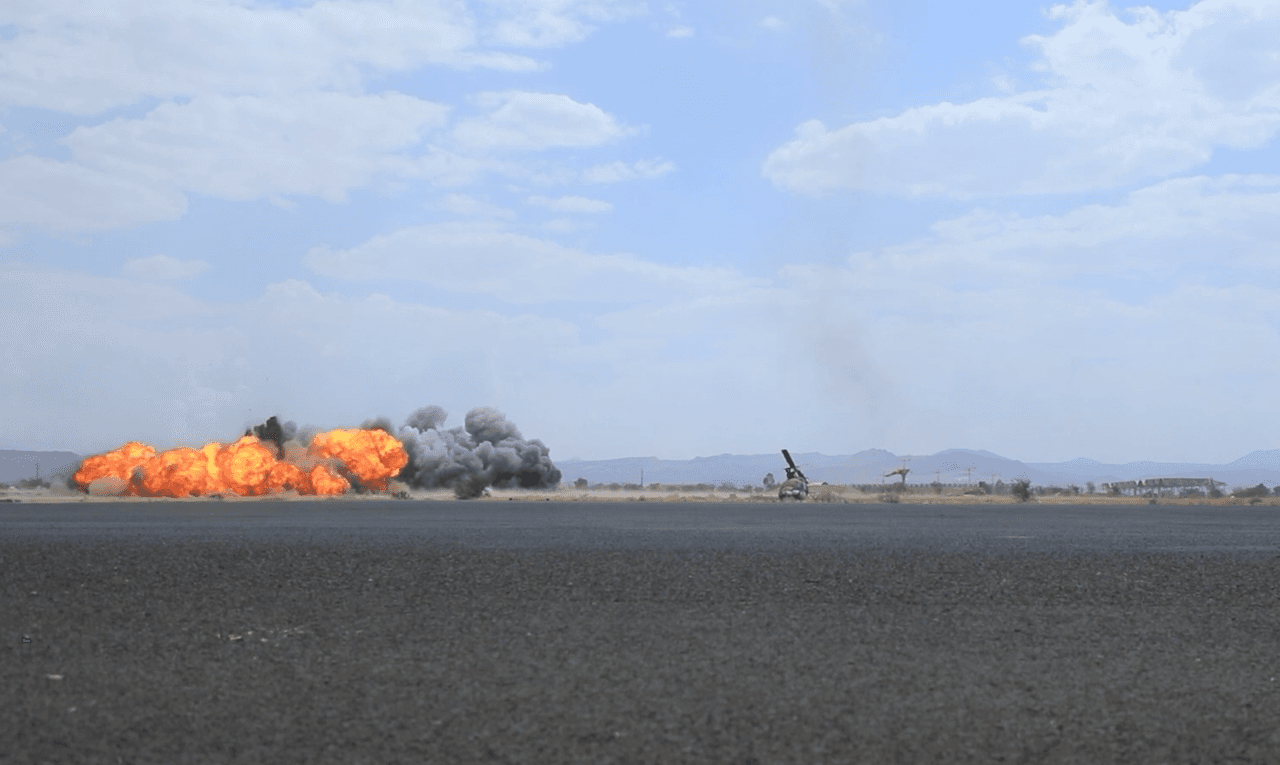
The Yemeni military announced that it targeted the airport runway to prevent the Iranian aircraft from landing. The Houthis claimed the attack was carried out by Saudi Arabia.
Following the attack, the Iranian aircraft changed course and landed at Hodeidah Airport. Iranian authorities have not issued an official statement on the incident. Yemen’s Minister of Information Muammer al-Iryani accused the Houthis of detaining an aircraft belonging to the International Committee of the Red Cross (ICRC) at Sanaa Airport, refusing to allow it to take off, and detaining its pilot and co-pilot.
Houthi Military Spokesperson Yahya Saree declared that the attack would not go unanswered and shortly afterward announced that Abha Airport in southern Saudi Arabia had been targeted by ballistic missiles and UAVs.
Turki al-Maliki, spokesperson for the Saudi-led Coalition, stated that air defense systems had been activated against the ballistic missiles launched by the Houthis and that the threat had been neutralized. No casualties were reported in the incident.
The Houthis also warned international airlines not to use Saudi airspace until restrictions on Sanaa Airport were lifted, stating that attacks would continue until then.
President of the Presidential Leadership Council Rashad al-Alimi ordered the government, military, and security forces to raise their readiness to the highest level. Al-Alimi stated that the attempt to land the Iranian aircraft at Sanaa Airport constituted a violation of Yemen’s sovereignty and that the country would not tolerate any infringement of its airspace.
Yemen’s Civil Aviation and Meteorology Authority announced that all airports in the country were closed until a further notice following the strike on Sanaa Airport. However, shortly afterward, the Ministry of Transport declared that operations at airports were continuing normally.
In response to these developments, the United Nations Security Council (UNSC) held an emergency meeting the same day. UN Assistant Secretary-General for Political Affairs Khalid Khiari stated that Yemen and the region could not withstand another wave of tension and called on all parties to participate in negotiations under UN auspices.
UN Special Envoy for Yemen Hans Grundberg confirmed that the UN was closely monitoring developments in Yemen’s airspace and warned of the risk of broader escalation, urging all parties to engage in dialogue.
Yemen’s Permanent Representative to the UN Abdullah al-Saadi claimed that the aircraft attempting to land in Sanaa was linked to the Iranian Revolutionary Guard Corps (IRGC) and was carrying military personnel and equipment. Al-Saadi also stated that the Yemeni government had offered to provide a Yemen Airways aircraft to repatriate the Houthi delegation from Tehran.
The British Embassy in Yemen condemned the hardening rhetoric from the Houthis and called on all parties to reduce tensions. Russia’s Ambassador to Yemen Yevgeny Kudrov stated that the Tehran-Sanaa flight had been discussed during his meeting with President Rashad al-Alimi.
On 14 July, the American news platform Axios, citing two unnamed US officials, reported that US President Donald Trump had spoken by phone with Saudi Crown Prince Mohammed bin Salman and approved requested support for a potential military operation against the Houthis.
The report also stated that a US official claimed the Iranian aircraft was transporting weapons, missile components, and military experts to the Houthis. The White House responded to requests for comment by referencing a previous interview Trump gave to Fox News, while the Saudi Embassy in Washington declined to issue a statement.
On 14 July, Houthi Political Bureau member Muhammad al-Buhayti told Al Jazeera that if Saudi Arabia’s responsibility for the attack on Sanaa Airport were accepted, Yemen would have the right to target Saudi airports and impose a similar blockade. On the same day, Houthi Military Spokesperson Yahya Saree claimed that the 13 July attack had ended the “de-escalation” period that had lasted since 2014.
On 16 July, Houthi leader Abdulmalik al-Houthi stated in a televised address that the response to Sanaa Airport had been “modest,” and declared that the Houthis would apply a policy of “airports for airports, ports for ports, blockade for blockade.” He also indicated that Saudi Arabia’s oil facilities could be targeted. In the same speech, al-Houthi stated that if attacks on Yemen continued, Saudi oil infrastructure and critical facilities would become targets of missile and UAV strikes.
On 17 July, mass demonstrations under the slogan “mobilization” were held in numerous cities, beginning with Sanaa, following a call by Abdulmalik al-Houthi. After the demonstrations, the Houthis declared that the continuation of the blockade against Yemen would be regarded as a “total war.”
Houthi Minister of Defense Muhammad al-Atifi affirmed that all military units were ready to implement orders from leadership and stated that readiness levels were at their highest.
On 18 July, Presidential Leadership Council member Osman Majali told the official news agency SABA that the military option must be activated and that state institutions under Houthi control must be reclaimed.
On the same day, Council member and Commander of the Amalika Brigades Abdulrahman al-Muhrimi issued a message to civilians in Houthi-controlled areas, stating that their priority was a fair and lasting peace, but that they were prepared to resort to military action if peace proved unattainable.
On 19 July, Yemen’s Minister of Transport Muhsin al-Omari announced that a planned flight by the Iranian airline Mahan Air to Sanaa had been halted due to lack of required official permissions. Omari stated that the aircraft was denied permission to proceed to Sanaa while over Omani airspace and was forced to return. Iranian authorities and the Houthis have not issued official statements on the matter.
On 20 July 2026, Houthi Military Spokesperson Yahya Saree announced in a statement broadcast on the Al-Masirah television channel that a ban on maritime transport linked to Saudi Arabia had come into effect. Saree described the decision as part of a “blockade for blockade” response to the approximately 12-year-long blockade imposed on Yemen.
Saree stated that the Yemeni Armed Forces were prepared for all options but did not provide details on the scope or geographic areas covered by the maritime blockade.
Saudi Arabia initially did not issue an official assessment of the announcement. The development occurred as Saudi Arabia was attempting to increase oil shipments to Yanbu Port via the East-West Pipeline (Petroline).
Al Jazeera Arabic. “الحوثيون يعلنون فرض حظر على السفن الإسرائيلية في البحر الأحمر.” *الجزيرة*. Accessed July 20, 2026.https://www.aljazeera.net/news/
Al Jazeera. "What Is Going on in Yemen?" Al Jazeera. Accessed July 20, 2026.https://www.aljazeera.com/features/2026/7/11/what-is-going-on-in-yemen
Al Jazeera. “Leading Houthi Threatens ‘Siege’ on Saudi Arabia after Yemen Airport Attack.” Al Jazeera. Accessed July 20, 2026.https://www.aljazeera.com/news/2026/7/14/leading-houthi-threatens-siege-on-saudi-arabia-after-yemen-airport-attack
Al Jazeera. “Yemen’s Houthis Threaten Saudi Arabia after Alleged Airspace Intrusion.” Al Jazeera. Accessed July 20, 2026.https://www.aljazeera.com/news/2026/7/3/yemens-houthis-threaten-saudi-arabia-after-alleged-airspace-intrusion
Anadolu Ajansı. "Saudi Air Defenses Intercept Houthi Ballistic Missiles amid Yemen Tensions." Accessed July 20, 2026.https://www.aa.com.tr/en/middle-east/saudi-air-defenses-intercept-houthi-ballistic-missiles-amid-yemen-tensions/3996904
Anadolu Ajansı. "Saudi-Led Coalition Vows ‘Unprecedented’ Force against Houthi Threats." Accessed July 20, 2026.https://www.aa.com.tr/en/middle-east/saudi-led-coalition-vows-unprecedented-force-against-houthi-threats/3985817
Anadolu Ajansı. "Trump'ın Suudi Arabistan'ın Husilere Yönelik Saldırısına Destek Verdiği İddiası." Anadolu Ajansı. Accessed July 20, 2026.https://www.aa.com.tr/tr/dunya/trumpin-suudi-arabistanin-husilere-yonelik-saldirisina-destek-verdigi-iddiasi/3997165
Anadolu Ajansı. "Yemen Hükümeti, İran'a Ait Bir Uçağın Sana Havalimanı'na İnişini Engellediğini Duyurdu." Accessed July 20, 2026.https://www.aa.com.tr/tr/dunya/yemen-hukumeti-irana-ait-bir-ucagin-sana-havalimanina-inisini-engelledigini-duyurdu/4002763
Anadolu Ajansı. "Yemen'de Hükümet ile Husiler Karşılıklı Askeri Hazırlıklarını Artırıyor." Accessed July 20, 2026.https://www.aa.com.tr/tr/dunya/yemende-hukumet-ile-husiler-karsilikli-askeri-hazirliklarini-artiriyor/3990369
Anadolu Ajansı. "Yemen'deki Husiler: Suudi Arabistan'ın Abha Havalimanı'nı Balistik Füze ve İHA'larla Hedef Aldık." Accessed July 20, 2026.https://www.aa.com.tr/tr/dunya/yemendeki-husiler-suudi-arabistanin-abha-havalimanini-balistik-fuze-ve-ihalarla-hedef-aldik/3996967
Anadolu Ajansı. "Yemen’s Houthis Declare ‘Maritime Blockade’ on Saudi Arabia." Accessed July 20, 2026.https://www.aa.com.tr/en/middle-east/yemen-s-houthis-declare-maritime-blockade-on-saudi-arabia/4003795
Anadolu Ajansı. “Houthis Threaten to Attack Oil Facilities in Saudi Arabia amid Yemen Tensions.” Accessed July 20, 2026.https://www.aa.com.tr/en/middle-east/houthis-threaten-to-attack-oil-facilities-in-saudi-arabia-amid-yemen-tensions/4000598
Anadolu Ajansı. “Yemen'deki Husiler: Suudi Arabistan, Uluslararası Sana Havalimanı'nı Hedef Aldı.” Accessed July 20, 2026.https://www.aa.com.tr/tr/dunya/yemendeki-husiler-suudi-arabistan-uluslararasi-sana-havalimanini-hedef-aldi/3996488
Anadolu Ajansı. “İran Uçağı Krizi, Yemen'de Dört Yıldır Süren Ateşkesi Sarsarken Askeri Gerilimi Yeniden Tırmandırdı.” Accessed July 20, 2026.https://www.aa.com.tr/tr/dunya/iran-ucagi-krizi-yemende-dort-yildir-suren-ateskesi-sarsarken-askeri-gerilimi-yeniden-tirmandirdi/3997442
Arab News. “Saudi Arabia Says It Intercepted Houthi Missiles Fired at South.” Accessed July 20, 2026.https://www.arabnews.com/node/2650763/sa%EE%80%80udi-arabia
Associated Press. “Iran-Backed Houthi Leader in Yemen Threatens Escalation with Saudi Arabia.” Accessed July 20, 2026.https://apnews.com/article/yemen-saudi-arabia-war-houthi-iran-70a8626c44a50a4f489a0b193788fd43
Associated Press. “Yemen’s Houthis Announce a Maritime Embargo against Saudi Arabia.” Accessed July 20, 2026.https://apnews.com/article/yemen-saudi-arabia-maritime-embargo-fd7c4a3911f7eee18251483fc8af768c
Associated Press. “Yemen’s Houthis Strike Saudi Arabia’s Abha Airport with Missiles and Drones in a Sharp Escalation.” Accessed July 20, 2026.https://apnews.com/article/yemen-houthis-airport-saudi-strikes-7bddae3006304df8bf7f89e980006b33
BBC News. “Yemen's Houthis Launch Missiles at Saudi Arabia after Strikes on Sanaa Airport.” BBC News. Accessed July 20, 2026.https://www.bbc.com/news/articles/cp9ldle3d3xo
CNN Arabic. “فيديو لـ«لحظة سقوط صاروخ حوثي على مطار أبها في السعودية».. ما قصته؟” CNN Arabic. Accessed July 20, 2026.https://arabic.cnn.com/middle-east/article/2026/07/14/old-video-moment-a-houthi-missile-fell-on-abha-airport-in-saudi-arabia
Haberler.com. "Yemen'de İran Uçağı Krizi: Gerilim Yeniden Tırmanıyor." Accessed July 20, 2026.https://www.haberler.com/guncel/yemen-de-iran-ucagi-krizi-gerilim-yeniden-tirmaniyor-20033059-haberi/
Reuters. “Houthis Fire Missiles at Saudi Arabia, Breaking Years of Calm.” Reuters. Accessed July 20, 2026.https://www.reuters.com/world/middle-east/yemeni-military-targets-sanaa-airport-runway-stop-iranian-plane-landing-defence-2026-07-13/
TRT Haber. "Yemen Başkanlık Konseyi: Hava Sahamızın İhlal Edilmesine İzin Vermeyeceğiz." Accessed July 20, 2026.https://www.trthaber.com/haber/dunya/yemen-baskanlik-konseyi-hava-sahamizin-ihlal-edilmesine-izin-vermeyecegiz-951107.html
The National. "Houthis Announce ‘Maritime Ban’ on Saudi Arabia in Retaliation for Yemen Blockade." Accessed July 20, 2026.https://www.thenationalnews.com/news/2026/07/20/houthis-announce-maritime-ban-on-saudi-arabia-citing-blockade-of-yemen/
Arab Coalition spokesperson Brigadier General Turki al-Maliki stated that coalition forces have taken necessary operational measures to ensure the safety of commercial vessels navigating the Bab al-Mandab Strait within the framework of international law and the 1982 United Nations Convention on the Law of the Sea. The statement asserted that claims regarding the closure of ports and airports in Yemen constitute a “disinformation campaign” conducted by the Houthis.
According to the coalition’s statement, more than 300 commercial vessels entered the ports of Hodeidah, Al-Salif, and Ras Isa during the first half of 2026 carrying food, fuel and construction materials. It was alleged that the Houthis have halted operations at Sanaa International Airport, destroyed aircraft belonging to Yemenia Airlines, and rejected all efforts to reopen the airport.
The Saudi Ministry of Foreign Affairs condemned statements made by Seri, whom it labeled as the “military spokesperson of terrorist Houthi militias.” It recalled that the Houthis have targeted Yemen’s infrastructure through attacks on Aden International Airport in 2020 and southern Yemen’s oil export ports in 2022. The ministry also accused the Houthis of seizing four Yemenia Airlines aircraft at Sanaa International Airport.
On 21 July, Saudi Arabia issued a statement following a meeting of the Council of Ministers chaired by King Salman bin Abdulaziz, condemning the Houthis’ “false claims,” reaffirming its support for the internationally recognized government of Yemen, and declaring that it would take “decisive measures” to safeguard its vessels and ensure security in accordance with international law and the 1982 United Nations Convention on the Law of the Sea.
United Nations spokesperson Stephane Dujarric expressed concern at a press briefing on 20 July regarding the renewed fighting in the region and the Houthis’ threats against Saudi Arabia and freedom of navigation, stating that “an urgent de-escalation step is required.” Dujarric also highlighted the potential global economic impact of the near-closure of the Hormuz Strait.
US President Donald Trump, in a statement on 21 July, said the United States has “no issues” with the Houthis since its military operations against them. In response to concerns that a Houthi blockade could open a new front in the region, Trump stated that “the necessary steps will be taken if needed,” and recalled the “very strong operation” conducted against the Houthis lasting approximately 45 days.
The Sudanese Ministry of Foreign Affairs, in a statement issued on 22 July, expressed “deep concern” over the Houthi blockade decision, noting that it endangers maritime navigation in the Red Sea and the security and economic interests of coastal states. It affirmed full support for Saudi Arabia’s right to take all necessary measures to protect its ports and national security.
The Pakistani Ministry of Foreign Affairs, in a statement issued the same day, affirmed its right to take all necessary measures, including the legitimate use of force within the framework of self-defense under the United Nations Charter and international law, to protect its maritime assets and national interests in the Red Sea. The ministry condemned the Houthis’ “ongoing” threats against Saudi Arabia and commercial vessels “unconditionally.”
A Houthi military source speaking to the Houthi-affiliated Saba News Agency reported that within 24 hours of the blockade announcement on 21 July, six vessels received warnings, altered course, and returned. The source did not identify the vessels or the regions to which they returned.
Rashad al-Alimi, Chairman of the Yemen Presidential Council, during a meeting with India’s Ambassador to Yemen, Suhel Ajaz Khan, urged the international community to view the Houthis as part of an interconnected regional threat network. Alimi stated that the Houthis are attempting to drag Yemen into a broader regional conflict serving the agenda of the Iranian regime.
Alimi emphasized that the consequences of these developments extend beyond Yemen’s borders, threatening the security of the Red Sea and Asian countries dependent on this strategic sea lane. He also accused the Houthis of collaborating with terrorist groups and armed factions in the Horn of Africa, facilitating arms and military technology smuggling, and supporting piracy and transnational crime.
Following the near-halt of commercial vessel transit through the Hormuz Strait due to US-Iran tensions, the Houthi blockade decision has shifted the tension to the Bab al-Mandab Strait. Brent crude oil prices hovered near the $90 per barrel level.
After the blockade announcement, the number of crude oil tankers passing through the Bab al-Mandab Strait decreased by 69 percent. On 20 July, 16 vessels transited the strait; this number dropped to five on 21 July and rose slightly to nine on 22 July. During the same period, no vessels transited the Hormuz Strait over the previous five days.
ING Group Senior Economist for Transport and Logistics Rico Luman noted that even though no new attacks had yet occurred, the Houthi announcement immediately increased risks for Bab al-Mandab transit, causing freight and insurance premiums to surge. He recorded that the increased utilization of Yanbu Port as an alternative export hub for Saudi Arabia has added pressure to oil markets.
According to vessel tracking data, at least seven to eight oil tankers changed course sharply near Yemen following the Houthi blockade announcement on 20 July. The tankers Rodos and Mica, along with the vehicle carrier Liu Jiang Kou, altered their routes as they approached the Bab al-Mandab Strait from the south. The European Union’s naval force Aspides advised vessels belonging to Israel, the United States or Saudi Arabia to avoid transit through the Red Sea and the Gulf of Aden until the threat level subsides.
In an email sent to shipowners, the Houthis stated that “vessels are prohibited from loading or unloading cargo at any Saudi port” and that “anywhere within the operational area may be targeted.”
Under normal conditions, approximately 7.8 to 8.8 million barrels of crude oil and refined petroleum products transit daily through the 32-kilometer-wide Bab al-Mandab Strait. Analysts describe a simultaneous closure of the Hormuz and Bab al-Mandab straits as a “double chokepoint,” forecasting that such a scenario could reduce global oil supply by 7 percent and push crude oil prices above $120 per barrel.
Yemeni authorities reported that in “intense fighting” between government forces and Houthis in the Dhalea governorate in southwestern Yemen, four government soldiers and 23 Houthi fighters—including two commanders—were killed, and seven were captured. Ten government personnel were wounded. These clashes are described as the most intense in the region since the 2022 ceasefire.
Reports indicate that recent fighting between government forces and Houthis has resumed in various governorates including Juff, Dhalea and Taiz. According to a Reuters report citing sources from last week, Iran has instructed the Houthis to prepare to close the Bab al-Mandab Strait in the event of a US strike on Iran’s power infrastructure.
Houthi military spokesperson Yahya Seri announced on 23 July 2026 that, citing violations of the transit ban, the Houthis launched ballistic missiles, cruise missiles and drones against two Saudi oil tankers, Encelia and Layla. Seri stated that the attacks achieved direct hits and forced approximately 10 other vessels to turn back.
In a warning to Saudi Arabia, Seri stated that any attack targeting the kingdom would be met with large-scale operations deep within Saudi territory.
The United Kingdom Maritime Trade Operations (UKMTO) center reported that an oil tanker approximately 70 nautical miles off the coast of Shaqiq in Saudi Arabia was struck by an unknown projectile, resulting in a fire on board.
The Saudi General Authority for Transport, in a statement issued through the official news agency SPA, confirmed that the tanker Encelia was attacked while sailing in the Red Sea, with a fire breaking out in its bow section. However, all crew members were confirmed safe. The authority stated that the attack constitutes a violation of international law that guarantees the safety of commercial vessels and their crews. The alleged attack on the Layla tanker has not been independently verified.
According to vessel tracking data, the tankers Xin Long Yang and Rodos turned back before reaching the southern entrance of the Bab al-Mandab Strait, while the vessels New Champion, Xin Tong Yang, New Prime and Desh Viraat also altered their routes. At the same time, the Xin Long Yang and Cosnew Lake vessels were observed heading back toward the Bab al-Mandab Strait, possibly testing whether the Houthis are actively enforcing their blockade.
Sanaa-based journalist Hussein al-Buhayti, in an assessment for Al Jazeera, stated that the ultimate objective of the Houthi maritime blockade is to force Riyadh to lift its own blockade on ports and airports under its control.
Al Jazeera. “Iran, Houthis Strike Tankers as US Bombing Continues: What’s the Latest?” Al Jazeera. Accessed July 23, 2026.https://www.aljazeera.com/news/2026/7/23/iran-houthis-strike-tankers-as-us-bombing-continues-whats-the-latest
Al Jazeera. “Yemen’s Houthis Claim Attack on Two Saudi Oil Tankers.” Al Jazeera. Accessed July 23, 2026.https://www.aljazeera.com/news/2026/7/22/yemens-houthis-claim-attack-on-two-saudi-oil-tankers
Anadolu Ajansı. "Mounting Tensions in Bab el-Mandeb Strait Threaten Maritime Trade." Accessed July 23, 2026.https://www.aa.com.tr/en/middle-east/mounting-tensions-in-bab-el-mandeb-strait-threaten-maritime-trade/4005589
Anadolu Ajansı. "Pakistan Warns Against Any Hostile Act on Its Vessels in Red Sea." Accessed July 23, 2026.https://www.aa.com.tr/en/asia-pacific/pakistan-warns-against-any-hostile-act-on-its-vessels-in-red-sea/4005703
Anadolu Ajansı. "Several Oil Tankers Alter Course in Red Sea Following Houthi Threats." Accessed July 23, 2026.https://www.aa.com.tr/en/us-israel-iran-war/several-oil-tankers-alter-course-in-red-sea-following-houthi-threats/4006572
Anadolu Ajansı. "Trump Says US Has No Problem with Houthis Since US Military Action." Accessed July 23, 2026.https://www.aa.com.tr/en/americas/trump-says-us-has-no-problem-with-houthis-since-us-military-action/4005010
Anadolu Ajansı. "Yemen'deki Husilerden Kızıldeniz'de Suudi Arabistan Tankerlerine Saldırı." Accessed July 23, 2026.https://www.aa.com.tr/tr/dunya/yemendeki-husilerden-kizildenizde-suudi-arabistan-tankerlerine-saldiri/4006354
Anadolu Ajansı. "Yemen'deki İran Destekli Husiler, Suudi Arabistan'a Karşı ‘Deniz Ablukası Başlattıklarını’ Açıkladı." Accessed July 23, 2026.https://www.aa.com.tr/tr/dunya/yemendeki-iran-destekli-husiler-suudi-arabistana-karsi-deniz-ablukasi-baslattiklarini-acikladi/4003708
Anadolu Ajansı. "Yemen's Houthis Say They Targeted 2 Saudi Oil Tankers with Missiles, Drones." Accessed July 23, 2026.https://www.aa.com.tr/en/middle-east/yemen-s-houthis-say-they-targeted-2-saudi-oil-tankers-with-missiles-drones/4006371
Anadolu Ajansı. “Houthis Say 6 Ships Turned Back After Navigation Ban on Saudi Arabia as Yemen's Government Seeks Global Action.” Accessed July 23, 2026.https://www.aa.com.tr/en/middle-east/houthis-say-6-ships-turned-back-after-navigation-ban-on-saudi-arabia-as-yemen-s-government-seeks-global-action/4005233
Anadolu Ajansı. “Husilerin, Suudi Arabistan'a ‘Deniz Ablukası’ Kararı, Hürmüz'den Sonra Babülmendep'te de Tansiyonu Artırdı.” Accessed July 23, 2026.https://www.aa.com.tr/tr/ekonomi/husilerin-suudi-arabistana-deniz-ablukasi-karari-hurmuz-den-sonra-babulmendepte-de-tansiyonu-artirdi/4004620
Anadolu Ajansı. “Hürmüz'ün Ardından Babülmendep'te Yükselen Tansiyon Deniz Taşımacılığını Tehdit Ediyor.” Accessed July 23, 2026.https://www.aa.com.tr/tr/ekonomi/hurmuzun-ardindan-babulmendepte-yukselen-tansiyon-deniz-tasimaciligini-tehdit-ediyor/4005489
Anadolu Ajansı. “Sudan Backs Saudi Arabia After Houthi Announcement of Maritime Blockade.” Accessed July 23, 2026.https://www.aa.com.tr/en/middle-east/sudan-backs-saudi-arabia-after-houthi-announcement-of-maritime-blockade/4005695
Anadolu Ajansı. “UN Voices Concern Over Houthi Threats as Mideast Tensions Risk Choking Red Sea Trade.” Accessed July 23, 2026.https://www.aa.com.tr/en/world/un-voices-concern-over-houthi-threats-as-mideast-tensions-risk-choking-red-sea-trade/4004012
BBC News. "Yemen's Houthis Announce ‘Maritime Embargo’ on Saudi Arabia." BBC News. Accessed July 23, 2026.https://www.bbc.com/news/articles/cm2gmddx1ldo
BBC News. “Tankers Make Sharp U-Turns After Houthi Shipping Threat.” BBC News. Accessed July 23, 2026.https://www.bbc.com/news/articles/cn0n127lpzgo
TRT World. “More Than Two Dozen Killed in Yemen Clashes as Houthis Widen Attacks in Support of Iran.” TRT World. Accessed July 23, 2026.https://www.trtworld.com/article/d4f60145b077

Tensions arose between the parties after an Iranian aircraft landed at Sanaa International Airport on July 3. On July 13, the Yemeni army targeted the airport runway, and in response, the Houthis struck Abha International Airport in Saudi Arabia with missiles and drones; the Saudi air defense announced it had intercepted the attack. During this period, the prisoner exchange was postponed, the parties issued mutual declarations of military preparedness and mobilization, and the UN Security Council convened an emergency meeting to address the issue. On July 20, the Houthis declared a naval blockade against Saudi Arabia.
No Discussion Added Yet
Start discussion for "Yemen-Saudi Arabia Tension and Iran Airplane Crisis (July 2026)" article
July 20, 2026
Background of the Crisis
July 20, 2026
Beginning of the Crisis: Iran Aircraft Landing in Sanaa
July 20, 2026
Military Activity and Escalation of Tensions
July 20, 2026
Attack on Sanaa Airport and Reciprocal Clashes (13 July 2026)
July 20, 2026
Allegation that US President Donald Trump Supported Saudi Arabia
July 20, 2026
Mutual Statements and Escalation of Military Tensions (14–18 July 2026)
July 20, 2026
Second Aircraft Blocked and Maritime Blockade Declared (19–20 July 2026)
July 23, 2026
Saudi Arabia and the Arab Coalition’s Response to the Blockade
July 23, 2026
International Reactions
July 23, 2026
Yemen Government’s Call for International Action
July 23, 2026
Impact on Maritime Traffic in the Red Sea and Bab al-Mandab Strait
July 23, 2026
Resumption of Fighting on the Ground
July 23, 2026
Attack on Saudi Oil Tankers (22–23 July)