This article was automatically translated from the original Turkish version.
Location | Gelibolu Peninsula, Ertuğrul Bay; opposite Ertuğrul Barracks | ||||||||
|---|---|---|---|---|---|---|---|---|---|
Year of Construction | 1992 | ||||||||
Institution That Built It | Ministry of Culture | ||||||||
Dedicated Union | Soldiers of the 9th Division, 26th Regiment, 3rd Battalion | ||||||||
Symbol Name | Ezineli Yahya Çavuş | ||||||||
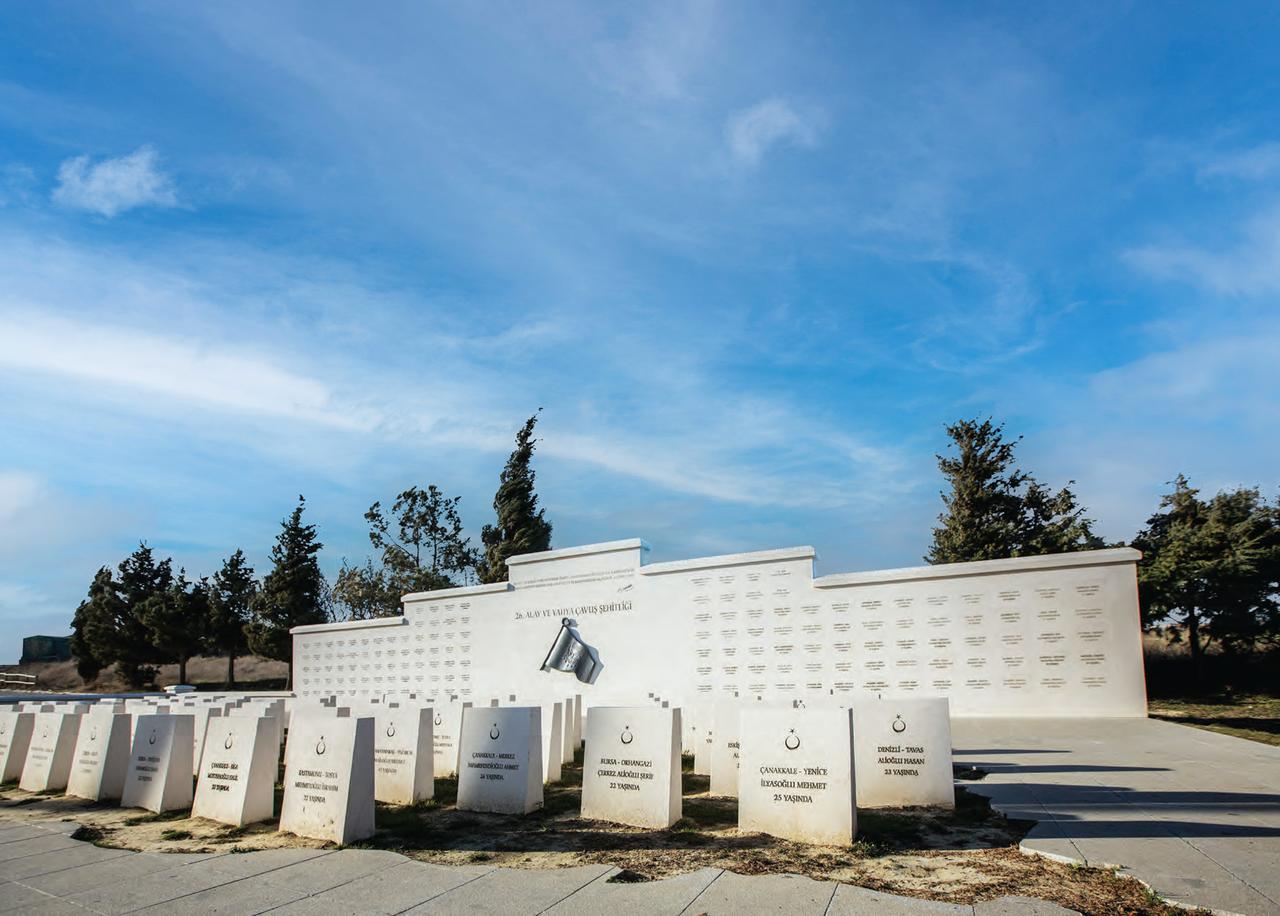
Yahya Çavuş Martyrdom Site is a memorial built in honor of the soldiers who lost their lives defending Ertuğrul Bay during the Gallipoli Campaign. The site is located directly opposite the Ertuğrul Battery.
Ezineli Yahya Çavuş Martyrdom Site and Monument (Çanakkale Historical Area Directorate)
Constructed by the Ministry of Culture in 1992, this monument commemorates the Turkish soldiers of the 3rd Battalion of the 26th Regiment of the 9th Division who defended Ertuğrul Bay during the landing on 25 April 1915.【1】
On 25 April 1915, as part of the land battles that began on that date, the British 29th Division launched a large-scale offensive along a five-kilometer stretch of coastline. The strategic objective of the British forces in this area was to capture Alçıtepe, the most dominant point in the region, by linking up with other units. In response, the Turkish units deployed in the area demonstrated remarkable resistance against enemy forces that greatly outnumbered them. This steadfast defense hindered the advance of the Allied powers and provided the Turkish units with the crucial time needed to influence the course of the battles.【2】
Following the martyrdom of Captain Hüseyin Hüsnü Bey, commander of the 10th Company, the leadership vacuum was filled by Ezineli Yahya Çavuş. Assuming command, Yahya Çavuş and his soldiers displayed fierce resistance and became symbols of the defense. The determination shown by Yahya Çavuş and his unit led the enemy to believe that Turkish forces in the area were far more numerous—on a divisional scale.【3】
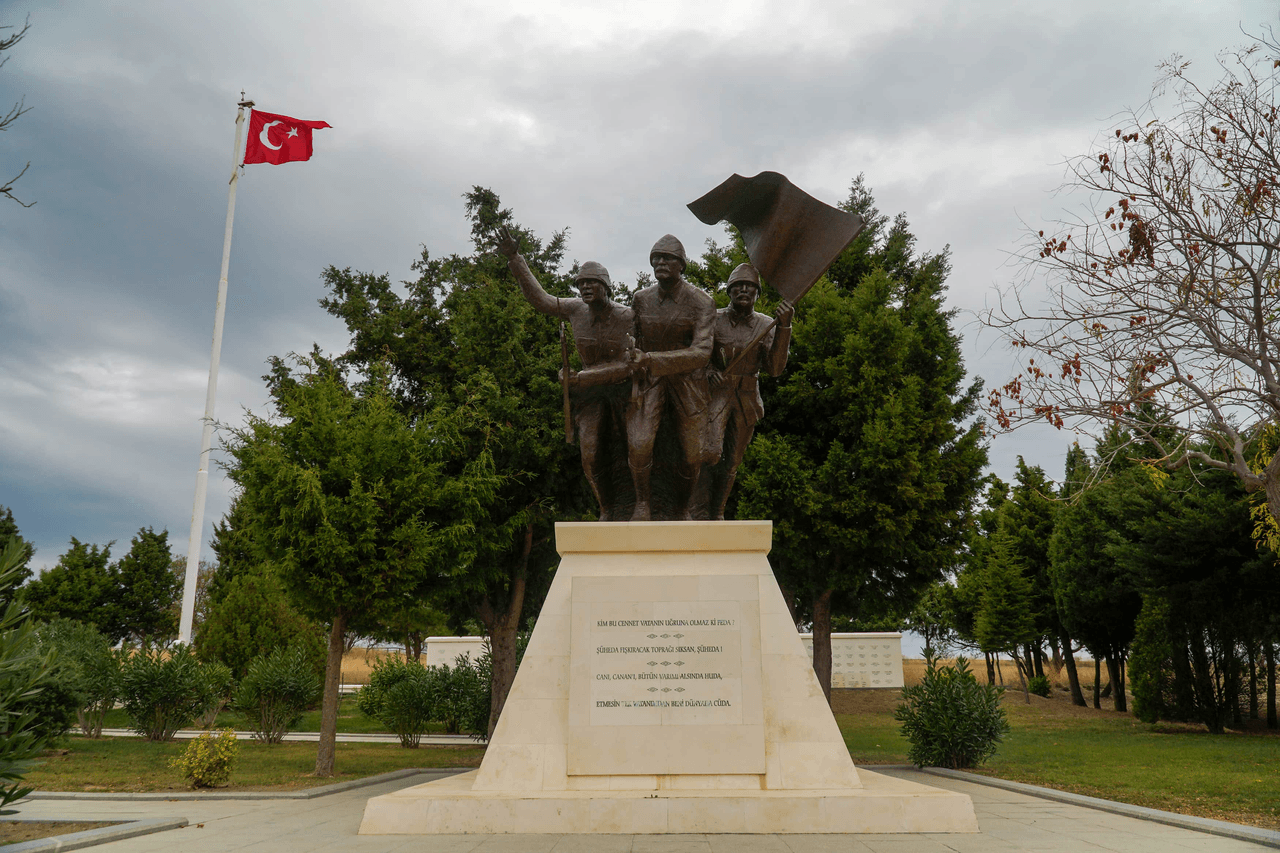
Yahya Çavuş Şehitliği (Gelibolu Tarihi Alan Başkanlığı)
The martyrdom site comprises various symbolic and informative elements. The main inscription on the structure lists the names of 148 martyrs. Directly in front of this large inscription stand 67 symbolic tombstones arranged on a motif representing Türkiye. Additionally, within the boundaries of the site are original Turkish frontline trenches from 1915 that have been preserved in their original state to this day.【4】
On the four distinct facades of the Yahya Çavuş Martyrdom Site, texts highlighting the meaning and significance of the battle are inscribed:
Gelibolu Tarihi Area Presidency. "Yahya Çavuş Şehitliği ve Anıtı." Accessed July 16, 2026.https://canakkaletarihialan.gov.tr/tr/ziyaret/sehitlikveanitlar/yahya-cavus-sehitligi-ve-aniti
Çanakkale Tarihi Alan Başkanlığı. "Ezineli Yahya Çavuş Şehitliği ve Anıtı." YouTube. Accessed July 16, 2026.
[1]
Gelibolu Tarihi Alan Başkanlığı. "Yahya Çavuş Şehitliği ve Anıtı." Erişim Tarihi 16 Temmuz 2026. https://canakkaletarihialan.gov.tr/tr/ziyaret/sehitlikveanitlar/yahya-cavus-sehitligi-ve-aniti
[2]
Gelibolu Tarihi Alan Başkanlığı. "Yahya Çavuş Şehitliği ve Anıtı."
[3]
Gelibolu Tarihi Alan Başkanlığı. "Yahya Çavuş Şehitliği ve Anıtı."
[4]
Gelibolu Tarihi Alan Başkanlığı. "Yahya Çavuş Şehitliği ve Anıtı."
[5]
Gelibolu Tarihi Alan Başkanlığı. "Yahya Çavuş Şehitliği ve Anıtı."

Location | Gelibolu Peninsula, Ertuğrul Bay; opposite Ertuğrul Barracks | ||||||||
|---|---|---|---|---|---|---|---|---|---|
Year of Construction | 1992 | ||||||||
Institution That Built It | Ministry of Culture | ||||||||
Dedicated Union | Soldiers of the 9th Division, 26th Regiment, 3rd Battalion | ||||||||
Symbol Name | Ezineli Yahya Çavuş | ||||||||
No Discussion Added Yet
Start discussion for "Yahya Çavuş Martyrdom" article
Historical Background and Battle Process
Ezineli Yahya Çavuş and the Symbolization of the Defense
Architecture and Components of the Martyrdom Site
Inscriptions on the Monument Facades