



Women's Clothing in the Ottoman Empire
Ottoman women’s clothing was not merely a means of covering the body but also a way to express personal taste, wealth, and the social environment in which they lived. During this period, clothing was meticulously sewn like works of art, with each garment containing a unique story. The Ottoman woman’s wardrobe was filled with colorful fabrics and delicate embroidery.
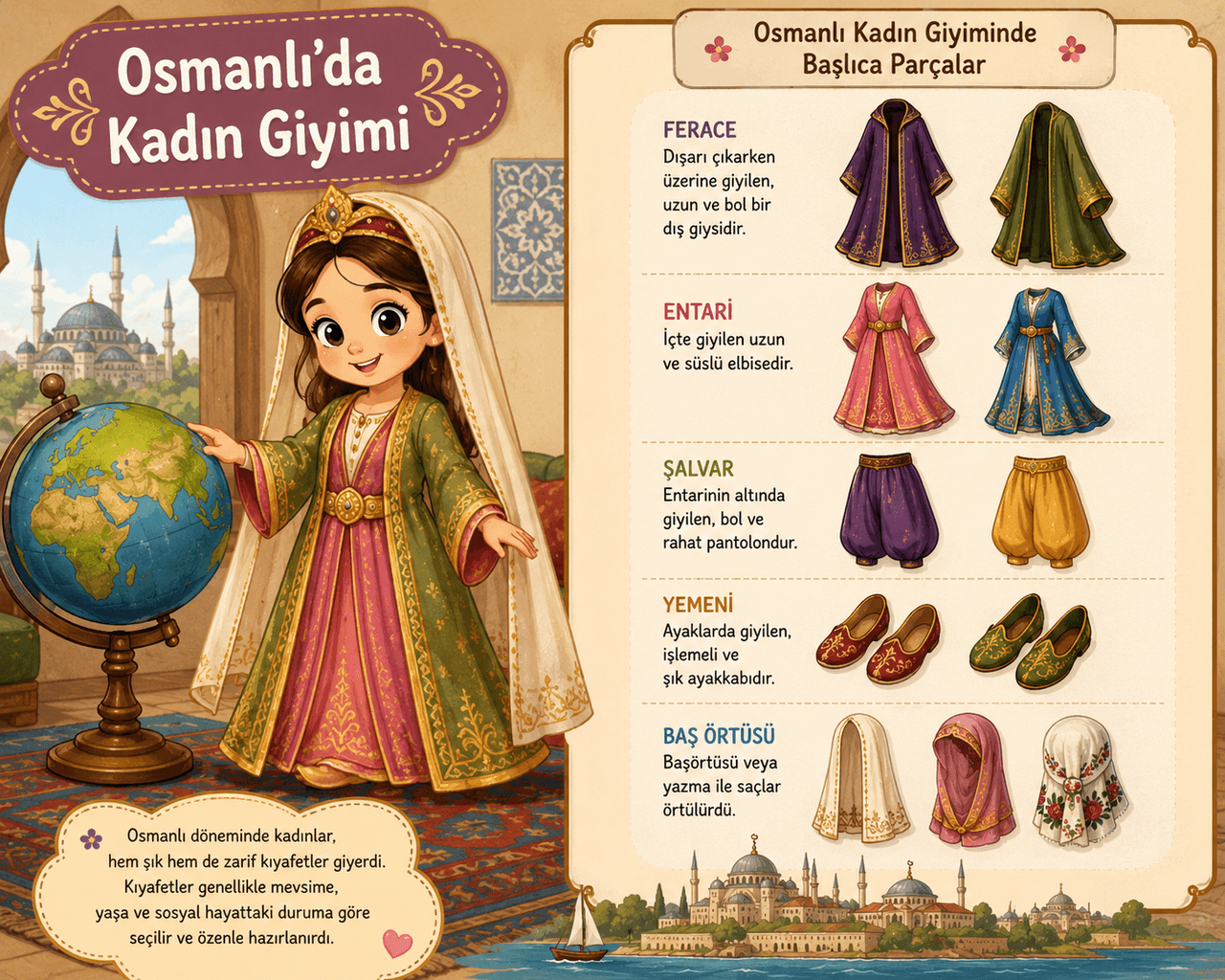
Literacy on Women’s Dress in the Ottoman Era (Generated with AI assistance)
The Colorful Interior
Since Ottoman women spent most of their time at home, their indoor garments were far more ornate and elaborate than their outerwear. The most important elements of indoor attire were the şalvar, the undergarment, and the long, flowing entari worn over them. These garments were typically made from soft, luxurious fabrics such as silk, velvet, and satin.
Ladies wore ornate headpieces called hotoz, adorned with valuable pins featuring butterfly, flower, or bee motifs. On their feet, they wore embroidered slippers or nalın, high-heeled clogs designed for indoor use. Each lady’s attire reflected the joy and elegance of her household.
Elegance in the Streets: Ferace and Yaşmak
When going outdoors, Ottoman women wore special outer garments designed to conceal their bodies and faces. The most common of these was the ferace, resembling today’s coats but much looser and without collars. Although feraces were typically dark in color, by the later period they began to be made in vibrant hues such as pink and lilac.
To cover their faces, they used the yaşmak and the peçe. The yaşmak consisted of a thin white veil wrapped around the face and head. By the end of the 19th century, the two-piece çarşaf, still known today, became more popular. This modest exterior reflected the Ottoman ladies’ respect for societal norms.
Evolving Fashions
In the final years of the Ottoman Empire, especially in Istanbul, ladies began to follow European fashion, particularly the Parisian style. Elaborate, lace-trimmed dresses with puffed sleeves gradually replaced the simpler traditional feraces. This new fashion trend was called “alafranga” and became a symbol of the modernizing Ottoman society.
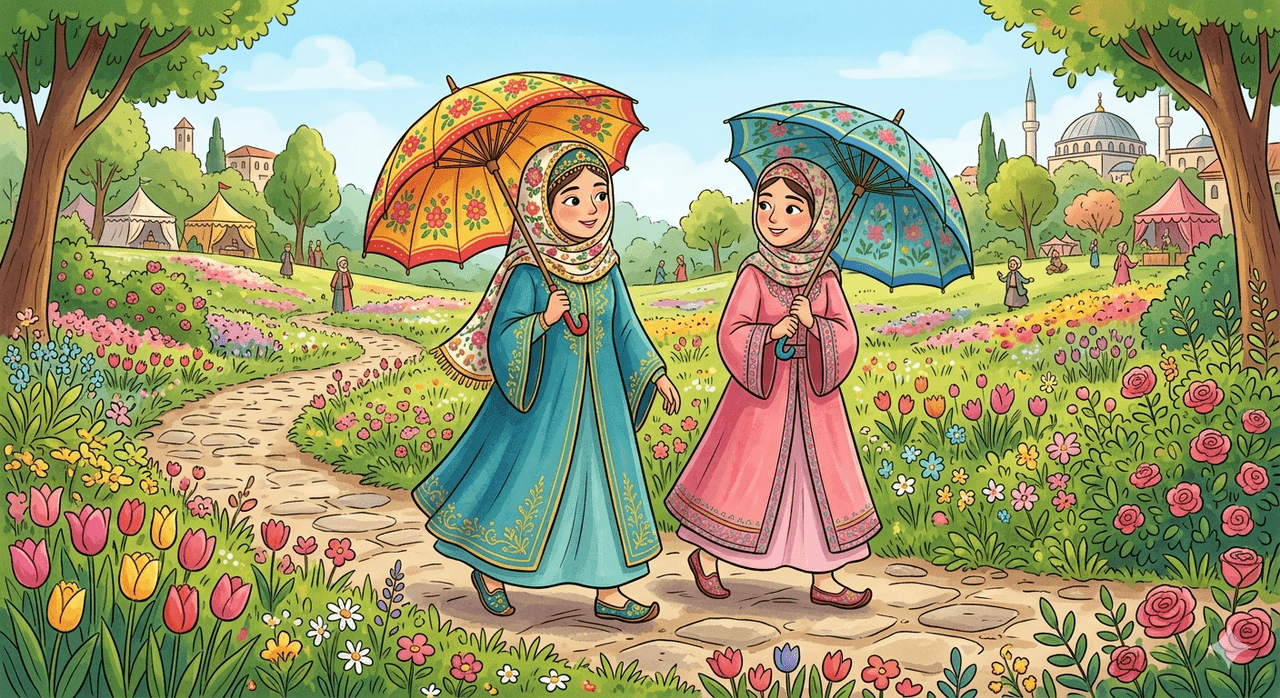
Ottoman Ladies (Generated by AI)
Women now had their tailors sew not only traditional garments but also the dresses they saw in European magazines. Carrying elegant parasols and wearing lace gloves became the height of fashion in that era. Thus, the Ottoman woman preserved her own traditions while opening her doors to global innovations.





