


This article was automatically translated from the original Turkish version.
+2 More
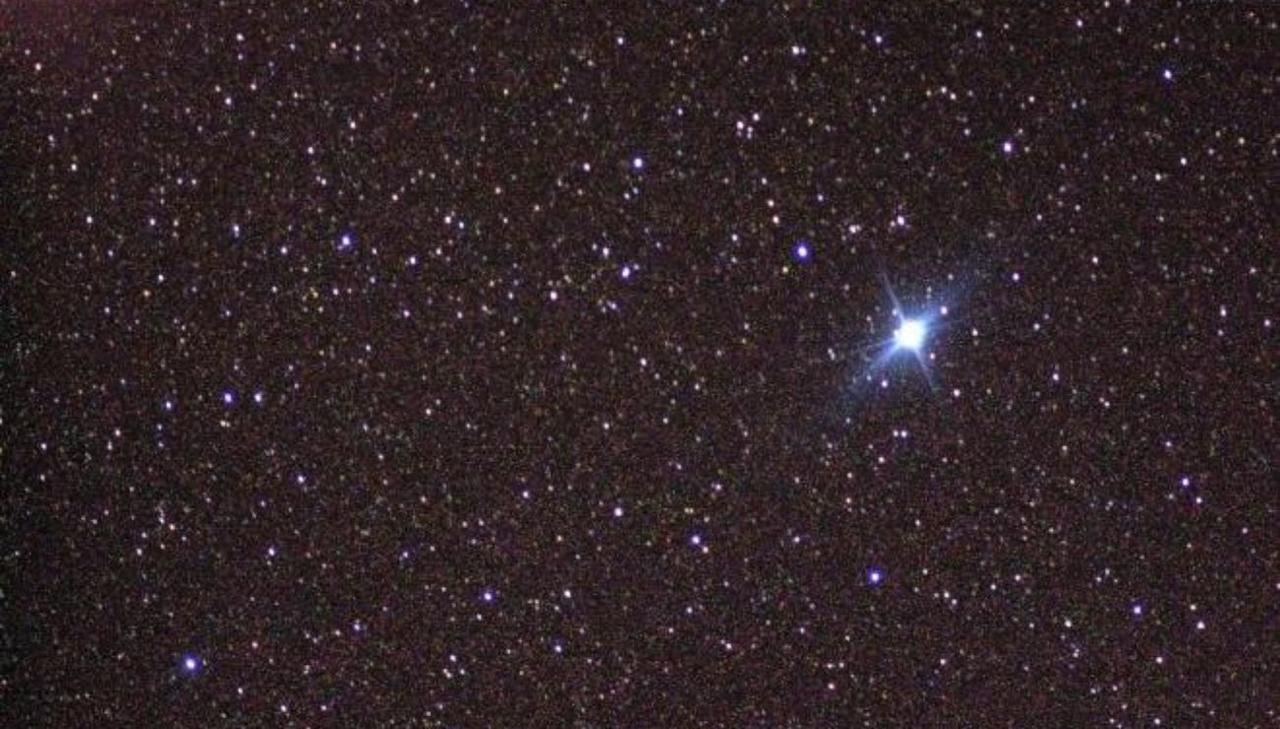
Vega Star
Constellation | Lyra (Instrument) Constellation | ||||||||
|---|---|---|---|---|---|---|---|---|---|
Distance | 25 light-years | ||||||||
Brightness | 0.026 | ||||||||
Spectral Type | A0V (White-blue main sequence star) | ||||||||
Surface Temperature | 9,500 K | ||||||||
Mass | 2.1 times the Sun's mass | ||||||||
Diameter | 2.3 times the Sun's mass | ||||||||
Rotation Speed | 236 km/s | ||||||||
Age | 450 million years | ||||||||
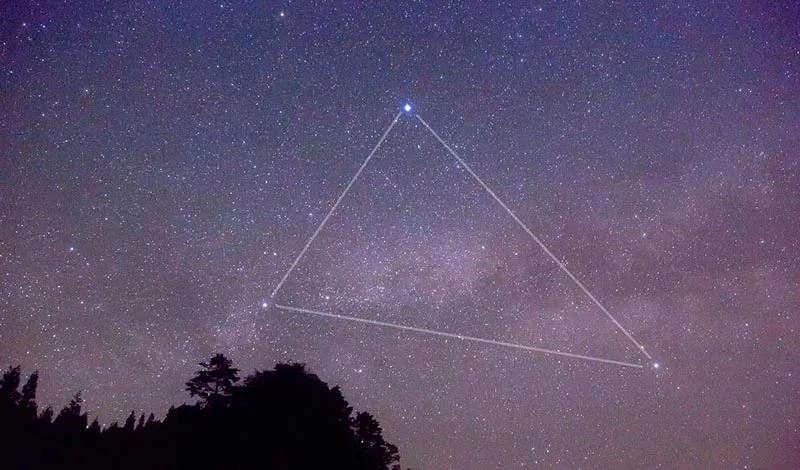
Vega, the brightest star in the constellation Lyra (Çalgı), is also described as the second most important star in the sky after the Sun. Vega, located approximately 25 light-years away, is one of the closest stars to Earth. It is the fifth brightest star in the sky and is believed to have a relatively short lifespan. Due to its high energy output, its brightness continues to increase, and it is predicted that in the future it may become the North Star. Vega is also used as a reference point for determining the brightness of other stars. Along with Altair and Deneb, it forms the "Summer Triangle".
Vega is an main-sequence star of spectral type A0 V. This means it generates energy by fusing hydrogen and is a blue-hued star on the main sequence. With a temperature of approximately 9,500 Kelvin, its high temperature is the primary reason for its blue light emission. It is about 2.5 times larger and 50 times brighter than the Sun, which correlates with its high energy consumption. Due to this rapid and intense energy output, its lifespan is expected to be significantly shorter than average for its type. Vega has a rotation period of 16.5 hours; although it rotates faster than the Sun, its rotational speed is still slower than that of planets such as Jupiter and Saturn.
The star derives its name from the Arabic phrase "النسر الواقع" (al-nasr al-waqie), meaning "the falling eagle". In ancient Egypt, Vega was used to determine the timing of the Nile River's annual flooding and was previously the North Star before being replaced by Polaris. Although it has since yielded that role, it is expected to become the North Star again in approximately ten thousand years.
Vega also holds a melancholic place in Japanese and Chinese mythology. According to legend, Vega was the daughter of the gods, the princess of the heavens, and the goddess of the heavens. An exceptionally skilled weaver, Vega adorned the sky with stars and clouds by weaving them into tapestries. But Vega feared loneliness in the infinite expanse where she resided. This fear became her greatest torment. One day, hearing a unique melody, she descended to Earth and saw Altair, a shepherd playing his flute. They fell in love, and Vega promised Altair that one day they would live together in the heavens.
But Altair was merely mortal, and Vega’s father strongly disapproved of his daughter falling in love with a human. As punishment, he cruelly transformed them both into stars and placed them far apart in the sky, separating them with the Milky Way (the Celestial River). Yet every year, on the seventh day of the seventh month—that is, on July 7—a bridge of magpies forms across the river, allowing the lovers to meet for a single day.
In some years, Vega and Altair are able to reunite and spend the day together; in others, Altair fails to cross the bridge. Vega, overcome with longing for her beloved, sheds tears. Japan and China believe that if it rains on July 7, the lovers could not meet and the rain is Vega’s tears.

A representation of Vega and Altair reuniting on July 7 via the Magpie Bridge (generated with AI assistance)
Experts studying Vega have noted that the vast debris disk surrounding it, composed of dust and gas, is remarkably smooth and purity. The pressure from the star’s radiation pushes smaller particles outward faster than larger ones, resulting in a layered distribution of dust within the disk.
The presence of a planet-forming disk around Vega, similar to the Asteroid Belt, suggests that the rocky bodies in its orbit may still be hot and not yet cooled, potentially evolving into planets. However, it is believed that Vega’s predicted lifespan is too short for any planet forming in its orbit to develop complex life.
As noted at the beginning of this article, Vega is a much larger, hotter, and more rapidly energy-consuming star than many other celestial bodies, and therefore has a significantly shorter lifespan. It is also a main-sequence star. According to scientific estimates, once Vega exhausts its hydrogen fuel, it will have no other material available for energy production except in its core and will evolve into a red giant.
Following the red giant phase, it is expected to expand into an even larger and brighter halo. At that time, due to changes in both Vega’s and Earth’s axial orientation, Vega is expected to become the new North Star. With no fuel remaining in its core, Vega will then transform into a white dwarf. After billions of years, its outer layers will disperse into space, and its dense, hot core will begin to cool and fade. Ultimately, Vega—the second most important star in the sky—will become a galactic fossil.
Numerous studies and observations have been conducted on Vega over the years. Among these, the most prominent have been those carried out using the Hubble and James Webb Space Telescopes. These university-supported observation programs have provided many new and diverse insights and have significantly advanced the study of Vega’s debris disks.
One example of the information gained from these observations is the calculation of Vega’s radial velocity from its spectral shift. Research using radial velocity data has suggested that Vega may be part of the "Coastar Moving Group". However, this status remains uncertain. In addition, Vega has served as a reference point in numerous studies aimed at gathering information about other stars and planets, discovering new celestial bodies, and measuring luminosity values.
Carroll, Bradley, and Ostlie, Dale. An Introduction to Modern Astrophysics, 2017.
Gürdilek, Raşit. "Vega yaşam destekleyebilir mi ?" Kurious. Accessed February 2025.https://kurious.ku.edu.tr/haberler/vega-yasam-destekleyebilir/
Kaler, James. The Cambridge Encyclopedia of Stars, 2002.
NASA. *NASA’s Hubble, Webb probe surprisingly smooth disk around Vega*, NASA Science (2024). Accessed February 2025. https://science.nasa.gov/missions/hubble/nasas-hubble-webb-probe-surprisingly-smooth-disk-around-vega/
Ridpath, Ian, ed. Oxford Astronomy Encyclopedia, 2018.
Star Facts. (n.d.). "Vega Star: Facts and features." Accessed February 2025.

Vega Star
Constellation | Lyra (Instrument) Constellation | ||||||||
|---|---|---|---|---|---|---|---|---|---|
Distance | 25 light-years | ||||||||
Brightness | 0.026 | ||||||||
Spectral Type | A0V (White-blue main sequence star) | ||||||||
Surface Temperature | 9,500 K | ||||||||
Mass | 2.1 times the Sun's mass | ||||||||
Diameter | 2.3 times the Sun's mass | ||||||||
Rotation Speed | 236 km/s | ||||||||
Age | 450 million years | ||||||||
Physical Properties
Historical and Mythological Significance
System
Future and Lifespan
Research