This article was automatically translated from the original Turkish version.
Period | 15th century – present | ||||||||
|---|---|---|---|---|---|---|---|---|---|
Materials | Sugar, water, starch, acidity regulators, nuts, fruit extracts | ||||||||
Presentation | Served with Turkish coffee on special occasions | ||||||||
Classification | Lokum with kaymak Plain lokum Flavored lokum | ||||||||
Application Area | Guest hospitality Holiday Gift Wedding | ||||||||
Production Centers | Afyonkarahisar, Istanbul, Gaziantep, Ankara, Kayseri | ||||||||
Turkish Delight is a confection made by mixing sugar, water, starch, and acid regulators in specific proportions and cooking them to produce a soft, elastic, and chewable sweet.
Citric acid (lemon salt), tartaric acid, or potassium bitartrate (cream of tartar) may be used in its production. Optional additives such as fruit pieces, rose petals, flower extracts, hazelnuts, pistachios, walnuts, coconut, and kaymak may be added according to preference. According to the Turkish Food Code, Turkish Delight is classified into three categories: plain, kaymak-flavored, and flavored.
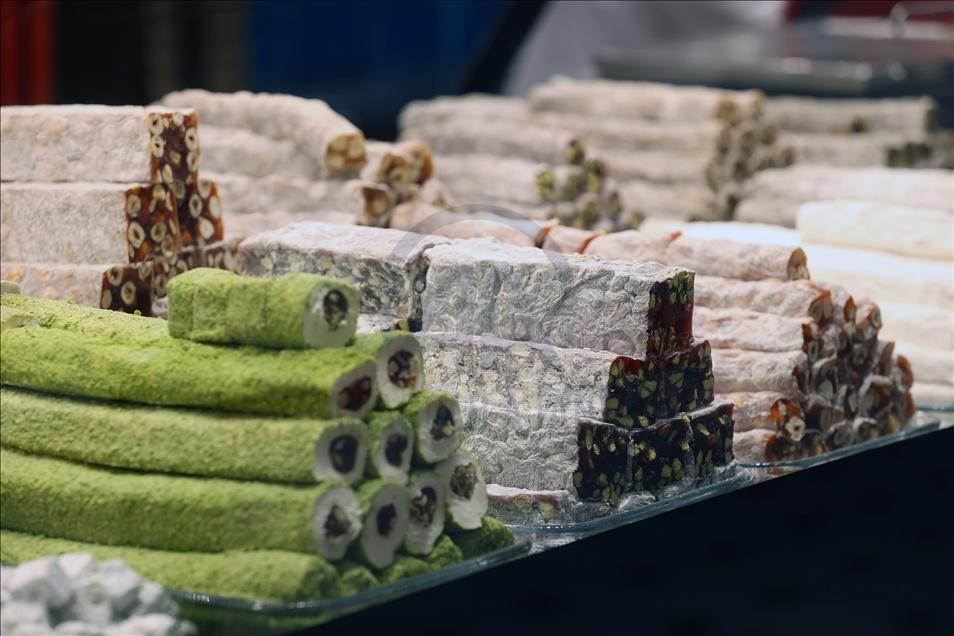
Turkish Delight (AA)
The origins of Turkish Delight date back to the Ottoman period and it has been known in Anatolia since approximately the 15th century. Initially made by mixing honey or grape molasses with flour, it became widespread within the borders of the Ottoman Empire during the 17th century. The introduction and use of refined sugar and starch transformed its production technique and flavor.
In English-speaking countries it is known as “Turkish Delight”, while in French and Balkan languages it is called “Lokoum”. Its elastic texture, ability to return to its original shape after being pressed, and the soft sensation it leaves in the mouth are among its defining characteristics.【1】
Turkish Delight gained international recognition when an English traveler visiting Istanbul in the 18th century enjoyed the confection, took it back to his country, and introduced it there as “Turkish Delight”. During the late 19th and early 20th centuries, Turkish Delight was showcased at various international fairs and became widely known in English-speaking countries during this period.
The production method developed by Hacı Bekir during the Ottoman era contributed significantly to establishing a standard for texture and taste. This production tradition, initiated by Hacı Bekir, has been maintained through subsequent centuries and has secured Turkish Delight’s place as an original product of Turkish confectionery culture.
The ingredients and technological processes used in the production of Turkish Delight play a decisive role in determining the product’s texture, gloss, elasticity, and shelf life. The production process is fundamentally based on mixing sugar, water, starch, and acid regulators in specific proportions and cooking them. The main components and technical features used in Turkish Delight production are listed below:
Throughout this production process, the appropriateness of cooking, cutting, and weighing operations are considered key control points for ensuring consistent quality.
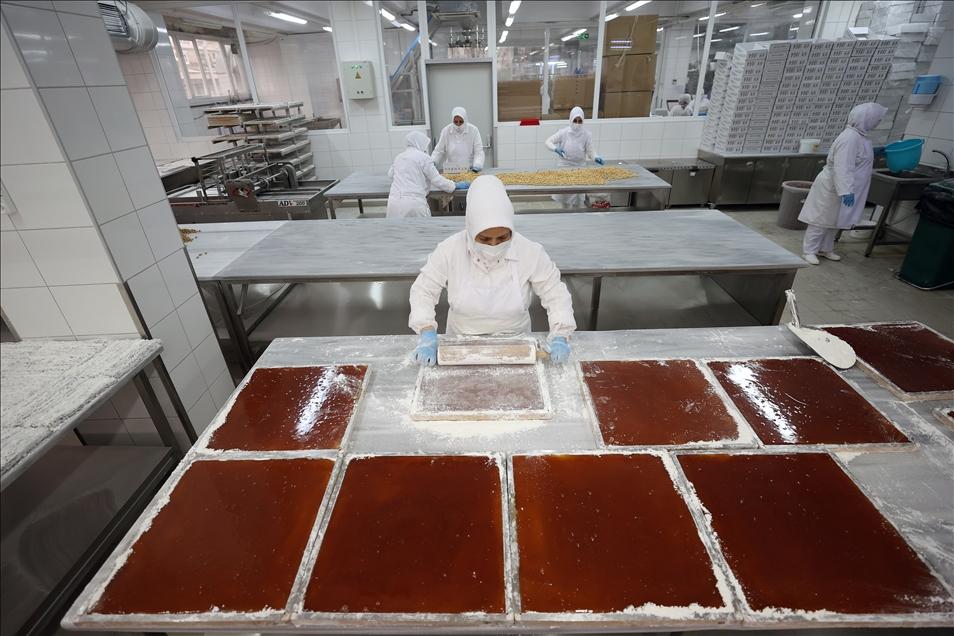
A Visual from the Production Stage (AA)
According to the Turkish Food Code, Turkish Delights are classified into three main categories based on their ingredients and additives: plain Turkish Delight, kaymak-flavored Turkish Delight, and flavored Turkish Delight. This classification is determined by the type and proportion of components used in production.
Plain Turkish Delight contains only the basic ingredients—sugar, starch, water, and acid regulators—with no additional additives. Kaymak-flavored Turkish Delight includes milk or kaymak added to these components, enriching its texture and aroma. Flavored Turkish Delights are produced with additives such as fruit extracts, rose petals, hazelnuts, pistachios, walnuts, coconut, or gum.
The fundamental difference among types of Turkish Delight in terms of production technique lies in whether flavoring agents are added before or after cooking. This difference determines the product’s color, taste, and consistency. Additionally, natural flavorings and colorants used during production impart unique visual and taste characteristics to each type of Turkish Delight.
Turkish Delight varieties are produced in both plain and additive-enhanced forms to meet diverse consumer preferences in domestic and export markets.
The shelf life of Turkish Delight is directly related to its moisture content, storage conditions, and packaging method. Temperature and humidity levels are critical factors in preserving the structural properties of Turkish Delight.
Turkish Delight has an approximate moisture content of 15 percent and an equilibrium relative humidity of around 60 percent. Low ambient relative humidity causes surface hardening, while high humidity leads to stickiness on the product’s surface. When stored under appropriate conditions, Turkish Delight can retain its chewable and soft texture for a longer period.
Leaving Turkish Delight exposed during storage reduces product quality. Therefore, adding magnesium carbonate at a rate of 1 percent along with powdered sugar helps prevent clumping and supports texture preservation. To extend shelf life, Turkish Delight must be stored in sealed packaging under controlled humidity and temperature conditions.
The quality of packaging material is also important for shelf life. Appropriate packaging helps preserve the sensory properties of Turkish Delight and reduces the risk of spoilage. Temperature and humidity variations at sales points, especially for unpackaged products, lead to quality loss. Therefore, controlled storage and proper packaging selection enhance product durability.
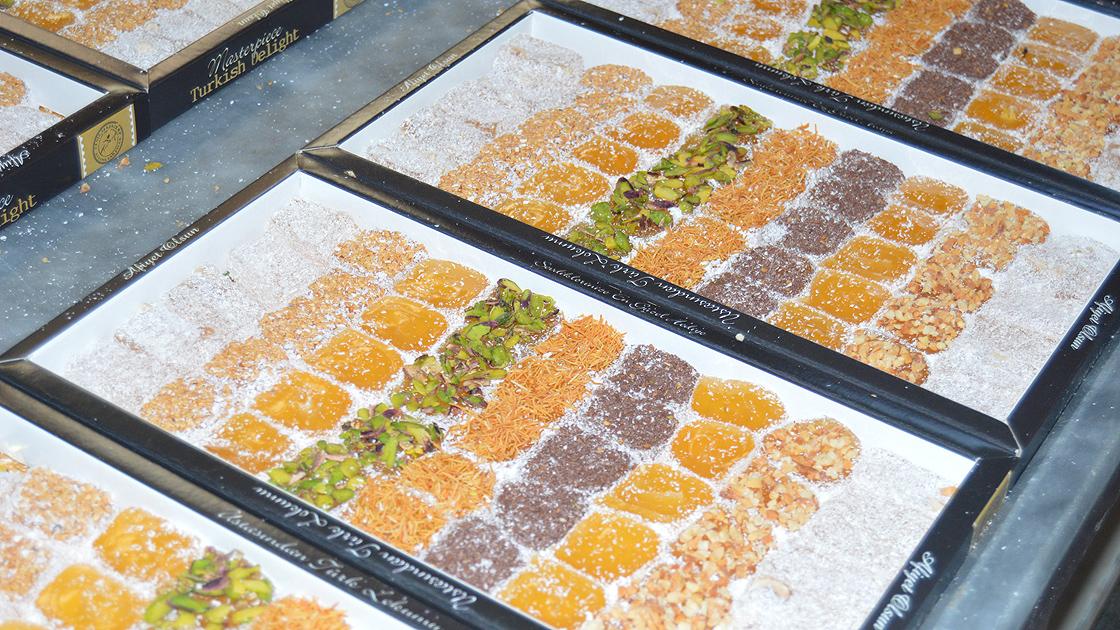
Turkish Delight (AA)
Turkish Delight production occurs in various regions of Türkiye, but certain cities stand out due to higher production concentration. In particular, Afyonkarahisar holds a leading position in Turkish Delight production due to its preservation of traditional methods and its registered geographical indication. Production in this region possesses high potential in terms of variety and quality.
In addition to Afyonkarahisar, Turkish Delight production has developed in cities such as Istanbul, Ankara, Kayseri, Eskişehir, and Gaziantep. Producers in these cities create different varieties using local ingredients. Istanbul, in particular, is a major center for promoting Turkish Delight through its long-established production brands.
In Afyonkarahisar, local ingredients such as sour cherry, pomegranate, and pomegranate juice are used to produce Turkish Delight varieties with distinct colors and aromas. This contributes a unique identity to the region’s production.
Turkish Delight is among Türkiye’s most exported traditional confectionery products. Production centers, particularly Afyonkarahisar, hold a significant share in exports targeting international markets. Producers in this city send hundreds of tons of Turkish Delight annually to nearly 50 countries across six continents.
Major export destinations include the United States, the United Kingdom, France, Germany, Qatar, Tunisia, Morocco, Australia, Chile, and Argentina. In these markets, fruit-flavored, gum-drop, and nut-filled varieties are prominent. In Arab countries, nut-filled Turkish Delight is preferred; in European and American markets, fruit-flavored varieties are in higher demand.
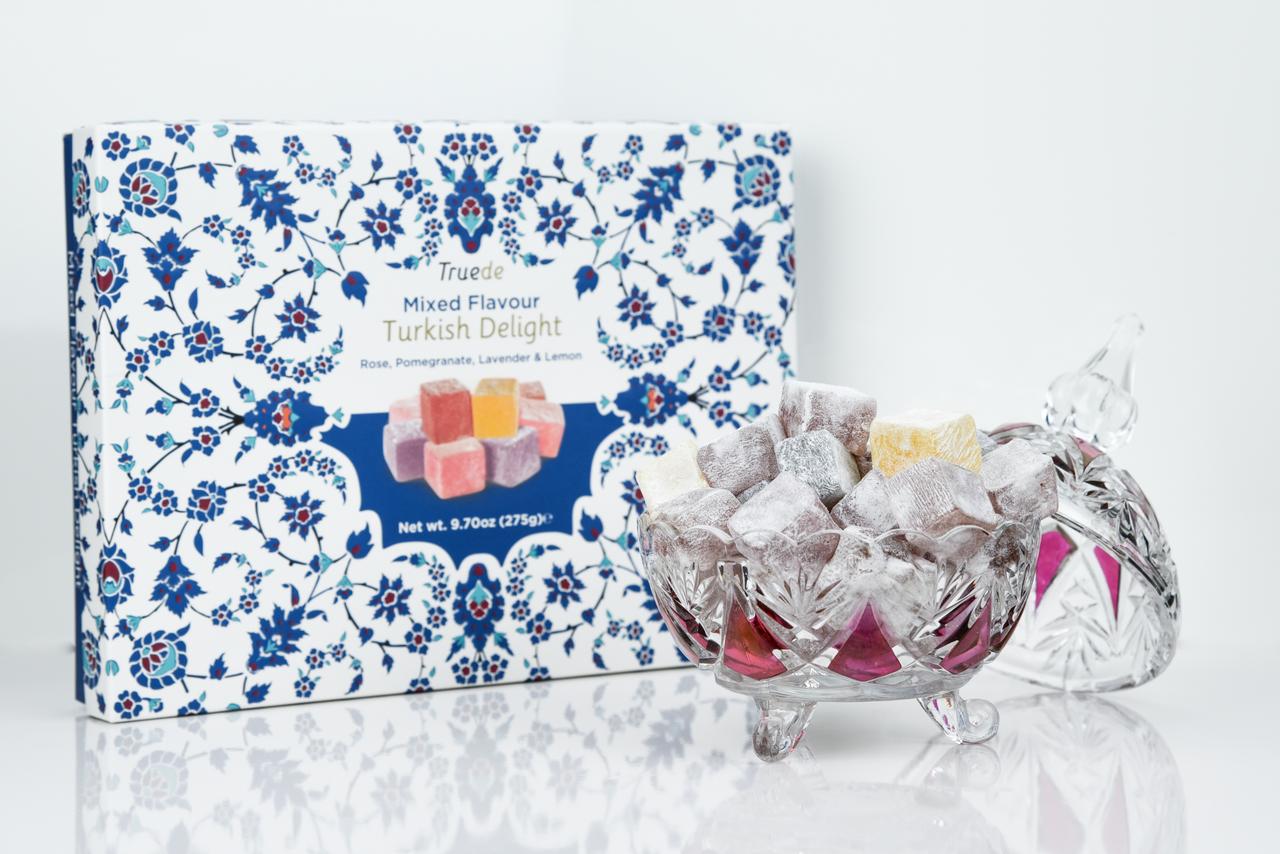
The United Kingdom is one of the strongest international markets for Turkish Delight. In this country, natural-ingredient Turkish Delight, especially rose-flavored varieties, is preferred. Turkish producers in the UK use traditional Turkish motifs and cultural elements in their product packaging to promote their brands.
In Africa, Somalia is one of the countries where Turkish Delight has recently begun to gain recognition. Products shipped from Türkiye are well received and consumed by the local population.
Turkish Delight is one of the key products of Türkiye’s confectionery industry and holds economic value both for domestic consumption and international trade. The majority of ingredients used in its production are sourced from local resources, contributing to sustainable production within the food sector. Particularly in centers such as Afyonkarahisar, Istanbul, Ankara, and Gaziantep, businesses provide regional employment.
The Turkish Delight sector features a production structure dominated by small and medium-sized enterprises. These businesses combine traditional methods with modern production techniques to enhance competitiveness in the domestic market and increase export potential. Revenues generated from production and marketing activities support the revitalization of local economies.
Culturally, Turkish Delight is recognized as an integral part of Türkiye’s traditional sweet culture. It is frequently served during holidays, weddings, and guest hospitality events. Linked with coffee culture, Turkish Delight is commonly offered alongside Turkish coffee as a symbol of hospitality. This tradition has established Turkish Delight as a symbolic element in both daily life and ceremonial contexts.
In this regard, Turkish Delight occupies a unique place in Türkiye’s food industry and cultural identity, both through its economic contribution and cultural representation.
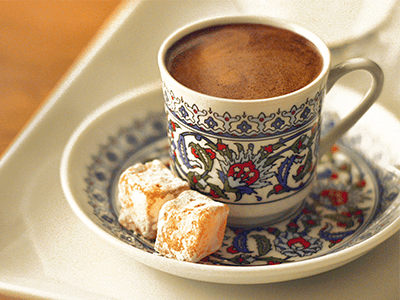
Turkish Coffee and Turkish Delight (Culture Portal)
Accessed October 23, 2025.https://www.aa.com.tr/tr/ekonomi/afyonkarahisardan-6-kitaya-turk-lokumu-ihracati/1694705.
Anadolu Ajansı. "Afyonkarahisar'dan 6 Kıtaya Türk Lokumu İhracatı." AA Ekonomi, January 7, 2020.
Anadolu Ajansı. “G20 Zirvesine Katılacak Liderlere ‘Türk Lokumu’.” *AA Yaşam*, November 11, 2015. Accessed October 23, 2025.https://www.aa.com.tr/tr/yasam/g20-zirvesine-katilacak-liderlere-turk-lokumu/471760
Anadolu Ajansı. “Osmanlı'nın Tarifleriyle 157 Yıldır Lokum Üretip Tüm Dünyaya Satıyorlar.” AA Foto Galeri, April 4, 2021. Accessed October 23, 2025.https://www.aa.com.tr/tr/pg/foto-galeri/osmanlinin-tarifleriyle-157-yildir-lokum-uretip-tum-dunyaya-satiyorlar/2
Anadolu Ajansı. “Türk Lokumu Somali'de.” AA Yaşam, December 31, 2011. Accessed October 23, 2025.https://www.aa.com.tr/tr/yasam/turk-lokumu-somalide/387312
Anadolu Ajansı. “Türk Lokumu İngilizlerin Ağzını Tatlandırıyor.” *AA Türkiye*, October 14, 2018. Accessed October 23, 2025.https://www.aa.com.tr/tr/turkiye/turk-lokumu-ingilizlerin-agzini-tatlandiriyor/1281246.
Batu, Ali. “Türk Lokumu Üretim Tekniği ve Kalitesi.” *Gıda Teknolojileri Elektronik Dergisi* 2006 (1): 35–46. Accessed October 23, 2025.https://d1wqtxts1xzle7.cloudfront.net/32720568/Turk_lokumu_ureim_tek_ve_kalitesi-libre.pdf
Doğan, İsmail Sait. “Hammadde ve Sorunlarıyla Türk Lokum Üretimi.” *Gıda Teknolojileri Elektronik Dergisi* 2008 (1): 13–17. Accessed October 23, 2025.https://dergipark.org.tr/tr/download/article-file/1370044
Ministry of Culture and Tourism Media Library. "Türk Kahvesi" search. Accessed October 23, 2025.https://www.kulturportali.gov.tr/medya/fotograf/arama/t%C3%BCrk%20kahvesi
Sarıtaş, Meltem. “Bir Kalıp Yargı Olarak Türk Lokumu (Turkish Delight).” Akademik Gıda Dergisi 17, no. 4 (2019): 381–392. Accessed October 23, 2025.https://dergipark.org.tr/en/download/article-file/633012
[1]
Hürriyet Gökdayı, “Bir Kalıp Yargı Olarak Türk Lokumu (Turkish Delight),” TÜRÜK: Uluslararası Dil, Edebiyat ve Halkbilimi Araştırmaları Dergisi 5, no. 9 (2017): 60–70, erişim 23 Ekim 2025, https://dergipark.org.tr/en/download/article-file/633012.

Period | 15th century – present | ||||||||
|---|---|---|---|---|---|---|---|---|---|
Materials | Sugar, water, starch, acidity regulators, nuts, fruit extracts | ||||||||
Presentation | Served with Turkish coffee on special occasions | ||||||||
Classification | Lokum with kaymak Plain lokum Flavored lokum | ||||||||
Application Area | Guest hospitality Holiday Gift Wedding | ||||||||
Production Centers | Afyonkarahisar, Istanbul, Gaziantep, Ankara, Kayseri | ||||||||
History
Ingredients and Production Techniques
Sugar
Starch
Water
Acid Regulators
Additives and Flavorings
Production Stages
Types of Turkish Delight
Shelf Life and Storage
Geographical Distribution and Production Centers
Export and International Recognition
Economic and Cultural Significance