This article was automatically translated from the original Turkish version.
+2 More
Family and Branch to Which It Belongs | Ural-Altaic Language Family, Altaic Branch | ||||||||
|---|---|---|---|---|---|---|---|---|---|
Language Type According to Structure | Agglutinative | ||||||||
Oldest Written Work | 7th Century, Ilterish Kutluk Khagan Inscription | ||||||||
Historical Periods | Old Turkish, Middle Turkish, New Turkish | ||||||||
Scripts Used (Throughout History) | Göktürk (Runic), Uyghur, Manichaean, Brahmi, Arabic, Cyrillic, Latin | ||||||||
Main Language Groups | Oghuz, Kipchak, Karluk, Siberian, Ogur | ||||||||
Major Languages | Turkish of Türkiye, Azerbaijani Turkish, Turkmen Turkish, Kazakh Turkish, Kyrgyz Turkish, Uzbek Turkish, New Uyghur Turkish, Tatar Turkish | ||||||||
Geographical Distribution | Anatolia, Balkans, Caucasus, Central Asia, Siberia, China (Xinjiang) | ||||||||
Basic Features | Regular Affix Order Preservation of Roots Vowel Harmony | ||||||||
Turkic language family (Turkic languages) is a language family consisting of languages with a common origin, spoken across the vast geography of Eurasia throughout history and still used today by numerous communities. This family is defined as a whole characterized by structural similarities evident from both historical documents and modern linguistic data, accepted as sharing a common origin, and classified through various approaches in different periods. The Turkic languages have spread over a wide area extending from the steppes of Central Asia to the northern regions of Siberia, the Middle East, Anatolia, the Balkan Peninsula and Eastern Europe. This expansion was shaped by both migration movements and political and cultural interactions, giving Turkic languages a remarkable position in terms of geographical diversity.
The language family holds an important place not only in terms of the number of speakers but also in historical and cultural influence. The political organizations established by Turkic communities in different periods, their cultural production fields, literary traditions and written texts are the main elements determining the historical value of Turkic languages. These languages have formed a broad corpus of texts written in various scripts across different belief systems since before Islam.
Turkic language family refers to a group of languages spoken across a large part of Eurasia, sharing a common historical and structural origin. Languages belonging to this family are defined by criteria such as agglutinative structure, vowel harmony, similar phonological and morphological features, and a shared basic vocabulary. The Turkic language family is regarded as a coherent linguistic unit based on comparisons between historical texts (Orhun–Uyghur–Karakhanid–Chagatai, etc.) and modern languages. This language family belongs to the Altai branch of the Ural-Altaic language family.
The main languages belonging to the Turkic language family (by major groups) are as follows:
Turkic languages can also be classified as follows:
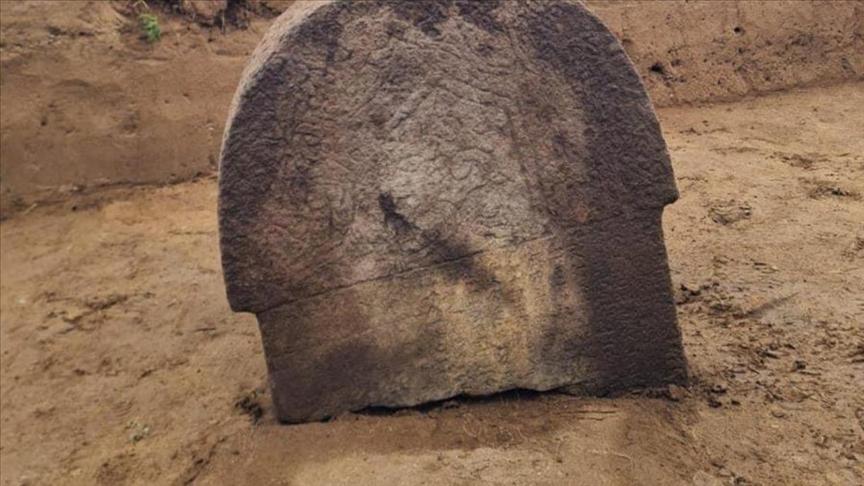
The oldest known written products of the Turkic language family were long dated to the 8th century Orkhon Inscriptions. In 2022, the discovery of the Ilterish Kutlugh Khagan Inscription in Mongolia pushed this date back to the 7th century. Until this discovery, the inscriptions known as Orkhon Inscriptions were the earliest to contain the term “Turk”; now the Ilterish Kutlugh Khagan Inscription holds that distinction. Ilterish Kutlugh Khagan was the father of Bilge Khagan and Kül Tigin. 【1】 Together with this inscription, the Orkhon Inscriptions are emphasized as the most comprehensive and linguistically significant documents of the early Old Turkish period. The Orkhon texts serve as a fundamental source, demonstrating that Turkish had a well-established written tradition and clearly reflecting the syntax, phonology and morphology of the language at that time.
The Orkhon Inscriptions indicate a highly developed written language in terms of syntax, phonology and morphology. The Uyghur-period manuscripts that followed reveal the diversity of early written Turkish through Manichaean, Buddhist and secular texts. These documents demonstrate the deep-rooted written tradition of Turkic languages while simultaneously reflecting the historical continuity of common features. Typological characteristics such as vowel harmony, agglutinative structure and verb-final word order are shared features.
The Orkhon Inscriptions exhibit a clearly agglutinative structure. The syntactic arrangement, in which the verb appears at the end of the sentence, is dominant and is defined as one of the fundamental characteristics of Turkish showing historical continuity. The order of elements within the sentence, inflectional forms related to the verb and noun phrases demonstrate that Old Turkish had a sophisticated syntactic system. Phonologically, vowel harmony is clearly evident in the inscriptions; this system, reflecting both back-front and rounded-unrounded harmony, reveals the phonological unity of the period. Furthermore, the regular distribution of vowels and consonants and the limited occurrence of initial and final sound changes indicate the phonological stability of Old Turkish.
Old Turkish text types vary from runic inscriptions to Uyghur-period manuscripts. Runic inscriptions include not only monumental texts but also tombstones, seals and short inscriptions. These writings, composed in the Göktürk alphabet, provide detailed information about early Turkic language and culture through their political, military and social content. Uyghur-period texts encompass a broader literature including Manichaean, Buddhist and secular works. These texts show that the early written tradition of Turkish was further diversified through religious texts and translated literature.
Multiple alphabets were used during the Old Turkish period. The Göktürk alphabet is the earliest writing system used in the Orkhon and Yenisei inscriptions. The Uyghur alphabet, of Sogdian origin, was widely used especially in Manichaean and Buddhist texts. The Manichaean alphabet is another writing system adopted in Manichaean circles. It is noted that the Brahmi-derived alphabet was used in some Buddhist Uyghur texts. This multilingual writing system usage demonstrates that Turkish developed in early periods through contact with diverse religious and cultural environments.
The Middle Turkish period constitutes the stage following Old Turkish and is characterized by the diversification of Turkic languages through regional written languages. This period marks a phase in which Turkish acquired new forms in phonological, morphological and written tradition terms through the development of Karakhanid, Khwarezm–Kipchak, Old Oghuz and Chagatai written languages. This period enabled Turkish to adapt and diversify in different geographical, political, religious and cultural contexts.
Karakhanid Turkish is recognized as the first written language of Middle Turkish and is the product of the written culture developed during the Karakhanid state. This language preserves the core morphological and phonological features inherited from Old Turkish while reflecting the influence of Islamic culture. Karakhanid texts consist of didactic and religious works written in the Arabic script. In the texts of this period, vowel harmony was largely preserved, the agglutinative structure remained stable, and the syntactic order continued the verb-final pattern of Old Turkish.
The Khwarezm and Kipchak region formed the second major written language environment of Middle Turkish after the Karakhanid tradition. This written language carries the common features of the Turkish textual tradition developed in Khwarezm and the Turkish spoken in the Kipchak steppes. Texts show transitional features between Karakhanid Turkish and Old Oghuz Turkish. Khwarezm–Kipchak texts are generally religious, ethical and didactic in content, written in the Arabic script. During this period, phonological and morphological diversity increased; particularly in the Kipchak region, initial and final consonant changes and variations in certain affix forms emerged. This linguistic environment later formed the historical basis of Kipchak Turkish.
Old Oghuz Turkish is the written language of the Oghuz region encompassing Anatolia, Azerbaijan and surrounding areas and represents an important branch of the Middle Turkish period. This written language preserved features inherited from Old Turkish and Karakhanid periods while developing regional phonological and morphological variations. Old Oghuz Turkish found extensive use especially in Islamic and literary texts. Pre-Ottoman and early Ottoman religious-tasawwufi works, ethical instruction books and various translations are examples of this written language. This linguistic period formed the foundation of later Ottoman Turkish.
Chagatai Turkish is a dialect that developed in Central Asia during the Timurid period and served for a long time as the literary and cultural written language of the region. Although connected to the Karakhanid and Khwarezm traditions, Chagatai Turkish acquired the status of a standardized written language in phonological and morphological terms. Chagatai Turkish possesses a rich literary corpus, producing various texts especially in poetry and prose. The Chagatai written language was entirely written in the Arabic script and represented the eastern branch of classical Turkic literature.
Middle Turkish was not only a literary language but also a widely used written language in administration, law, religion and culture. The Middle Turkish period established the historical and geographical foundations that determined the emergence of modern Turkic dialects.
The New Turkish period represents the transition from Middle Turkish to modern Turkic languages, during which written languages acquired new forms dependent on geographical and political developments. This period is defined by the divergent evolution of the Oghuz, Kipchak and Eastern Turkish traditions; written language diversity, standardization processes and regional fragmentation are the key dynamics.
The most influential written language of the New Turkish period in cultural and political contexts is Ottoman Turkish, which developed on the basis of Old Oghuz Turkish and continues the Oghuz written tradition that emerged in Anatolia and the Balkans. Throughout its historical development, Ottoman Turkish evolved through contact with Arabic and Persian, forming a vast written corpus through administrative, legal, scientific and literary texts. During this period, Turkish was used as a language of education, bureaucracy and literature across a vast geography extending from the Balkans to North Africa. Literature developed in the Rumelia and Anatolia regions enriched itself through branches such as court literature and folk literature, represented by numerous poets and writers. During this process, the Ottoman written tradition acquired the status of a supra-language, incorporating both Oghuz dialectal features and the multi-layered vocabulary of classical literature. This written tradition formed the foundation of modern Turkish of Türkiye.
During the New Turkish period, the Kipchak written tradition continued the earlier Khwarezm–Kipchak phase but developed differently in various regions due to geographical fragmentation and political structures. The Kipchak region was connected to written traditions in Eastern Europe, the North Black Sea region and Egypt, where dictionaries, grammar books and translated texts shaped the written language. The Kipchak written language continued to use the Arabic script during this period, but phonological and morphological variations emerged due to settlement changes and regional contacts following Mongol dominance. By the New Turkish period, the Kipchak written tradition largely lost its historical continuity; in contrast, Turkish written languages emerging in the Crimea, Kazan and Volga-Ural regions developed new standard forms carrying Kipchak elements. This transformation constitutes the key stage in the transition of the Kipchak branch to the modern era.
The Eastern Turkish tradition was represented for a long time in Central Asia by Chagatai Turkish, the region’s literary and administrative language. This language remained influential as a classical written language from the 15th century until the early 20th century, creating a rich literary corpus in poetry and prose. However, from the late 19th century to the early 20th century, political and social transformations in the region weakened the unifying nature of the Chagatai written language, giving rise to new standard written languages based on local dialects.
As a result of language planning during the Soviet period, Uzbek Turkish and New Uyghur Turkish emerged as independent modern written languages separate from the Chagatai tradition. During this process, alphabet reforms were frequently implemented; first transitioning from the Arabic alphabet to the Latin alphabet, then to the Cyrillic alphabet; after the Soviet era, some regions adopted the Latin alphabet again. The dissolution of the Eastern Turkish tradition increased the regional diversity of the Turkic language family in the modern era; the emergence of contemporary Central Asian Turkic languages largely resulted from this process.
In this context, the New Turkish period is regarded as a stage in which the historical written tradition of Turkic languages was restructured, modern national languages emerged, and linguistic diversity became more pronounced.
The emergence of modern Turkic languages is the result of regional fragmentation that began in the New Turkish period and the social, political and cultural transformations experienced throughout the 19th and 20th centuries. This process occurred especially in the geographical areas of Türkiye, Central Asia, the Balkans, Cyprus, Siberia (Yakut/Sakha) and Turkmen lands. During this process, modern Turkic languages became standardized, reflecting both local dialectal features and factors such as state formation, education policies and writing system reforms.
Turkish of Türkiye is the continuation of Old Oghuz Turkish and Ottoman Turkish, forming the modern form of the Oghuz written tradition developed in Anatolia. The broad administrative and cultural usage during the Ottoman period prepared the foundation for Turkish of Türkiye; the language reforms, standardization efforts and transition to the Latin alphabet in the 20th century gave it its definitive modern written form. Turkish of Türkiye has acquired prestige language status across a wide geography extending from the Balkans to Cyprus and from the Middle East to various migrant communities and is one of the Turkic languages with the largest written and spoken production today.
Central Asian languages were standardized during the Soviet period through language planning; after the Soviet era, these standards were reshaped in connection with national identities. Uzbek Turkish and New Uyghur Turkish are modern written languages developed based on local dialects after the dissolution of the Chagatai written language. Alphabet changes between Arabic, Latin and Cyrillic scripts during the Soviet period directly affected the transcription of phonological structures. After the Soviet era, transitions to the Latin alphabet were revived in countries such as Kazakhstan and Turkmenistan; in some countries (e.g., Uzbekistan), the Latin alphabet was officially adopted as the national writing system. This standardization process accelerated the modern differentiation of Turkic languages in the region.
Balkan Turkic dialects preserve traces of historical Rumelian settlements and have shown a trend toward standardization due to renewed connections with Turkish of Türkiye in the modern period. In the Balkan region, Turkish functioned as an administrative and literary written language during the Ottoman period but has persisted mainly at the dialectal level in the modern era; however, written production (newspapers, magazines, literary texts) has continued in some areas.
Cypriot Turkish developed on the island after Turkish settlement following 1571; it has developed distinctive phonological, morphological and syntactic differences due to intensive contact with Greek and English. After 1974, increased communication and educational ties with Türkiye led to a shift toward Turkish of Türkiye, yet the Cypriot Turkish dialect has retained its vitality in daily usage.
Yakut/Sakha Turkish developed in the northeast of Siberia and is one of the most divergent branches of Turkic languages in phonological and morphological terms. Yakut has a rich literary production and was standardized as a written language during the Soviet period. This language is one of the main examples demonstrating the geographical and typological diversity of the Turkic language family.
The Turkmen written language reflects the most distinctive trajectory of alphabet change among Turkic languages. The historical progression is as follows:
These four phases constitute the main outlines of the modernization and standardization process of Turkmen Turkish. Changes in the writing system have led to the reshaping of the language in both education and cultural production.
The classification of Turkic languages is a fundamental area of study based on both historical development and modern linguistic data. Researchers have developed various classification models due to the wide geographical spread of the Turkic language family, historical contacts with different communities and phonological, morphological and syntactic differences among dialects. Some researchers divide the language family into historical and contemporary layers based on genetic unity; relationships among languages are determined through sound changes, affix systems, lexical layers and geographical distributions. Classification is generally structured around the Oghuz, Kipchak, Karluk, Siberian and Oghur/Chuvash branches, each defined by shared features and historical divergences.
The Turkic language family is divided into various main groups based on historical development, geographical spread and structural features. These groups reflect both shared linguistic features stemming from a common origin and divergences that emerged in different geographical areas over time.
The Oghuz Group is one of the most extensive and culturally influential branches of Turkic languages. Its historical origin lies in Old Oghuz Turkish, which later formed the basis of written and spoken languages developed in Anatolia, Azerbaijan, Iran and the Balkans. This group includes Turkish of Türkiye, Azerbaijani Turkish, Turkmen Turkish, Gagauz Turkish and Balkan Oghuz dialects. Oghuz languages share common phonological and morphological features; vowel harmony is largely preserved, and verb conjugation and word structure show similarities. The Oghuz group encompasses languages spoken across a wide geography today. This group stands out due to its historical spread and dialectal diversity in the Balkans, Anatolia, Azerbaijan and the Middle East.
Kipchak Group is a historical branch associated with western Central Asia, the North Black Sea region and Eastern Europe. The structure of Kipchak languages extends from the Khwarezm–Kipchak tradition to the modern era. Languages such as Kazakh, Kyrgyz, Nogai, Karachay-Balkar Turkish, Tatar and Bashkir are included in this group. Kipchak languages exhibit unique phonological changes (e.g., certain consonant shifts) and morphological structures.
The Karluk Group is a branch historically rooted in the Karakhanid and Khwarezm regions, later evolving into modern standard languages through Uzbek and New Uyghur Turkish in Central Asia. Languages in this group are associated with the Chagatai tradition and were restructured as separate written languages during the 20th century under Soviet language policies. Karluk languages retain traces from both Old Turkish and other branches of Middle Turkish in phonological and morphological terms.
Languages developed in Siberia form a distinct group. The most prominent representative of this branch is Yakut/Sakha Turkish; Dolgan Turkish is also included in this group. Siberian Turkic languages exhibit some of the most distinctive features within the Turkic language family in phonological and morphological terms. Due to geographical isolation and contact with local communities, these languages have diverged markedly from other Turkic languages. This group encompasses various Siberian Turkic languages, with Yakut/Sakha as the primary example.
The Oghur branch is a historically distinct group that has diverged markedly from other branches of the Turkic language family. Chuvash is defined as the only living representative of the historical Oghur branch. This branch is associated with historical Bulgar Turkish and exhibits structures differing from general Turkic linguistic features in phonological and morphological terms. Chuvash shows systematic differences compared to other Turkic languages, particularly in initial consonants (e.g., r/l shifts) and certain phonological and morphological elements. In this regard, the Oghur branch constitutes one of the most unique structures within the language family.
The wide geographical distribution of the Turkic language family and its development through contact with diverse cultural environments have necessitated a multidimensional approach in classification studies. In this regard, researchers use various criteria ranging from structural measures based on phonological and morphological changes to historical comparative methods, the effects of language contact and writing system phases.
Phonological and morphological features are among the most fundamental criteria in classifying Turkic languages. Particularly the following structural divergences are decisive:
Such differences serve as fundamental criteria for determining historical stages and identifying which branch modern Turkic languages belong to.
Vowel harmony is one of the common typological features of Turkic languages, but this rule does not operate uniformly across all languages. The following harmony types are considered in classification:
These divergences enable the grouping of Turkic languages according to their historical origins and the languages they have come into contact with.
In these methods:
For example, the formation of the Karluk group through the Chagatai tradition or the distinctive phonological features of the Oghur branch, such as r/l shifts, are determined based on these comparative methods.
Geographical factors and language contact are also decisive criteria in the classification of the Turkic language family. Particularly the following contacts have occurred:
These contacts explain differences in phonology and lexicon among dialects and support the distinguishing criteria used in classification.
Different writing systems constitute an important criterion in the historical periodization of the Turkic language. Alphabet changes have highlighted both the developmental stages of languages and regional divergences.
These writing phases are among the primary tools for periodizing the historical development of Turkic languages and shape the historical dimension of classification.
The phonological system of Turkic languages shows broad commonality in fundamental features such as vowel harmony and syllable structure, while various sound changes and unique phonetic features are observed in dialects spread across different geographical areas.
The fundamental features of the phonological structure of Turkic languages are defined primarily through vowel harmony, consonant harmony and syllable structure. These features have shown considerable continuity throughout the historical stages of the Turkic language family and have been preserved to varying degrees in modern dialects.
Vowel harmony is one of the most distinctive typological features of Turkic languages and is treated as a fundamental phonological principle in both historical texts and modern dialects. Vowel harmony is examined along three main axes.
Back/Front Vowel Harmony: This harmony refers to the arrangement of vowels in a word according to their back (back) and front (front) articulation.
Rounded/Unrounded Vowel Harmony: This harmony concerns the influence of the roundedness of the first vowel in a word on subsequent syllables.
Open/Closed Vowel Harmony: This harmony is based on the regulated arrangement of vowel openness (a, e, ı, i, u, ü) across syllables.
Consonant harmony is analyzed in Turkic languages through the relationship between affix consonants and root consonants. This harmony includes processes of voicing and devoicing (consonant assimilation).
Consonant harmony serves as a fundamental phonological regulator supporting the stability of the agglutinative structure based on sound harmony.
The syllable structure of Turkic languages is defined as a simple, regular and open syllable system.
Turkic dialects in the Balkan region constitute an important dialect area reflecting the linguistic features of historical Rumelian settlements and are evaluated within the Oghuz group. These dialects are generally examined in two main groups: Eastern Rumelia and Western Rumelia. Both groups exhibit common features as well as distinctive differences resulting from regional contact. The fundamental phonological features of Balkan dialects can be examined through vowel changes, the present tense suffix and final vowel variations.
Vowel Changes in Eastern/Western Rumelia Dialects: One of the characteristic features of Balkan Turkic dialects is vowel changes in the vowel system. These changes are observed in both back/front and open/closed vowel relationships.
These changes demonstrate that the Balkan region has witnessed the most prominent phonological adaptations of Oghuz Turkish due to regional contact.
Present Tense Suffix (-y / -yor): Balkan Turkic dialects show a distinctive variation in tense suffixes, particularly in the present tense form.
Final Vowel Variations (-i, -ı, -u, -ü): In Balkan dialects, final vowels in words show variation.
These variations demonstrate that Balkan dialects both maintain the general trajectory of Oghuz Turkish and have developed unique phonological structures due to long-term contact with Slavic and Rum languages.
Cypriot Turkish, shaped by Turkish settlement on the island after 1571, developed over a long period under intensive contact with Greek and later English and is an Oghuz dialect that shows distinctive features from Turkish of Türkiye in phonological, morphological and lexical terms. Although the trend toward Turkish of Türkiye has increased since 1974, the island dialect has retained its vitality.
t > d, k > g, p > b Changes: One of the most characteristic phonological features of Cypriot Turkish is the systematic softening or voicing of certain consonants in word-initial and internal positions. The following changes occur:
Example: tatlı > dadlı
Example: kavun > gavun
Example: dolap > dolab
Although these changes parallel some Anatolian dialects, the continuity and prevalence in Cyprus are explained by the convergence of the dialectal features of Turkish settlers with the multilingual structure of the island.
Shortening of Long Vowels: In Cypriot Turkish, original long vowels are completely or largely shortened. Some long vowels preserved to a limited extent in Anatolian dialects are regularly reduced or lost in the Cypriot dialect. This shortening process leads to simplification in the syllable structure of Cypriot Turkish, resulting in a phonological system in which vowel length no longer serves a distinctive function.
Sound Structure under Greek and English Influence: Cypriot Turkish has developed over a long period under contact with Greek (Cypriot Greek) and English due to the island’s historical multilingual structure.
Yakut (Sakha) Turkish is the principal representative of the Siberian branch and possesses one of the most divergent phonological structures within the Turkic language family. Its geographical location, historical isolation and long-term contact with Evenki, Tungusic–Manchu and Samoyedic languages have caused Yakut’s sound system to diverge markedly from other Turkic languages.
b- > p- and Other Systemic Divergences: The most characteristic feature of Yakut Turkish is the systematic alteration of initial consonants compared to historical Turkish. The most prominent change is the preservation of the Old Turkish b- sound as p- in Yakut. This change is not merely a single phonetic shift but represents a unique evolutionary path of Yakut within the Turkic language family. Yakut also exhibits the following features:
Unique Vowel Inventory: Yakut/Sakha Turkish has one of the largest and most complex vowel systems among Turkic languages.
This vowel system reflects both the historical connection of Yakut to Old Turkish and the influence of Siberian contact areas.
Prosodic Features: The prosodic structure of Yakut/Sakha Turkish holds a unique position among Turkic languages. These features include:
This prosodic structure demonstrates that Yakut occupies a unique position among Turkic languages not only in terms of its sound system but also in speech flow, rhythm and intonation.
Turkmen Turkish is a Turkic language representing the eastern branch of the Oghuz group and exhibits distinctive features in its historical development, sound structure and dialectal diversity. The preservation of original long vowels and the prominence of regional dialectal differences highlight Turkmen Turkish’s distinctive position within the Turkic language family.
Original Long Vowels: One of the most characteristic phonological features of Turkmen Turkish is that it is one of the few Turkic languages preserving original long vowels inherited from Old Turkish. Long vowels in Turkmen Turkish carry phonemic value both in word roots and in certain affixation processes.
This feature is defined by:
Regional Dialectal Differences (Teke, Yomut, etc.): Turkmen Turkish is not merely a written language but also a broad dialectal area consisting of numerous regional dialects. The best-known among these are the Teke, Yomut, Ersari, Saryk, Salur and Göklen dialects. Dialectal differences are evident at both phonological and morphological levels:
The Turkic language family is defined as a group of languages exhibiting a highly regular, agglutinative structure. Throughout the broad time span from historical texts (Orkhon, Uyghur, Karakhanid, etc.) to modern dialects, the fundamental morphological principles have been largely preserved. This continuity has made morphology a central criterion in the internal classification of the Turkic language family and in historical comparative studies. The morphology of Turkic languages is based on a “root + affix” system, and word formation and inflection are transparent and systematic. Roots generally remain unchanged while meaning and grammatical functions are expressed through affixes.
The core of Turkic language morphology is the agglutinative structure. This structure is based on the principle that word roots remain largely unchanged in form and grammatical functions are expressed through sequential affixes. The agglutinative structure has shown continuity from Old Turkish through the Middle and New Turkish periods and remains the fundamental morphological principle in all modern Turkic languages.
In Turkic languages, affixes are added to roots in a specific and fixed order. This order has remained largely unchanged from historical texts to modern dialects. Generally:
This regular affix order ensures high formal transparency in Turkic languages and enables easy analysis of word structure.
Verb inflection is one of the areas where the agglutinative structure is most clearly observed in the Turkic language family. Affixes added to the verb root follow this basic order:
Tense and mood affixes express the time of the verb’s occurrence and the speaker’s perspective, while person affixes indicate the subject’s identity and number. Each affix assumes a distinct function and is clearly distinguishable morphologically.
A significant portion of the tense–mood affixes used in Old Turkish has maintained functional continuity in Middle Turkish and modern Turkic languages. Although some tense affixes have been morphologically simplified in regional dialects (e.g., Balkan Turkic dialects), the fundamental principle of the tense–mood–person order has remained unchanged.
Noun inflection in Turkic languages also reflects the regular and systematic functioning of the agglutinative structure. Nouns are inflected through:
These affixes are added in a specific order and generally follow this sequence:
This order is a morphological pattern traceable from Old Turkish texts. Although minor formal differences exist among the Oghuz, Kipchak, Karluk and Siberian branches, the fundamental structure of noun inflection is common across the entire Turkic language family. In contact areas such as Balkan and Cypriot Turkish, some changes in the frequency of case affix usage are observed, yet the core of the inflection system has been preserved.
The lexicon of the Turkic language family has been shaped by intense contact with different cultural and linguistic environments throughout history. These contacts have not altered the fundamental structure of Turkic languages but have left lasting effects on lexicon, and to a lesser extent, on semantic fields and usage frequency.
The primary historical contact areas of Turkic languages are Chinese, Mongolian, Persian and Arabic. Contact with these languages occurred in different periods and with varying intensity.
The syntax of the Turkic language family exhibits a regular and typologically distinctive structure with considerable continuity from historical periods to modern dialects. The syntax of Turkic languages is closely related to morphology, and due to the agglutinative structure, the grammatical roles of elements within a sentence are clearly determined.
The basic sentence order in Turkic languages is Subject–Object–Verb. This order:
The placement of the verb at the end of the sentence is recognized as one of the distinctive syntactic features of Turkic languages.
While the basic Subject–Object–Verb order is maintained in Turkic languages, some syntactic flexibility is possible. This flexibility arises from:
However, this flexibility does not imply free word order; due to affixes clearly marking the grammatical roles of elements, ambiguity does not arise.
In Turkic languages:
This order is consistently applied in noun phrases and adjective groups. This structure has remained unchanged from Old Turkish to the present day.
In Turkic languages, elements corresponding to prepositions in Western languages are generally postpositions (following the noun). Postpositions are used after nouns or noun phrases and function together with inflectional affixes. This feature demonstrates that Turkic languages exhibit a head-final syntax consistent with their typological classification.
In Turkic languages, subordinate clauses are mostly constructed using verbals (verbal nouns, adjectival verbs, adverbial verbs). The limited use of conjunctions allows for the construction of long and nested sentences through affixes and verbals. This demonstrates that sentence structure in Turkish is heavily dependent on morphology.
The Turkic language family is a linguistic community spread across a vast area of Eurasia. The number of speakers of Turkic languages is distributed across a region extending from the Balkans to Anatolia, the Caucasus to Central Asia and the northeastern regions of Siberia. In this context:
The use of Turkic languages in education varies significantly by region:
Today, the use of Turkic languages in written and visual media is particularly strong in independent Turkic republics. Television, radio, newspapers and digital media play a vital role in sustaining the vitality of Turkic languages. In contrast, media use in the Balkans and Siberia is more limited and localized.
The preservation and development of Turkic languages are carried out through cultural institutions, academic centers and publishing activities. Language and cultural associations, universities and research centers play a vital role in ensuring the continuity of language among Turkic communities in the Balkans and the Russian Federation.
Although the entire Turkic language family exhibits a robust structure, some languages are considered endangered. This situation arises from relatively small numbers of speakers and intense contact with dominant languages. In this context:
World Turkic Language Family Day is a cultural and linguistic day aimed at highlighting the common origin, historical continuity and cultural ties of Turkic languages at the international level. This day was declared by UNESCO to be celebrated on December 15, based on the symbolic connection with one of the oldest known written legacies of the Turkic language, the Orkhon Inscriptions.
The initiative for declaring this day was developed jointly by Türkiye, Azerbaijan, Kazakhstan, Kyrgyzstan and Uzbekistan, and the decision was adopted at the UNESCO 43rd General Conference. World Turkic Language Family Day provides an international framework to promote cooperation in the preservation, research and intergenerational transmission of the Turkic language family.
Akalın, Şükrü Halûk. "Türk Dili: Dünya Dili." *Türk Dili* XCVII, no. 687 (2009): 195-204. Accessed December 10, 2025.https://turkoloji.cu.edu.tr/YENI%20TURK%20DILI/sukru_haluk_akalin_turk_dili_dunya_dili.pdf
Anadolu Ajansı. "Uluslararası Türk Akademisi, İlteriş Kutluğ Kağan Yazıtı'nın ön okumasını açıkladı." Accessed December 10, 2025.https://www.aa.com.tr/tr/kultur/uluslararasi-turk-akademisi-ilteris-kutlug-kagan-yazitinin-on-okumasini-acikladi/2669893
Bilgin, A. Azmi and Necmettin Hacıeminoğlu. "Kıpçaklar (2)." *Türkiye Diyanet Vakfı İslâm Ansiklopedisi*. Accessed December 13, 2025.https://islamansiklopedisi.org.tr/kipcaklar#2
Demirel, Mustafa. "Türk Dilinin Geçirdiği Devreler." Haliç Üniversitesi Sosyal Bilimler Dergisi 3, no. 2 (September 2020): 175-197. Accessed December 10, 2025.https://dergipark.org.tr/tr/download/article-file/951612
Ercilasun, Ahmet Bican. "Türkçenin Dünya Dilleri Arasındaki Yeri." *Dil Araştırmaları* 12 (Spring 2013): 17–22. Accessed December 10, 2025.https://dergipark.org.tr/en/pub/dilarastirmalari/issue/4726/64774
Johanson, Lars. *Discoveries on the Turkic Linguistic Map*. Svenska Forskningsinstitutet i Istanbul, Stockholm, 2001. Accessed December 10, 2025.https://www.academia.edu/123993671/Discoveries_on_the_Turkic_Linguistic_Map
Kara, Mehmet. "Türk (25)." *Türkiye Diyanet Vakfı İslâm Ansiklopedisi*. Accessed December 13, 2025.https://islamansiklopedisi.org.tr/turk#25-turkmenler
Karademir, Fevzi. "Türk Dilinin Tarihî Dönemlerini Adlandırma Sorunu." *Uluslararası Türkçe Edebiyat Kültür Eğitim Dergisi* 5, no. 2 (2016): 545-564. Accessed December 10, 2025.https://dergipark.org.tr/en/pub/teke/issue/24715/261399
Koraş, Hikmet. "Türk Lehçelerindeki Müşterekler Üzerine." *Türkiye Sosyal Araştırmalar Dergisi* 183 (2014): 197–249. Accessed December 10, 2025.https://dergipark.org.tr/tr/pub/tsadergisi/issue/21495/230452
Korkmaz, Zeynep. *Türk Dili Üzerine Araştırmalar* I-II. Türk Dil Kurumu Yayınları, Ankara, 2023. (e-book). Accessed December 10, 2025.https://tdk.gov.tr/wp-content/uploads/2022/05/629.-Turk-dili-uzerine-calismalar-1.pdf
Korkmaz, Zeynep. *Türk Dili Üzerine Araştırmalar*. III. Türk Dil Kurumu Yayınları, Ankara, 2023. (e-book). Accessed December 10, 2025.https://tdk.gov.tr/turk-dili-uzerine-arastirmalar-iii/
Korkmaz, Zeynep. *Türk Dili Üzerine Araştırmalar*. IV. Türk Dil Kurumu Yayınları, Ankara, 2023. (e-book). Accessed December 10, 2025.https://tdk.gov.tr/turk-dili-uzerine-arastirmalar-iv/
Pehlivan, Ahmet. "Türk (27)." *Türkiye Diyanet Vakfı İslâm Ansiklopedisi*. Accessed December 13, 2025.https://islamansiklopedisi.org.tr/turk#27
Tekin, Talat. "Türk Dilleri Ailesi." *Türk Dili* 37, no. 318 (1978): 178–183. Accessed December 10, 2025.http://www.dilbilimi.net/Tekin_Turk_Dilleri_Ailesi.pdf
Tekin, Talat. *Makaleler 1 Altayistik*. Türk Dil Kurumu Yayınları, Ankara, 2023. (e-book). Accessed December 10, 2025.https://tdk.gov.tr/makaleler-i-altayistik/
Tekin, Talat. *Makaleler 3 Çağdaş Türk Dilleri*. Türk Dil Kurumu Yayınları, Ankara, 2023. (e-book). Accessed December 10, 2025.https://tdk.gov.tr/makaleler-iii-cagdas-turk-dilleri/
Yüce, Nuri. "Türk (8)." Türkiye Diyanet Vakfı İslâm Ansiklopedisi. Accessed December 13, 2025.https://islamansiklopedisi.org.tr/turk#8
Yılmaz, Özlem Deniz. "Türk (21)." *Türkiye Diyanet Vakfı İslâm Ansiklopedisi*. Accessed December 13, 2025.https://islamansiklopedisi.org.tr/turk#21-yakut-saha-dili-ve-edebiyati
Özkan, Mustafa. "Osmanlı Türkçesi." Türkiye Diyanet Vakfı İslâm Ansiklopedisi. Accessed December 13, 2025.https://islamansiklopedisi.org.tr/osmanli-turkcesi
Öztürkmen, Nida. "Dünya Türk Dili Ailesi Günü." KÜRE Ansiklopedi. Accessed December 15, 2025.https://kureansiklopedi.com/tr/detay/dunya-turk-dili-ailesi-gunu-4f0cc
Özyetgin, A. Melek. "Tarihten Bugüne Türk Dili Alanı." *Bildiri Metni. Chinese Academy of Social Science (Konferans).* Turfan, Çin. January 23–25, 2006. Accessed December 10, 2025.https://www.academia.edu/9279258/TAR%C4%B0HTEN_BUG%C3%9CNE_T%C3%9CRK_D%C4%B0L%C4%B0_ALANI
Şanlı, Cevdet. "Türk (26)." *Türkiye Diyanet Vakfı İslâm Ansiklopedisi*. Accessed December 13, 2025.https://islamansiklopedisi.org.tr/turk#26-balkanlarda-turk-dili-ve-edebiyati
[1]
Anadolu Ajansı. "Uluslararası Türk Akademisi, İlteriş Kutluğ Kağan Yazıtı'nın ön okumasını açıkladı." Anadolu Ajansı. Erişim Tarihi: 10 Aralık 2025. https://www.aa.com.tr/tr/kultur/uluslararasi-turk-akademisi-ilteris-kutlug-kagan-yazitinin-on-okumasini-acikladi/2669893

Family and Branch to Which It Belongs | Ural-Altaic Language Family, Altaic Branch | ||||||||
|---|---|---|---|---|---|---|---|---|---|
Language Type According to Structure | Agglutinative | ||||||||
Oldest Written Work | 7th Century, Ilterish Kutluk Khagan Inscription | ||||||||
Historical Periods | Old Turkish, Middle Turkish, New Turkish | ||||||||
Scripts Used (Throughout History) | Göktürk (Runic), Uyghur, Manichaean, Brahmi, Arabic, Cyrillic, Latin | ||||||||
Main Language Groups | Oghuz, Kipchak, Karluk, Siberian, Ogur | ||||||||
Major Languages | Turkish of Türkiye, Azerbaijani Turkish, Turkmen Turkish, Kazakh Turkish, Kyrgyz Turkish, Uzbek Turkish, New Uyghur Turkish, Tatar Turkish | ||||||||
Geographical Distribution | Anatolia, Balkans, Caucasus, Central Asia, Siberia, China (Xinjiang) | ||||||||
Basic Features | Regular Affix Order Preservation of Roots Vowel Harmony | ||||||||
No Discussion Added Yet
Start discussion for "Turkish Language Family" article
Oghuz Group
Kipchak Group
Karluk Group
Siberian Group
Oghur (Bulgar) Group
Historical Development of Turkic Languages
Early Period (Orkhon and Old Turkish Period)
Middle Turkish Period
Karakhanid Turkish
Khwarezm–Kipchak Turkish
Old Oghuz Turkish
Chagatai Written Language
New Turkish Period
Ottoman Turkish and the Oghuz Written Tradition
Kipchak Written Tradition
Dissolution of the Eastern Turkish Tradition and Transition to Modern Dialects
Formation of Modern Languages
Formation of Turkish of Türkiye
Language Standardization in Central Asia after the Soviet Era
Modernization of Special Dialect Areas: the Balkans, Cyprus and Yakut/Sakha
Formation of the Turkmen Written Language
Classification of Turkic Languages
Main Groups, Subgroups and Languages
Oghuz Group
Kipchak Group
Karluk Group
Siberian–Yakut Branch
Chuvash (Oghur Branch)
Criteria Used in Classification
Phonological/Morphological Criteria
Types of Vowel Harmony
Historical Comparative Methods
Geographical Spread and Language Contact
Impact of Different Alphabets on Classification
Phonology
Basic Features of the Sound System in Turkic Languages
Types of Vowel Harmony
Consonant Harmony
Syllable Structure
Regional Diversity
Balkan Dialects
Cypriot Turkish
Yakut / Sakha Turkish
Turkmen Turkish
Morphology
General Agglutinative Structure
Affix Order
Tense–Mood–Person Affixes
Noun Inflection System
Lexicon and Language Contact
Chinese, Mongolian, Persian and Arabic Influences
Syntax
Basic Sentence Order
Flexibility in Element Order
Modifier–Head and Qualifier–Qualified Relationships
Postpositions and Auxiliary Elements
Subordinate Clauses and Verbals
Current Status of Turkic Languages
Current Language Use
Education
Media and Publishing
Cultural Institutions
Contemporary Situation in the Balkans, Cyprus, Central Asia and Siberia
Endangered Turkic Languages
World Turkic Language Family Day