This article was automatically translated from the original Turkish version.
+1 More
Building Name | Tomb of Abu Darda (also known as Abu Darda Türbesi) | ||||||||
|---|---|---|---|---|---|---|---|---|---|
Type | Tomb | ||||||||
Location | Zal Pasha Street, Nişanca Neighborhood, Eyüpsultan District, Istanbul Province; between Cezeri Kasım Pasha Mosque and Zal Mahmud Pasha Mosque | ||||||||
Restoration Date and Patron | It was repaired in 1835 (Hijri 1251) by Ottoman Sultan Mahmud II | ||||||||
Status | The structure is currently accessible | ||||||||
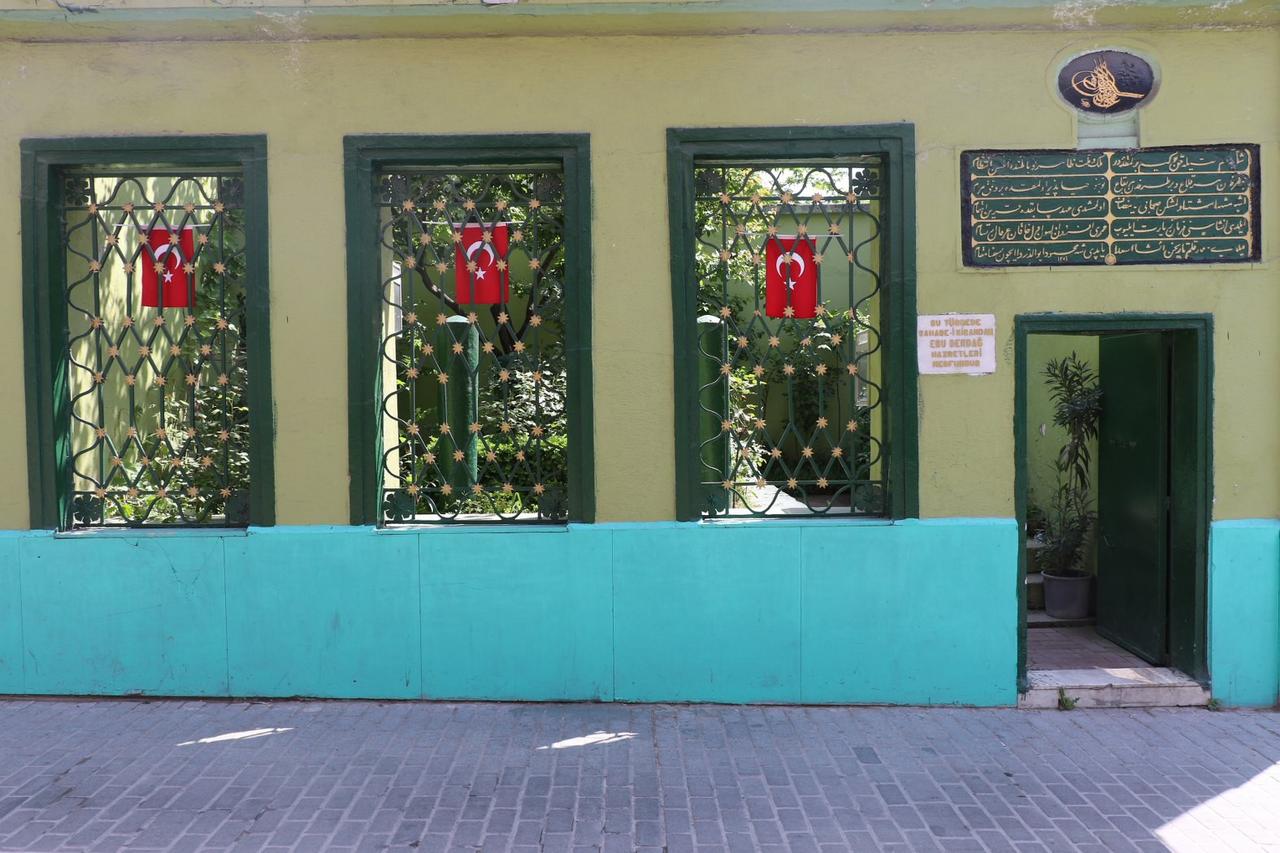
The Tomb of Abu al-Darda (Maqam of Abu al-Darda Radiyallahu Anhu) is a historical mausoleum and burial structure located on Zal Pasha Street in the Nişanca Neighborhood of the Eyüpsultan district of Istanbul, attributed to the esteemed Companion Abu al-Darda.【1】
Eyüp Ebü’d-Derdâ Türbesi (Yasin Karabacak)
The structure is situated within the boundaries of Eyüpsultan on Zal Pasha Street, positioned between the Cezeri Kasım Paşa Camii and the Zal Mahmud Paşa Camii. Directly opposite the front facade of the tomb lies the Evronos Dede hazire, while the Şah Sultan Türbesi is located at its rear.【2】
The tomb, built with cut stone, has a rectangular floor plan. Its facade facing the street features two hacet windows and a single entrance door. The original wooden roof, believed to have been part of the initial construction, no longer exists. Inside the tomb are two graves without inscriptions; one is identified as the maqam of Abu al-Darda, and the other is known to belong to a türbedar.【3】
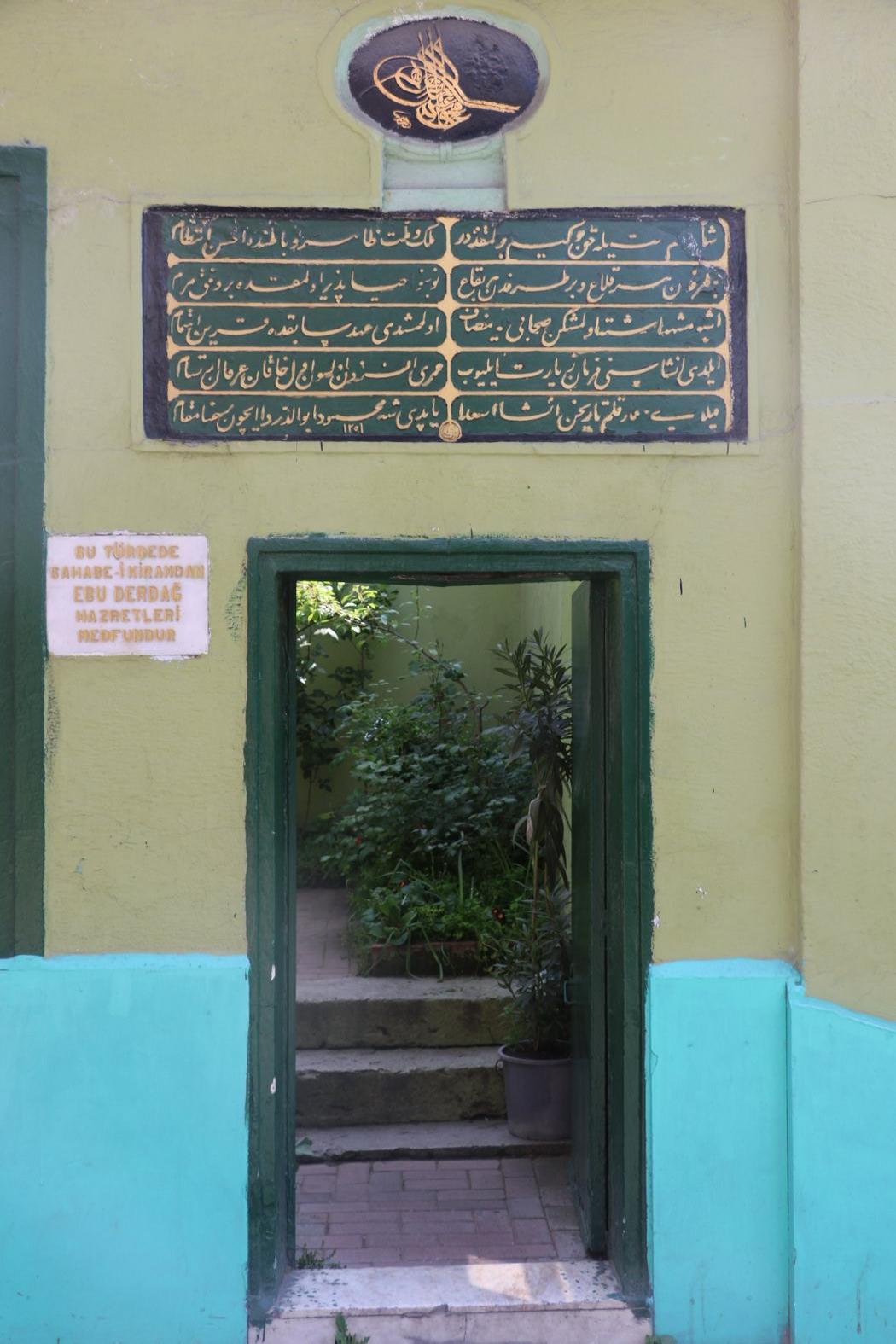
This structure in the Zalmahmutpaşa area of Eyüp was restored in 1835 (Hijri 1251) by the Ottoman Sultan II Mahmud. Above the entrance door is an inscription in six lines documenting this restoration. The upper portion of the inscription bears the tuğra of Sultan II Mahmud. The poetic text was composed by Sahhaflar Şeyhi-zade Es’ad Efendi, who died in 1848 (Hijri 1264).【4】
The inscription on the tomb’s entrance describes how, under the grace of Sultan II Mahmud, the state and its people were brought into perfect order, various fortresses and sites were restored, and this revered maqam attributed to the Companions had previously received insufficient attention until it was revived through the Sultan’s visit and decree. Additionally, within the structure, a plaque dedicated to the Companions includes a four-line verse requesting intercession from Abu al-Darda. There is also an inscription on the green tombstone inside the tomb, which reads as follows:
Türbe Girişi (Eyüpsultan Belediyesi)
By the grace of the Sovereign of the world, who truly possesses this right.
The realm and its people, in all visible and hidden aspects, enjoy the finest order.
From one side every fortress, from another every monument.
The revival of this maqam fulfills the purpose of divine intent.
Though this maqam was established among the Companions,
It had not received due reverence in earlier times.
By royal decree, through His visit, it was restored,
May the life of this sovereign of knowledge be prolonged.
The scribe Es’ad composed this inscription,
And Sultan Mahmud erected this noble maqam for Abu al-Darda.【5】
The individual referred to here as Abu al-Darda was originally named Uwaymir ibn Malik ibn Kays ibn Umayya. Renowned in the early years of Islam for his bravery and wisdom, Abu al-Darda was appointed by Caliph Umar ibn al-Khattab as judge of Damascus, becoming the region’s first qadi. A memorizer of the Qur’an and the source of 179 hadiths recorded in hadith literature, this Companion died in Damascus in 652 CE (Hijri 32).
Historical sources indicate that Abu al-Darda’s actual grave is located in Medina or Damascus, and that the site in Eyüpsultan holds the status of a maqam rather than a burial place. It is also considered possible that this tomb in Eyüp belongs to another companion or tabi‘i bearing the same name. Other maqams attributed to Abu al-Darda are located in Üsküdar (Karacaahmet) and Konya Ereğli.【6】
Eyüpsultan Belediyesi. "Ebu Derda Türbesi." Accessed June 10, 2026. https://www.eyupsultan.bel.tr/tr/main/pages/ebu-derda-turbesi/964
Kültür Envanteri. "Ebu Derda Hazretleri Makamı." Accessed June 10, 2026. https://kulturenvanteri.com/yer/ebu-derda-hazretleri-makami/
Yasin Karabacak. "Ebü’d-Derdâ Türbesi, Eyüp (The Tomb of Abu-d Darda)." YouTube. Accessed June 10, 2026. https://youtu.be/b1xvQsErQ3k?si=_pIAmWJYCFewXc17
[1]
Eyüpsultan Belediyesi. "Ebu Derda Türbesi." Erişim Tarihi 10 Haziran 2026. https://www.eyupsultan.bel.tr/tr/main/pages/ebu-derda-turbesi/964
[2]
Eyüpsultan Belediyesi. "Ebu Derda Türbesi." Erişim Tarihi 10 Haziran 2026. https://www.eyupsultan.bel.tr/tr/main/pages/ebu-derda-turbesi/964
[3]
Eyüpsultan Belediyesi. "Ebu Derda Türbesi." Erişim Tarihi 10 Haziran 2026. https://www.eyupsultan.bel.tr/tr/main/pages/ebu-derda-turbesi/964
[4]
Eyüpsultan Belediyesi. "Ebu Derda Türbesi." Erişim Tarihi 10 Haziran 2026. https://www.eyupsultan.bel.tr/tr/main/pages/ebu-derda-turbesi/964
[5]
Eyüpsultan Belediyesi. "Ebu Derda Türbesi." Erişim Tarihi 10 Haziran 2026. https://www.eyupsultan.bel.tr/tr/main/pages/ebu-derda-turbesi/964
[6]
Eyüpsultan Belediyesi. "Ebu Derda Türbesi." Erişim Tarihi 10 Haziran 2026. https://www.eyupsultan.bel.tr/tr/main/pages/ebu-derda-turbesi/964

Building Name | Tomb of Abu Darda (also known as Abu Darda Türbesi) | ||||||||
|---|---|---|---|---|---|---|---|---|---|
Type | Tomb | ||||||||
Location | Zal Pasha Street, Nişanca Neighborhood, Eyüpsultan District, Istanbul Province; between Cezeri Kasım Pasha Mosque and Zal Mahmud Pasha Mosque | ||||||||
Restoration Date and Patron | It was repaired in 1835 (Hijri 1251) by Ottoman Sultan Mahmud II | ||||||||
Status | The structure is currently accessible | ||||||||
Location and Environmental Features
Architectural Structure
History and Restorations
Epigraphic Data and Inscriptions
Identity of Abu al-Darda and Debates Regarding the Maqam