This article was automatically translated from the original Turkish version.
Original Name | It Must Be Heaven | ||||||||
|---|---|---|---|---|---|---|---|---|---|
Director | Elia Suleiman | ||||||||
Screenplay | Elia Suleiman | ||||||||
Cinematographer | Sofian El Fani | ||||||||
Editing | Véronique Lange | ||||||||
Actor | Ali Suliman Guy Sprung Elia Suleiman Grégoire Colin Vincent Maraval Gael García Bernal Kwasi Songui | ||||||||
Production | Türkiye Palestine Canada Germany Qatar France | ||||||||
Duration | 101 minutes | ||||||||
First Screening | Cannes Film Festival, 24 May 2019 | ||||||||
Genre | Drama Comedy | ||||||||
Language | Arabic English French Spanish Hebrew | ||||||||
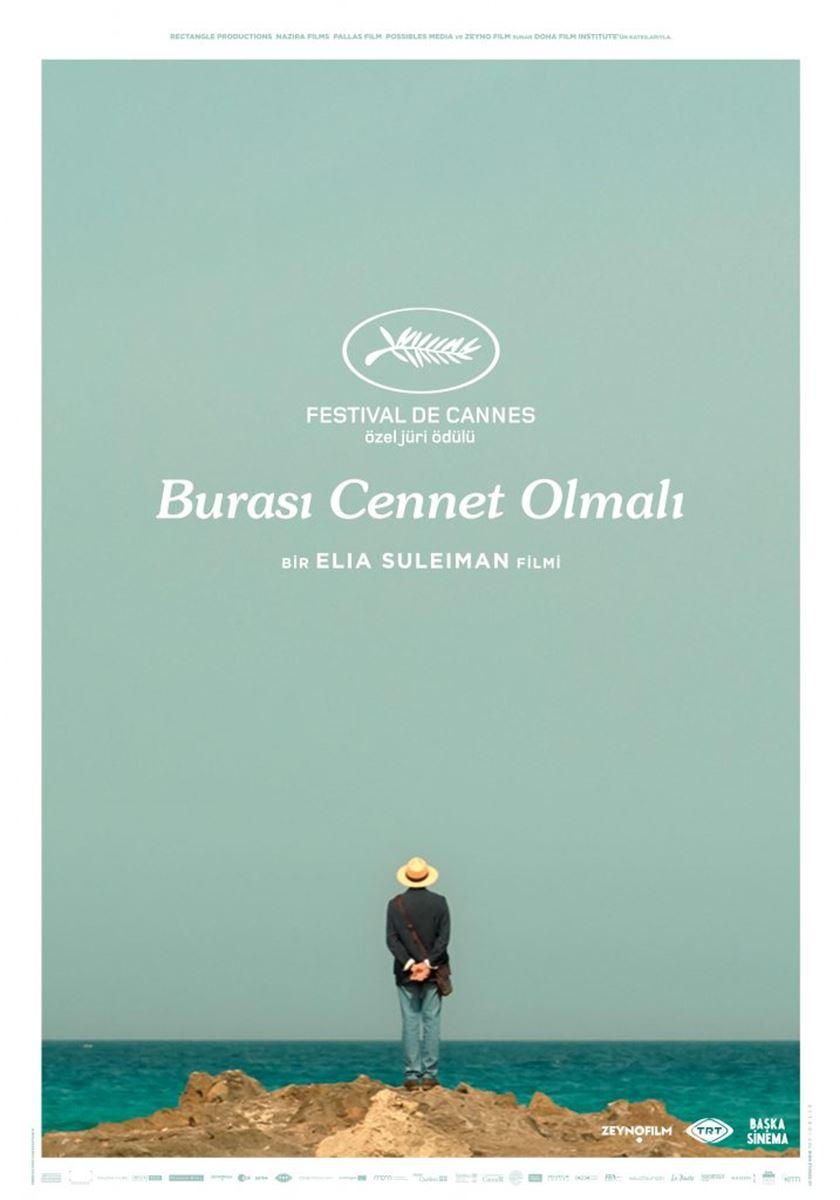
It Must Be Heaven (It Must Be Heaven) is a 2019 film written and directed by Palestinian filmmaker Elia Suleiman, who also stars in the lead role. The film continues the director’s signature style of silent humor while questioning the meaning of being Palestinian within a global context.
Nazareth to Paris and New York, the film explores a universal sense of alienation centered on themes of statelessness, identity, and exile. Through silence, static tableaux, and an observational protagonist, the film presents both a personal and collective narrative of exile, rendering the invisibility of Palestine visible through the absurdities of everyday life.

Elia Suleiman, Still from the Film (IMDb)
The film begins in the director’s birthplace, Nazareth. Scenes depicting small daily events and comic contradictions reflect the internal tensions of Palestinian society before the protagonist departs abroad.
Paris and New York, Suleiman searches for funding for a film project on the Palestinian issue and encounters how his identity is perceived in each city: in Paris he is told he is “not Palestinian enough,” while in New York no one shows interest in Palestinian stories.
The character encounters a similar bureaucratic, distrustful, and alienating system wherever he goes. The film concludes with his return to Palestine.

Elia Suleiman, Still from the Film (IMDb)
The film addresses the condition of “not finding a place,” even when one has crossed physical borders. Elia Suleiman’s character experiences the same sense of alienation in every country he visits. His journey from Nazareth to Paris and New York becomes a metaphor for universal statelessness. The character encounters identical bewilderment and exclusion everywhere, serving both as an allegory for Palestine’s historical condition and as an indicator of the modern individual’s dislocation within the global order.【1】
The film argues that the Israeli occupation in Palestine has transformed into a global condition. In the director’s words, the world is increasingly becoming a “global Palestine”: borders, surveillance, control, and alienation are replicated everywhere. This idea reveals the universality of transnational systems of oppression.【2】
The director uses cinema as a form of unarmed resistance. It Must Be Heaven, though not a directly political film, can be understood as a “soft power” act of resistance against the invisibility of Palestine.【3】
Silence in Suleiman’s cinema is not passivity but a form of resistance. The director defines silence as “an existential revolt against the noise of power.” This silence compels the viewer to think and become aware of the moment, generating spiritual awareness in opposition to the superficiality of a consumer-driven age.【4】
Absurd situations critique political reality not directly but through the distance of humor. This dark comedy makes visible both the normalization of violence and the individual’s helplessness.
The film critiques the structure of modern cities like Paris and New York, which isolate and mechanize the individual. In this system, which Suleiman calls “global neoliberalism,” everyone becomes a potential stranger and every city a potential border.

Elia Suleiman, Still from the Film (IMDb)
Suleiman constructs his narrative through long takes, minimal dialogue, and visual irony. The director’s face functions as a “neutral mask.” Each scene in the film is a “vignette” composed of small observations; everyday absurdities carry political meaning through silent humor.
Cinematographer Sofian El Fani emphasizes the emptiness of spaces through wide shots and symmetrical framing. This aesthetic choice visually equates the alienation of Nazareth with that of Paris and New York.
The film’s music does more than create atmosphere—it is the “sound of resistance.” The Arabic song “Arabyon Ana” played during the final scene is, according to one interpretation, a cultural testimony to the enduring vitality of Palestinian identity.【5】

Yasmine Haj, George Khleifi and Faris Muqabaa. Still from the Film (IMDb)
The film was distributed by Le Pacte (France) and produced with contributions from Rectangle Productions, Nazira Films, Pallas Film, Zeyno Film, Doha Film Institute and other partners. Turkish producer Zeynep Özbatur Atakan served as a co-producer. This multinational collaboration exemplifies cultural diplomacy that strengthens the global visibility of Palestinian cinema.
It Must Be Heaven Turkish Subtitled Trailer (Box Office Türkiye)
It Must Be Heaven, represents Elia Suleiman’s transition from political irony to a universal existential quest. The director transforms individual silence into a collective form of resistance, presenting the modern world’s boundless surveillance and alienation as a global Palestinian metaphor. The film is both an aesthetic observation and a visual space for contemplating the rootless, displaced human in the contemporary world.
6th International Cinema and Philosophy Symposium, Ankara, (2024): 25–33.https://avesis.akdeniz.edu.tr/yayin/43e87ee2-195d-4189-a2ea-a9571783e0d5/deleuze-ve-guattarinin-yersiz-yurtsuzluk-kavrami-cercevesinde-it-must-be-heaven-filmi
Beyazyüz, Selim. "Kültürel Direniş Pratiği Olarak Sinema Anlatıları Özelinde Dünyadan Arda Kalan Topraklara, Filistin'e Bakmak." *Ombudsman Akademik* 20 (August 2024): 229–278. Accessed October 11, 2025.https://dergipark.org.tr/en/download/article-file/3578442
Box Office Türkiye. "Burası Cennet Olmalı | It Must Be Heaven | Altyazılı Fragman." YouTube Video. Accessed October 11, 2025.https://www.youtube.com/watch?v=cqU1VX_MrFA
Evecen, Gökhan. "Deleuze ve Guattari’nin Yersiz Yurtsuzluk Kavramı Çerçevesinde It Must Be Heaven Filmi."
IMDb. "It Must Be Heaven (2019) - Full Cast and Crew." Accessed October 11, 2025.https://www.imdb.com/title/tt8359842/fullcredits/?ref_=tt_cst_sm
IMDb. "It Must Be Heaven (2019) - Media Viewer." Accessed October 11, 2025.https://www.imdb.com/title/tt8359842/mediaviewer/rm1750195457/?ref_=ttmi_mi_4_1
IMDb. "It Must Be Heaven (2019) - Media Viewer." Accessed October 11, 2025.https://www.imdb.com/title/tt8359842/mediaviewer/rm1884413185/?ref_=ttmi_mi_2_2
IMDb. "It Must Be Heaven (2019) - Media Viewer." Accessed October 11, 2025.https://www.imdb.com/title/tt8359842/mediaviewer/rm1917967617/?ref_=ttmi_mi_3_1
IMDb. "It Must Be Heaven (2019) - Media Viewer." Accessed October 11, 2025.https://www.imdb.com/title/tt8359842/mediaviewer/rm1968299265/?ref_=ttmi_mi_3_2
IMDb. "It Must Be Heaven (2019) - Media Viewer." Accessed October 11, 2025.https://www.imdb.com/title/tt8359842/mediaviewer/rm3968277761/?ref_=ttmi_mi_2
MUBI. "Ödüller ve Festivaller: Burası Cennet Olmalı." Accessed October 11, 2025.https://mubi.com/tr/films/it-must-be-heaven/awards
Nashef, Hania A.M. "Songs of Nostalgia: Creative Activism and Exile in Elia Suleiman’s 'It Must be Heaven' and Panah Panahi’s 'Hit the Road.' Regards, 30. (2023): 73-90. Accessed October 11, 2025.https://e-journals.usj.edu.lb/cgi/viewcontent.cgi?article=1042&context=regards
Suleiman, Elia. "Nothing Solves Nothing: A Conversation with Elia Suleiman." Interview by Flavia Dima, *MUBI Notebook* (May 24, 2021). Accessed October 11, 2025.https://mubi.com/tr/notebook/posts/nothing-solves-nothing-a-conversation-with-elia-suleiman
Weissberg, Jay. "Film Review: ‘It Must Be Heaven’." *Variety*, May 24, 2019. Accessed October 11, 2025.https://variety.com/2019/film/reviews/it-must-be-heaven-review-1203225342/
[1]
Gökhan Evecen, "Deleuze ve Guattari’nin Yersiz Yurtsuzluk Kavramı Çerçevesinde It Must Be Heaven Filmi",
6. Uluslararası Sinema ve Felsefe Sempozyumu, Ankara, (2024): 28-32. https://avesis.akdeniz.edu.tr/yayin/43e87ee2-195d-4189-a2ea-a9571783e0d5/deleuze-ve-guattarinin-yersiz-yurtsuzluk-kavrami-cercevesinde-it-must-be-heaven-filmi
[2]
Elia Suleiman, "Nothing Solves Nothing: A Conversation with Elia Suleiman," Flavia Dima'nın söyleşisi, MUBI Notebook (2021) https://mubi.com/tr/notebook/posts/nothing-solves-nothing-a-conversation-with-elia-suleiman
[3]
Selim Beyazyüz, "Kültürel Direniş Pratiği Olarak Sinema Anlatıları Özelinde Dünyadan Arda Kalan Topraklara, Filistin'e Bakmak", Ombudsman Akademik, 20 (Ağustos 2024): 240-44.
[4]
Suleiman, "Nothing Solves Nothing: A Conversation with Elia Suleiman," https://mubi.com/tr/notebook/posts/nothing-solves-nothing-a-conversation-with-elia-suleiman
[5]
Hania A.M. Nashef, "Songs of Nostalgia: Creative Activism and Exile in Elia Suleiman’s 'It Must be Heaven' and Panah Panahi’s 'Hit the Road'", Regards, 30:30 (2023): 74. https://e-journals.usj.edu.lb/cgi/viewcontent.cgi?article=1042&context=regards

Original Name | It Must Be Heaven | ||||||||
|---|---|---|---|---|---|---|---|---|---|
Director | Elia Suleiman | ||||||||
Screenplay | Elia Suleiman | ||||||||
Cinematographer | Sofian El Fani | ||||||||
Editing | Véronique Lange | ||||||||
Actor | Ali Suliman Guy Sprung Elia Suleiman Grégoire Colin Vincent Maraval Gael García Bernal Kwasi Songui | ||||||||
Production | Türkiye Palestine Canada Germany Qatar France | ||||||||
Duration | 101 minutes | ||||||||
First Screening | Cannes Film Festival, 24 May 2019 | ||||||||
Genre | Drama Comedy | ||||||||
Language | Arabic English French Spanish Hebrew | ||||||||
No Discussion Added Yet
Start discussion for "This Place Should Be Heaven (Film)" article
Plot
Cast and Characters
Themes
Exile, Identity, and the Global Palestinian Condition
Silence, Resistance, and the Politics of Humor
Observation, Existence, and Time-Image
Alienation and Critique of Late Capitalism
Style, Aesthetics, and Cinematic Language
Production and International Contributions
Nominations and Awards