


This article was automatically translated from the original Turkish version.

Throughout human history, literacy consisted simply of pronouncing and interpreting the letters printed by the press or written by the pen. Knowing a language meant only deciphering its alphabet to understand the world. Today, however, we are subjected to a data bombardment unlike any in history, standing before screens. As letters give way to batteries, pixels, emojis, and algorithmic flows, the very definition of traditional literacy is being shaken at its foundations. Simply being able to read text no longer equips us to master the language of this new world; because the alphabet has changed, and we must now read not only the lines but also the invisible code behind the screen.
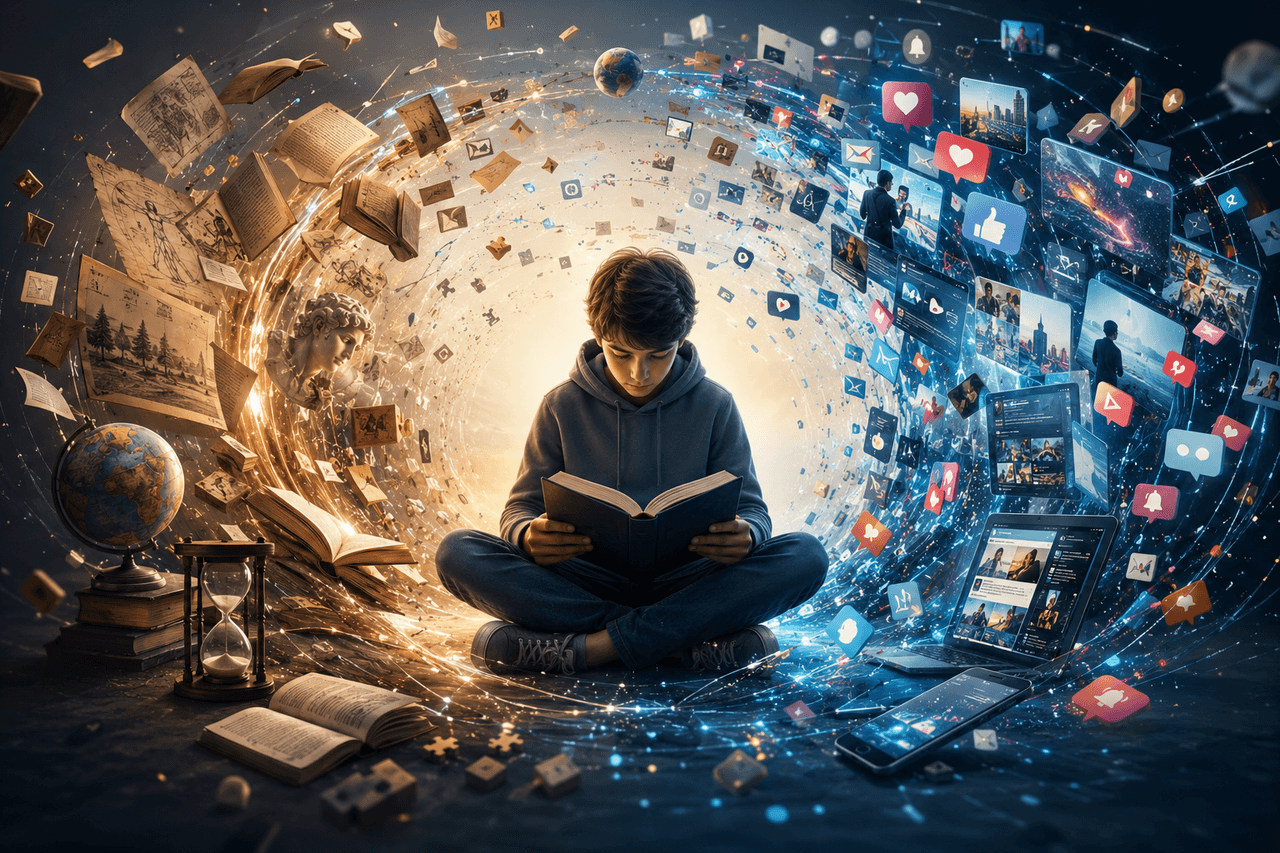
(Yapay zeka ile oluşturulmuştur)
Traditional literacy was a linear act: opening a book and moving from left to right, line by line. The digital age has pulled us from this calm river and thrown us into a turbulent ocean. We no longer read—we scroll—up and down across screens. Our eyes search for keywords while our minds strive to consume the most information in the shortest time.
This condition is weakening our brain’s muscles for deep thinking and focus. We form opinions based solely on article titles and believe we understand the world through 15-second videos. Mastering the new alphabet of the digital age begins precisely here: moving beyond being a superficial scanner to becoming an expert in deep reading who can discern the intent behind the text. When we forget how to read between the lines, we become most vulnerable to manipulation and disinformation.
Today, literacy is not merely about understanding the words on a screen but recognizing why and by whom those words were presented to us. A news article, a social media post, or a text generated by artificial intelligence—all are products of algorithms that analyze our interests, fears, and clicking habits.
The new generation of literate individuals does not accept information blindly but approaches it with skepticism.
Asking these questions is the true alphabet of the digital age. If we allow the content we consume to shape us without question, we are not literate—we are merely loyal consumers of algorithms. True literacy is the courage to tear apart the illusions presented by the screen and see the truth behind them.
Scanning the Screen or Diving Deep?
The Muscles of Critical Reading in the Shadow of Algorithms