


This article was automatically translated from the original Turkish version.
+1 More
Bursa, is not only a city historically but also the first capital of the Ottoman Empire and one of the symbolic centers of Turkish-Islamic culture. Therefore, the Greek forces’ selection of Bursa as a target following their initial occupation of Anatolia after World War I carried not only a military significance but also a psychological and symbolic character. The occupation, which began on 8 July 1920, ended on 11 September 1922 with the Turkish army’s victory over the Greek forces, thereby liberating the city.
The power vacuum in Anatolia after the Armistice of Mudros enabled the Allied Powers to compete for influence. Greece sought to seize Western Anatolia under the framework of its proclaimed “Megali Idea” and, with British support, took its first step by occupying İzmir on 15 May 1919. Bursa held a crucial position in Greek military strategy due to its agricultural wealth and its role as a gateway to Istanbul via the Sea of Marmara. Operations targeting this city carried significant economic and symbolic value.
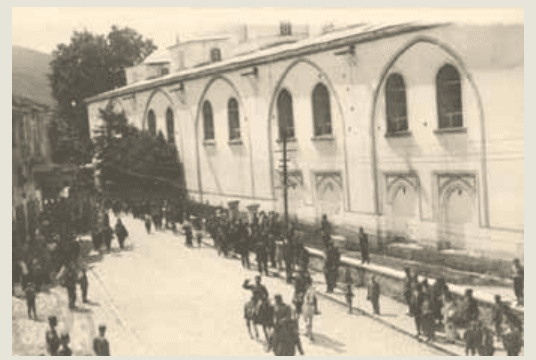
In front of Ulucami During the Greek Occupation (Bursa BŞB Kültür ve Sosyal İşler Daire Başkanlığı Yayınları)
The occupation of Bursa was a continuation of the Greek military advance in Western Anatolia. Greek units, having completed their preparations during the night of 7–8 July, entered the city in the early morning hours. Bursa fell quickly due to its insufficient military forces and equipment. The news of the occupation provoked strong reactions in Ankara; the podium in the Turkish Grand National Assembly, covered in black cloth, remained so until the city’s liberation.
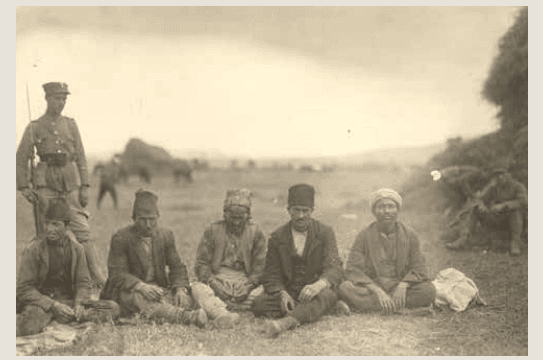
Turkish National Forces Taken as Prisoners (Bursa BŞB Kültür ve Sosyal İşler Daire Başkanlığı Yayınları)
The Greek occupation lasted approximately two years, during which the city’s population endured severe hardships. In districts such as İnegöl, Gemlik, Orhangazi, and Karacabey, villages were burned, rural areas were devastated, and the population was forcibly displaced. Livestock and agricultural products were confiscated in the name of the Greek army.
The Greek administration banned Ottoman currency and introduced the Greek drachma, attempting to integrate the region economically into its own system. This caused major disruptions in trade and daily life for the local population.
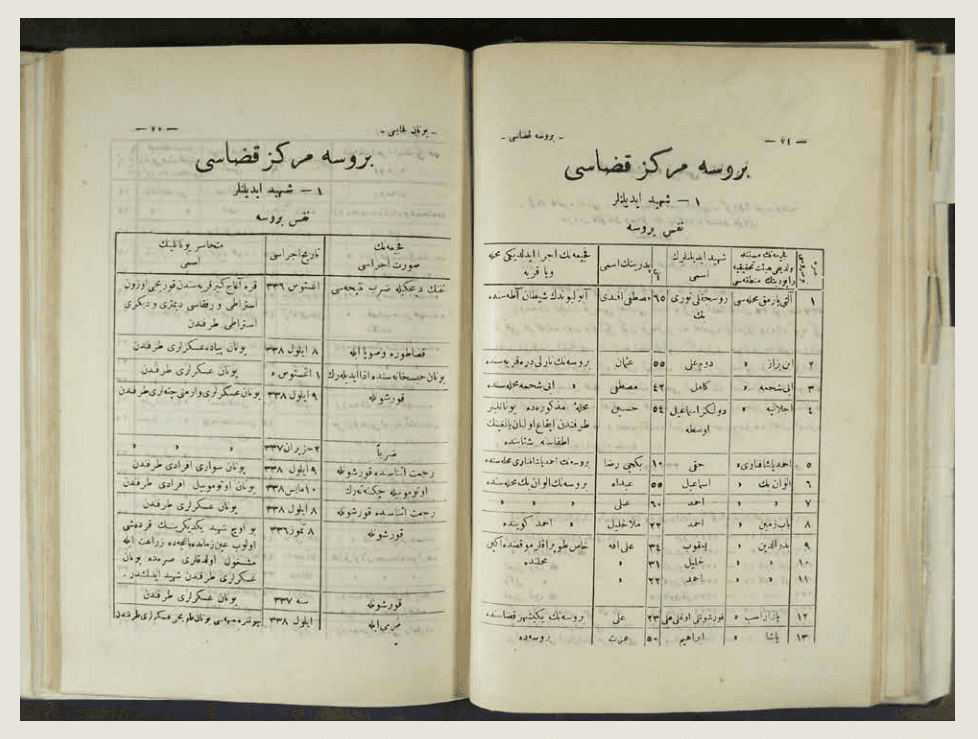
First Two Pages from the Register Listing the Names and Circumstances of Those Killed in Bursa Central District (Bursa BŞB Kültür ve Sosyal İşler Daire Başkanlığı Yayınları)
Muslim civilians, fleeing intense pressure, migrated deep into Anatolia, resulting in a significant population decline in the Bursa plain. International Red Cross reports documented the repression and waves of displacement experienced by civilians in the region.
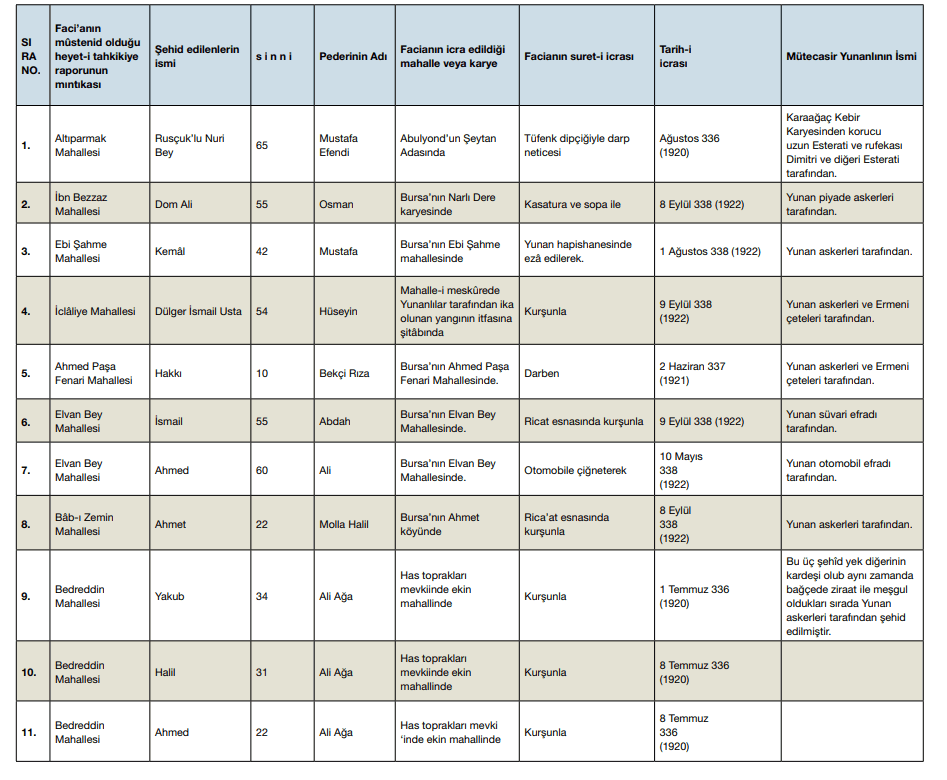
From the Section Listing the Names and Circumstances of Those Killed in Bursa Central District: 11 of 445 Individuals (Bursa BŞB Kültür ve Sosyal İşler Daire Başkanlığı Yayınları)
The Greek army conducted operations targeting not only physical infrastructure but also symbolic values. This was interpreted as a deliberate policy aimed at breaking the psychological resistance of the population.
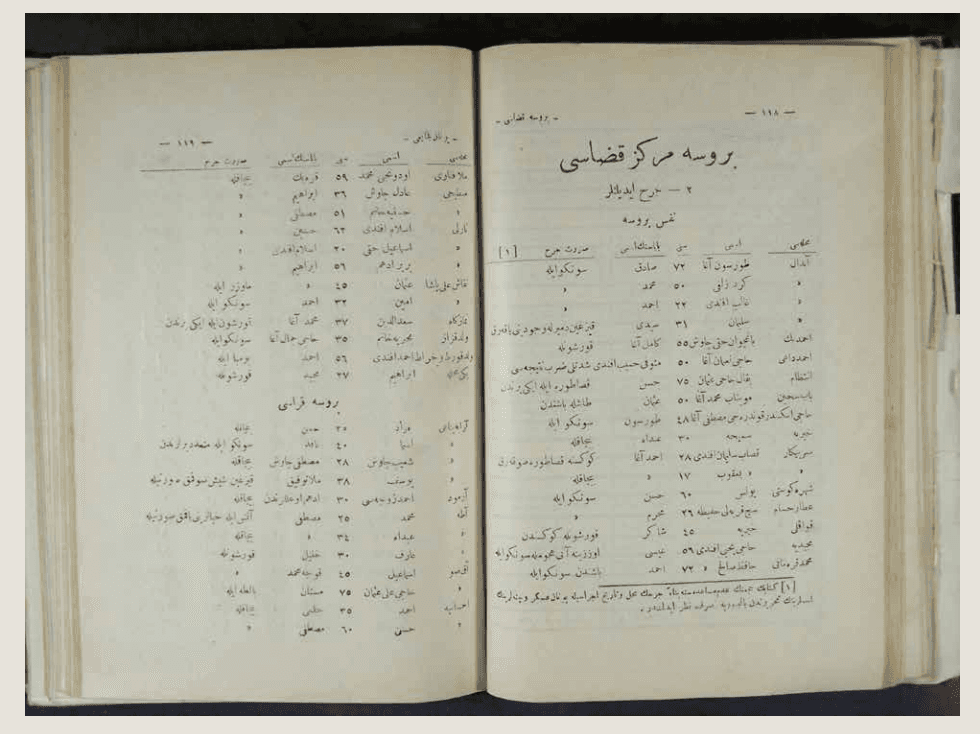
First Two Pages from the Section Listing the Names and Circumstances of Those Wounded in Bursa Central District (Bursa BŞB Kültür ve Sosyal İşler Daire Başkanlığı Yayınları)
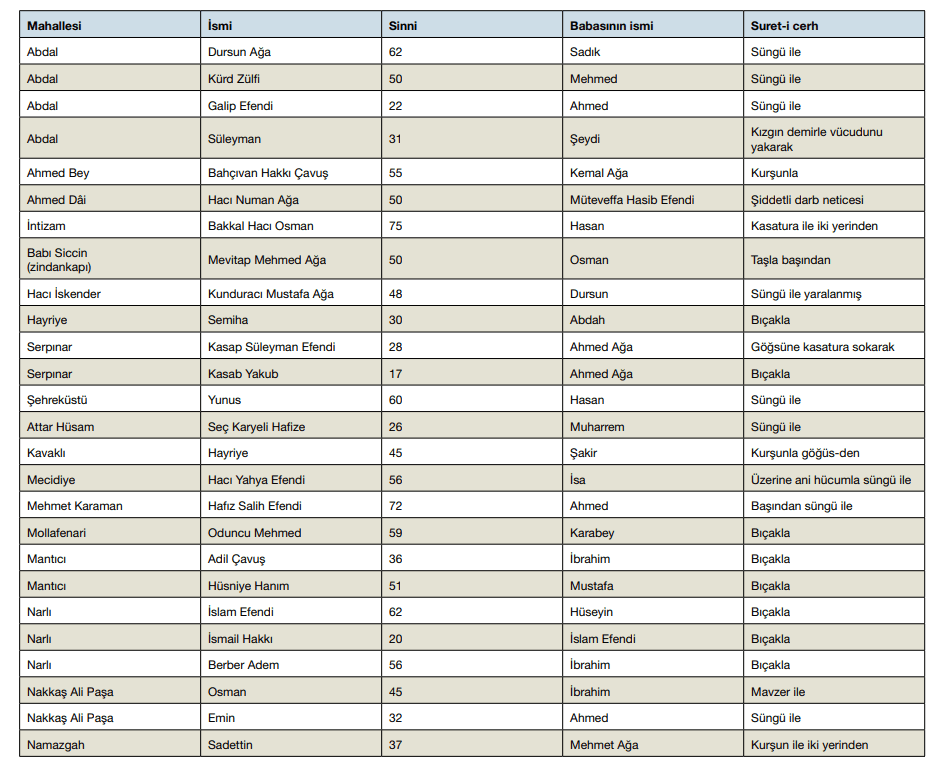
One Page from the Section Listing the Names and Circumstances of Those Wounded in Bursa Central District (Bursa BŞB Kültür ve Sosyal İşler Daire Başkanlığı Yayınları)
The most widely reported and publicly resonant incident during the occupation of Bursa was the attack on the tomb of Osman Gazi, the founder of the Ottoman Empire. Sophoklis Venizelos, the son of the Greek Prime Minister Eleftherios Venizelos, entered the tomb and placed his foot on Osman Gazi’s sarcophagus, posing for photographs. The dissemination of these images in the European press triggered a wave of outrage in Turkish public opinion.
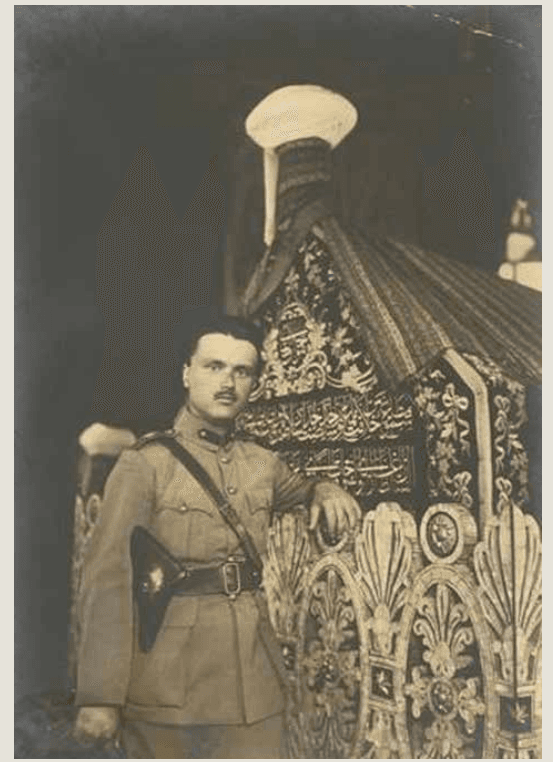
Sophoklis Venizelos, Son of Venizelos, at the Tomb of Osman Gazi (Bursa BŞB Kültür ve Sosyal İşler Daire Başkanlığı Yayınları)
This act was not merely an insult but was perceived as a direct assault on the historical memory and spiritual identity of the Turkish nation. Mehmet Âkif Ersoy referenced this incident in his poem “Bülbül,” expressing the suffering of Bursa in the tone of a lament. This poem stands as one of the literary examples reflecting the deep imprint left by the occupation on the national consciousness.
International observers monitored developments in the region during the occupation years. Maurice Gehri, representative of the International Red Cross, documented in his reports the violence inflicted upon the Muslim population in and around Bursa, including the burning of villages and mass displacement. Gehri’s observations corroborated the evidence presented by the Turkish side to international public opinion and revealed the humanitarian dimensions of the occupation.
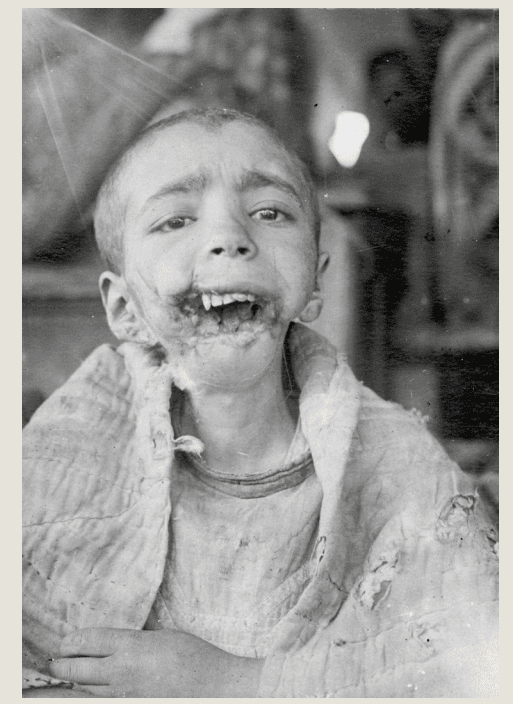
Young Girl Tortured by Greek Soldiers, from the Red Cross Archives (Bursa BŞB Kültür ve Sosyal İşler Daire Başkanlığı Yayınları)
Following the successful conclusion of the Great Offensive, which began on 26 August 1922, the Turkish army rapidly advanced westward. On 6 September, Turkish units liberated Yenişehir and İnegöl. Orhangazi and its surroundings regained their freedom on 9–10 September. On 11 September 1922, the Turkish army entered the center of Bursa, definitively ending the Greek occupation. After the liberation of Bursa, the black cloth covering the podium in the Turkish Grand National Assembly was removed, and celebrations were held throughout the city.
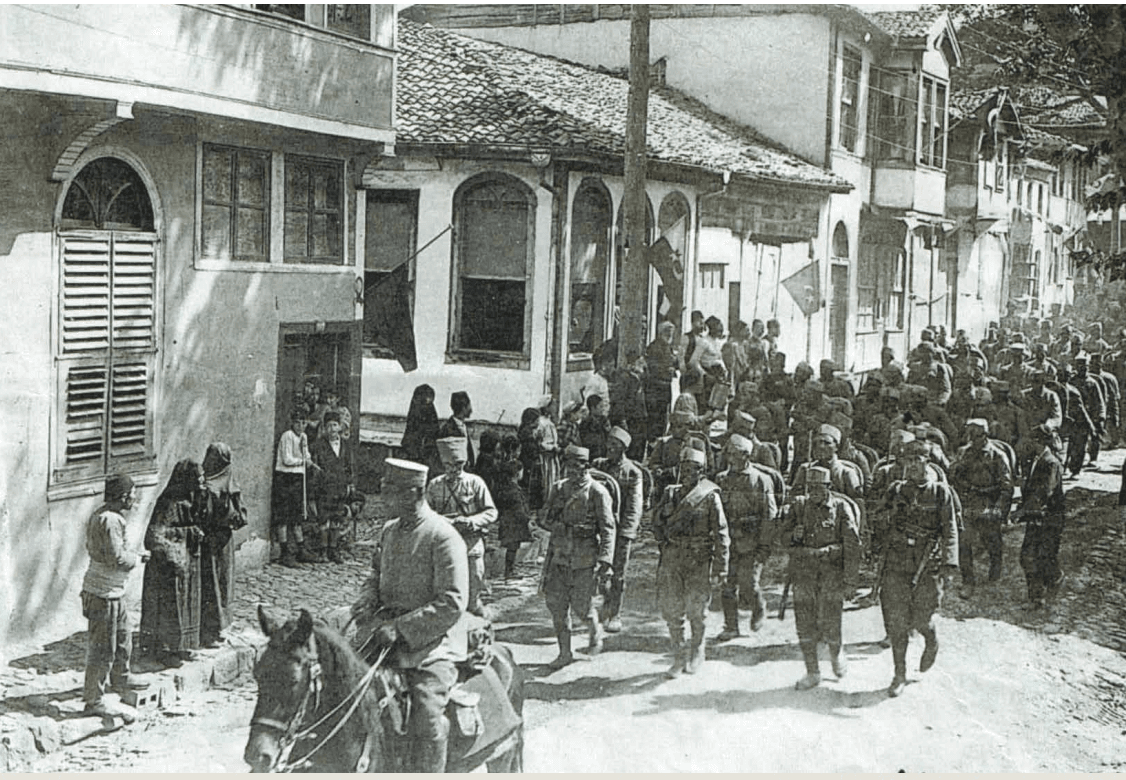
Şükrü Naili Paşa Entering Bursa with His Unit on the Day of Liberation (Bursa BŞB Kültür ve Sosyal İşler Daire Başkanlığı Yayınları)
Following liberation, a process of both physical and spiritual reconstruction began in Bursa. Mosques, tombs, and caravanserais damaged during the occupation were restored in the early years of the Republic. Displaced populations returned, and agriculture and trade gradually revived.
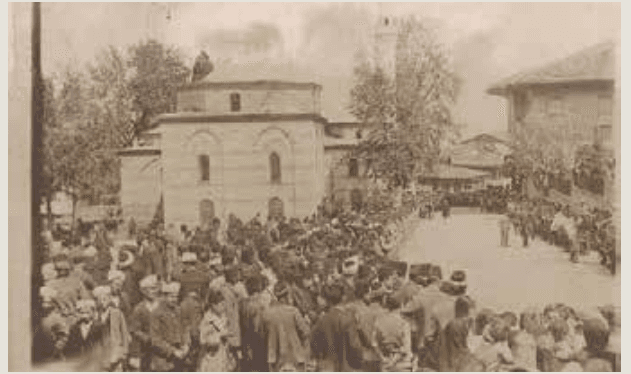
Mustafa Kemal Paşa’s Arrival in Bursa on 16 October 1922 (Bursa BŞB Kültür ve Sosyal İşler Daire Başkanlığı Yayınları)
The massacres, economic repression, and especially the attack on the Tomb of Osman Gazi during the occupation played a critical role in strengthening Turkish resistance and rapidly increasing popular participation in the national struggle. Liberation enabled the symbolic and physical reconstruction of the city; in the Republican era, Bursa once again became one of Anatolia’s leading cultural and economic centers.
Göltekin, Sefer. *Bursa'da Yaşamak*. Bursa Büyükşehir Belediyesi Bursa Kültür A.Ş., 2011. Accessed September 8, 2025.https://www.bursa.bel.tr/dosyalar/yayinlar/5lxehdew3m4ook0.pdf
Karabağ, Hacer. "Uluslararası Kızılhaç Örgütü Temsilcisi Maurice Gehri’nin Kaleminden Samanlıdağ Yarımadası Araştırması (12-22 Mayıs 1922)." *İşgalden Kurtuluşa Milli Mücadele Döneminde Bursa (100. Yıl)*, edited by Mine Ersevinç, Gürhan Korkmaz, Hacer Karabağ, Nursal Kumaş, Bursa Uludağ Üniversitesi Basımevi Müdürlüğü, 2023. Accessed September 8, 2025.https://www.academia.edu/102760302/ULUSLARARASI_KIZILHA%C3%87_%C3%96RG%C3%9CT%C3%9C_TEMS%C4%B0LC%C4%B0S%C4%B0_MAURICE_GEHR%C4%B0_N%C4%B0N
Karabağ, Hacer. *Milli Mücadele Dönemi Bursa’da İşgal ve Kurtuluş Süreci (100. Yıl)*. Edited by Hacer Karabağ,Bursa Büyükşehir Municipality, Directorate of Culture and Social Affairs Publications, (2022). Accessed September 8, 2025.https://www.bursamuze.com/upload/dosyalar/bursa-da-gal-ve-kurtulu_1ec2c826f800377218102023164439000000.pdf
Karaca, Nesrin. "Bülbül Şiirinin İzinde Bursa’nın İşgali ve Mehmet Akif." *Hacettepe Üniversitesi Türkiyat Araştırmaları (HÜTAD)* 35/Özel Sayı (2021): 89–102. Accessed September 8, 2025.https://dergipark.org.tr/tr/pub/turkiyat/issue/67325/1034526
Selvi, Haluk. "Bursa Vilayeti'nde Yunan Vahşet ve Soykırımı." Türk Tarih Kurumu, 2024. Accessed September 8, 2025.https://ttk.gov.tr/wp-content/uploads/2024/05/8-Haluk-Turkce.pdf
Öztürk, Yücel. "Bursa ve Civarının İşgal ve Kurtuluş Sürecinde Askerî Harekâtlar." Journal of Turkish Research Institute 65 (2019): 381-405. Accessed September 8, 2025.https://dergipark.org.tr/en/download/article-file/767715
No Discussion Added Yet
Start discussion for "The Liberation of Bursa (11 September 1922)" article
Strategic Context Before the Occupation
The Occupation of Bursa (8 July 1920)
The Occupation Period
Attack on the Tomb of Osman Gazi
International Reactions and Red Cross Reports
The Great Offensive and the Liberation of the City (6–11 September 1922)
Post-Liberation Reconstruction and Memory