


This article was automatically translated from the original Turkish version.
+1 More
Stellar evolution is one of the fundamental studies in astrophysics and plays a crucial role in understanding the formation of chemical elements in the universe, galaxy dynamics, and cosmological processes. This process encompasses the physical and chemical transformations a star undergoes from its birth through its life cycle to its final stage. A star’s mass is the most critical factor determining its evolutionary path.
Stars form in cold, dense regions of gas and dust known as giant molecular clouds (interstellar medium). These clouds are typically rich in hydrogen and experience localized increases in density when compressed by an external trigger such as a supernova explosion or radiation pressure from a nearby star. This density increase causes gravity to dominate, leading a portion of the cloud to begin collapsing under its own weight.
During this collapse, a protostar forms at the center. In this stage, gravitational potential energy is converted into thermal energy, raising the core temperature. When the core temperature reaches approximately 10 million Kelvin, hydrogen fusion begins and the star enters the main sequence phase.
The main sequence phase is the longest stage in a star’s life. During this period, the star generates energy by fusing hydrogen atoms into helium in its core. This process occurs via the proton-proton chain or the carbon-nitrogen-oxygen (CNO) cycle. As a star’s mass increases, the CNO cycle becomes the dominant energy production mechanism.
Main sequence stars are in hydrostatic equilibrium: the inward force of gravity is balanced by the outward pressure of radiation. As long as this balance remains unbroken, the star maintains a constant brightness and size.
The duration of the main sequence phase varies with mass. For stars similar to the Sun, this phase lasts about 10 billion years, while for more massive stars it can be as short as a few million years.
Stars with masses lower than the Sun (M < 0.5 M☉) cannot reach sufficient core temperatures when their hydrogen is exhausted. These stars remain as red dwarfs for extended periods and eventually transition directly into white dwarfs.
Stars similar to the Sun, after exhausting their hydrogen, develop helium-rich cores that contract. During this time, their outer layers expand, causing the star to become a red giant. If helium fusion ignites in the core, heavier elements such as carbon and oxygen are produced.
Once helium is also depleted, the star expels its outer layers into space, forming a planetary nebula. The remaining core persists as a white dwarf. Over time, this white dwarf cools and becomes a black dwarf; however, the age of the universe is not thought to be sufficient for any such objects to have formed yet.
Stars with masses greater than 8 M☉ can fuse elements such as carbon, neon, oxygen, and silicon in their cores in sequence. This process continues until iron is formed. Fusion of elements heavier than iron does not produce energy; as a result, the core loses its equilibrium and collapses inward. This collapse triggers a supernova explosion. The remnant core, depending on its mass, becomes either a neutron star or a black hole.
White dwarfs are dense objects composed primarily of carbon and oxygen, supported by electron degeneracy pressure. Although they typically have masses comparable to the Sun, their volumes are similar to that of Earth.
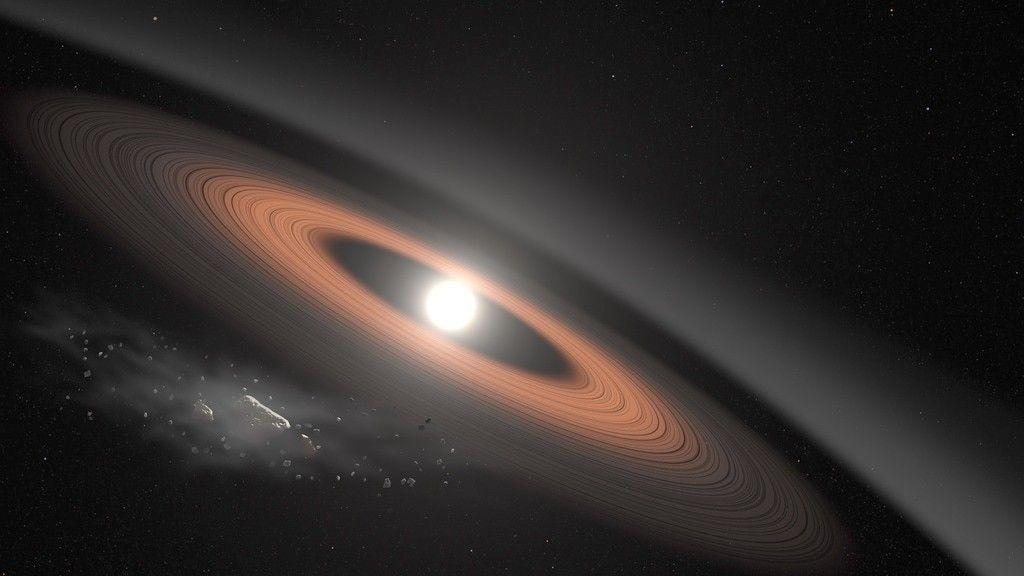
NASA. "Star Types." NASA Science: Universe. Last accessed 10 April 2025. White Dwarf.
If the remnant core after a supernova has a mass between 1.4 and 3 M☉, protons and electrons combine to form neutrons. This structure is supported by neutron degeneracy pressure. Neutron stars are extremely dense; a teaspoon of neutron star material has a mass of several billion tons.
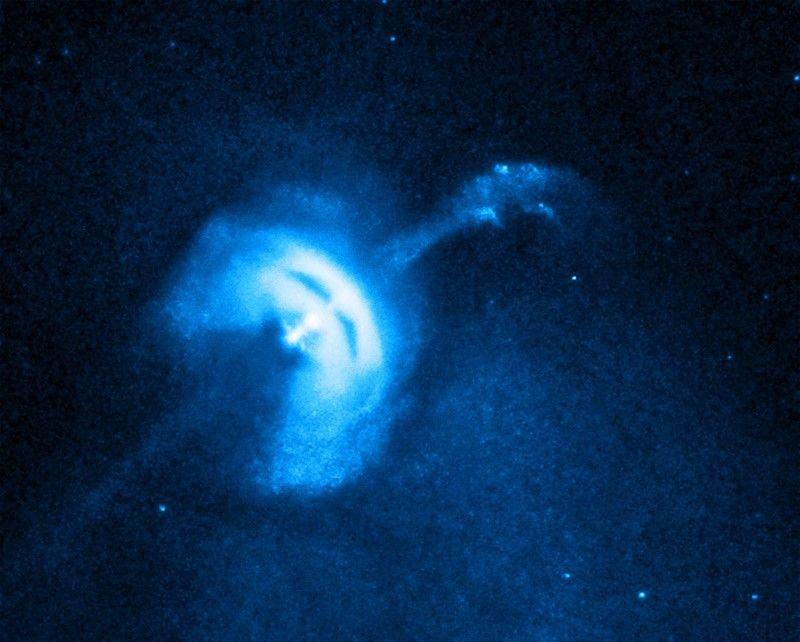
NASA. "Star Types." NASA Science: Universe. Last accessed 10 April 2025. Neutron Star.
If the core mass exceeds approximately 3 M☉, gravitational forces overcome all forms of pressure, causing matter to collapse into a singularity of infinite density. Black holes are cosmic structures beyond a boundary called the event horizon, from which not even light can escape.
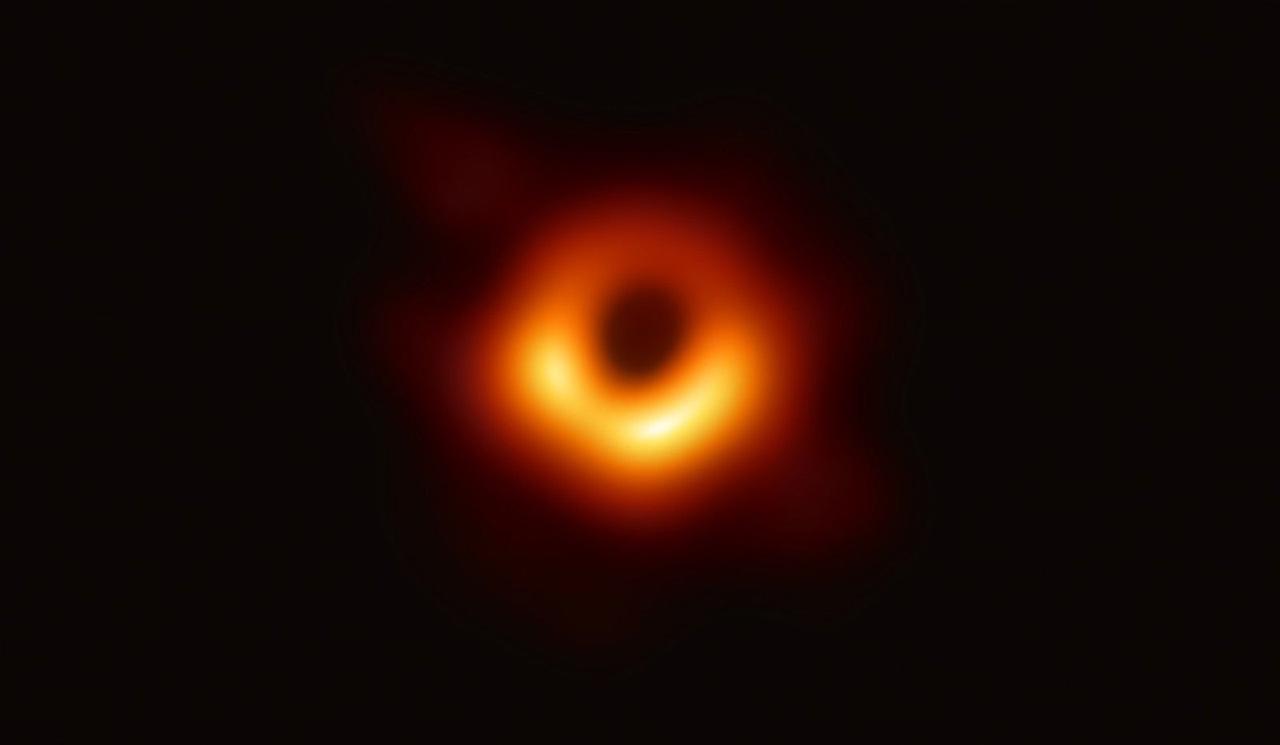
NASA. "Star Types." NASA Science: Universe. Last accessed 10 April 2025. Black Hole.
Stellar evolution is not only essential for understanding the life cycles of stars but also for explaining the origin of heavy elements in the universe. Supernova explosions and planetary nebulae disperse vital elements such as carbon, oxygen, and iron into galaxies. This process creates the conditions necessary for the formation of planets and, consequently, life.
Stellar evolution is one of the fundamental processes that bridge nuclear reactions at the microscopic level with galactic dynamics at the macroscopic level, providing insight into how the universe functions. The birth, life, and death of stars are not merely physical processes; they are also carriers of cosmic heritage. Therefore, research into stellar evolution is closely linked to many disciplines including cosmology, nuclear physics, plasma physics, and chemistry.
Hansen, Carl J., Steven D. Kawaler, and Virginia Trimble. 2004. *Stellar Interiors: Physical Principles, Structure, and Evolution*. 2nd ed. New York: Springer. Accessedhttps://link.springer.com/book/10.1007/978-1-4419-9110-2
Kippenhahn, Rudolf, Alfred Weigert, and Achim Weiss. 2012. *Stellar Structure and Evolution*. 2nd ed. Berlin: Springer. Accessedhttps://link.springer.com/book/10.1007/978-3-642-30304-3
NASA. "Exploring the Birth of Stars." NASA Science: Hubble Space Telescope. Accessed April 10, 2025.
NASA. "Star Lifecycle." NASA Science: James Webb Space Telescope. Accessed April 10, 2025.
NASA. "Star Types." NASA Science: Universe. Accessed April 10, 2025.
NASA. "Stellar Evolution: Our Cosmic Connection." NASA STEM Engagement. Accessed April 10, 2025.
NASA. 2013. "The Life and Death of Stars." *Wilkinson Microwave Anisotropy Probe (WMAP)*. Accessed April 10, 2025.https://map.gsfc.nasa.gov/universe/rel_stars.html

Star Formation
Main Sequence Phase
Post-Main Sequence Evolution
Low-Mass Stars
Intermediate-Mass Stars
High-Mass Stars
Final Stages of Stars
White Dwarf
Neutron Star
Black Hole
Cosmological Significance