


This article was automatically translated from the original Turkish version.
+2 More
Black Hole
Type | Astrophysical Celestial Body | ||||||||
|---|---|---|---|---|---|---|---|---|---|
Definition | Extremely dense cosmic structures with gravitational pull so strong that not even light can escape | ||||||||
Component | Event Horizon Singularity Photosphere (Melting Circle) | ||||||||
Classification | Stellar-Mass Black Hole Supermassive Black Hole Intermediate-Mass Black Hole | ||||||||
Observation Instruments | Radio telescopes Hubble and James Webb Space Telescopes X-ray telescopes | ||||||||
Important Features | Emission of matter and energy Evolutionary regulator of cosmic structures Formation of galactic nuclei | ||||||||
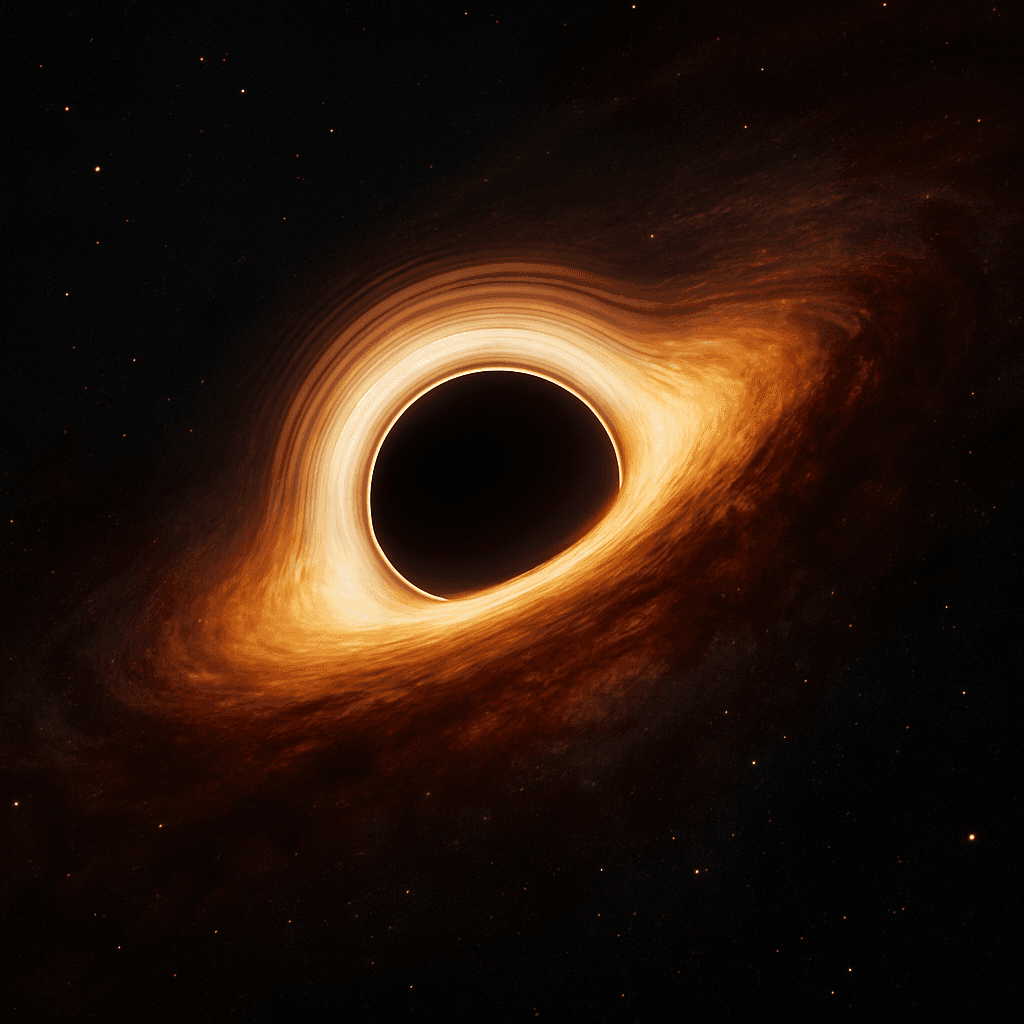
Black holes are among the most difficult celestial objects to understand scientifically. Although the term "black hole" evokes the sense of emptiness, these structures actually represent regions containing extraordinarily dense matter and energy. According to general relativity, these formations possess such a powerful gravitational field that nothing, not even light, can escape from within it. Therefore, direct observation of black holes is impossible; however, their existence can be inferred indirectly through their effects on surrounding matter, the high-energy radiation they emit, and their gravitational influences.
The scientific definition and theoretical modeling of black holes have been a major milestone in the development of astrophysics. Especially since the second half of the 20th century, advances in observational technology have enabled black holes to move beyond being mere theoretical assumptions and become physical realities supported by various astronomical data. Their role in the life cycles of stars and in galactic evolution has made them one of the fundamental concepts for understanding the structure of the universe. The discovery of black holes has fundamentally transformed our conception of space-time and expanded the boundaries of modern astrophysical theories.
Although black holes are often described as "places from which nothing can escape," this applies only to the specific boundary known as the event horizon. The event horizon is the boundary beyond which direct access to the black hole’s interior becomes impossible; any matter or light crossing this boundary cannot return. In this sense, black holes represent the most extreme gravitational fields in the universe. However, these structures attract attention not only through their gravitational properties but also through their internal physical layers. Understanding the structure of black holes requires examining these layers and their functions together.
Event Horizon: It is the outer boundary of the black hole. Objects that cross this boundary cannot exit to the outside using any physical means, including light. Therefore, acquiring information about the interior structure of a black hole is possible only through theoretical physics and indirect astronomical data, not direct observation.
Singularity: Located at the center of the black hole, it is defined as a point of infinite density and zero volume. This point is considered a region where the known laws of physics cease to be valid.
Photon Sphere: The region surrounding the event horizon where light is bent due to intense gravity. As a result of light being deflected into orbital paths, a bright ring forms around the black hole; this ring has been one of the key signatures in the first imaging of black holes.
Black holes are divided into three main categories based on their mass and formation processes: stellar-mass, intermediate-mass, and supermassive black holes. This classification helps us understand not only differences in physical size but also the conditions of their formation and their distribution throughout the universe. Each type of black hole interacts with structures at different cosmic scales and provides astronomers with crucial insights into cosmic evolution processes.
Formation: Stellar-mass black holes form when the cores of massive stars collapse at the final stage of their life cycles. This collapse typically occurs following a supernova explosion, leaving behind a core that collapses under gravity into a black hole.
Mass Range: These black holes typically have masses ranging between 3 and 10 solar masses.
Properties: Stellar-mass black holes are often found in binary star systems and are frequently observable due to mass exchange with a companion star. Many stellar-mass black holes have been detected indirectly within the Milky Way galaxy.
Formation: There is no definitive model for the formation of intermediate-mass black holes, but they are thought to arise either from the merging of smaller black holes or from the collapse of gas within dense star clusters.
Mass Range: They may have masses ranging from 100 to 10,000 solar masses.
Properties: This class of black holes is the most difficult to confirm observationally. Therefore, knowledge about their existence relies largely on theoretical models. Indirect evidence of such objects has been detected in the substructures of galaxies or at the centers of some dwarf galaxies.
Formation: The formation of supermassive black holes may have occurred in the early universe through the direct collapse of large gas and dust clouds or through the merging of many smaller black holes over time. It is also believed that accretion of interstellar material around the black hole contributes to their growth.
Mass Range: They can reach masses of millions or even billions of solar masses.
Properties: They are typically located at the centers of galaxies and interact with dense surrounding structures of stars and gas. These black holes play a major role in galactic evolution. For example, the supermassive black hole at the center of the Milky Way galaxy, known as Sagittarius A*, has a mass of approximately 4.3 million solar masses.
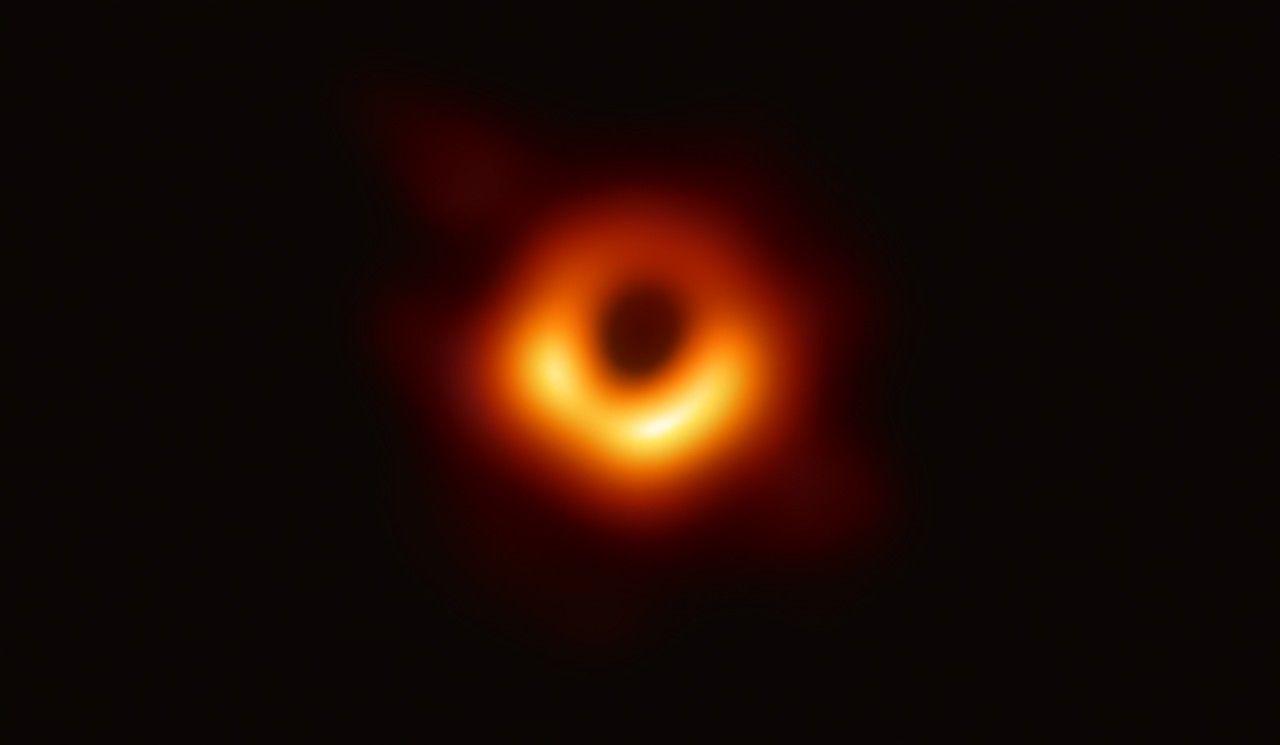
Because black holes do not emit light directly, they were long considered only theoretical constructs. This made direct observation impossible and limited evidence of their existence to indirect indicators. However, observations conducted in 2019 by the Event Horizon Telescope (EHT) brought about a fundamental shift in this understanding. The EHT is a global network formed by synchronizing radio telescopes located at different points on Earth, enabling observations with extremely high resolution. This system allowed, for the first time, direct observation of structures surrounding a black hole.
M87 Galaxy: The first image captured by the EHT belongs to the supermassive black hole at the center of the M87 galaxy, located about 55 million light-years from Earth. In this image, the bright ring surrounding the black hole’s event horizon, caused by gravitational lensing, is clearly visible. The image is not merely a visual achievement; it also provided a direct test of the predictions of Einstein’s general theory of relativity. Thus, the direct observation of black holes became possible, and their physical reality was scientifically confirmed with greater strength.
İlk kara delik görüntüsü (Nasa)
Thanks to their intense gravitational effects, black holes exert significant influence not only on local scales but also on cosmic scales. In particular, supermassive black holes, located at the centers of galaxies, can shape the structural evolution of these systems. These black holes become active by consuming accumulated matter in galactic nuclei, and the energy released during this process can affect star formation in the surrounding regions. The mass of a black hole and the amount of material accumulating around it may be directly correlated with the size of its host galaxy. In this context, black holes are regarded as fundamental factors in determining the growth, shape, and dynamic properties of galaxies.
Galaxy Formation and Evolution: Black holes located at the centers of galaxies interact with surrounding dense matter and star clusters. The strong gravitational field of black holes draws this material toward the galactic center, leading to the formation of a denser structure. This process may play a role in shaping galaxies into symmetric or elliptical forms.
Black Hole Effects – Fluid Dynamics and Energy Emission: Black holes pull in gas from their surroundings, causing it to rotate at high speeds and heat up. This heating produces high-energy electromagnetic emissions such as radio waves and X-rays. Part of this energy, guided by magnetic fields surrounding the black hole, can be ejected as jets of matter along the polar directions, escaping into the galaxy. These dynamic processes demonstrate that black holes are not merely passive absorbers but active structures that emit energy and influence the intergalactic medium.
The increasing observational capacity in astrophysics has deepened our understanding of black holes. In recent years, the development of space telescopes has enabled indirect observation of black holes through observations across different regions of the electromagnetic spectrum. NASA’s Hubble Space Telescope captures images of structures in galactic centers in optical and ultraviolet wavelengths, while the James Webb Space Telescope observes in infrared wavelengths to probe earlier epochs of the universe and study the formation history of black holes. These instruments generate critical data on the mass, activity, and relationship of black holes with galaxies by analyzing the motion of surrounding gas and stars.
X-ray and Radio Telescopes: High-energy events occurring around black holes predominantly manifest in invisible parts of the spectrum such as X-rays and radio waves. Therefore, X-ray telescopes such as the Chandra X-ray Observatory and radio telescopes such as the Very Large Array (VLA) and the Atacama Large Millimeter Array (ALMA) play a critical role in analyzing matter flows, heating processes, and jet structures around black holes.
New Technologies and Future Research: Future observational projects are focused on developing telescopes with higher resolution and broader wavelength coverage. These advancements are expected to enable direct observation not only of the environments around black holes but also of their effects on space-time itself. Combined with advanced data processing techniques and artificial intelligence-assisted analysis methods, researchers aim to achieve a more detailed understanding of the role black holes play in galactic evolution.
Advancing observational technologies are vital for understanding the physical structure and environmental effects of black holes. In particular, NASA’s Hubble Space Telescope and the James Webb Space Telescope, which succeeded it, contribute to scientific observations by examining star-forming regions around black holes, density variations in gas structures, and optical effects such as light bending in great detail.
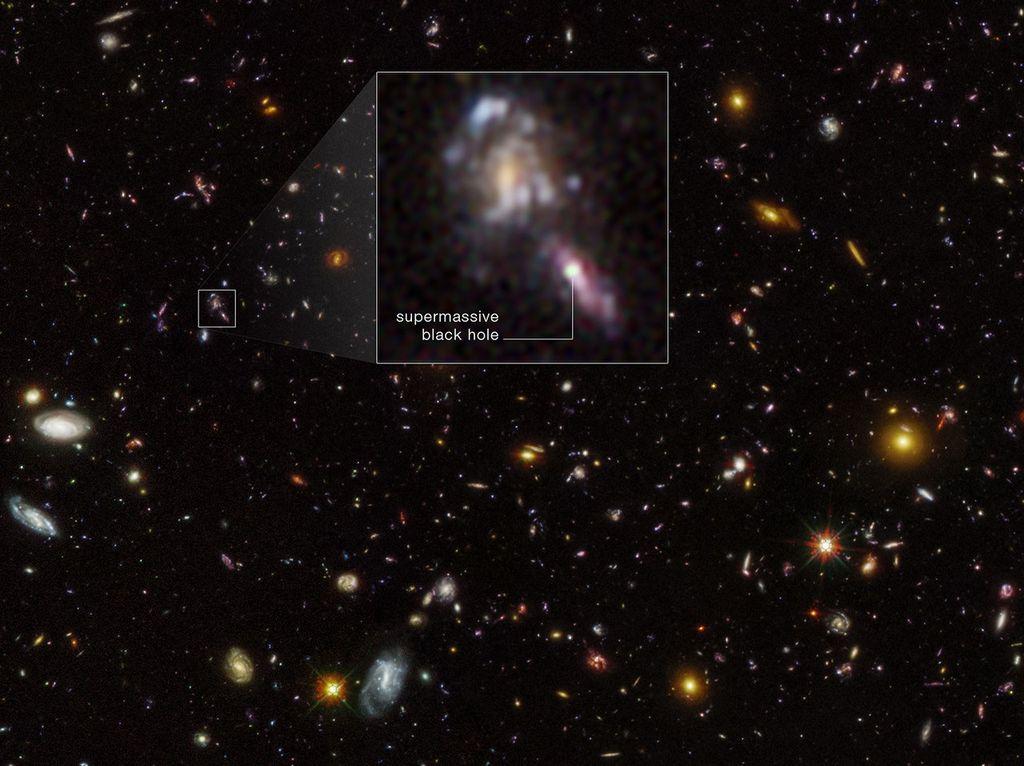
Thanks to these telescopes, not only the gravitational effects of black holes but also their energy exchanges with surrounding environments can be analyzed with greater accuracy. Deep-field surveys of observed galaxies offer new perspectives on the presence of supermassive black holes under early-universe conditions. Observations made with these telescopes, such as the image of supermassive black holes in the Hubble Ultra Deep Field (NASA), demonstrate that black holes are not merely individual structures but fundamental components of universal systems.
Supermassive black holes in the Hubble Ultra Deep Field (Nasa)
In the coming years, new projects are expected to come online, supported by more advanced radio and X-ray telescopes as well as ground-based multi-telescope networks. These projects are being designed to enable direct observation of physical processes near the event horizon, not just indirect effects. These developments will lay the groundwork for a more detailed understanding of the relationship between black holes and cosmic building blocks and for the development of new physical models beyond the general theory of relativity.
NASA. "NASA's Hubble Finds More Black Holes Than Expected in the Early Universe." NASA Science. Accessed May 1, 2025.https://science.nasa.gov/missions/hubble/nasas-hubble-finds-more-black-holes-than-expected-in-the-early-universe/.
NASA. “Black Holes Basics.” *NASA Science*. Accessed May 1, 2025.https://science.nasa.gov/universe/black-holes/.
“Black Holes Explained.” National Geographic. Accessed May 1, 2025.https://www.nationalgeographic.com/science/article/black-holes.

Black Hole
Type | Astrophysical Celestial Body | ||||||||
|---|---|---|---|---|---|---|---|---|---|
Definition | Extremely dense cosmic structures with gravitational pull so strong that not even light can escape | ||||||||
Component | Event Horizon Singularity Photosphere (Melting Circle) | ||||||||
Classification | Stellar-Mass Black Hole Supermassive Black Hole Intermediate-Mass Black Hole | ||||||||
Observation Instruments | Radio telescopes Hubble and James Webb Space Telescopes X-ray telescopes | ||||||||
Important Features | Emission of matter and energy Evolutionary regulator of cosmic structures Formation of galactic nuclei | ||||||||
General Properties of Black Holes
Classification of Black Holes
1. Stellar-Mass Black Holes
2. Intermediate-Mass Black Holes
3. Supermassive Black Holes
Event Horizon Telescope and the First Image
Black Holes and Their Role in the Universe
Black Holes and Evolving Technologies
Future Perspectives and New Approaches