


This article was automatically translated from the original Turkish version.
+1 More
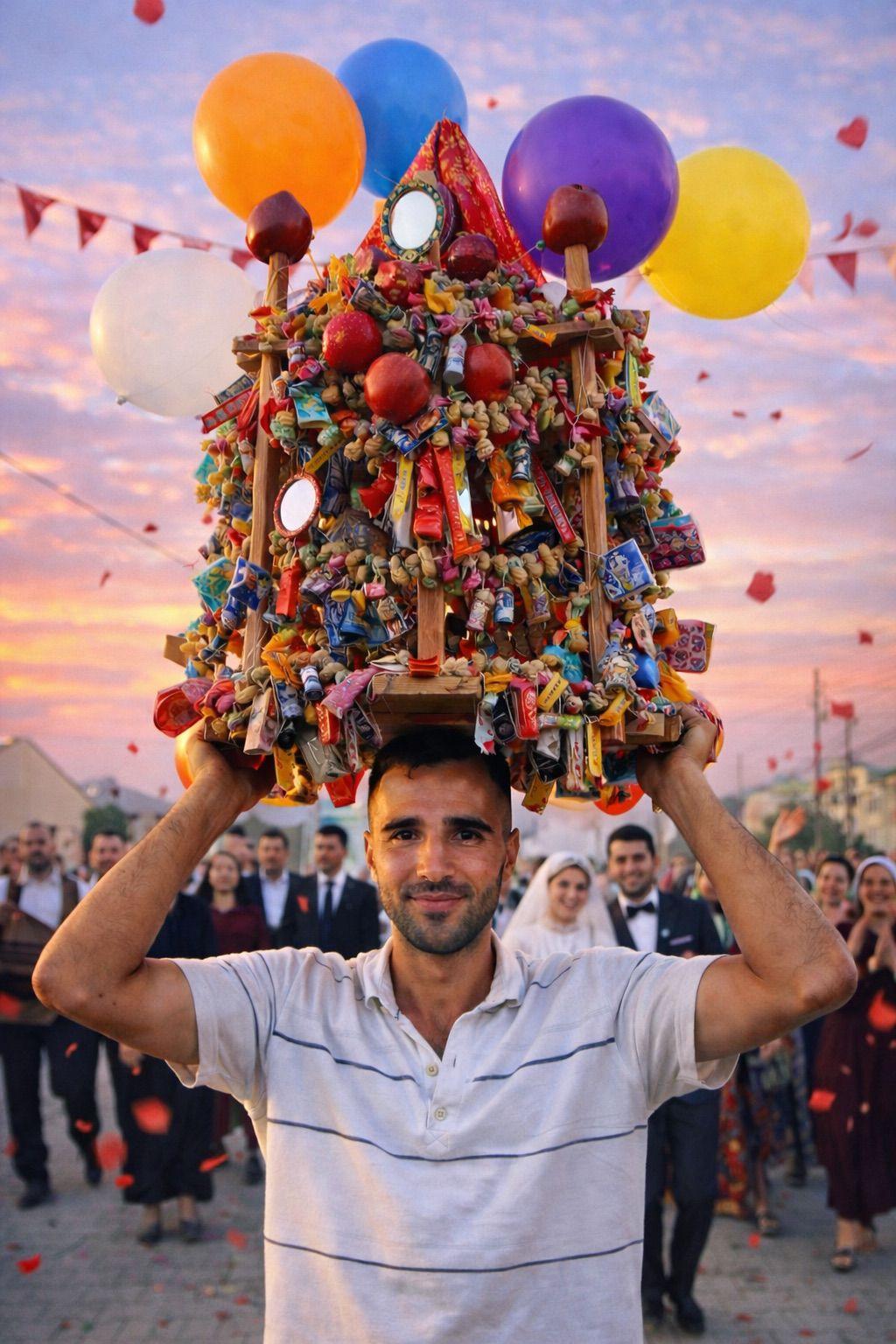
(Generated with Artificial Intelligence)
Shah Removal Ritual
Relevant Community | Karapapak / Terekeme Turks | ||||||||
|---|---|---|---|---|---|---|---|---|---|
Geography | Amasya Sivas Tokat Ağrı Iğdır Ardahan Muş Kars | ||||||||
Type | Wedding Ritual | ||||||||
Main Material | Symbolic tree with 7 to 9 branches decorated with elements called şah and fruit candies | ||||||||
Şah Kaldırma Ritusu, is a ritual practiced by the Karapapak (Terekeme) Turks, who are settled in the Eastern Anatolia region of Türkiye, particularly around Kars and Ardahan. It involves carrying a symbolic tree, called the “şah,” adorned with fruits and sweets, accompanied by music, during weddings to symbolize abundance and prosperity. Today, this ritual is also practiced in Iğdır, Ağrı, Muş, Sivas, Tokat, and Amasya, due to migration.
The origins of the Şah Kaldırma ritual trace back to the pre-Islamic era of the Turks and their shamanistic practices. The custom is considered a transformed adaptation of the ancient Turkic ceremony known as “kağan kaldırma,” in which the ruler (kağan) was ceremonially lifted into the air upon ascending the throne to signify divine acceptance and the bestowal of sacred power (kut). In ancient Turkic belief, the term “şah,” originally used for rulers, came to be applied to the bride and groom during weddings, symbolizing their sanctification and elevation.
The tradition was transmitted to Anatolia through the migration of Karapapak Turks from the Borçalı region of Georgia and the Gence and Kazak regions of Azerbaijan. The symbolism of the tree at the heart of the ritual parallels the Tree of Life in Turkic mythology and the belief in a spiritual connection between humans and the divine.
The central element of the ritual, the ornamental tree known as the “şah,” typically consists of a wooden frame 70 centimeters in height with seven or nine branches. The numbers seven and nine, regarded as auspicious in Turkic mythology and recurring as the nine-branched tree motif in creation epics, form the foundational elements of the şah’s design. In some regions, the şah may also be constructed in the shape of a rectangular prism.
The process of preparing and decorating the şah is called “şah bezeme.” According to tradition, two separate şah trees may be prepared: one for the bride (“kız şahı”) and one for the groom (“oğlan şahı”), though local variations exist. The expenses for the şah are generally covered by the bride’s family (saddıç). The decoration is carried out by young women under the supervision of experienced village women, accompanied by folk songs and ballads. Fruits such as apples and pomegranates, as well as sweets like sugar, chocolate, biscuits, and nuts, are hung on the branches using strings. Each item carries symbolic meaning:
• Apples and Pomegranates: Represent fertility, fecundity, and the continuation of the lineage.
• Sugar and Nuts: Symbolize sweetness, abundance, and prosperity.
• Red Cloth/Turban: The red covering draped over the şah is associated with the cult of red and fire.
The Şah Kaldırma ritual is performed through a sequence of ceremonies governed by specific rules, hierarchical order, and symbolic meanings, all aimed at sanctifying marriage as a transitional rite and protecting the couple from evil spirits.
The ceremony begins with the instructions of the “toy babası,” the wedding organizer. The prepared şah tree, covered with a red cloth or turban, is carried from the bride’s family home toward the groom’s home. During this journey, a procession known as the “şah alayı” is formed. The order is not random: the person carrying the şah leads the procession, followed immediately by the groom and the bride’s family representatives, then the “şah bekçileri” — individuals tasked with guarding the şah and the groom — and finally the villagers and guests. As the procession moves, traditional melodies are played on the davul and zurna, young men may engage in wrestling, and local games are performed.
Strict rules govern the carrying of the şah. The person carrying it must hold the tree above head height, and it must never be lowered below shoulder or waist level until reaching the wedding venue. This practice is regarded as an expression of respect for the sanctity and dignity of marriage. Furthermore, no one is permitted to cross in front of or pass the şah before it arrives at the wedding home; this taboo underscores the sacred and inviolable nature of the şah.
One of the rituals performed during the şah procession involves the use of fire and light. Torches, candles, or decorative lamps are lit as the procession advances. Historically, torches were used for this purpose; today, candles or artificial light sources are employed. This practice is linked to the belief that the hearth fire of the new marriage must never be extinguished, ensuring the continuity of the family line (fire cult).
It is also common for a mirror to be held near the şah or the groom during the procession. This mirror, known as the “baht aynası,” is believed to repel evil spirits and protect against the evil eye through its reflected light. According to ancient beliefs, the mirror reflects the soul, and this reflection safeguards vulnerable individuals undergoing transition — the bride and groom — from metaphysical threats from outside.
When the şah procession arrives at the wedding home — whether the bride’s or groom’s — a welcoming ceremony takes place. As the şah reaches the doorway, a mixture called “saçı” is scattered over the şah and the groom to symbolize abundance and prosperity. This mixture typically consists of coins, sugar, barley, wheat, and nuts. Wheat and barley represent agricultural fertility and childbearing; sugar symbolizes sweetness; and coins signify wealth.
A gift-giving ritual occurs upon the delivery of the şah. For example, the groom’s family (saddıç) presents the bride’s family with a gift called “hilat,” usually fabric or clothing. At the end of the ceremony, the şah is placed before the bride and groom or left in the bridal chamber. The fruits and sweets on the şah are consumed by the couple or offered to children and guests, as a wish for fertility and prosperity.
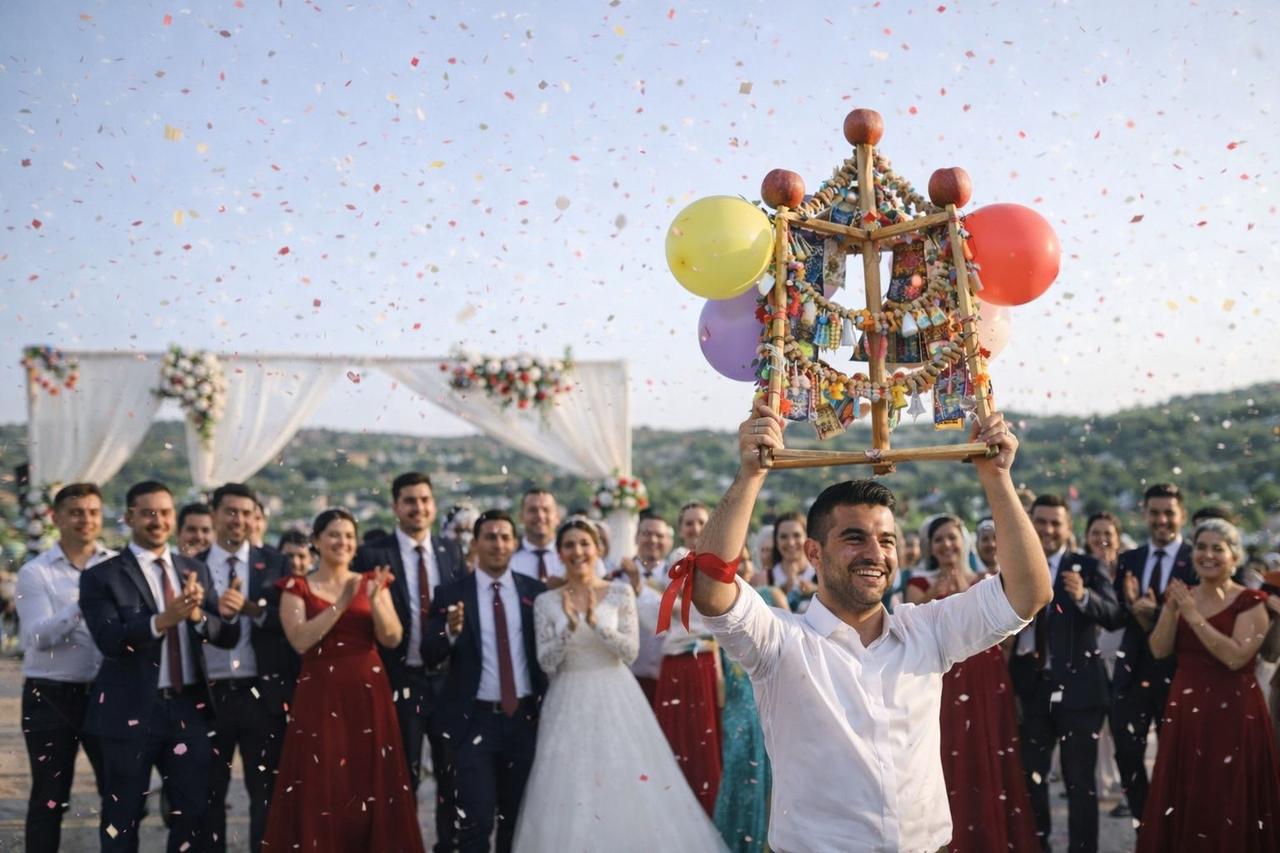
Şah Kaldırma Ritusu (Generated by Artificial Intelligence)
Although the Şah Kaldırma ritual is still actively preserved in villages around Kars, modernization — including rural-to-urban migration and the increasing practice of holding weddings in halls — has led to certain changes. While spatial constraints make full-scale performance difficult, the local community continues to uphold the ritual as a vital cultural heritage.
Altunok, Bedir. "17 asırlık “Şah Kaldırma” geleneği." Kafkas Haber Ajansı. Accessed January 1, 2026.https://www.kha.com.tr/haber/17-asirlik-sah-kaldirma-gelenegi_39070/
Altunsabak, Ergin. "Karapapak Türklerinde Şah Kaldırma Geleneğinin Mitik Çözümlemesi." *Milli Folklor* 28, no. 112 (2016): 120-131. Accessed January 1, 2026.https://www.millifolklordergisi.com/PdfViewer.aspx?Sayi=112&Sayfa=120
Erzurum Gazetesi. "Doğu Anadolu’da yüzyıllardır süren şah geleneği." Accessed January 1, 2026.https://www.erzurumgazetesi.com.tr/haber/Dogu-Anadolu-da-yuzyillardir-suren-sah-gelenegi/127134
Lider Haber Ajansı. "Kafkasya'dan Anadolu'ya Uzanan Gelenek Şah Bezeme." Accessed January 1, 2026.https://www.lha.com.tr/kafkasyadan-anadoluya-uzanan-gelenek-sah-bezeme-10705h.htm
TRT Avaz. "Kafkasya'dan Anadolu'ya uzanan 17 asırlık gelenek: Şah bezeme." Accessed January 1, 2026.https://www.trtavaz.com.tr/haber/tur/turkistandan/kafkasyadan-anadoluya-uzanan-17-asirlik-gelenek-sah-bezeme/60d9859401a30a370cc24b2e
(Generated with Artificial Intelligence)
Shah Removal Ritual
Relevant Community | Karapapak / Terekeme Turks | ||||||||
|---|---|---|---|---|---|---|---|---|---|
Geography | Amasya Sivas Tokat Ağrı Iğdır Ardahan Muş Kars | ||||||||
Type | Wedding Ritual | ||||||||
Main Material | Symbolic tree with 7 to 9 branches decorated with elements called şah and fruit candies | ||||||||
No Discussion Added Yet
Start discussion for "Shah Removal Ritual" article
Origins
Structure and Preparation of the Şah Tree
Stages of the Ritual
Formation and Procession of the Şah Cortege
Rules for Carrying the Şah
Symbolism of Fire, Light, and Mirrors
Welcoming, Scattering, and Gift-Giving
Current Status