+2 More

Birth | 15 November 1886 | ||||||||
|---|---|---|---|---|---|---|---|---|---|
Place of Birth | France - Blois | ||||||||
Education | Mathematics Philosophy | ||||||||
Adoption of Islam | In 1912 under the name Abdülvâhid Yahyâ | ||||||||
Death | 7 January 1951 | ||||||||
Place of Death | Egypt - Cairo | ||||||||
Major Works | A Collective Look at Islamic Spirituality and Taoism The Crisis of the Modern World East and West Sovereign of the Universe Material Power and Spiritual Authority | ||||||||
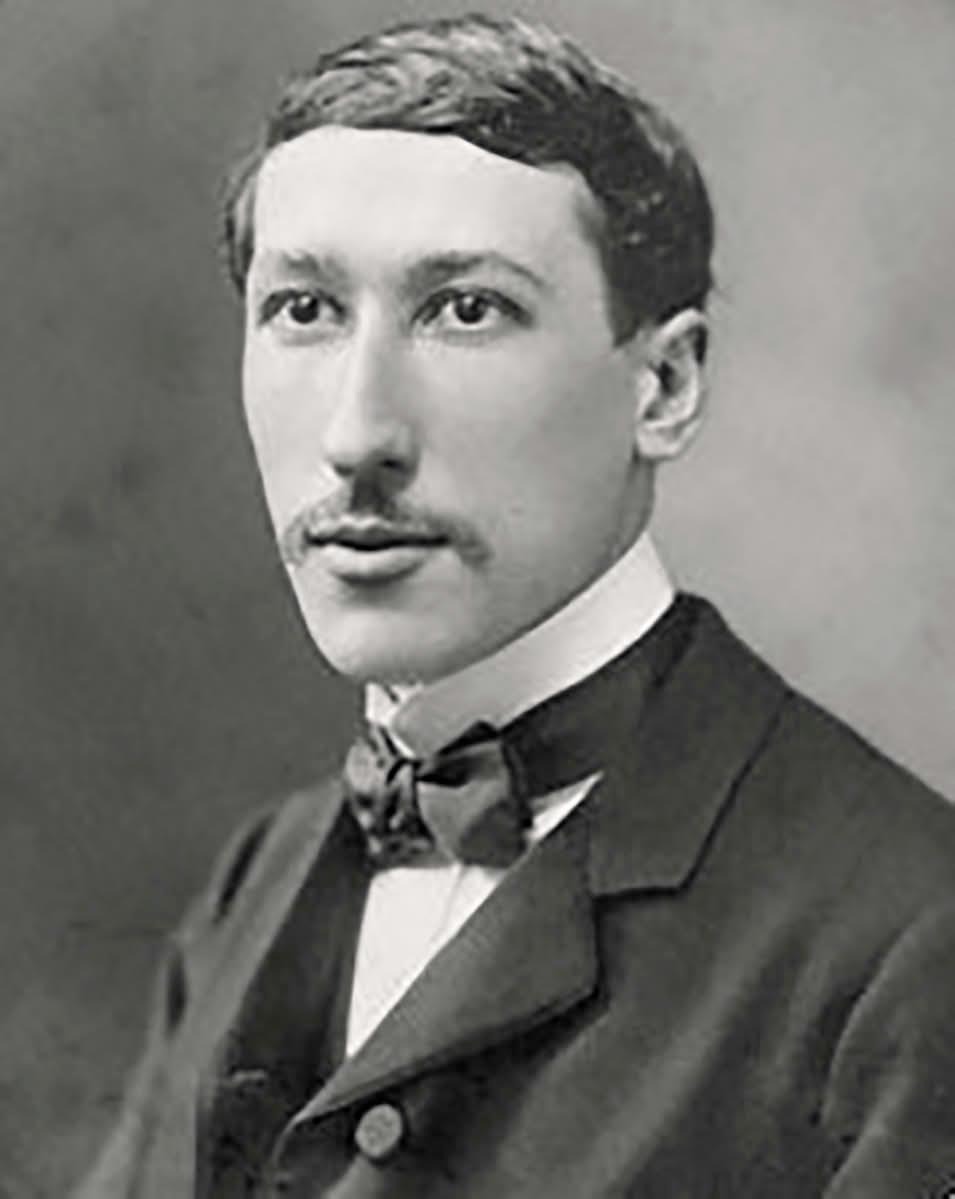
René Jean-Marie-Joseph Guénon (1886–1951) was a French thinker regarded as one of the pioneers of the traditionalist current of thought in the first half of the 20th century. Raised in a Catholic family, he began his education in religious schools and spent his youth immersed in various intellectual and metaphysical circles such as spiritualism, Freemasonry, and esotericism. In 1912, after embracing Islam, he adopted the name "Abdulwahid Yahya" and, following his affiliation with the Shadhiliyya tariqa, undertook extensive studies on metaphysics, tradition, and spirituality. In his works on various Western and Eastern traditions, he critiqued modernity and placed the traditional understanding of knowledge at the center. Guénon spent the last twenty years of his life in Cairo, where his numerous articles and books played a decisive role in reviving traditional metaphysics in the Western world.
René Guénon (full name René Jean-Marie-Joseph Guénon) was born on 15 November 1886 in Blois, France. His father, Jean-Baptiste, was an architect; his mother, Anna-Leontine Jolly. Raised in a Catholic family, Guénon had a frail constitution due to health problems during childhood. His aunt, Madame Duru, who lived near the family, took on a central role in his care and education from an early age. Guénon received his initial schooling from his aunt.
In October 1898, at the age of twelve, René Guénon began his secondary education at the religious school Notre-Dame des Aydes. In January 1902, he studied rhetoric at the Augustin-Thierry College. The following year, he continued his philosophical studies at the same college and completed this section with a grade of “very good.”
In 1904, René Guénon began his studies as a mathematics student. Due to health issues, he could not attend classes regularly. Upon his teachers’ recommendation, he moved to Paris in October of the same year and enrolled at the Rollin College. Initially, he lived in a room in the Latin Quarter, but soon relocated to Île Saint-Louis due to the behavior of surrounding students. He resided in a third-floor apartment in an 18th-century building for over twenty-five years.
In the following years, dissatisfied with classical texts, René Guénon turned toward other intellectual fields. During this period, he began exploring popular neo-spiritualist teachings. Through a friend, he became acquainted with “occultiste” circles interested in hidden sciences and quickly found his place within these communities.
“Subsequently, he joined Masonic lodges connected with these circles and rapidly attained high degrees. In 1908, he served as secretary at the Spiritualist and Masonic Congress. He resigned from this position after Papus, head of the Ecole Hermetique, declared at the congress that ‘the human soul returns to the world after death, enters a body, and thus achieves development (reincarnation: tenâsüh), thereby attaining immortality (survivance), and that these two principles form the foundation of spiritualism.’ At this time, he also became acquainted with leading figures of L’Eglise Gnostique and joined the organization. After severing ties with the aforementioned Masonic lodges and occultist institutions, he joined another Masonic lodge.”【1】
“In 1909, René Guénon joined the Gnostic Church and became a bishop under the name ‘Palengenius’—just as ‘René’ means ‘reborn,’ so too does ‘palengenius.’ While in the Gnostic Church and within occultist circles, Guénon met two important individuals: Leon Champrenaud and Albert de Pouvourville, both of whom played significant roles in his intellectual life.”【2】
“In November 1909, René Guénon and two friends began publishing the journal La Gnose. Initially, the journal appeared as the official publication of the Gnostic Church to which Guénon belonged. His first writings began appearing in this journal; over the course of three years, Guénon published many articles in it. The journal ceased publication in February 1912. During this period, Guénon earned a legitimate reputation as a ‘great metaphysician.’”【3】
La Gnose played a crucial role in René Guénon’s intellectual development. The journal marked one of the initial turning points in his turn toward Islam and Sufism.
“During the 1911 holidays, Guénon traveled to Blois to visit his mother and his aunt, Madame Duru. There, he met a young, qualified girl assisting his aunt. Her name was Berthe Loury—beautiful, cultured, and a musician. Guénon was drawn to her. The following year, on 11 July 1912, they were officially married at the Blois City Hall. A week later, their religious marriage was solemnized at Saint-Hilaire Church. As he himself noted in a letter, and as indirectly confirmed by his dedication in the 1931 publication ‘Le Symbolisme de la Croix,’ he became a Muslim in the year 1329 AH, corresponding to 1912 AD.”【4】
After becoming a Muslim, René Guénon, under the name Abdulwahid Yahya, accepted Islam through the intermediary of Abdulhadi, the successor of Sheikh Rahman Aliş el-Kebir, a Maliki scholar and Sheikh of the Shadhiliyya tariqa, and joined the Shadhiliyya order.【5】
After becoming a Muslim, René Guénon, now known as Abdulwahid Yahya, served as a substitute teacher at the Saint-Germain-en-Laye College between 1915 and 1916. His mother, Anna-Leontine Jolly, died on 8 March 1917 due to illness. Six months after his mother’s death, on 27 September 1917, Guénon was appointed as a philosophy teacher in Sétif, Algeria. There, in addition to teaching philosophy, he also taught French and Latin and furthered his Arabic studies.
After spending a year in Algeria, René Guénon and his wife returned to Paris in October 1918 and settled in the family home on Foix Street in Blois. Since they had no children, they took in their four-year-old nephew. During this period, Guénon taught philosophy for about a year before becoming a librarian at the University of Paris. His wife supported him by reading and correcting drafts of his writings. From 1924 onward, Guénon began teaching philosophy at the Saint-Louis College, where his nephew was studying.
“Guénon and his wife attended evening gatherings organized by friends, one of whom was François Bonjean. This man frequently hosted gatherings of individuals interested in the past, present, and future values of both East and West. Attendees included Muslims, Christians, Hindus, and Jews. Unfortunately, ‘these young and enlightened Easterners had no knowledge of their own religions and were entirely westernized.’ At these gatherings, Guénon conversed with almost all his interlocutors in their native languages. He was a polyglot: fluent in Arabic, Latin, Greek, Hebrew, English, German, Italian, Spanish, Russian, and Polish.”【6】
René Guénon lost his wife, Berthe Loury, whom he had married in 1912, on 15 January 1928. Later that year, his aunt Madame Duru, who had cared for him in childhood and provided his first education, also passed away. During this period, Guénon placed his fourteen-year-old nephew in the Victor-Hugo High School. After his nephew’s mother later took in her daughter, Guénon continued living alone.
“Guénon wrote for Voile d’Isis. In 1933, he changed the journal’s name to Etudes Traditionnelles. During this time, writers such as André Preau, René Allar, and Frithjof Schuon (Isa Nureddin) collaborated with him. Around 1929, Mr. and Mrs. Dina—a wealthy couple consisting of the Egyptian engineer Hasan Ferid Dina and Marie W Shillito, daughter of the president of the Canadian Pacific Railway—met Guénon. Mrs. Dina developed a great interest in Guénon’s works, collected them, and established a bookstore and publishing house with the aim of publishing his writings.”【7】
On 5 March 1930, René Guénon traveled to Egypt with Mrs. Dina for three months to study, translate, and conduct research on Islamic Sufism. Mrs. Dina returned after three months, but Guénon remained in Cairo, as he had not completed his work.
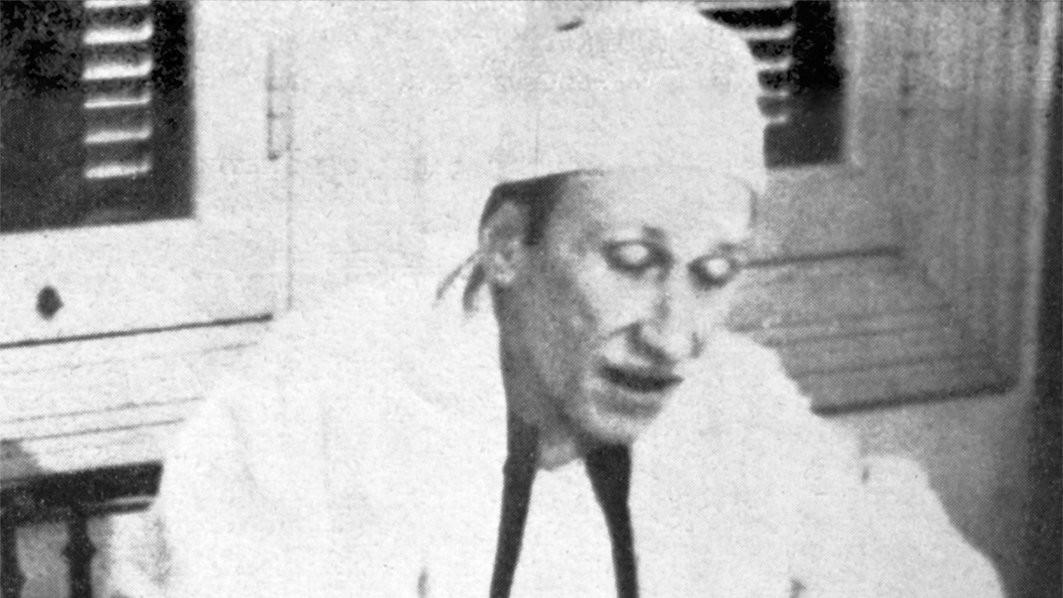
“Guénon lived discreetly in Cairo, avoiding all contact with Europeans, for he was no longer the Frenchman ‘René Guénon’ but ‘Sheikh Abdulwahid Yahya.’ He had fully embraced the customs and traditions of his new homeland. Because he was a Muslim and spoke Arabic without an accent, he lived modestly, embodying the living ideal of fakr. For a time, he resided at the Dâr el-İslâm Hotel opposite the Seyyid Hüseyin Mosque. One morning, Guénon met Sheikh Salâmi Radî, a member of a branch of the Shadhiliyya order, at this mosque. He attended the Sheikh’s gatherings for a while. The Sheikh died in 1940. During this time, Guénon published Arabic articles in the journal El-Ma’rife. Two of these articles, ‘The Influence of Islamic Civilization in the West’ and ‘Know Thyself,’ were later translated into French.”【8】
After staying for a time at the Dâr el-İslâm Hotel, René Guénon moved into the home of Hajji Khalil al-Hilwani on Tambaksiya Street. He later relocated to Koronfiş Street opposite al-Azhar University. Every morning, Guénon went to the Seyyid Hüseyin Mosque, where he met Sheikh Muhammad Ibrahim. He maintained a close relationship with the Sheikh and frequently visited his home. In July 1934, Guénon married Sheikh Muhammad Ibrahim’s daughter and moved into his father-in-law’s house.
After his second marriage, Guénon planned to return to Paris to complete unfinished business and retrieve his belongings, but he never did so. With the help of a friend, he cleared out his apartment on Île Saint-Louis and sent his books, documents, and possessions to Alexandria. Because these trunks could not fit in his father-in-law’s house, Guénon moved with his wife, sister-in-law, and father-in-law to al-Azhar Street. In the same year, he traveled with his wife to Alexandria—his only journey during the last twenty years of his life.
In May 1937, following his father-in-law’s death, René Guénon moved into a white, garden-house on Navel Street in the Dokki district outside Cairo. He named this house “Villa Fatima.” In it, he used one room as a study and another for worship. He did not share the address of the house with his European friends and received his letters via “poste-restante” (general delivery).
Necmeddin Bammat (d. 1985), who visited Guénon several times during these years, wrote in his memoir titled “Visites à René Guénon”: ‘He imbued even the most mundane actions—such as breaking bread or adding salt to food—with the value of worship.’ Due to an intense correspondence with readers between 1932 and 1939, Guénon found little opportunity to write his own works.”【9】
During this period, René Guénon developed rheumatism and remained immobile for long stretches. Although his health improved in 1938, he fell seriously ill again in April 1939. During this time, Martin Lings (Sheikh Abu Bakr), an Englishman who had become a Muslim and lived in Egypt, and Frithjof Schuon (Isa Nureddin) visited him. Later, Valentine de Saint Point (Ravheya Nureddin), a granddaughter of Lamartine who had embraced Islam, also visited him.
In 1944, René Guénon’s first daughter, Fatima, was born. In 1945, his health deteriorated again. In May 1946, his wife Fatima and daughter Fatima embarked on the Hajj pilgrimage. Guénon could not join them because he did not hold Egyptian citizenship.
In January 1947, René Guénon’s second daughter, Leyla, was born. His health continued to decline. Guénon made several applications to obtain Egyptian citizenship. After prolonged efforts and intervention by high-ranking officials, his request was accepted. In September 1949, Guénon’s third child and first son, Ahmed, was born.
His deteriorating health since 1947 worsened significantly in the final months of 1950. Deep wounds appeared on his right leg. Although temporarily healed, they soon deteriorated again, pain increased, and his mobility gradually diminished. His life, which began on 15 November 1886 in Blois, France, ended on 7 January 1951.
René Guénon’s funeral was held on 8 January 1951 after the noon prayer. In accordance with his will, a simple ceremony was conducted. The funeral prayer was performed at the Seyyid Hüseyin Mosque, and he was buried in the family cemetery at Derrase Cemetery near Mukattam Hill.
René Guénon began publishing his first writings in the journal La Gnose, which he co-founded with two friends.
“Guénon’s works have been translated into other Western languages, including English, Arabic, Spanish, Portuguese, and German. He wrote seventeen books and approximately three hundred fifty articles. He published under the name René Guénon. The Arabic articles he wrote were signed Abdulwahid Yahya.”【10】
“René Guénon’s works have been translated into many Western languages and have even reached Tibet. In Turkish, translations of his writings were first published in the journal Diriliş in the autumn of 1979 over a period of four months.”【11】
René Guénon’s works include:
Akgül, Zeynep. "René Guénon’un Gelenekselci DüşüncesindeDin Bilimleri Sanat." Master's thesis,Atatürk Üniversitesi Institute of Social Sciences, Department of Philosophy and Religious Studies, 2020.
Akkaya, Yusuf Bilal. "René Guénon'un Gelenek Anlayışının Güray Süngü'nün Öykülerine Yansıması." Master's thesis, Fatih Sultan Mehmet Vakıf University, 2024.
Evkuran, Mehmet. “Rene Guenon Düşüncesinde Temel Konu ve Kavramlar.” *Bilimname*, no. X (2006): 93–115. Accessed September 10, 2025.https://bilimname.erciyes.edu.tr/sayilar/200601/20060104.pdf
Guénon, René. Doğu ve Batı. Trans. Fahrettin Arslan. İstanbul: İnsan Yayınları, 2021.
Guénon, René. Kadim Bilimler ve Bazı Modern Yanılgılar. Trans. Fevzi Topaçoğlu. İstanbul: İnsan Yayınları, 2000.
Guénon, René. Maddi İktidar ve Ruhani Otorite. İstanbul: Ağaç Yayıncılık, 1992.
Guénon, René. Metatron Dünya Krallığı: Kıyamet İşçileri Ülkesi Agarta’nın Öyküsü. Trans. Halûk Özden. İstanbul: Ruh ve Madde Yayınları, 1992.
Guénon, René. Modern Dünyanın Bunalımı. Trans. Mahmut Kanık. İstanbul: İnsan Yayınları, 2022.
Guénon, René. Niceliğin Egemenliği ve Çağın Alametleri. Trans. Mahmut Kanık. İstanbul: İz Yayıncılık, 2012.
Guénon, René. Varlığın Mertebeleri. Trans. Vildan Yalsızuçanlar. İstanbul: Etkileşim Yayınları, 2013.
Guénon, René. Âlemin Hükümdarı: Dinlerde Merkez Sembolizmi. İstanbul: İnsan Yayınları, 2004.
Guénon, René. İslam Maneviyatı ve Taoculuğa Toplu Bakış. Trans. Mahmut Kanık. İstanbul: İnsan Yayınları, 2016.
Kanık, Mahmut. "Rene Guenon ve Eserleri Üzerine." Introduction. Modern Dünyanın Bunalımı, by René Guénon. İstanbul: İnsan Yayınları, 2022.
Kasay, Abdullah. "Çağdaş Türk Düşüncesinde Gelenekselci Ekol’ün (Tradisyonalizm) Eleştirisi." Master's thesis, Necmettin Erbakan University Institute of Social Sciences, Department of Philosophy and Religious Studies, Islamic Philosophy, Konya, 2019.
Kværne, Per. "René Guénon." Store Norske Leksikon. Accessed September 10, 2025.https://snl.no/Ren%C3%A9_Gu%C3%A9non
Tahralı, Mustafa. “Abdülvâhid Yahyâ (René Guénon).” *TDV İslâm Ansiklopedisi*. Accessed September 10, 2025.https://islamansiklopedisi.org.tr/abdulvahid-yahya-rene-guenon
Çil, Hüseyin. “Sınırın Ötesinde Yaşamak: Rene Guenon Düşüncesinde Modernite, Gelenek ve Hakikat.” *Temaşa Felsefe Dergisi*, no. 15 (2021): 188–201. Accessed September 10, 2025.https://dergipark.org.tr/tr/pub/temasa/issue/62806/915915
[1]
Mustafa Tahralı. “Abdülvâhid Yahyâ (René Guénon).” TDV İslâm Ansiklopedisi. Erişim 10 Eylül 2025. https://islamansiklopedisi.org.tr/abdulvahid-yahya-rene-guenon
[2]
René Guénon, İslam Maneviyatı ve Taoculuğa Toplu Bakış, çev. Mahmut Kanık (İstanbul: İnsan Yayınları, 2016), 13.
[3]
René Guénon, İslam Maneviyatı ve Taoculuğa Toplu Bakış, çev. Mahmut Kanık (İstanbul: İnsan Yayınları, 2016), 13-14.
[4]
René Guénon, İslam Maneviyatı ve Taoculuğa Toplu Bakış, çev. Mahmut Kanık (İstanbul: İnsan Yayınları, 2016), 15.
[5]
Tahralı, Mustafa. “Abdülvâhid Yahyâ (René Guénon).” TDV İslâm Ansiklopedisi. Erişim 10 Eylül 2025. https://islamansiklopedisi.org.tr/abdulvahid-yahya-rene-guenon
[6]
René Guénon, İslam Maneviyatı ve Taoculuğa Toplu Bakış, çev. Mahmut Kanık (İstanbul: İnsan Yayınları, 2016), 16.
[7]
René Guénon, İslam Maneviyatı ve Taoculuğa Toplu Bakış, çev. Mahmut Kanık (İstanbul: İnsan Yayınları, 2016), 16-17.
[8]
René Guénon, İslam Maneviyatı ve Taoculuğa Toplu Bakış, çev. Mahmut Kanık (İstanbul: İnsan Yayınları, 2016), 17.
[9]
Mustafa Tahralı. “Abdülvâhid Yahyâ (René Guénon).” TDV İslâm Ansiklopedisi. Erişim 10 Eylül 2025. https://islamansiklopedisi.org.tr/abdulvahid-yahya-rene-guenon
[10]
Zeynep Akgül, “René Guénon’un Gelenekselci Düşüncesinde Din ve Sanat” (yüksek lisans tezi, Atatürk Üniversitesi Sosyal Bilimler Enstitüsü, Felsefe ve Din Bilimleri Anabilim Dalı, 2020), 8.
[11]
Mahmut Kanık, “René Guénon ve Eserleri Üzerine,” Modern Dünyanın Bunalımı, René Guénon (İstanbul: İnsan Yayınları, 2022), 10.

Birth | 15 November 1886 | ||||||||
|---|---|---|---|---|---|---|---|---|---|
Place of Birth | France - Blois | ||||||||
Education | Mathematics Philosophy | ||||||||
Adoption of Islam | In 1912 under the name Abdülvâhid Yahyâ | ||||||||
Death | 7 January 1951 | ||||||||
Place of Death | Egypt - Cairo | ||||||||
Major Works | A Collective Look at Islamic Spirituality and Taoism The Crisis of the Modern World East and West Sovereign of the Universe Material Power and Spiritual Authority | ||||||||
No Discussion Added Yet
Start discussion for "René Guénon (Abdulvahid Yahya)" article
Birth and Early Years
Educational Life
Involvement in Esoteric Circles
Embracing Islam and First Marriage
Works and Family
Settlement in Egypt and Second Marriage
Final Years
Death
Works