+1 More

Grave | Zincirlikuyu Cemetery | ||||||||
|---|---|---|---|---|---|---|---|---|---|
Journals | Ergenekon Bozkurt Gök Börü | ||||||||
Award | 997 Burhan Felek Press Service Award | ||||||||
Ideological movement | Turkish Nationalism (Turkism) | ||||||||
Profession | Academic Writer Politician Journalist | ||||||||
Education | Sorbonne (Anthropology) AÜ Law Columbia University | ||||||||
Date of death | 2010-01-18 | ||||||||
Date of birth | 1920-10-12 | ||||||||
Dr. Reha Oğuz Türkkan was born on 12 October 1920 in Istanbul. He belonged to the Hacıkadızadeler family originating from Kastamonu-Taşköprü; his father was Halit Ziya Bey, the General Director of the Land Registry and Cadastre who introduced the cadastre system to Türkiye, and his mother was Saibe Hanım. Ömer Fahrettin Türkkan Pasha, known for his defense of Medina, was his father’s uncle.
Spending part of his childhood in the villa of his uncle Ziya Paşa in Erenköy and in his father’s property on Büyükada, Türkkan later adopted the name “Oğuz” due to his Turkist convictions.
Türkkan began his education at St. Joseph High School and continued at Kabataş Boys High School and Galatasaray High School. At Galatasaray High School, he became a student of the renowned literary figure Halit Fahri Ozansoy. At the end of 1937, Türkkan embraced the Turkist movement and founded a secret society around the magazine Ergenekon during his high school years. Launched on 10 November 1938 under the editorial direction of Fevziye Abdullah Tansel, this magazine marked the first concrete step in Türkkan’s efforts to disseminate his ideas.【1】
After completing high school, Türkkan went to France in 1938 to study physical anthropology at the Sorbonne University. Following the German occupation of France in 1940, he returned to Türkiye and graduated from the Faculty of Law at Ankara University. During this period, he held various positions at the Ministry of Justice and the Turkish Grand National Assembly’s Construction Commission.
Active in Turkist circles, Türkkan published articles under pseudonyms such as “Mete Turanlı,” “Reha Kurtuluş,” and “Avni Motun” in the magazines he launched: Ergenekon, Bozkurt, and Gök Börü. During these years, he developed ideological disagreements with Nihal Atsız, and leadership disputes within the Turkist movement became widely known in public discourse as the “Atsız-Türkkan Conflict.” Türkkan also founded the “Society of Book Lovers” and published a new edition of Ahmet Hikmet Müftüoğlu’s work Çağlayanlar.
After deciding to leave Türkiye following the 1946 elections, Türkkan first went to France for medical treatment and then to the United States of America to complete his doctorate. While in America, after working in various jobs such as potato farming and book publishing, he began teaching at Columbia University. Publishing works and articles in English, Türkkan established himself in academic circles and contributed to encyclopedias such as Encyclopedia Britannica.
While in America, Türkkan maintained ties with Türkiye, regularly contributing articles under the title “Letters from America” to the newspaper Cumhuriyet and personally producing brochures and organizing exhibitions to promote Türkiye. In 1955, his article “From the Coffin to the Light of Day,” published in the newspaper Tercüman at the suggestion of Cihat Baban, attracted considerable attention.
During his time in America, Türkkan also entered the tourism sector, using his own resources to produce radio advertisements and organize exhibitions aimed at attracting tourists to Türkiye.
Reha Oğuz Türkkan was an intellectual whose political framework was grounded in Turkish nationalism.【2】 On religious matters, he argued that religion could not be dismissed as fanaticism but must never be placed above national interests or the nation itself.【3】 In his political thought system, he structured the balance between religion and nationalism around the axis of national identity.
In foreign policy, Türkkan unequivocally rejected the colonial order and argued that war could not be avoided when the survival and independence of the state demanded it. In domestic policy, while affirming democracy as an indispensable form of governance, he advocated the implementation of what he termed a “disciplined democracy.”【4】
Türkkan exhibited a highly sensitive stance on debates concerning national unity, strongly opposing discussions based on concepts such as “miscegenation” or “mosaic.” According to Türkkan, the fundamental element sustaining a country and its civilization is ideological unity; he asserted that a society without a unifying ideal would inevitably be dragged toward collapse and emphasized that the national ideal was a necessity for social well-being.
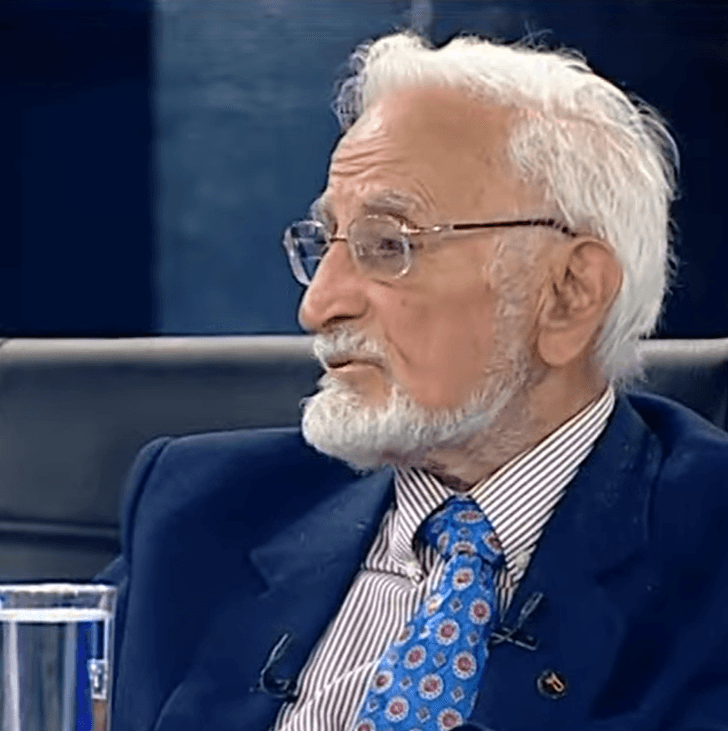
Reha Oğuz Türkkan (Habertürk)
In the early years of the Republic, the idea of Turanism was regarded by the state as a threat in its bilateral relations with the Soviet Union and thus met with cautious restraint. During the era of Atatürk, the Turkism-Turanism movement faced various restrictions in terms of political organization and publishing activities, and groups representing Turkist ideas failed to achieve broad organizational reach. Nevertheless, Atatürk consistently identified himself as a Turkish nationalist. After the leadership change in 1938, there was no significant shift in the regime’s approach to Turkism and Turanism.
However, beginning in 1938, the Turkist movement gained new momentum. One of the main factors behind this revival was the new policy of conciliation adopted by İsmet İnönü toward political figures and personalities from the Atatürk era. As a result of this policy, figures such as Dr. Rıza Nur and Zeki Velidi Togan returned to Türkiye in December 1938, injecting spiritual dynamism into the Turkist movement.【5】
Approaches implemented in the early 1930s, such as the Turkish History Thesis and the Sun Language Theory, processed Central Asian history through the lens of a “motherland” consciousness via school textbooks, laying the groundwork for the development of nationalist discourse. In particular, high schools and educational institutions served as vehicles for spreading Turkist sentiments among the younger generation. Figures such as Nihal Atsız, Nihat Sami Banarlı, Orhan Şaik Gökyay, Arif Nihat Asya, Hüseyin Namık Orkun, and Fevziye Abdullah Tansel promoted nationalist ideas in Turkish literature and history classes, encouraging the ideal of cultural unity. Between 1939 and 1944, the most active representative of Turkist-Turanist tendencies among the younger generation was Reha Oğuz Türkkan.【6】
The love of books and sensitivity to cultural issues played a significant role in shaping Reha Oğuz Türkkan’s intellectual world and personal interests. From his youth onward, Türkkan turned toward institutional initiatives, and his most concrete activity in this field was launched in 1939.【7】
On 11 October 1939, with permission from the Ministry of Interior, Türkkan founded an association named the “Society of Book Lovers” for the purpose of scholarly research.【8】 The honorary presidency of the association was held by Fethi Okyar, then Minister of Justice; the board of directors included Besim Atalay, Mehmet Sadık Aran, Nebil Buharalı, Reha Oğuz Türkkan, and Ertuğrul Yener. The association received strong support from the political and scientific communities and quickly became an organization with 15 members of parliament. To publicize its activities, the association published a four-page brochure. The first two pages were dedicated to its founding purpose and publication program, the third page contained a membership form, and the fourth page was formatted as an envelope with the association’s address. A notable detail on the membership form was the inclusion of the “place of birth of the grandfather.”
The single-party regime, closely monitoring and suspicious of the association’s independent existence, felt uneasy about it. On 27 April 1940, the Anatolia News Agency announced to the public that the Society of Book Lovers had voluntarily merged with the People’s Houses. Türkkan, in his memoirs, stated that this merger was not voluntary but enforced. During its short existence, the institution made significant contributions to cultural life. New editions of Ziya Gökalp’s Esasları Türkçülük and Ahmet Hikmet Müftüoğlu’s Çağlayanlar, which could not be printed using the new alphabet adopted in 1928, were published. These efforts formed the cornerstone of the institution’s publishing program.【9】
As a prolific writer, Dr. Reha Oğuz Türkkan authored numerous works across a wide range of subjects including nationalism, Turkish culture, psychology, educational technology, and personal development. He also used pseudonyms such as “Mete Turanlı,” “Reha Kurtuluş,” and “Avni Motun” in the magazines he published.
Türkkan’s works can be classified by subject as follows:
In addition to his academic and intellectual work, Türkkan was active in visual and audio media and publishing.
Prof. Dr. Reha Oğuz Türkkan, who served as a faculty member at various universities in Türkiye and abroad and was one of the three founders of the “Programmed Learning with Questions” method, was listed in the encyclopedia Who's Who. He served as an educational technology consultant to the U.S. government in the planning of education for four states and in the establishment of an open university. He participated in Turkist activities between 1938 and 1944, during which he published numerous magazines and books.【11】
Prof. Dr. Reha Oğuz Türkkan, journalist, member of the Turkish Journalists Association, holder of a Permanent Press Card, and recipient of the 1997 Burhan Felek Journalism Service Award, died in Istanbul on 18 January 2010 at the age of 90. His funeral was held at Zincirlikuyu Cemetery.
Habertürk. "Teke Tek Özel - Reha Oğuz Türkkan / 10 Mayıs 2009." YouTube. Accessed June 28, 2026. https://youtu.be/0WGx8RePTQ4
Yeni Şafak. "Yazar Türkkan Vefat Etti." Yeni Şafak. (2010). Accessed June 28, 2026. https://www.yenisafak.com/gundem/yazar-turkkan-vefat-etti-236334
Yıldırım, Osman Alper. "Reha Oğuz Türkkan'ın (1920-2009) Hayatı Ve Çalışmaları." Master's thesis, Marmara Üniversitesi, 2019. Accessed June 28, 2026. https://tez.yok.gov.tr/UlusalTezMerkezi/TezGoster?key=aEzj_IdWAsjiSAfK3qwrBjX_OaAB-vL68H1F1AJufE_cJO9-MKisdeNZpWZICQvi
Şamlı, Emre. "Bir Türkçünün Portresi: Reha Oğuz Türkkan." TÜBAR, no. XLIV (2018): 193-214. Accessed June 28, 2026. https://dergipark.org.tr/tr/download/article-file/611075
[1]
Osman Alper Yıldırım, Reha Oğuz Türkkan'ın (1920-2009) Hayatı ve Çalışmaları (Yüksek Lisans Tezi, Marmara Üniversitesi, 2019), 10-11. Erişim tarihi: 28 Haziran 2026.https://tez.yok.gov.tr/UlusalTezMerkezi/TezGoster?key=aEzj_IdWAsjiSAfK3qwrBjX_OaAB-vL68H1F1AJufE_cJO9-MKisdeNZpWZICQvi.
[2]
Emre Şamlı, “Bir Türkçünün Portresi: Reha Oğuz Türkkan,” TÜBAR, no. XLIV (2018): 195. Erişim tarihi: 28 Haziran 2026.https://dergipark.org.tr/tr/download/article-file/611075.
[3]
Emre Şamlı, “Bir Türkçünün Portresi: Reha Oğuz Türkkan,” TÜBAR, no. XLIV (2018): 195. Erişim tarihi: 28 Haziran 2026.https://dergipark.org.tr/tr/download/article-file/611075.
[4]
Emre Şamlı, “Bir Türkçünün Portresi: Reha Oğuz Türkkan,” TÜBAR, no. XLIV (2018): 200. Erişim tarihi: 28 Haziran 2026.https://dergipark.org.tr/tr/download/article-file/611075.
[5]
Osman Alper Yıldırım, Reha Oğuz Türkkan'ın (1920-2009) Hayatı ve Çalışmaları (Yüksek Lisans Tezi, Marmara Üniversitesi, 2019), 26-27. Erişim tarihi: 28 Haziran 2026.https://tez.yok.gov.tr/UlusalTezMerkezi/TezGoster?key=aEzj_IdWAsjiSAfK3qwrBjX_OaAB-vL68H1F1AJufE_cJO9-MKisdeNZpWZICQvi.
[6]
Osman Alper Yıldırım, Reha Oğuz Türkkan'ın (1920-2009) Hayatı ve Çalışmaları (Yüksek Lisans Tezi, Marmara Üniversitesi, 2019), 27. Erişim tarihi: 28 Haziran 2026.https://tez.yok.gov.tr/UlusalTezMerkezi/TezGoster?key=aEzj_IdWAsjiSAfK3qwrBjX_OaAB-vL68H1F1AJufE_cJO9-MKisdeNZpWZICQvi.
[7]
Emre Şamlı, “Bir Türkçünün Portresi: Reha Oğuz Türkkan,” TÜBAR, no. XLIV (2018): 212-213. Erişim tarihi: 28 Haziran 2026.https://dergipark.org.tr/tr/download/article-file/611075.
[8]
Emre Şamlı, “Bir Türkçünün Portresi: Reha Oğuz Türkkan,” TÜBAR, no. XLIV (2018): 212. Erişim tarihi: 28 Haziran 2026.https://dergipark.org.tr/tr/download/article-file/611075.
[9]
Emre Şamlı, “Bir Türkçünün Portresi: Reha Oğuz Türkkan,” TÜBAR, no. XLIV (2018): 213. Erişim tarihi: 28 Haziran 2026.https://dergipark.org.tr/tr/download/article-file/611075.
[10]
Osman Alper Yıldırım, Reha Oğuz Türkkan'ın (1920-2009) Hayatı ve Çalışmaları (Yüksek Lisans Tezi, Marmara Üniversitesi, 2019), 16-23. Erişim tarihi: 28 Haziran 2026.https://tez.yok.gov.tr/UlusalTezMerkezi/TezGoster?key=aEzj_IdWAsjiSAfK3qwrBjX_OaAB-vL68H1F1AJufE_cJO9-MKisdeNZpWZICQvi.
[11]
Osman Alper Yıldırım, Reha Oğuz Türkkan'ın (1920-2009) Hayatı ve Çalışmaları (Yüksek Lisans Tezi, Marmara Üniversitesi, 2019), 83. Erişim tarihi: 28 Haziran 2026.https://tez.yok.gov.tr/UlusalTezMerkezi/TezGoster?key=aEzj_IdWAsjiSAfK3qwrBjX_OaAB-vL68H1F1AJufE_cJO9-MKisdeNZpWZICQvi.

Grave | Zincirlikuyu Cemetery | ||||||||
|---|---|---|---|---|---|---|---|---|---|
Journals | Ergenekon Bozkurt Gök Börü | ||||||||
Award | 997 Burhan Felek Press Service Award | ||||||||
Ideological movement | Turkish Nationalism (Turkism) | ||||||||
Profession | Academic Writer Politician Journalist | ||||||||
Education | Sorbonne (Anthropology) AÜ Law Columbia University | ||||||||
Date of death | 2010-01-18 | ||||||||
Date of birth | 1920-10-12 | ||||||||
Childhood and the Beginning of His Education
Youth and the Second World War Period
Years in America
His Political Thought
The Turkism-Turanism Movement
Associations and Love of Books
His Works
Books
Magazines, Television Programs, and Films
Death