This article was automatically translated from the original Turkish version.
+1 More
Monument Name | New Zealand National Memorial | ||||||||
|---|---|---|---|---|---|---|---|---|---|
Location | Conkbayırı Hill, Gelibolu Peninsula, Çanakkale | ||||||||
Architect | S. Hurst Seager | ||||||||
Construction Year | 1925 | ||||||||
Constructing Institution | Commonwealth War Graves Commission (CWGC) | ||||||||
Cemetery Dimensions | 29 m long, 36.5 m at the summit, 40 m at the base | ||||||||
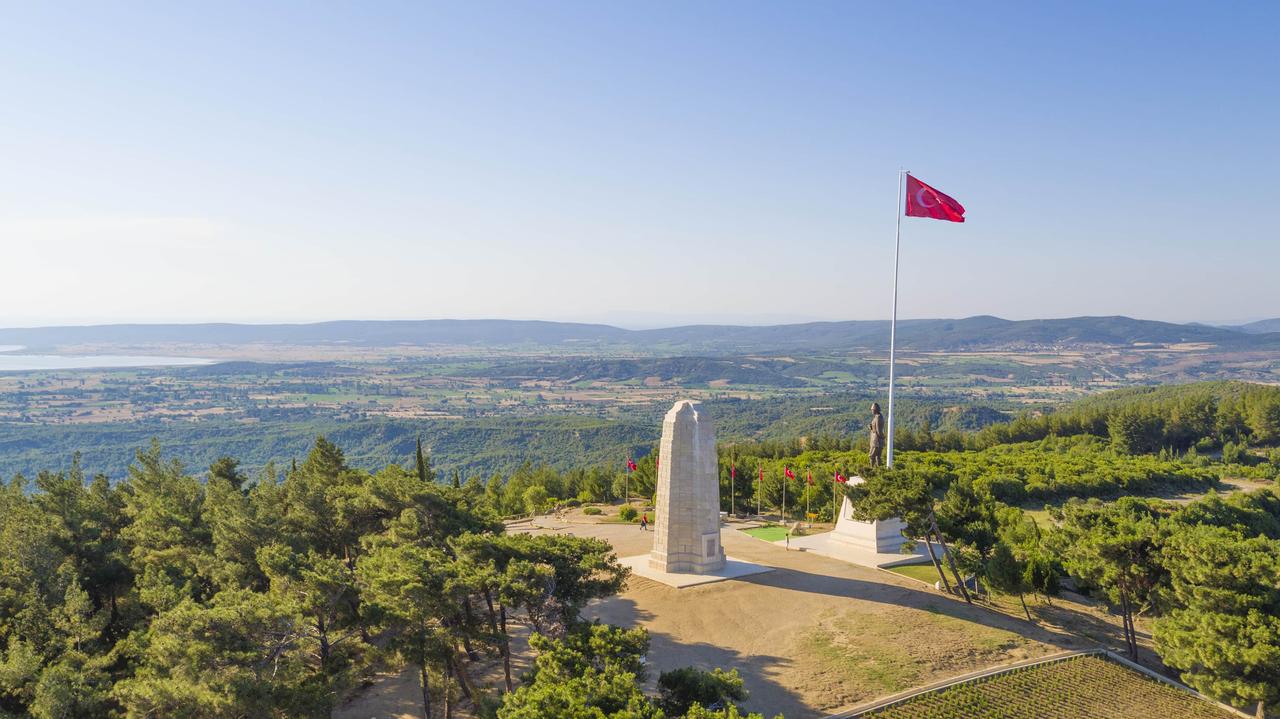
New Zealand National Memorial is the most prominent structure built in memory of New Zealand soldiers on the Gallipoli Peninsula. Located atop the Conkbayırı summit, this memorial was erected as the largest New Zealand memorial on the peninsula in commemoration of the battles that took place on 8 August 1915. The structure was completed in 1925 by the Commonwealth War Graves Commission (CWGC).【1】
Twelve Tree Copse Cemetery and New Zealand Memorial (Çanakkale Tarihi Alan Başkanlığı)
The memorial was designed by New Zealand architect S. Hurst Seager. Architecturally, it takes the form of a long, tapering stone pylon rising upward.
Structurally similar to the Lone Pine Memorial, it features a multi-faceted shape and is constructed from cut stone. Its appearance resembles a bell tower.【2】
The area where the memorial stands was a strategic point during the August 1915 battles, where New Zealand forces advanced and seized positions near Sazlıdere. During the intense fighting on 8 August 1915, the Wellington Battalion under the command of Lieutenant Colonel William Malone occupied the front lines and suffered heavy casualties.【3】
Colonel Malone was killed on the same day when a shell exploded near him. After 12 days of resistance, Conkbayırı was lost by the Allied forces on 10 August 1915 following a counterattack by Turkish units under the command of Mustafa Kemal. This military operation is regarded as one of the decisive turning points of the Gallipoli Campaign.【4】
The memorial’s body bears the inscription: "To the Memory of the New Zealand Expeditionary Force 8 August 1915 From the Farthest Ends of the Earth".【5】
The memorial preserves the names of 856 New Zealand Expeditionary Force officers and men who died in the fighting between August and December 1915 and whose graves are unknown. These names are engraved on low stone walls opposite the memorial.【6】
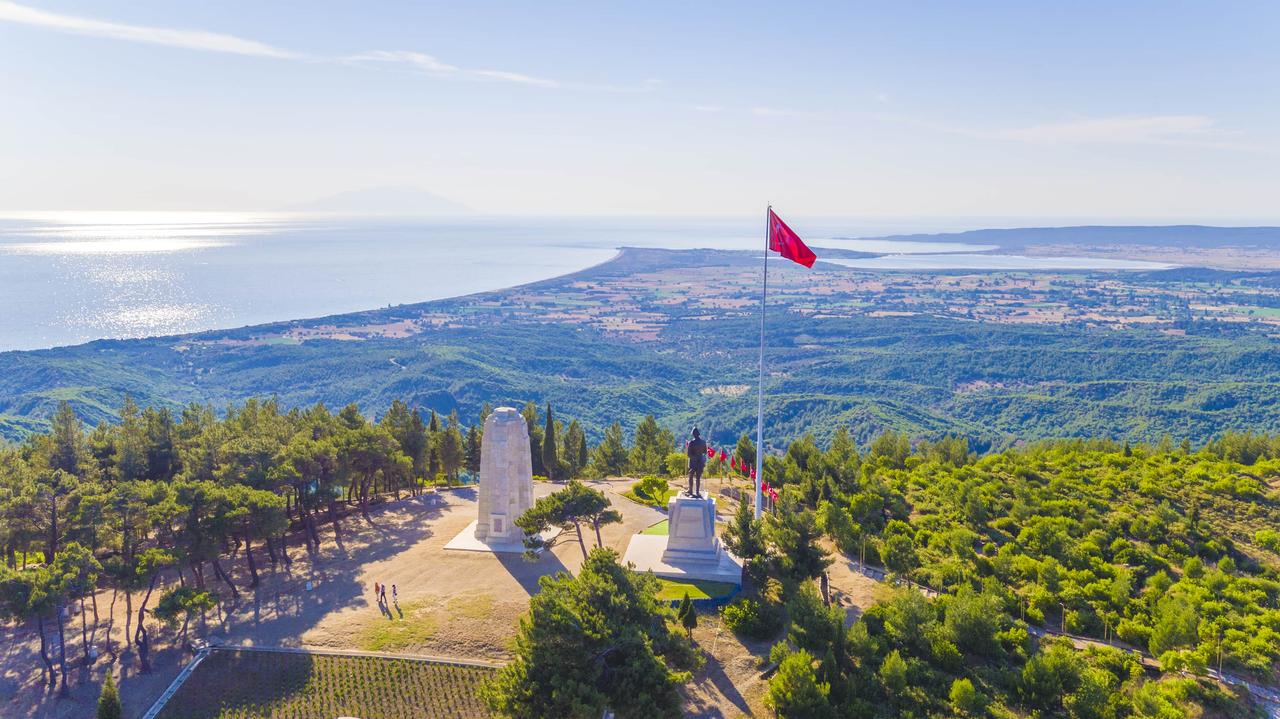
Yeni Zelenda Anıtı (Gelibolu Tarihi Alan Başkanlığı)
Located 20 metres east of the main memorial is the New Zealand Cemetery. The cemetery area measures 36.5 metres at the top and 40 metres at the base, with a length of 29 metres.【7】
Nine rows of graves, aligned parallel to the path, are arranged within the site, with only one row marked by headstones. The foundation of the cemetery was laid by Turkish soldiers who buried the dead—New Zealand, British and Gurkha soldiers—together in this single location following the battle. The site also contains remnants of the original New Zealand trench and observation posts from the war period.【8】
Ceremonies begin with a traditional Māori welcome known as "Karanga," which signifies "Welcome," accompanied by chants. Religious services are held, prayers are recited, and a Haka dance performance is presented by members of the New Zealand Defence Force.【9】
Anadolu Ajansı. "Çanakkale Kara Savaşları'nın yıl dönümünde Lone Pine Anıtı’nda anma töreni düzenlendi." Accessed July 16, 2026.https://www.aa.com.tr/tr/gundem/canakkale-kara-savaslarinin-yil-donumunde-lone-pine-aniti-nda-anma-toreni-duzenlendi/2572307
CNN Türk. "Anzakları 'Yeni Zelandalı' yapan yer." Accessed July 16, 2026.https://www.cnnturk.com/yasam/diger/anzaklari-yeni-zelandali-yapan-yer-235766
CNN Türk. "Şehitler Abidesi'nde uluslararası tören." Accessed July 16, 2026.https://www.cnnturk.com/turkiye/sehitler-abidesinde-uluslararasi-toren-176263
Gelibolu Tarihi Alan Başkanlığı. "Yeni Zelanda Ulusal Anıtı ve Mezarlığı." Accessed July 16, 2026.https://canakkaletarihialan.gov.tr/tr/ziyaret/mezarliklar-ve-anitlar/yeni-zelanda-ulusal-aniti-ve-mezarligi
Çanakkale Tarihi Alan Başkanlığı. "Twelve Tree Copse Mezarlığı ve Yeni Zelanda Anıtı." YouTube. Accessed July 16, 2026.
[1]
Gelibolu Tarihi Alan Başkanlığı. "Yeni Zelanda Ulusal Anıtı ve Mezarlığı." Erişim Tarihi 16 Temmuz 2026. https://canakkaletarihialan.gov.tr/tr/ziyaret/mezarliklar-ve-anitlar/yeni-zelanda-ulusal-aniti-ve-mezarligi
[2]
Gelibolu Tarihi Alan Başkanlığı. "Yeni Zelanda Ulusal Anıtı ve Mezarlığı."
[3]
Gelibolu Tarihi Alan Başkanlığı. "Yeni Zelanda Ulusal Anıtı ve Mezarlığı."
[4]
CNN Türk. "Anzakları "Yeni Zelandalı" yapan yer." Erişim Tarihi 16 Temmuz 2026. https://www.cnnturk.com/yasam/diger/anzaklari-yeni-zelandali-yapan-yer-235766
[5]
Gelibolu Tarihi Alan Başkanlığı. "Yeni Zelanda Ulusal Anıtı ve Mezarlığı."
[6]
Gelibolu Tarihi Alan Başkanlığı. "Yeni Zelanda Ulusal Anıtı ve Mezarlığı."
[7]
Gelibolu Tarihi Alan Başkanlığı. "Yeni Zelanda Ulusal Anıtı ve Mezarlığı."
[8]
Gelibolu Tarihi Alan Başkanlığı. "Yeni Zelanda Ulusal Anıtı ve Mezarlığı."
[9]
Anadolu Ajansı. "Çanakkale Kara Savaşları'nın yıl dönümünde Lone Pine Anıtı’nda anma töreni düzenlendi." Accessed July 16, 2026.

Monument Name | New Zealand National Memorial | ||||||||
|---|---|---|---|---|---|---|---|---|---|
Location | Conkbayırı Hill, Gelibolu Peninsula, Çanakkale | ||||||||
Architect | S. Hurst Seager | ||||||||
Construction Year | 1925 | ||||||||
Constructing Institution | Commonwealth War Graves Commission (CWGC) | ||||||||
Cemetery Dimensions | 29 m long, 36.5 m at the summit, 40 m at the base | ||||||||
No Discussion Added Yet
Start discussion for "New Zealand National Monument" article
Architectural Features and Design
Historical Background and Military Significance
Inscriptions and Named Casualties on the Memorial
New Zealand Cemetery
Commemorative Ceremonies and Cultural Heritage