


This article was automatically translated from the original Turkish version.
+2 More
Narlıkuyu Mosaic Museum
Location | Mersin Silifke Narlıkuyu | ||||||||
|---|---|---|---|---|---|---|---|---|---|
Construction Period | 4th century AD | ||||||||
Discovery Year(s) | 1975 | ||||||||
Museumization Date | 1975–1976 | ||||||||
Culture | Roman Period, Eastern Roman Empire | ||||||||
Protected Elements | Floor mosaic, Water basin | ||||||||
Figures Depicted in the Mosaic | Aglaia, Thalia, Euphrosine (The Three Graces / Charites) | ||||||||
Mythological Context | Daughters of Zeus and Eurynome | ||||||||
Mosaic Features | Black white yellow stones, geometric patterns, bird and flower motifs | ||||||||
Inscription Language | Greek | ||||||||
Person Mentioned in the Inscription | Poimenios | ||||||||
Poimenios's Title | Eastern Roman administrator, honest governor of the sacred islands, imperial friend | ||||||||
Ancient Settlement Name | Porto Calamie | ||||||||
Related Natural Element | Freshwater emerging from the Paradise Abyss | ||||||||
Affiliated Institution | Ministry of Culture and Tourism of the Republic of Türkiye | ||||||||
Narlıkuyu Mosaic Museum is located in the village of Narlıkuyu, within the Silifke district of Mersin, Türkiye. The museum was constructed to preserve the mosaic floor of a Roman-era bathhouse uncovered during archaeological excavations carried out between 1975 and 1976. Situated approximately 20 kilometers from the center of Silifke, the structure contains both historically significant architectural remains and depictions from Greek mythology. The mosaic is preserved within the museum building and provides insight into the artistic sensibilities of its time.
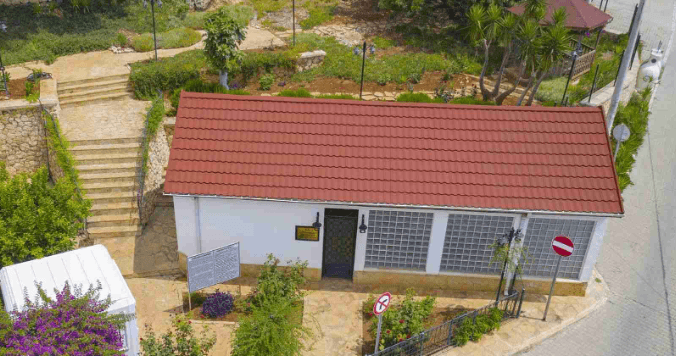
Narlıkuyu Mosaic Museum (Turkish Museums)
The Narlıkuyu region served as a transit point for religious and tourist visits throughout antiquity and the Byzantine period. It functioned as the maritime gateway for visitors traveling to the Cennet ve Cehennem sinkholes. During the medieval period, this settlement was known as Porto Calamie and is known to have featured an impressive bathhouse structure.
In 1975, during excavation work in the area, the remains of a Roman-era bathhouse were discovered beneath a café. The site was expropriated, excavations were completed, and a museum building was constructed to protect the mosaic floor. The mosaic was incorporated into the structure and opened to the public between 1975 and 1976.
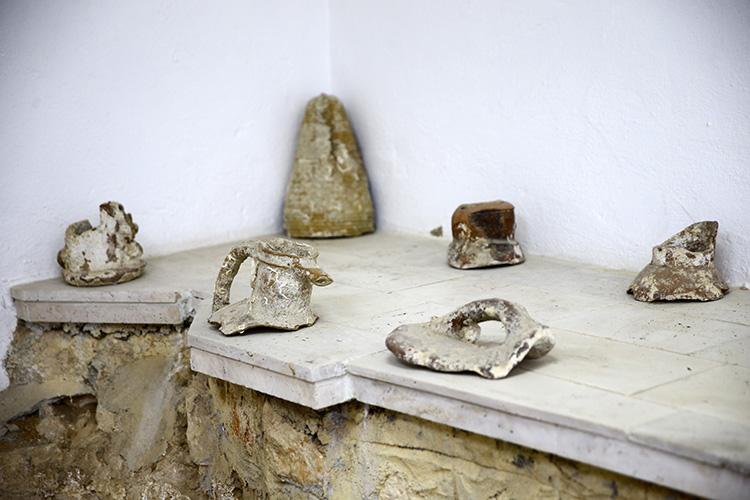
Bathhouse Remains (AA)
The bathhouse was commissioned by a man named Poimenios, who held a high-ranking position during the Eastern Roman Empire. It is known that Poimenios constructed a small harbor in the bay of Narlıkuyu using freshwater springs that flowed through the depths of the Cennet Obruğu. Poimenios’s name appears in an inscription on the mosaic floor of the structure.
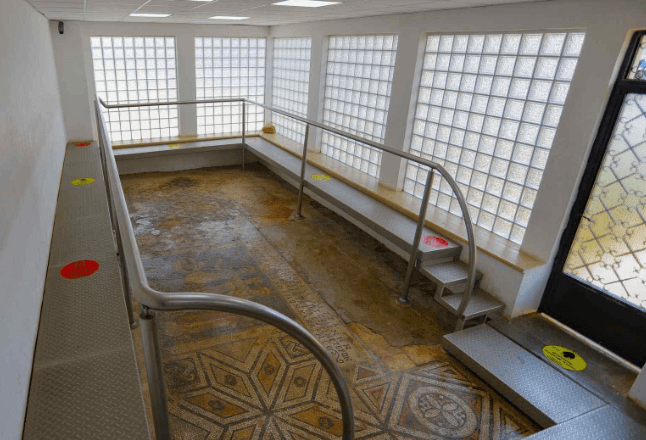
Floor Mosaic (Turkish Museums)
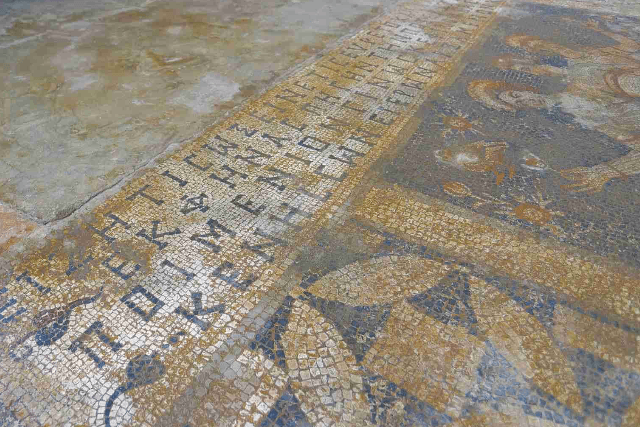
The mosaic is adorned with stones in black, white, and yellow. The ground features geometric patterns and local motifs of birds and flowers. The central scene depicts Aglaia, Thalia, and Euphrosine, the daughters of Zeus and Eurynome, who are recognized in Greek mythology as the Three Graces. These figures are also referred to in ancient sources as the Kharites, a term derived from the word “kharis,” meaning radiance, grace, and beauty.
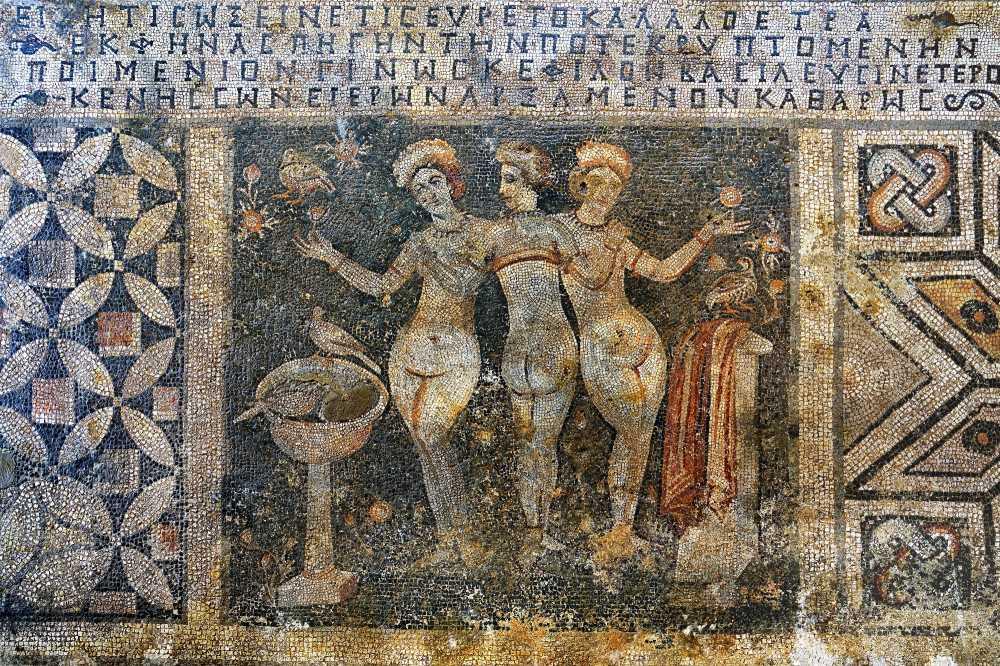
The Three Graces (Kültür Portalı)
At the top of the mosaic is a Greek inscription that reads: “If you ask, friend, who discovered the hidden spring that feeds this beautiful bath, know that it was Poimenios, who governed the sacred islands with integrity and was a friend to the emperors.”
The inscription serves as a documented record identifying the patron who commissioned the structure.
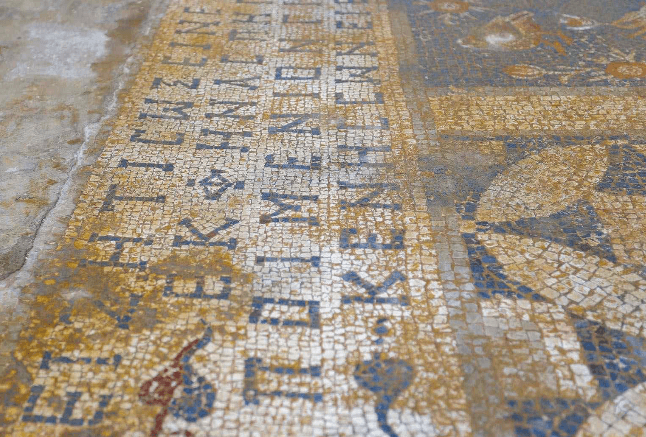
Floor Mosaics (Turkish Museums)
Only the washing area and the water channel have survived to the present day. These sections are displayed within the museum building. Further excavation efforts are planned to recover other parts of the bathhouse. The structure open to visitors is under the authority of the Republic of Türkiye Ministry of Culture and Tourism.
Anadolu Ajansı. “Mersin’in Tarihi Üç Güzeller Mozaiği Kendisine Özel Müzede Korunuyor.” Accessed May 7, 2025.https://www.aa.com.tr/tr/anadolu-mozaigi/mersinin-tarihi-uc-guzeller-mozaigi-kendisine-ozel-muzede-korunuyor/2805406.
Kültür Portalı. "Narlıkuyu Mozaik Müzesi." T.C. Kültür ve Turizm Bakanlığı. Accessed May 7, 2025.https://www.kulturportali.gov.tr/turkiye/mersin/gezilecekyer/narlikuyu-mozaik-muzesi.
Müze.gov.tr. "Narlıkuyu Mozaik Müzesi." T.C. Kültür ve Turizm Bakanlığı. Accessed May 7, 2025.https://muze.gov.tr/muze-detay?SectionId=SNM01&DistId=MRK.
Turkish Museums. "Mersin Narlıkuyu Mozaik Müzesi." T.C. Kültür ve Turizm Bakanlığı. Accessed May 7, 2025.https://turkishmuseums.kprod.kultur.gov.tr/museum/detail/2153-mersin-narlikuyu-mozaik-muzesi/2153/1.

Narlıkuyu Mosaic Museum
Location | Mersin Silifke Narlıkuyu | ||||||||
|---|---|---|---|---|---|---|---|---|---|
Construction Period | 4th century AD | ||||||||
Discovery Year(s) | 1975 | ||||||||
Museumization Date | 1975–1976 | ||||||||
Culture | Roman Period, Eastern Roman Empire | ||||||||
Protected Elements | Floor mosaic, Water basin | ||||||||
Figures Depicted in the Mosaic | Aglaia, Thalia, Euphrosine (The Three Graces / Charites) | ||||||||
Mythological Context | Daughters of Zeus and Eurynome | ||||||||
Mosaic Features | Black white yellow stones, geometric patterns, bird and flower motifs | ||||||||
Inscription Language | Greek | ||||||||
Person Mentioned in the Inscription | Poimenios | ||||||||
Poimenios's Title | Eastern Roman administrator, honest governor of the sacred islands, imperial friend | ||||||||
Ancient Settlement Name | Porto Calamie | ||||||||
Related Natural Element | Freshwater emerging from the Paradise Abyss | ||||||||
Affiliated Institution | Ministry of Culture and Tourism of the Republic of Türkiye | ||||||||
No Discussion Added Yet
Start discussion for "Narlıkuyu Mosaic Museum" article
Historical Background
Poimenios and the Bathhouse Structure
Mosaic Features and Mythological Depictions
Greek Inscription
Museum Contents and Preserved Remains