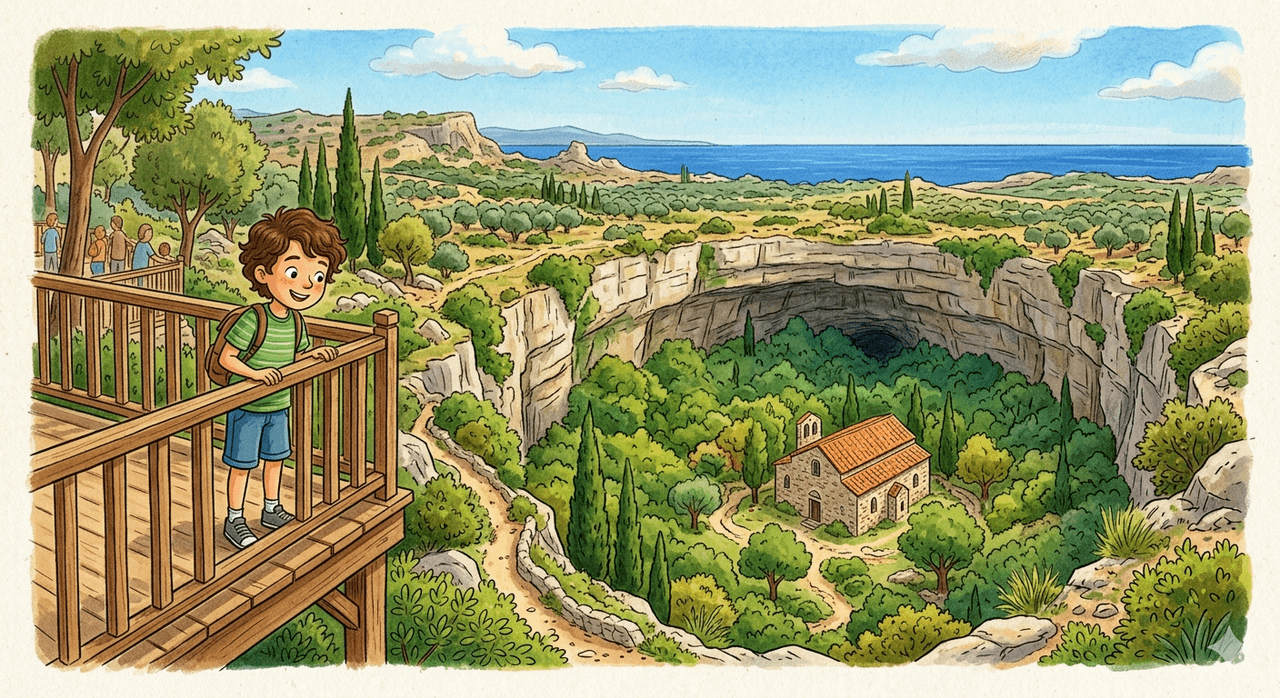


Cennet and Cehennem Sinkholes (Mersin)
Nature sometimes creates hidden worlds beneath the earth. In the Silifke district of Mersin lie two breathtaking natural wonders: the Cennet and Cehennem sinkholes, which appear like colossal fistprints left by a giant in the soil, leaving visitors in awe. These deep depressions are the result of a natural story spanning thousands of years.
How Were These Massive Sinkholes Formed?
The formation of these sinkholes is essentially a story of “ceiling collapse.” Underground waters gradually dissolve limestone layers, creating vast cavities. Eventually, the weight of the rock above can no longer be supported, and it collapses with a loud crash. Such deep depressions are known as obruks.
Cennet Sinkhole: A Green World
Cennet sinkhole is a tranquil place accessible from the surface, with lush green vegetation at its base. To reach the bottom, which is approximately 70 meters deep, you must descend 452 individual stone steps. At the 300th step, a surprising structure awaits you: a small church hidden among the rocks. At the very bottom, you can hear the sound of an underground river.
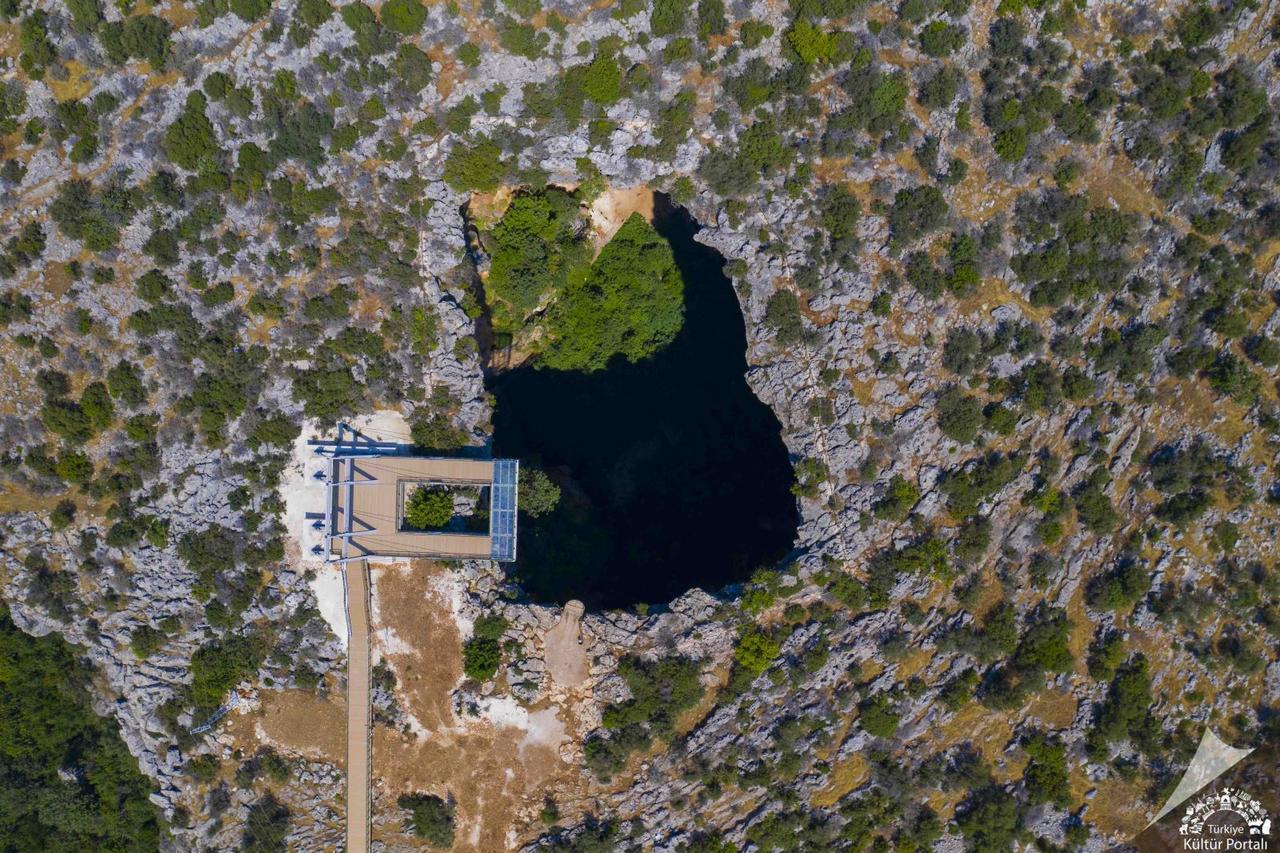
Cennet Sinkhole (Kültür Portalı)
Cehennem Sinkhole and the Dragon Legend
Just 75 meters from Cennet lies the Cehennem sinkhole. It is 128 meters deep and has a narrower opening than Cennet. Its sloping edges make descent impossible without specialized equipment. According to ancient tales, Zeus, the god of the sky, defeated the fire-breathing, hundred-headed dragon Typhon in battle and imprisoned him for a time in this dark abyss.
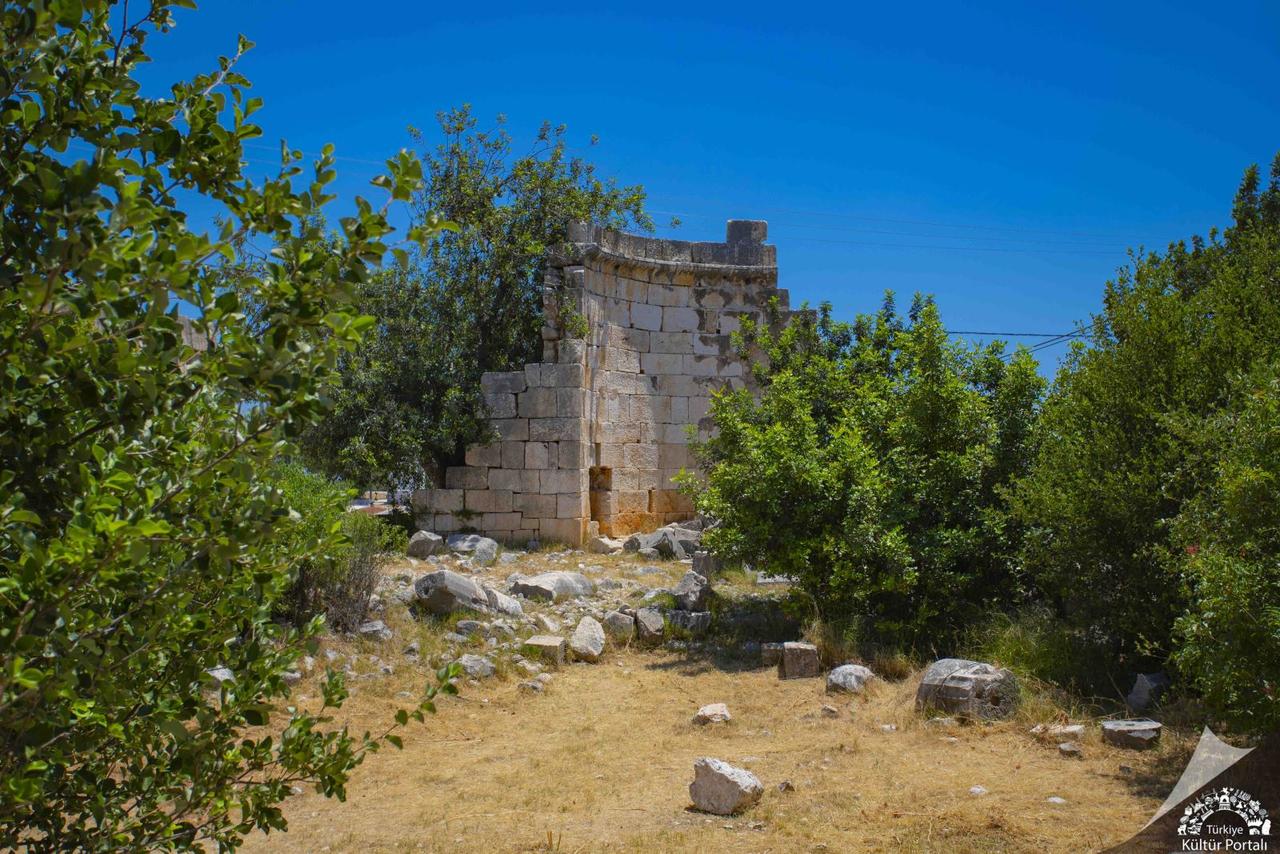
Temple of Zeus (Kültür Portalı)
A Journey Through Time
Approximately 1,500 years ago (5th century CE), a devout man named Paulus built a small church inside the Cennet sinkhole in honor of the Virgin Mary. Additionally, directly above the sinkhole lies a temple from antiquity, containing inscriptions of the names of 130 priests dedicated to Zeus.