


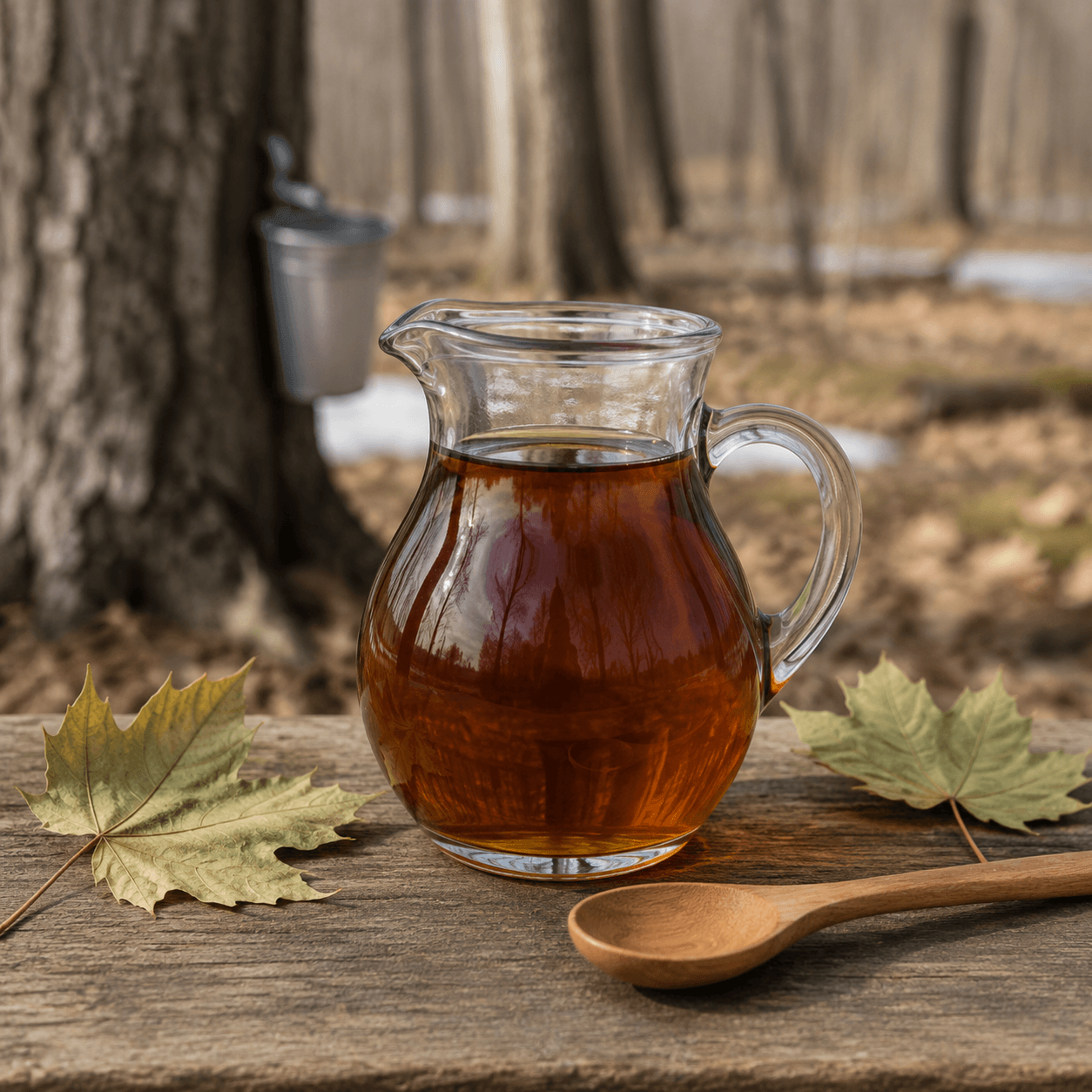
Akçaağaç Şurubu (Generated by Artificial Intelligence)
Akçaağaç Syrup
Type | Natural Plant-Based Sweetener | ||||||||
|---|---|---|---|---|---|---|---|---|---|
Main Production Region | Northeastern Canada and the United States | ||||||||
Areas of Use | Breakfast Foods Desserts Beverages Sauces | ||||||||
Maple syrup is a natural sweetener obtained by collecting and concentrating the xylem sap of certain Acer species, primarily the sugar maple (Acer saccharum). The product is part of a longstanding forest-based agriculture and food processing tradition in northeastern North America. The sap, composed largely of water, sucrose, and smaller amounts of other organic and inorganic compounds, is concentrated by removing most of its water content to achieve a syrup consistency. The distinctive color and aroma of the finished product arise not only from the concentration of the sap but also from chemical transformations that occur during heating.【1】
Maple Syrup Production (Business Insider)
In commercial production, the most commonly used species is the sugar maple. The sap of other species such as the black maple (Acer nigrum), red maple (Acer rubrum), and silver maple (Acer saccharinum) can also be utilized for syrup production. The sugar maple requires less water removal due to its relatively high sucrose content. The species, tree age, trunk diameter, growing environment, seasonal conditions, and physiological state of the tree all influence both the quantity of sap and its sugar concentration.【2】
Sap collection occurs between late winter and early spring, when nighttime temperatures fall below freezing and daytime temperatures rise again. During freezing, a portion of the water in the xylem tissue turns to ice, creating negative pressure within the tissues. As the ice melts, gas expansion, liquid movement, and osmotic processes generate positive pressure within the trunk. Tubes inserted into small holes drilled into the trunk allow the sap, driven by this pressure, to flow into containers or pipeline systems. Sap flow is not simply a unidirectional movement of water from the roots upward; it is a seasonal process determined by the interplay of temperature, xylem structure, dissolved sugars, and pressure changes.【3】
In traditional methods, one tap is installed per tree and the sap is collected in buckets hung from the tree. In modern commercial operations, taps are connected to plastic pipeline networks, and the sap is transported directly to the production site by gravity or vacuum. When properly installed, vacuum systems increase the volume of sap collected by enhancing the pressure differential between the tap hole and the pipeline, without altering the internal sap-producing processes of the tree. The number and size of holes drilled during harvest are determined according to the tree’s diameter, health, and applied forestry practices.【4】
Fresh sap consists largely of water and typically contains about 2–3 percent sugar. Therefore, a significant amount of water must be removed to produce syrup. On average, approximately 40 liters of sap yield 1 liter of syrup, depending on the sugar concentration of the sap. In traditional open-vat and evaporator systems, water is boiled off through evaporation. In modern facilities, sap is first passed through reverse osmosis to remove a portion of the water via membranes, then further concentrated in an evaporator to reach the target density. Reverse osmosis reduces boiling time and energy consumption, while the final concentration stage allows the development of the syrup’s characteristic aroma and color.【5】
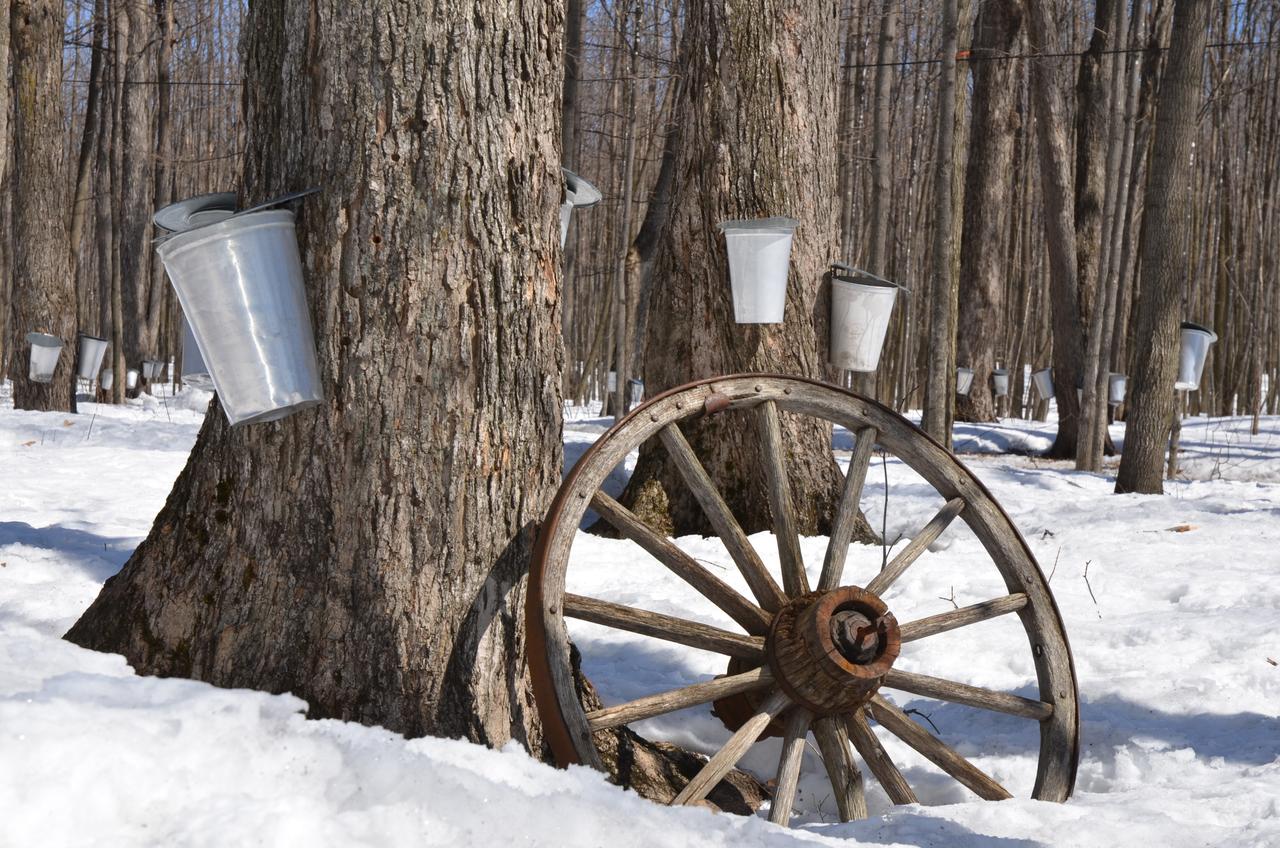
Akçaağaç Şurubu Üretimi (Pxhere)
The soluble solids content of finished syrup is approximately 66–67 °Brix. Products with lower density are more susceptible to microbial spoilage, while overly concentrated syrups may cause sucrose to crystallize. Concentrated syrup is filtered to remove suspended solids and mineral precipitates formed during heating. It is then packaged using hot-filling or an equivalent hygienic process. Prolonged storage of sap after collection can lead to sucrose breakdown due to microbial activity, altering the aroma, color, and processing characteristics of the final product.【6】
The majority of the soluble solids in maple syrup are carbohydrates. Sucrose is the primary sugar, with glucose and fructose present in smaller amounts. Syrup also contains various oligosaccharides and high-molecular-weight polysaccharides. Minerals such as potassium, calcium, magnesium, manganese, and zinc, along with organic acids like malic and fumaric acid, are present in smaller quantities. Although amino acids, phenolic compounds, and volatile substances constitute only a limited portion of the total mass, they play a critical role in determining the syrup’s color, aroma, taste, and chemical profile.【7】 The changes occurring during sap concentration are not limited to water removal. Maillard reactions between reducing sugars and amino compounds, thermal degradation of sugars, and transformation of phenolic substances contribute to the formation of brown pigments and aromatic compounds. Vanillin, furan derivatives, various aldehydes, and pyrazines are among the compounds identified in the aroma and flavor profile of maple syrup. Syrups produced at the beginning of the season are generally lighter in color and have a more delicate aroma. As the season progresses, the composition of the sap and its microbial load may change, resulting in darker, more pronounced flavors.【8】
The color of syrup depends on numerous variables, including tree species, geographic origin, weather conditions, harvest timing, sap storage duration, boiling rate, and equipment used. Therefore, color is not a direct indicator of purity or nutritional value. Light and dark syrups are different sensory classes of the same fundamental product. Excessive heat treatment can lead to burnt or bitter flavors, while inadequate hygiene or delayed processing may result in fermentation-related defects.【9】
In commercial classification, color transparency, density, clarity, taste, and aroma are key criteria. In modern systems used in North America, syrups offered to consumers are typically categorized as golden, amber, dark, or very dark, with class names often accompanied by descriptors such as delicate, rich, strong, or pronounced flavor. These categories indicate differences in color and aroma rather than quality grades. Fermentation, cloudiness, sediment, foreign odors, and processing defects affect the commercial classification and intended use of the product.【10】
The relatively high commercial value of maple syrup makes it susceptible to adulteration with cheaper sugars. High-fructose corn syrup, cane sugar, or beet sugar are commonly used for this purpose. While measurements of density, pH, and color are useful for production control, they alone cannot definitively determine the product’s origin. Stable carbon isotope analysis, chromatography, nuclear magnetic resonance, infrared and fluorescence spectroscopy, and multivariate statistical methods can be employed to assess purity and geographic origin. Analytical evaluations must account for natural variations in composition due to season and production region.【11】
The collection and conversion of maple sap into sugar predate European settlement in North America and were practiced by Indigenous peoples. Among the Anishinaabe communities, maple sugar was not merely a sweetener; it was a seasonal product used as food, medicine, gift, and trade item. Production sites served as gathering places for families during specific times of the year, facilitating work and cultural transmission.【12】
In early production methods, sap flowing from cuts made in tree bark was collected in vessels made of birch bark or other local materials. Water was reduced either by freezing and removing ice or by heating and evaporating. The widespread adoption of metal kettles enabled larger quantities of sap to be boiled efficiently. European settlers adopted Indigenous practices but replaced them with metal taps, buckets, and fixed production structures. During the 18th and 19th centuries, maple sugar became important for household consumption and regional trade, eventually being supplanted by bottled syrup as crystallized sugar became easier to transport.【13】
Production has become an activity linked to agricultural income, rural tourism, and local identity in the northeastern regions of Canada and the United States. Forests managed as sugarbushes or maple groves are not merely production areas but diverse forest ecosystems. Industrial pipeline and vacuum systems coexist alongside the traditional bucket method within the same geographic region. The ongoing harvest practices of Indigenous communities demonstrate that maple products cannot be viewed solely as national commercial symbols; they embody a living cultural tradition.【14】
Maple syrup is an energy-providing sweetener with a high sugar content. Certain minerals and phenolic compounds in its composition chemically distinguish it from pure sucrose; however, their presence does not render the syrup sugar-free or low-sugar. Since its primary carbohydrate is sucrose, excessive consumption increases total energy and free sugar intake. In nutritional assessments, the amount consumed, overall dietary patterns, and individual health conditions are considered together.
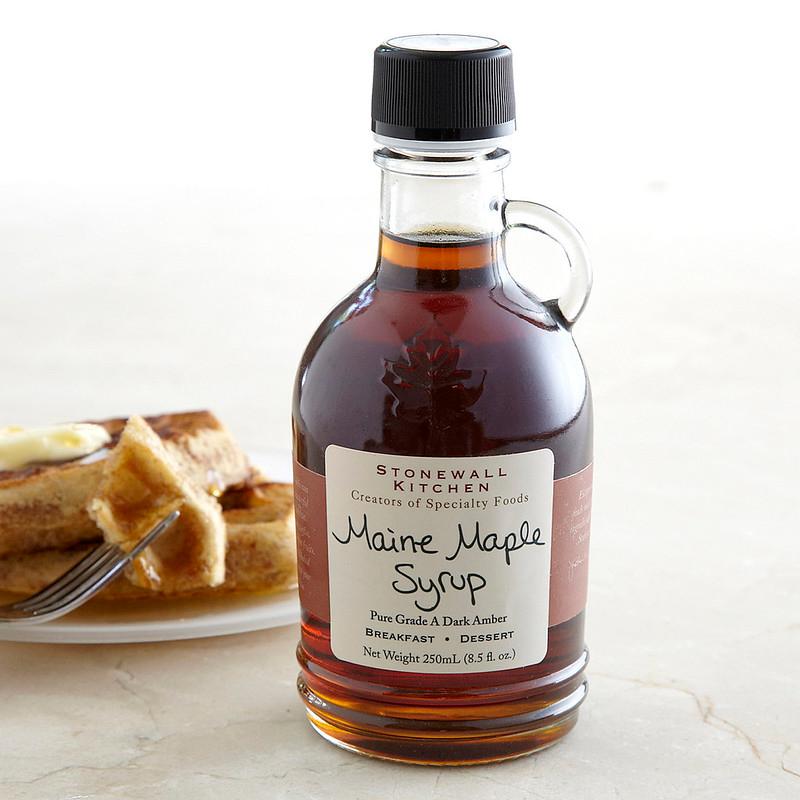
Şişelenmiş Akçaağaç Şurubu (Flickr)
Cell culture and animal studies have examined the antioxidant, anti-inflammatory, and metabolic effects of phenolic compounds. However, a significant portion of this research focuses on concentrated extracts or isolated compounds rather than whole syrup. Biological activities identified in laboratory settings do not alone demonstrate that the same effects occur in humans at normal consumption levels. Therefore, maple syrup is not classified as a food that prevents or treats disease. In the kitchen, it is used alongside pancakes, waffles, and desserts; as a sweetener and flavoring agent in baked goods, sauces, beverages, and various processed foods. Its liquid structure can alter the water content and baking properties of recipes when substituted for granulated sugar. The caramel-like and woody aroma developed during heating is especially prominent in baked goods and sauces. Due to the risk of surface mold growth, the product must be stored according to the storage conditions indicated on the packaging, particularly after opening. Pure maple syrup is compositionally distinct from most “pancake syrups,” which are typically made from corn syrup with added flavors and colorants.【15】

The Canadian National Symbol, the Maple Leaf (Public Domain Vectors)
Maple syrup is one of the distinctive food products in Canadian public culture that shares symbolic space with the maple leaf and northern forest imagery. Its symbolic value derives not only from production volume but also from the short harvest period marking the transition from winter to spring, the presence of maple groves in the rural landscape, familial labor, and intergenerational transmission of production knowledge. The social gatherings and work routines centered around sap collection link the product to seasonal, geographic, and communal memory beyond everyday consumption. In eastern Canadian provinces, where production is concentrated, syrup is both a visible element of local cuisine and rural life and a cultural marker representing the country’s forested geography.【16】 This national symbol is not the product of a single, unchanging tradition. Knowledge of processing maple sap is rooted in practices developed by Indigenous communities long before the founding of the Canadian state; subsequent settlement, trade, and technological transformations have reshaped this heritage into diverse production methods. Today, the identification of maple syrup with Canadian identity brings together Indigenous cultural continuity, regional production traditions, and contemporary commercial representations within a single framework. Therefore, the national symbolic status of the product is not merely a brand or tourist image; it is a multilayered cultural formation intersecting forest ecology, seasonal labor, historical knowledge, and technological change.【17】
PxHere. “Tree, Nature, Forest, Snow, Winter, Wood, Sweet, Shack, Food, Spring, Weather, Metal, Syrup, Season, Maple, Maple Tree, Bucket, Tap, Sugar, Canada, Pail, Production, Traditional, Collect, Sap, Gather, Maple Syrup, Tapping.” March 22, 2017. Accessed July 21, 2026. https://doi.org/10.3390/ijerph192013684.
Ahmed, Selena, David Lutz, Joshua Rapp, Ryan Huish, Boris Dufour, Autumn Brunelle, Toni Lyn Morelli, Kristina Stinson, and Teresa Warne. “Climate Change and Maple Syrup: Producer Observations, Perceptions, Knowledge, and Adaptation Strategies.” *Frontiers in Forests and Global Change* 6 (2023): 1092218. Accessed July 21, 2026.https://doi.org/10.3389/ffgc.2023.1092218
Artizone. “Maine Maple Syrup.” Flickr, April 18, 2012. Accessed July 21, 2026.
Business Insider. “Why Grade A Maple Syrup Is So Expensive | So Expensive Food.” YouTube, Accessed July 21, 2026.https://www.youtube.com/watch?v=rCzx_MTtb_U
Gad, Haidy A., Mohamed Fawzy Ramadan, and Mohamed A. Farag. “Authentication and Quality Control Determination of Maple Syrup: A Comprehensive Review.” *Journal of Food Composition and Analysis* 100 (2021): 103901. Accessed July 21, 2026.https://doi.org/10.1016/j.jfca.2021.103901.
Perkins, Timothy D., and Abby K. van den Berg. “Maple Syrup—Production, Composition, Chemistry, and Sensory Characteristics.” *Advances in Food and Nutrition Research* 56 (2009): 101-143. Accessed July 21, 2026.https://doi.org/10.1016/S1043-4526(08)00604-9
PublicDomainVectors.org. "Kanada Ulusal Simge Vektör Çizim." Accessed July 21, 2026.https://publicdomainvectors.org/tr/bedava-vektor/Kanada-ulusal-simge-vekt%C3%B6r-%C3%A7izim/21388.html.
Saraiva, Ariana, Conrado Carrascosa, Fernando Ramos, Dele Raheem, Maria Lopes, and António Raposo. “Maple Syrup: Chemical Analysis and Nutritional Profile, Health Impacts, Safety and Quality Control, and Food Industry Applications.” *International Journal of Environmental Research and Public Health* 19, no. 20 (2022): 13684. Accessed July 21, 2026.https://doi.org/10.3390/ijerph192013684.
Wade, Susan Deborah. *Ojibwe Women and Maple Sugar Production in Anishinaabewakiing and the Red River Region, 1670-1873*. Unpublished PhD thesis, University of Wisconsin-Milwaukee, 2021. Accessed July 21, 2026.https://minds.wisconsin.edu/handle/1793/92719
[1]
Timothy D. Perkins ve Abby K. van den Berg, “Maple Syrup—Production, Composition, Chemistry, and Sensory Characteristics,” Advances in Food and Nutrition Research 56 (2009): 101-143, https://doi.org/10.1016/S1043-4526(08)00604-9
[2]
Perkins, “Maple Syrup—Production, Composition, Chemistry, and Sensory Characteristics,” s. 104-108.
[3]
Perkins, s. 108-115.
[4]
Perkins, s. 115-120.
[5]
Perkins, s. 120-126.
[6]
Ariana Saraiva vd., “Maple Syrup: Chemical Analysis and Nutritional Profile, Health Impacts, Safety and Quality Control, and Food Industry Applications,” International Journal of Environmental Research and Public Health 19 (20) (2022): 13684, https://doi.org/10.3390/ijerph192013684.
[7]
Saraiva, “Maple Syrup.”
[8]
Perkins, “Maple Syrup—Production, Composition, Chemistry, and Sensory Characteristics,” s. 126-136.
[9]
Haidy A. Gad, Mohamed Fawzy Ramadan ve Mohamed A. Farag, “Authentication and Quality Control Determination of Maple Syrup: A Comprehensive Review,” Journal of Food Composition and Analysis 100 (2021): 103901, https://doi.org/10.1016/j.jfca.2021.103901.
[10]
Gad, “Authentication and Quality Control Determination of Maple Syrup.”
[11]
Gad, “Authentication and Quality Control Determination of Maple Syrup.”
[12]
Susan Deborah Wade, Ojibwe Women and Maple Sugar Production in Anishinaabewakiing and the Red River Region, 1670–1873 (Yayınlanmamış Doktora Tezi, University of Wisconsin–Milwaukee, 2021), s. 52–54. https://minds.wisconsin.edu/bitstream/handle/1793/92719/Wade_uwm_0263D_13036.pdf?sequence=1&isAllowed=y.
[13]
Wade, Ojibwe Women and Maple Sugar Production in Anishinaabewakiing and the Red River Region, 1670-1873, s. 57-61.
[14]
Wade, s. 65-69.
[15]
Saraiva, “Maple Syrup."
[16]
Ahmed, “Climate Change and Maple Syrup."
[17]
Wade, “Ojibwe Women and Maple Sugar Production," s. 201-202.


Akçaağaç Şurubu (Generated by Artificial Intelligence)
Akçaağaç Syrup
Type | Natural Plant-Based Sweetener | ||||||||
|---|---|---|---|---|---|---|---|---|---|
Main Production Region | Northeastern Canada and the United States | ||||||||
Areas of Use | Breakfast Foods Desserts Beverages Sauces | ||||||||
Collection and Production
Chemical Composition and Sensory Properties
Classification, Quality, and Adulteration
Historical and Cultural Development
Nutritional Properties and Consumption
Maple Syrup as a Cultural Symbol of Canada
This article was created with the support of artificial intelligence.