


This article was automatically translated from the original Turkish version.
+3 More
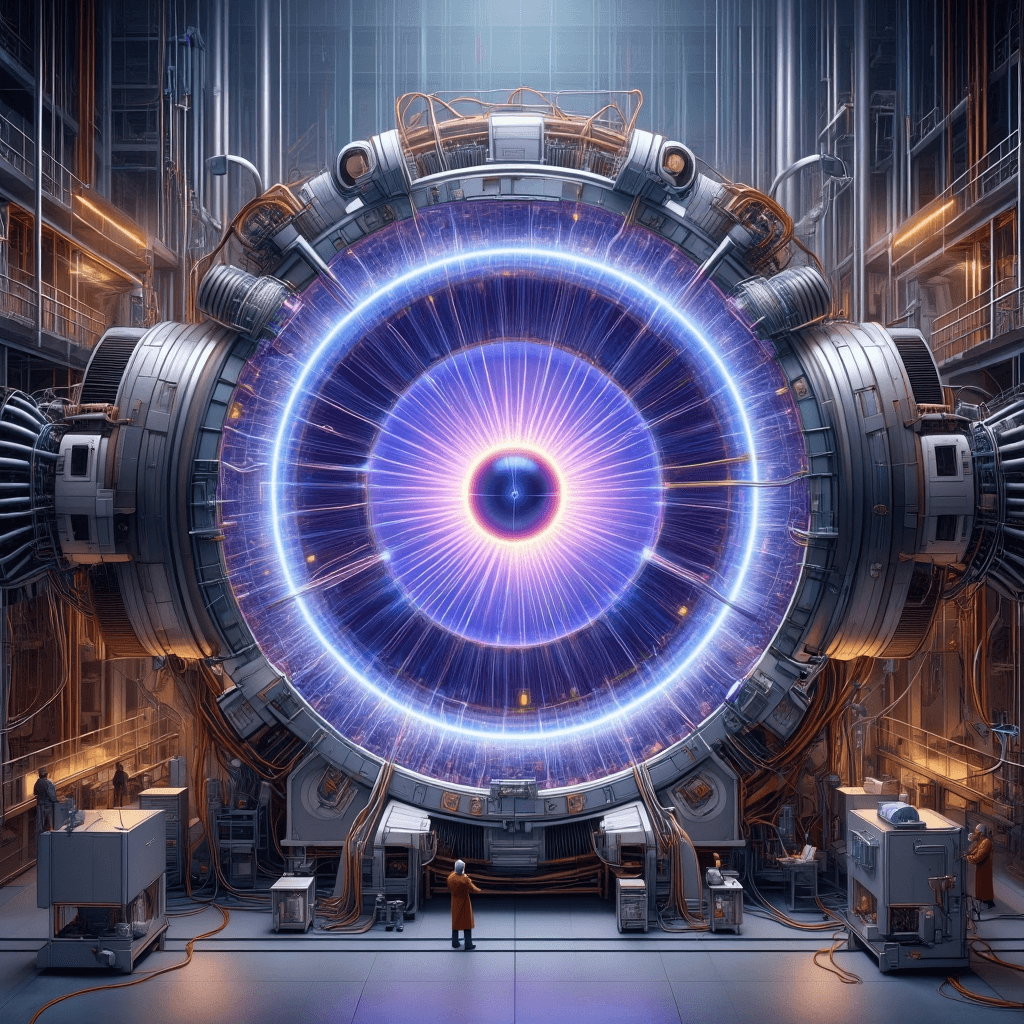
International Thermonuclear Experimental Reactor (ITER) (Generated by Artificial Intelligence)
Project Name | ITER (International Thermonuclear Experimental Reactor) | ||||||||
|---|---|---|---|---|---|---|---|---|---|
Purpose | To demonstrate the scientific and technological feasibility of fusion energy | ||||||||
Location | France Cadarache | ||||||||
Reactor Type | Tokamak | ||||||||
Target Energy Output | 500 MW (from 50 MW input) | ||||||||
Plasma Temperature | 150 million °C | ||||||||
Main Partners | European Union, China, India, Japan, South Korea, Russia, United States | ||||||||
Fuel | Deuterium and Tritium | ||||||||
The International Thermonuclear Experimental Reactor (ITER) is a major scientific and engineering endeavor aimed at reproducing on Earth the nuclear fusion process that powers stars under controlled conditions. The project’s primary goal is to establish the scientific evidence and technological infrastructure necessary to demonstrate the future viability of fusion energy as a sustainable safe and environmentally friendly power source.
To this end ITER encompasses the construction of a fusion reactor of the tokamak type one of the most advanced magnetic confinement systems ever designed. This reactor will use powerful magnetic fields to contain high-temperature plasma enabling the observation and measurement of energy released when hydrogen isotopes fuse. This experimental system aims to generate comprehensive data in physics engineering and materials science essential for the design and operation of future commercial fusion power plants.
Led in the Cadarache region of southern France this project is one of the largest international scientific collaborations in history. Spearheaded by the European Union it is supported by the joint contributions of major economic and scientific actors including China India Japan South Korea Russia and the United States. These countries share broad responsibilities across the project ranging from manufacturing engineering components and building research infrastructure to providing financial resources and scientific expertise.
In conclusion ITER can be viewed not merely as a reactor design but as a large-scale research initiative to assess the feasibility of fusion energy. It serves as an example of how international cooperation can be organized to pursue long-term scientific and technological goals. At the same time it functions as a critical test platform for analyzing the potential contributions of fusion-based energy production to energy security and the reduction of carbon emissions.
Nuclear energy is based on two fundamental physical processes occurring in atomic nuclei: fission and fusion reactions. Both processes convert mass into energy but differ significantly in their mechanisms technical requirements and environmental impacts.
Fission is the process underlying today’s nuclear power plants. In this reaction a heavy atomic nucleus such as uranium or plutonium becomes unstable upon interaction typically with a neutron and splits into two smaller nuclei. This splitting releases large amounts of energy additional neutrons and radioactive byproducts. Although this process can sustain a chain reaction and is efficient for energy production it generates long-lived radioactive waste posing serious environmental and safety concerns. Moreover loss of control in fission reactors can lead to high-risk accidents.
Fusion on the other hand is a process observed in nature particularly in the Sun and other stars. In this reaction light atomic nuclei such as deuterium and tritium fuse under extreme temperature and pressure conditions to form a heavier nucleus like helium. The energy released per unit mass in fusion is far greater than in fission. Therefore fusion is theoretically regarded as a clean safe and nearly limitless energy source. Fusion reactions do not carry the risk of a chain reaction and therefore cannot undergo runaway失控 and do not produce long-lived radioactive waste.
However achieving practical fusion requires meeting extraordinarily complex physical conditions. Creating powerful magnetic fields capable of stably confining plasma at millions of degrees and sustaining this plasma without significant energy loss represents a major challenge in engineering and materials science. For this reason although fusion energy is theoretically possible it has not yet reached the stage of commercial energy production. Current research in this field is primarily conducted through magnetic confinement systems such as tokamaks and stellarators. International projects like ITER aim to develop the foundational scientific and technological infrastructure needed for fusion to become a viable energy source in the future.
The primary objective of the International Thermonuclear Experimental Reactor (ITER) project is not to build a commercial fusion power plant directly but to scientifically and technologically demonstrate that fusion energy can be produced on a large and sustainable scale. This goal seeks to establish the engineering materials science and plasma physics foundations necessary to pave the way for future industrial fusion power plants.
To this end ITER is structured around a series of strategic and experimental goals. The primary goal is to achieve net energy gain meaning the reactor must produce more energy from fusion reactions than it consumes to heat the plasma. In this way the system will for the first time function as an experimental fusion reactor that generates more energy than it uses. This success will demonstrate that fusion is not only feasible in laboratory settings but also as a viable method for energy production.
Another critical goal is to reach the state of a “burning plasma” in which the plasma is sustained largely by its own internal energy. At this stage the plasma’s temperature is maintained by the fusion reactions themselves without external energy input marking a crucial milestone in achieving natural energy balance in fusion.
In addition ITER aims to experimentally validate key technologies required for the operation of future fusion reactors. These include:
Achieving these goals represents a critical step toward transitioning fusion energy from a theoretical option to a viable energy production method. The technical and scientific outcomes of ITER will serve as a foundational reference for future commercial fusion plants such as DEMO in terms of engineering design materials performance and plasma control.
At the heart of the ITER project lies a large-scale magnetic confinement system known as a tokamak which forms the core of fusion research. The term “tokamak” is an abbreviation of the Russian phrase “toroidalnaya kamera s magnitnymi katushkami” meaning “toroidal chamber with magnetic coils.” Developed by Soviet physicists in the 1950s this design has become the most widely used reactor architecture in fusion research due to its ability to stably confine plasma.
The tokamak is designed to contain plasma—the ionized state of matter consisting of atomic nuclei stripped of their electrons—in a closed magnetic field. The structure comprises a toroidal vacuum chamber powerful superconducting magnets heating systems and a complex cooling infrastructure.
In ITER the fusion process occurs in several key stages: First deuterium and tritium gases—two isotopes of hydrogen—are injected into the toroidal vacuum chamber. Then a strong electric current passed through the gas ionizes it forming plasma. The plasma is further heated to extremely high temperatures using specialized heating systems—far exceeding the conditions in the core of the Sun. At this point deuterium and tritium nuclei fuse initiating a fusion reaction.
Superconducting magnets surrounding the tokamak create an extraordinary strong magnetic cage that prevents the plasma from contacting the walls. This magnetic field holds the plasma at the center and shapes it into the desired geometry. High-energy neutrons produced by fusion pass unaffected through the magnetic field and strike the reactor walls transferring their energy as heat. This heat is carried away by coolant fluids circulating through the reactor’s cooling systems.
In future commercial fusion reactors this thermal energy will be used to generate electricity via steam turbines as in conventional thermal power plants. Thus the tokamak is not merely an experimental device but the most advanced physical system developed to practically and sustainably harness fusion energy. ITER’s tokamak structure is regarded as the most concrete engineering expression of humanity’s effort to replicate the energy production process of stars on Earth.
The ITER project is one of the most comprehensive and technically complex engineering endeavors in human history. This massive structure consists of tens of thousands of integrated components and is being constructed through a multinational supply chain. At its center the tokamak stands out for its extraordinary size and technological complexity. This system weighing over 23000 metric tons is a colossal engineering structure designed to stably confine fusion plasma.
The tokamak’s most critical components are the superconducting magnets. This magnet system comprises nineteen toroidal field coils encircling the plasma and a central solenoid—the reactor’s “heart”—that initiates and sustains the plasma current. Each magnet possesses exceptional mechanical durability and electromagnetic performance characteristics.
These magnets are manufactured from advanced superconducting materials such as niobium-tin (Nb₃Sn) and niobium-titanium (NbTi). To achieve superconductivity the system is cooled to temperatures near absolute zero using liquid helium. This enables the magnets to generate extraordinarily strong magnetic fields capable of controlling plasma currents of millions of amperes and providing the magnetic confinement necessary for fusion reactions.
The reactor’s fuel cycle also constitutes a major part of ITER’s research objectives. Deuterium the primary fuel for fusion is naturally abundant in seawater and easily obtainable. However the other isotope required for fusion tritium is extremely scarce in nature and has a short half-life requiring continuous production. Therefore ITER will test a method to generate its own tritium using neutrons released during fusion to irradiate lithium-containing modules installed in the reactor walls.
This technology aims to ensure the sustainability of the energy cycle by enabling future fusion power plants to produce fuel internally. Thus ITER will not only demonstrate the scientific feasibility of fusion energy but also shape the infrastructure necessary for fusion to become economically and technically viable at an industrial scale.
The idea of establishing a global collaboration in fusion energy was first introduced in 1985 during a summit between U.S. President Ronald Reagan and Soviet General Secretary Mikhail Gorbachev. This meeting marked the beginning of an effort to build a foundation for peaceful technological cooperation through scientific diplomacy during the Cold War. Following years of technical assessments and diplomatic negotiations the ITER project was formally launched in 2006 with the participation of the European Union the United States Russia China South Korea India and Japan. The construction site was chosen in Cadarache in southern France a region with a long-standing legacy in nuclear research.
ITER operates on a unique “in-kind contribution” model in which each member country produces and delivers specific components of the project rather than making direct cash payments. This model mobilizes each nation’s scientific capacity while enabling shared technical responsibility. For example the United States is responsible for manufacturing the central solenoid at the reactor’s core while the European Union undertakes critical components such as the vacuum vessel and cooling systems. Russia is responsible for developing superconducting materials and gyrotron heating systems while Japan and South Korea handle magnet structures and plasma support equipment. India provides key parts of the cryogenic systems power supplies and control infrastructure.
Because of this structure ITER is regarded as a unique example of scientific collaboration that transcends geopolitical differences. The project has become one of the most advanced applications of science diplomacy contributing to the rebuilding of international trust in the post-Cold War era. Over time Canada withdrew from the project for financial reasons while Kazakhstan has expressed interest by formally applying for membership.
In conclusion ITER not only reveals the potential of fusion energy but also demonstrates how countries with diverse political and cultural systems can unite around a common scientific goal. In this regard the project is both a harbinger of a new era in energy production and a symbol of international cooperation at the engineering level.
The ITER project has faced unprecedented challenges due to its scale technical complexity and multinational structure. Launched in 2006 with an estimated budget of approximately five billion euros and a ten-year construction schedule the project has since experienced significant delays and cost overruns due to unforeseen technical and administrative issues and disruptions in manufacturing processes. It is now reported that the total cost of ITER has risen to several times the original estimate and that the first plasma production has been postponed far beyond the initial timeline.【1】
Key causes of these delays include the technical difficulties encountered in developing and manufacturing components that are the first of their kind. Each component is produced with micron-level precision and fabricated in different countries before being assembled at the construction site in France. This creates complex logistics and quality control challenges. Additionally manufacturing defects identified in some equipment have necessitated rework resulting in further time losses.
In addition the global COVID-19 pandemic caused major disruptions in construction and supply chains and international coordination was severely hampered by travel restrictions. During the same period French nuclear safety authorities introduced new technical requirements regarding radiation safety material durability and emergency protocols. These additional regulations have necessitated revisions to both engineering plans and testing procedures.【2】
Current estimates project that ITER’s first plasma experiments will begin around 2035. These delays and cost increases have made ITER one of the longest-running and most expensive scientific infrastructure projects in history. Nevertheless member countries remain committed to continuing the project and continue to view ITER as a turning point in shaping the future of fusion energy.
This situation also demonstrates that ITER is not only a scientific endeavor but also a test of political and strategic resilience: ITER continues to stand as one of the rare examples proving that long-term international scientific collaboration can endure despite all setbacks.
Fusion energy holds significant potential in terms of environmental safety and sustainability for future energy systems. In this context the ITER project is regarded not merely as a scientific experiment but as a strategic milestone in the transition to a carbon-free energy future.
The most striking feature of fusion energy is its ability to produce large quantities of energy without emitting carbon. This is of great importance for reducing global greenhouse gas emissions and combating climate change. Unlike fission reactors fusion does not generate long-lived high-level radioactive waste; the byproducts are short-lived and have limited environmental impact.
In terms of safety fusion also offers advantages over existing nuclear technologies. Fusion reactions can only be sustained under extremely precise conditions of temperature pressure and magnetic fields. If any of these conditions are disrupted the reaction ceases spontaneously. Therefore there is no risk of chain reactions or nuclear meltdown in fusion reactors.
From a fuel supply perspective fusion is an extremely sustainable energy source. Deuterium is a hydrogen isotope naturally abundant in seawater while tritium can be produced from lithium. This means fusion energy is based on a nearly inexhaustible fuel source. Moreover fusion fuel offers energy density millions of times greater than fossil fuels.
Achieving the success targeted by ITER will enable this technology to move beyond theoretical possibility and become a permanent option in global energy supply. Because fusion energy can provide uninterrupted baseload power for large cities and industrial regions it is also viewed as a strategic solution for energy security and sustainable development.
In this regard ITER represents not merely an effort to build a reactor but the technological foundation of a future vision in which dependence on fossil fuels is reduced environmental risks are minimized and global equity in energy production is strengthened.
"FAQs." ITER Organization. Accessed October 28, 2025.https://www.iter.org/faqs?thematic=73
"ITER—An International Nuclear Fusion Research and Development Facility." Congress.gov. Library of Congress, October 28, 2025. Accessed October 28, 2025.https://www.congress.gov/crs-product/R48362
"Understanding the Difference Between Nuclear Fission and Fusion Technologies." U.S. Nuclear Regulatory Commission. Updated October 20, 2025. Accessed October 28, 2025.https://www.nrc.gov/materials/fusion/fission-vs-fusion
"What will ITER do?" ITER Organization. Accessed October 28, 2025.https://www.iter.org/fusion-energy/what-will-iter-do
Dalton, David. “Iter / New Schedule For Delayed Fusion Project Sees Initial Operation In 2035”. *NucNet*, June 21, 2024. Accessed October 28, 2025.https://www.nucnet.org/news/new-schedule-for-delayed-fusion-project-sees-initial-operation-in-2035-6-5-2024
Dalton, David. “Iter / €20 Billion Project Faces Delays As Defects Found In Two Key ‘First-Of-A-Kind’ Components”. *NucNet*, November 23, 2022. Accessed October 28, 2025.https://www.nucnet.org/news/eur20-billion-project-faces-delays-as-defects-found-in-two-key-first-of-a-kind-components-11-3-2022
Dalton, David. “Nuclear Fusion / Pandemic Could Lead To Iter Delays And Cost Overruns”. *NucNet*, May 10, 2021. Accessed October 28, 2025.https://www.nucnet.org/news/pandemic-could-lead-to-iter-delays-and-cost-overruns-5-1-2021
Degrave, J., F. Felici, J. Buchli, et al. "Magnetic Control of Tokamak Plasmas through Deep Reinforcement Learning." *Nature* 602 (2022): 414–419.https://doi.org/10.1038/s41586-021-04301-9.
Dongiovanni, D. N., Y. Melese, F. Gracceva, C. Bustreo, and A. von Müller. "On the Impact of Nuclear Fusion Power Plants Deployment on Selected Critical Materials Consumption." *Energy Strategy Reviews* 60 (2025): 101792.https://doi.org/10.1016/j.esr.2025.101792.
Griffith, Sabina. “‘Progress in the ITER Physics Basis’ Published Online.” ITER Organization, June 14, 2007. Accessed October 28, 2025.https://www.iter.org/node/20687/progress-iter-physics-basis-published-online
Pitts, R. A., A. Loarte, T. Wauters, et al. "Plasma-Wall Interaction Impact of the ITER Re-Baseline." *Nuclear Materials and Energy* 42 (2025): 101854.https://doi.org/10.1016/j.nme.2024.101854.
Wan, B., and G. Xu. "Steady-State Burning Plasma: A New Stage in the Development of Magnetic Confinement Fusion Energy." *National Science Review* 10, no. 12 (2023): nwad217.https://doi.org/10.1093/nsr/nwad217.
Şahin, S., H. M. Şahin, H. Şahiner, and G. Tunç. "Study on the Fusion Reactor Performance with Different Materials and Nuclear Waste Actinides." *International Journal of Energy Research* 45 (2021): 11759–11774.https://doi.org/10.1002/er.5708.
[1]
ITER Organization. “FAQs.” Official Website. Erişim Tarihi: 25 Ekim 2025. https://www.iter.org/faqs?thematic=73&
.
[2]
Dalton, David. “Nuclear Fusion / Pandemic Could Lead To Iter Delays And Cost Overruns”. NucNet, 10 Mayıs 2021. Erişim tarihi: 28 Ekim 2025. https://www.nucnet.org/news/pandemic-could-lead-to-iter-delays-and-cost-overruns-5-1-2021.

International Thermonuclear Experimental Reactor (ITER) (Generated by Artificial Intelligence)
Project Name | ITER (International Thermonuclear Experimental Reactor) | ||||||||
|---|---|---|---|---|---|---|---|---|---|
Purpose | To demonstrate the scientific and technological feasibility of fusion energy | ||||||||
Location | France Cadarache | ||||||||
Reactor Type | Tokamak | ||||||||
Target Energy Output | 500 MW (from 50 MW input) | ||||||||
Plasma Temperature | 150 million °C | ||||||||
Main Partners | European Union, China, India, Japan, South Korea, Russia, United States | ||||||||
Fuel | Deuterium and Tritium | ||||||||
Difference Between Fusion and Fission
Project Objectives and Goals
Tokamak Reactor and Operating Principle
Technical Features and Components
History and International Collaboration
Cost Timeline and Challenges
The Future of Energy and Environmental Impacts