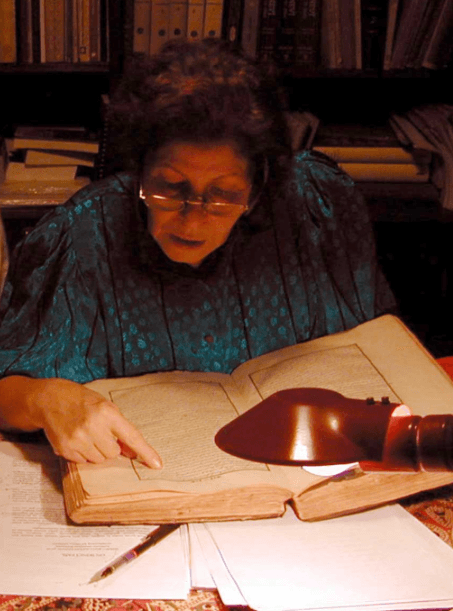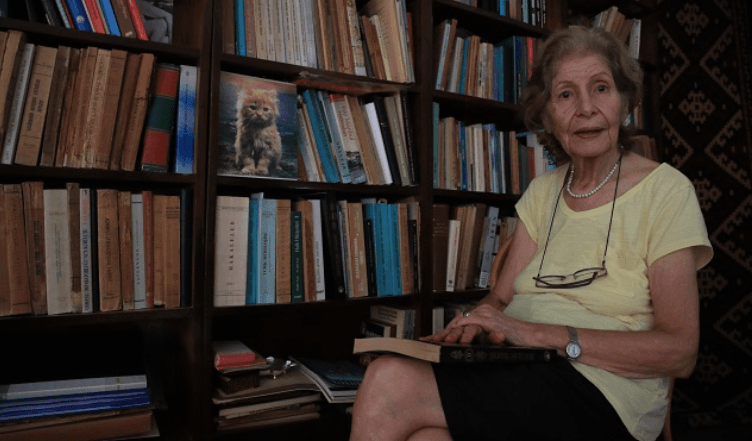

Spouse | Turgut KUT | ||||||||
|---|---|---|---|---|---|---|---|---|---|
Date of birth | 1939-05-05 | ||||||||
Place of birth | Bayburt | ||||||||
Academic position | Boğaziçi Üniversitesi Türk Dili ve Edebiyatı Bölümü (Emeritus Prof. Dr.) | ||||||||
Areas of expertise | Old Turkish Literature, Folk Literature, Manuscript Works | ||||||||
Günay Kut is a scholar renowned for her academic contributions, educational identity, and intellectual perspective in the field of Turkology, having made significant contributions to the history of Türkiye’s culture and literature. Throughout her life, her passion for literature and cultural heritage, integrated into her scholarly work, has served as a source of inspiration for a broad audience of students.
Günay Kut was born in Bayburt. Her father, a veterinarian from Balıkesir, was assigned to Bayburt due to his professional duties. While studying veterinary medicine in Istanbul, her father became acquainted with prominent intellectual figures such as Orhan Şaik Gökyay. This environment, where familial bonds were interwoven with literature and culture, profoundly influenced Günay Kut, who was deeply shaped by her father’s love of literature. Her mother is from a family in Trabzon. Growing up in this atmosphere, Günay Kut was also influenced by the personal stories of her family members. For instance, her father’s early interest in reading the works of Nazım Hikmet and Orhan Şaik Gökyay helped shape the cultural fabric of the household. Her sister, Gönül Tekin, holds an important place in Günay Kut’s life and academic journey. In later years, Gönül Tekin made significant contributions to Turkology, paralleling her sister’s work in the same field.
Günay Kut’s childhood and the cultural environment in which she grew up occupy a significant place in her life. She shares memories of this period to reveal the origins of her cultural heritage and the compelling family narratives that shaped her;
"...Even before starting primary school, I would hear from my late grandmother (my father’s mother) the quatrain from Yunus:
They say a poor man has died,
Three days later, they wail,
Wash him with cold water,
Thus, O poor soul, be comforted.
I would see her reading one of the books on her bedside whenever it was empty. At the time, I never asked what it was. Later, I learned it was Kara Davud. Again, during third and fourth grade, she would read us the Battâl-nâme. Summer nights were long. There was no radio in our home yet. My grandmother would sit us two siblings down and read the adventures of Battal. The next evening, we would beg her to continue. If you ask what remains in your memory, I would say 'nothing' except for one subject. But to us, Battal was a hero, superior to everyone else and sharp-eyed. The part that stayed with me was the episode involving Kara Koncolos. She had another book from which, for some reason, she would read to us passages about paradise. Much later, after entering my profession, I learned that this book was the Muhammediyye. My grandmother was also a very interesting woman. She was fond of folk tales and would tell us stories in the Trabzon dialect. My sister published six of these tales. The other six were on her husband Şinasi Tekin Bey’s computer. After his death, that computer could never be opened again. The stories stored there were never published..."
These memories are among the key elements that laid the foundation for Günay Kut’s literary and cultural heritage.
Throughout her childhood, Günay Kut lived in different cities due to her father’s profession. She completed her primary and secondary education in Aydın. Subsequently, at her family’s decision, she was sent to Istanbul to continue her high school education. During her studies in Istanbul, social upheavals such as the events of 6–7 September 1955 influenced her family’s life and decisions. In 1956, she enrolled in the Department of Turkology at Istanbul University, where she had the opportunity to work with distinguished scholars of the time. Under the guidance of Reşit Rahmeti Arat, Faruk Timurtaş, Ahmet Caferoğlu, Ali Nihat Tarlan, Fahir İz, and Mehmet Kaplan, she received intensive academic training. The courses she took at Çapa Higher Teacher Training School further strengthened her pedagogical approach. Günay Kut’s education, originally planned to culminate in graduation in 1960, was delayed due to the May 27 Coup. However, this challenging period did not deter her from her academic goals; rather, it strengthened her academic resolve.
Günay Kut’s academic career advanced rapidly thanks to her deep interest in Turkology and her discipline. In her research, Kut addressed both classical Turk literature and folk literature, producing significant studies in these areas. The education she received from prominent scholars of the era refined her critical and analytical perspective. Faruk Timurtaş’s courses on the Turkish language and literature deepened Günay Kut’s interest in the field, while Fahir İz’s analyses of modern Turkish literature enriched her academic outlook. The inspiration she drew from Ali Nihat Tarlan’s work on Ottoman literature became one of the defining elements of her academic identity.
Together with her sister Gönül Tekin, Günay Kut attended weekly night classes (from 8:30 p.m. to midnight) with Orhan Şaik Gökyay at Çapa Higher Teacher Training School. Günay Kut maintained a lifelong relationship with her teacher and learned various aspects of research methodology from him. She deepened her literary knowledge by observing and learning from the lexicons and other sources in Orhan Şaik Gökyay’s immediate circle. Additionally, through her collaborative critical edition work with Ali Nihat Tarlan on the Zati Divan, she gained substantial expertise in this field.
Günay Kut’s life reflects a dedicated academic journey devoted to Turkology and Turkish literature. The cultural heritage inherited from her family and strong academic mentorship were crucial factors shaping her career.
On 29 October 2024, at a special program held at the Exhibition Hall of the Presidential Complex, President Recep Tayyip Erdoğan announced the recipients of the 2024 Presidential Culture and Art Grand Award. Nine individuals were honored across categories including Science, Culture, Literature, Music, Cinema, Theater, Librarianship, Crafts, and Vefa. Among them were nine individuals, including the late director Halit Refiğ, who passed away in 2009.
In the Science and Culture category, Prof. Dr. Günay Kut of Boğaziçi University’s Department of Turkish Language and Literature, alongside Prof. Dr. Gönül Tekin, who continues her work in the same field, was recognized as a recipient of the award. This honor once again affirmed at the national level Günay Kut’s contributions to Turkology and marked a significant milestone in her academic career.
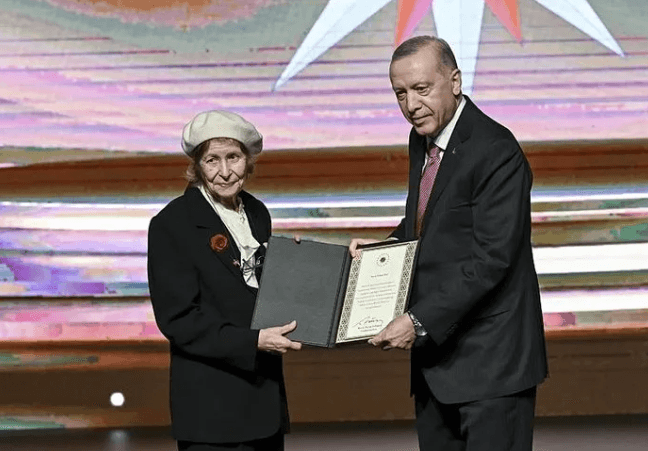
President Erdoğan presents the award to Günay Kut (left). (AA)
The opening of the Günay-Turgut Kut Special Library took place on 1 November 2024 at the Rami Library. The opening ceremony was attended by Deputy Minister of Culture and Tourism Batuhan Mumcu, Chairman of the Turkish Manuscripts Institution Coşkun Yılmaz, and Prof. Dr. Günay Kut. The special library, comprising books donated by Prof. Dr. Günay Kut to the Presidency of the Turkish Manuscripts Institution, will serve researchers at Rami Library, location 177.
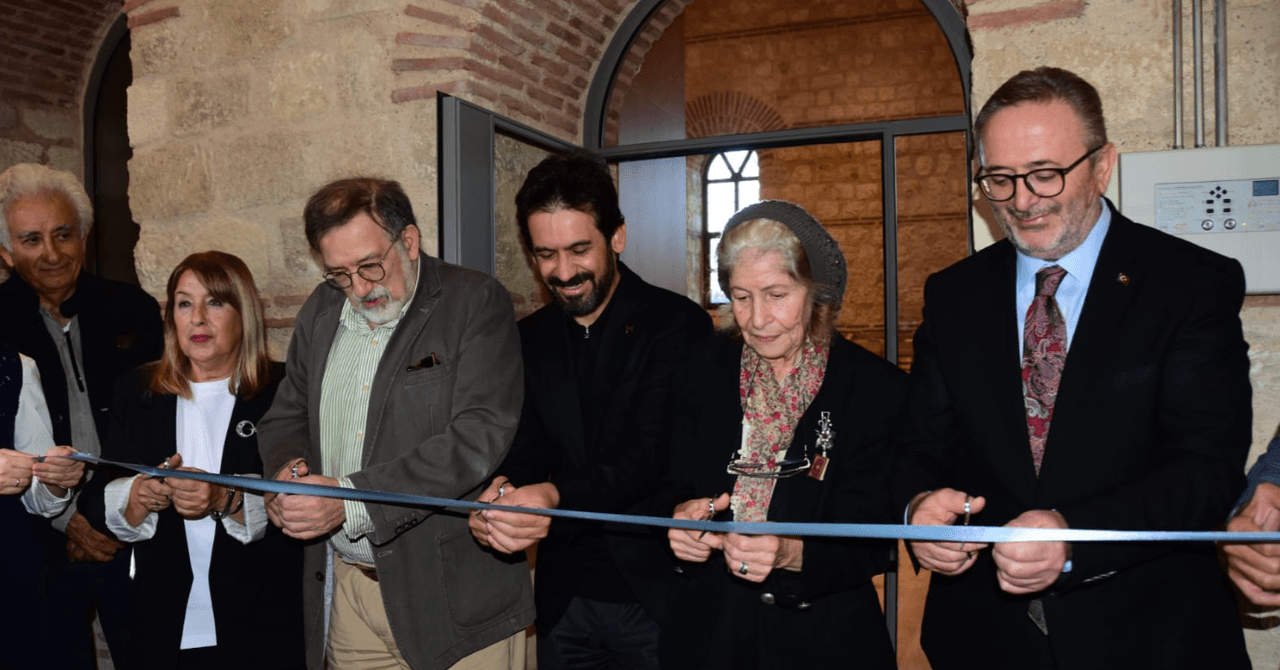
Opening of the special library. (YEK)
Günay Kut’s academic career includes numerous significant works. In addition to projects, exhibitions, and thesis supervision, she has published 24 books, 172 articles, and 61 papers. Between 1983 and 2010, she supervised 23 master’s theses. Below are some of her key works. For detailed information, see the comprehensive list she prepared.
1977
Contemporary Turkish Short Stories: An Intermediate Reader. Edited by Richard L. Chambers and Günay Kut (Alpay). Minneapolis and Chicago: Bibliotheca Islamica, 1977.
1978
Heşt Bihişt: The Tezkire by Sehi Beg, An Analysis of the First Biographical Work on Ottoman Poets with a Critical Edition Based on MS. Süleymaniye Library, Ayasofya O. 3544. Cambridge, Mass.: Harvard University, 1978.
1983
Ormanda Yaşam=Das Leben im Wald. With Meral Alpay. Translated into German by Zeynep Sayın. Istanbul: Yapı and Kredi Bankası, 1983.
1984
Vakıf Seals in Manuscripts. With Nimet Bayraktar. Ankara: Ministry of Culture and Tourism, 1984.
1986
Et-Terkibât fî Tabhi'l-hulviyyât: Recipes for Sweets. Ankara: Ministry of Culture and Tourism, 1986.
1989
Catalogue of Turkish Manuscripts in the Tercüman Newspaper Library. Istanbul: Tercüman Newspaper, 1989.
Orhan Şaik Gökyay: His Life and Works. Ankara: Ministry of Culture, 1989.
1996
Mehmed Râ'if: Mir’ât-ı İstanbul: Volume I, Asia Side. Edited and annotated by Günay Kut and Hatice Aynur. Istanbul: Çelik Gülersoy Foundation, 1996.
1999
An Essay on Turkish Dialects. With Esra Karabacak and Nesrin Altun. Istanbul: Boğaziçi University, 1999.
2001
Muhibbî Dîvânı: Photographic Reproduction of the Illuminated Manuscript No. 3873 in the Nuruosmaniye Library. Introduction by Günay Kut. Ankara: Ministry of Culture, 2001.
2003
Şemsi Ahmed Paşa: Şeh-name-i Sultan Murad. With Nimet Bayraktar. Cambridge, Mass.: Harvard University, Department of Near Eastern Languages and Civilizations, 2003.
Nureddin Abdurrahman İbni Ahmed-i Cami: The Fifth Throne: Yusuf and Züleyha. Cambridge, Mass.: Harvard University, 2003.
Turkish Manuscripts in the Bodleian Library. Compiled by Günay Kut. Oxford: Oxford University, 2003.
Ali Şîr Nevâî, Garâ’ibü’s-sıgar: Study and Comparative Text. Compiled by Günay Kut. Ankara: Turkish Language Association, 2003.
2005
Among Manuscripts: Studies in Old Turkic Literature 1. Edited by Fatma Büyükkarcı Yılmaz. Istanbul: Simurg, 2005.
2010
Gravestones of the Rumelihisarı Martyrs’ Shrine. With Edhem Eldem. Istanbul: Boğaziçi University Publications, 2010.
2012
Catalogue of the Library of Boğaziçi University, Kandilli Observatory and Earthquake Research Institute. With Hatice Aynur. Istanbul: Boğaziçi University, 2012.
Acâibü’l-Mahlûkât: Study and Photographic Reproduction. Compiled by Günay Kut. Istanbul: Presidency of the Turkish Manuscripts Institution, 2012.
2014
Catalogue of Manuscripts of the Institute for Istanbul Studies. With Zehra Toska, Fatma Büyükkarcı Yılmaz, Tülay Gençtürk Demircioğlu, and Arzu Atik. Istanbul: Institute for Istanbul Studies, 2014.
Mir’âtü’l-fevâ’id fî Terâcimi Meşâhiri Âmid: Diyarbakır Ulama and Notables, Introduction, Volume 1 Ali Emîrî. Edited by Günay Kut, Mesud Öğmen, and Abdullah Demir. 2 vols. Istanbul: Presidency of the Turkish Manuscripts Institution, 2014.
2020
Alî Şir Nevâyî, Külliyât-ı Nevâyî (Study and Photographic Reproduction). Compiled by Günay Kut. Notes on the Külliyât-ı Nevâyî in Topkapı Palace Museum Library, Revan 808, pp. 11–68.
2021
Vakıf Seals in Manuscripts. Second Edition. Günay Kut – Nimet Bayraktar. Edited with additions by Ahmet Çınar and Tenzile Şahal. Arabic translation by Muhammed Şahin and Muhammed Fatih Ünlü. Istanbul: Presidency of the Turkish Manuscripts Institution, 2021.
1961
Zati and Şem‘ ü Pervane Mesnevisi. Journal of Turkish Language and Literature XI (1961): 129–142.
1964
Refî'î. Islamic Encyclopedia, vol. IX. Ankara: Ministry of National Education, 1964: 668.
Rıza. Islamic Encyclopedia, vol. IX. Ankara: Ministry of National Education, 1964: 727–728.
1965
Ghalatat-ı Meshure. The Encyclopaedia of Islam, New Edition, vol. II, Leiden and London: 997.
1970
Ghazali. The Encyclopedia of Islam, New Edition. Vol. II, Leiden and London 1965, reprint 1970, 1042–1043.
1971
Notes on Turkish Manuscripts in the British Museum. Annual of Turkish Language Research – Belleten, 1971: 209–230.
Hakim Ata: A Study of His Life. Annual of Turkish Language Research – Belleten, 1971: 179–230.
1973
Aşkî and His Translation of Heft Peyker. Annual of Turkish Language Research – Belleten 1972. Ankara: Turkish Language Association, 1973: 127–151.
1974
Letters Sent by Ghazali from Mecca to Istanbul and the Replies Sent to Him. Annual of Turkish Language Research – Belleten 1973–74. Ankara: Turkish Language Association, 1974: 223–252.
1976
Lami’i Çelebi and His Works. Journal of Near Eastern Studies XXXV, No. 2 (1976): 73–93.
1977
Some Turkish Manuscripts in the Public Libraries of Bursa and Manisa. Journal of Turkish Studies – Türklük Bilgisi Araştırmaları I. Cambridge, Mass.: Harvard University, 1977: 121–147.
1978
Fürkat-name. Annual of Turkish Language Research – Belleten 1977. Ankara: Turkish Language Association, 1978: 333–353.
“Sehî Divanı”, Çevren, Year 6, No. 20, Pristina 1978, pp. 23–43.
1979
On Turkish Manuscripts in the Edirne Selimiye Library. Journal of Turkish Studies, III, Cambridge: Mass. Harvard University, 1979, pp. 259–272.
“Hakim Ata”, The Encyclopedia of Islam, New Edition Vol. III, 1971, reprint 1979, pp. 1117–1118.
1980
Literary Perspectives: Manuscript Libraries in Istanbul. Current Turkish Thought, No. 43 (1980): 1–36.
1981
Among Manuscripts: A Humorous Lexicon. National Culture II, Nos. 6–8 (November–December 1980–January 1981): 69–71.
1983
Feasts at the Circumcision Ceremonies of Sultan Bayezid and Sultan Cihangir, Sons of Kanuni. Catering Gourmet (1983): 18–21.
1986
Mihr ü Mah. Encyclopedia of Turkish Language and Literature, vol. VI. Istanbul: Dergâh, 1986: 332–333.
1988
Abdülvâsi Çelebi. Turkish Religious Foundation Islamic Encyclopedia, vol. I. Istanbul: Turkish Religious Foundation, 1988: 283–284.
1991
The Life and Poetry of Yunus. Kadıköy Anatolian High School (1991).
1999
An Essay on Turkish Dialects. Project Studies (1999).
2012
Studies on Acâibü’l-Mahlûkât. Süleymaniye Manuscripts (2012).
2014
The Circumcision Ceremony and Tombstone Inscription of Sultan Mehmed III, pp. 191–205. Sultan Mehmed III and His Era, Bursa, 2014.
2015
On Bedr-i Dilşâd’s Murâd-nâme. Sultan Murad II and His Era (2015): 91–99.
2019
Publications and Manuscripts of the Muhibbi Divan, pp. 74–90. In Kanuni Sultan Süleyman’s Era and Bursa. Bursa: Osman Belediyesi, 2019.
2021
Şemsi Ahmed Paşa and His Work Şehnâme-i Sultân Murad, pp. 322–346. In Sultan Murad III and His Era. Bursa, 2021.
1976
The Mesnevi of Şem‘ ü Pervâne and Its Sources in Turkish Literature. II International Turkology Congress. Istanbul, 4–9 October 1976.
1982
Esîrî and Sergüzeşt-nâmesi. IV International Turkology Congress. Istanbul, 20–25 September 1982.
1985
Manuscript Cataloguing Studies. Library Week. Istanbul, 27 March 1985.
On Turkish Translations of Acâibü’l-mahlûkât. V International Turkology Congress. Istanbul, 23–28 September 1985.
1986
Feasts at the Circumcision Ceremonies of Şehzade Cihangir and Bayezid. III International Turkish Folklore Congress. İzmir, 23–29 June 1986.
On the Recipes Added by Şirvânî to His Translation of a Cookbook. I International Food Congress. Istanbul-Ankara-Konya, 23–30 September 1986.
Errors in Spoken and Written Turkish and Their Correction. Boğaziçi University, 29–30 September 1986.
Some Important Points to be Considered in the Cataloguing and Editing of Turkish Manuscripts. Symposium on Textual Tradition and the Editing of Persian and Turkish Texts. Leiden, 16–18 October 1986.
1987
Mevlânâ Celâleddin-i Rûmî. Süleymaniye Library, 17 December 1987.
1988
Literary Life in the Kanuni Era. Marmara University, 18 December 1988.
Varieties of Soup in Turkish Cuisine. International Food Symposium. Istanbul, Beyazıt, 8 September 1988.
1989
Traces of Indian Literature in Turkish Literature. Marmara University, 5 April 1989.
1991
Understanding Yunus Emre. Edirnekapı Public Library, 20 February 1991.
The Life and Poetry of Yunus. Kadıköy Anadolu High School, 8 March 1991.
Turkish Manuscripts in the Bodleian Library. 27th Library Week. Istanbul, 29 March 1991.
Understanding Yunus. Marmara University, 2 May 1991.
An Essay on Nasreddin Hoca Tales in Manuscripts. IV International Congress of Turkish Folk Culture. Antalya, 6 May 1991.
Turkish Poetry in Anatolia in the 13th Century. IV Turkish-Soviet Colloquium. Konya, 12–19 June 1991.
Understanding Yunus. IRCICA, 2 November 1991.
The Poetry of Yunus. Süleymaniye Library, 2 November 1991.
A Haber. "Başkan Erdoğan’dan Önemli Açıklamalar." Accessed January 27, 2025.https://www.ahaber.com.tr/gundem/2024/12/25/baskan-erdogandan-onemli-aciklamalar.
Academia.edu. "Söyleşi: Günay Kut ile Eski Türk Edebiyatı Üzerine [Interview with Günay Kut on Old Turkish Literature]." Accessed January 27, 2025.https://www.academia.edu/5697025/SÖYLEŞİ_Günay_Kut_ile_Eski_Türk_Edebiyatı_Üzerine_Interview_with_Günay_Kut_on_Old_Turkish_Literature.
Bardakçı, Murat. “Hocaannenin Kitabı.” *Habertürk*, Accessed January 27, 2025.https://www.haberturk.com/yazarlar/murat-bardakci/1468524-hocaannenin-kitabi.
Boğaziçi Üniversitesi. “Curriculum Vitae.” Academia.edu. Accessed January 27, 2025.https://boun.academia.edu/httpsturkishliteraturebounedutrtrnode293/CurriculumVitae.
Boğaziçi Üniversitesi. “Emeritus Prof. Dr. Günay Kut’a Cumhurbaşkanlığı Kültür ve Sanat Büyük Ödülü.” Boğaziçi Üniversitesi Haberler. Accessed January 27, 2025.https://haberler.bogazici.edu.tr/tr/haber/emeritus-prof-dr-gunay-kuta-cumhurbaskanligi-kultur-ve-sanat-buyuk-odulu.
Nadir Kitap. “Günay Kut Röportajı.” Accessed January 27, 2025.https://www.nadirkitap.com/gunay-kut-roportaji-blog83.html.
TRT Haber. “Cumhurbaşkanı Erdoğan Kültür ve Sanat Büyük Ödülü Sahiplerini Açıkladı.” TRT Haber. Web Archive, Accessed January 27, 2025.https://web.archive.org/web/20241111005509/https://www.trthaber.com/haber/gundem/cumhurbaskani-erdogan-kultur-ve-sanat-buyuk-odulu-sahiplerini-acikladi-885181.html.
Spouse | Turgut KUT | ||||||||
|---|---|---|---|---|---|---|---|---|---|
Date of birth | 1939-05-05 | ||||||||
Place of birth | Bayburt | ||||||||
Academic position | Boğaziçi Üniversitesi Türk Dili ve Edebiyatı Bölümü (Emeritus Prof. Dr.) | ||||||||
Areas of expertise | Old Turkish Literature, Folk Literature, Manuscript Works | ||||||||
Childhood and Family Origins
Education Years and the Beginning of the Academic Journey
Academic Career and Passion for Literature
Awards
2024 Presidential Culture and Art Grand Award
Günay-Turgut Kut Special Library
Works
Books
Articles
Papers and Conferences