


This article was automatically translated from the original Turkish version.
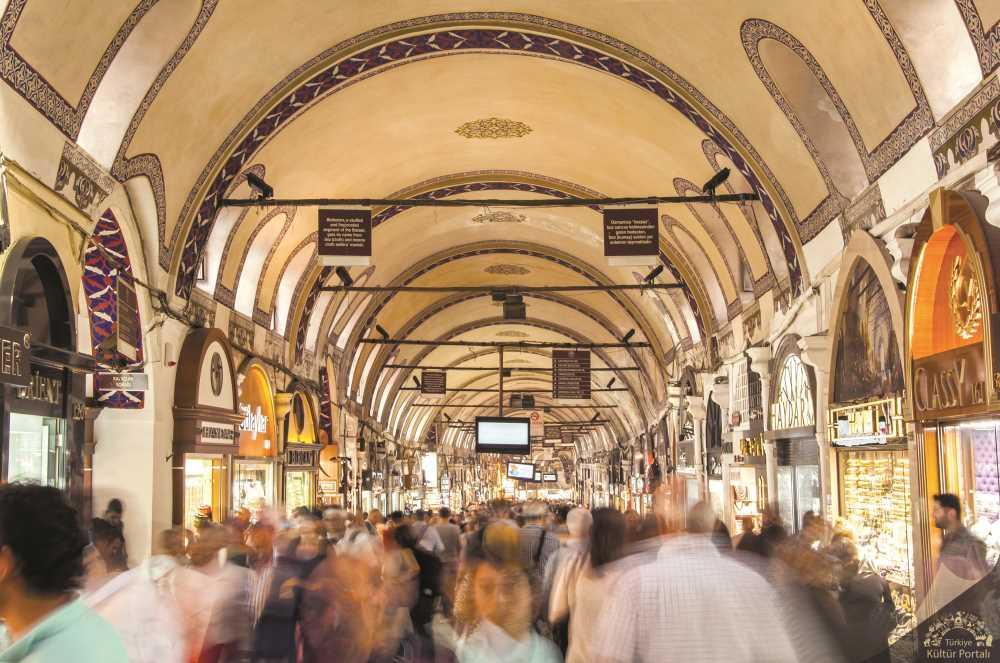
Covered Bazaar
Location | Beyazıt - Fatih Istanbul / Türkiye | ||||||||
|---|---|---|---|---|---|---|---|---|---|
Foundation | 1461 | ||||||||
Commissioned by | Fatih Sultan Mehmet (Initially commissioned two bedestens) | ||||||||
Architectural Style | Ottoman classical architecture, mixed plan (bedesten, han, street and shop layout) | ||||||||
Material | Stone and brick | ||||||||
Historical Names | Çarşu-yı Kebir Grand Bazaar Kapalıçarşı | ||||||||
Featured Products | Jewelry, carpets, antiques, ceramics, handicrafts, spices, textile products | ||||||||
Visiting Hours | Monday–Saturday: 08.30–19.00 (Closed on Sundays and public holidays) | ||||||||
The Grand Bazaar is located at the intersection of the Beyazıt, Nuruosmaniye and Mercan neighborhoods in İstanbul and is one of the largest and oldest covered markets in the world. Established during the Ottoman Empire, this trade center has played a defining role in the city’s economic and cultural life for centuries, both through its architecture and its social function. Today, with more than 60 streets and nearly 4,000 shops, the bazaar welcomes an average of 250,000 to 400,000 visitors daily and stands as one of Istanbul’s most iconic landmarks.
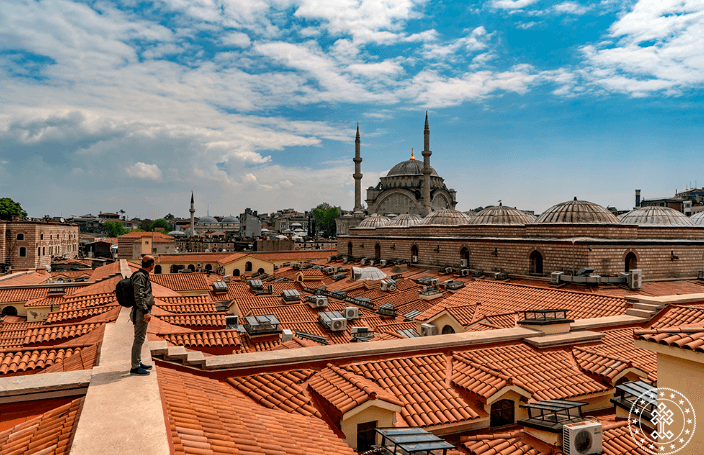
Exterior View of the Grand Bazaar (Turkey Culture Portal)
The origins of the Grand Bazaar date back to the reign of Fatih Sultan Mehmed (1451–1481). After the conquest of Istanbul, the Ottoman state built the bazaar to establish its economic center. It first opened in 1460 with the Cevahir Bedesteni, a primary structure specifically designed for the trade of precious stones and jewelry. This building was a vaulted bedesten with thick stone walls. In 1545, during the reign of Kanuni Sultan Süleyman, a second major structure, the Sandal Bedesteni, was added, initiating the bazaar’s expansion.
Over time, the surrounding hans, streets, shops, and gates expanded the Grand Bazaar into its present form. Its development was supported not only by commercial needs but also by structures serving social and religious functions. Mosques, fountains, ablution areas, and hans formed integral parts of this unified complex.
Throughout its history, the Grand Bazaar has faced numerous fires and earthquakes. Major fires in 1546, 1651, 1710, 1730, 1750 and 1954 caused extensive damage. The great Istanbul earthquake of 1894 severely damaged the bazaar’s dome system. Subsequent repairs and restorations followed these disasters, particularly during the 19th century, which shaped the bazaar’s current architectural character.
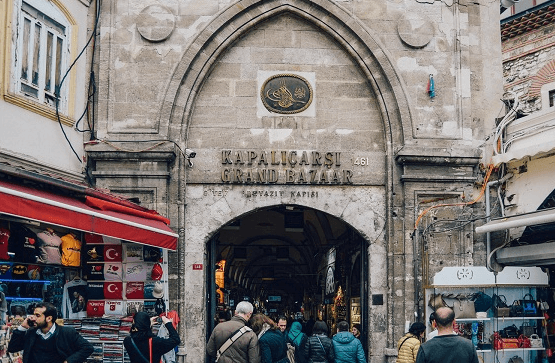
Entrance to the Grand Bazaar (Fatih District Governorship of the Republic of Türkiye)
The Grand Bazaar was constructed as a synthesis of the Ottoman arasta and bedesten traditions. Spanning approximately 30,700 square meters, it contains 64 streets, 22 gates, two bedestens and nearly 4,000 shops. The two main bedestens at the heart of the structure are architecturally notable for their domed and vaulted roofs. The Cevahir and Sandal Bedestens are enclosed by thick stone walls and organized with nested shops and arched compartments.
The bazaar’s streets are covered by vaulted ceilings fitted with translucent glass panels that allow soft natural light to diffuse throughout the interior. This system enhances the shopping experience while preserving the traditional atmosphere. Shops are typically small in volume with wooden partitions separating their facades. Street names within the bazaar reflect the dominant goods once traded there: Kuyumcular (Jewelers), Halıcılar (Carpet Sellers), Aynacılar (Mirror Makers), Sepetçiler (Basket Makers), Kalpakçılar (Fur Hat Makers) and others remain in use today.
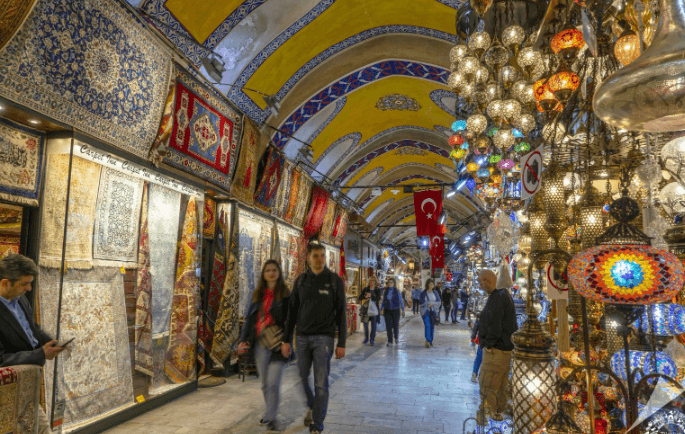
The Grand Bazaar Today(Turkey Culture Portal)
The shops of the Grand Bazaar, like those in the Mısır Çarşısı, were historically identified by symbolic motifs. Symbols placed on shop doors or counters indicated the type of product, the guild affiliation, or the craft practiced. Some jewelers displayed scales or gold motifs at their entrances, while carpet sellers adorned their shops with carpet patterns. This system served both to guide customers and to enhance the visibility and recognition of artisans.
In addition, Ottoman-era calligraphy inscriptions and traditional decorative elements on shop signs enhance the bazaar’s artistic value. Some symbols found in the interior reflect the influence of the ahilik guild system. Each motif has contributed to the bazaar’s rich cultural heritage and formed a visual archive preserved to this day.
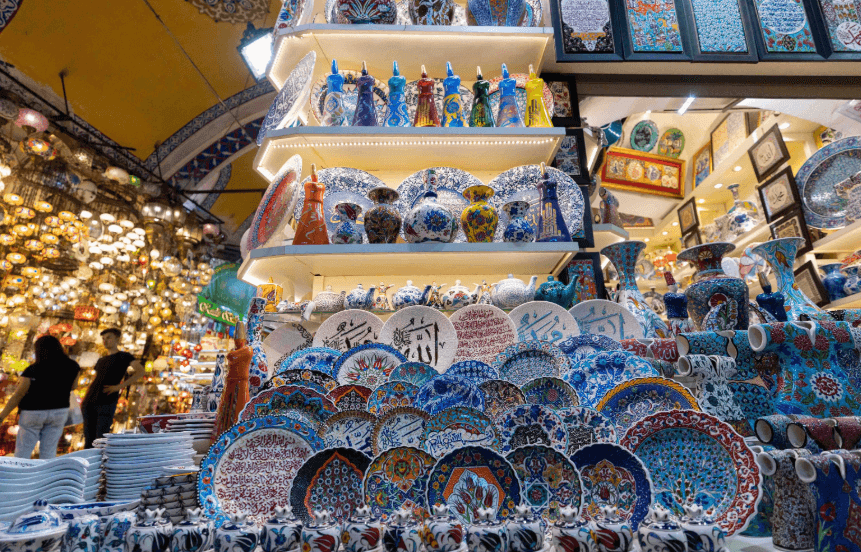
Shop in the Grand Bazaar (Governorship of the Republic of Türkiye, Istanbul)
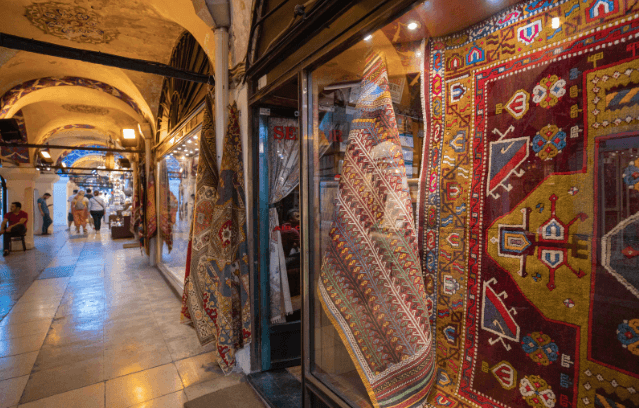
Shop in the Grand Bazaar (Governorship of the Republic of Türkiye, Istanbul)
The Grand Bazaar is not merely a marketplace; it is also a social meeting point and a space for cultural exchange stretching from the Ottoman era to the present. Throughout history, the bazaar brought together merchants and artisans from diverse ethnic communities and became an essential component of Istanbul’s multicultural fabric. This area, where Jewish, Armenian, Rum, Arab and Levantine traders conducted business together, reflects the spirit of tolerance that characterized Ottoman commercial life.
Relations among artisans were governed by the ahilik guild system, which established standards of apprenticeship, mastery, ethical trade practices and mutual social support. Collective iftars, blessing prayers and religious ceremonies held during special occasions such as Ramadan and festivals strengthened the bazaar’s social cohesion.
Today, the Grand Bazaar holds significant importance in international tourism. As a major attraction for foreign visitors, it offers both shopping and cultural experiences; many artisans speak multiple languages to serve their clientele. This multilingual environment ensures the continuation of the bazaar’s historical identity in the modern era.
Fatih Kaymakamlığı. *Kapalıçarşı*. Accessed April 15, 2025.http://fatih.gov.tr/kapalicarsi.
T.C. Ministry of Culture and Tourism. "Kapalıçarşı." *Türkiye Kültür Portalı*. Accessed April 15, 2025.https://www.kulturportali.gov.tr/turkiye/istanbul/gezilecekyer/kapalicarsi.
T.C. Ministry of Culture and Tourism. "Çarşılar - Bedestenler."İstanbul İl Directorate of Culture and Tourism. Accessed April 15, 2025.https://istanbul.ktb.gov.tr/TR-276803/carsilar-bedestenler.html
İstanbul Valiliği. *558 Yıldır Ticaretin Merkezi: Kapalıçarşı*. Accessed April 15, 2025.http://istanbul.gov.tr/558-yildir-ticaretin-merkezi-kapalicarsi.

Covered Bazaar
Location | Beyazıt - Fatih Istanbul / Türkiye | ||||||||
|---|---|---|---|---|---|---|---|---|---|
Foundation | 1461 | ||||||||
Commissioned by | Fatih Sultan Mehmet (Initially commissioned two bedestens) | ||||||||
Architectural Style | Ottoman classical architecture, mixed plan (bedesten, han, street and shop layout) | ||||||||
Material | Stone and brick | ||||||||
Historical Names | Çarşu-yı Kebir Grand Bazaar Kapalıçarşı | ||||||||
Featured Products | Jewelry, carpets, antiques, ceramics, handicrafts, spices, textile products | ||||||||
Visiting Hours | Monday–Saturday: 08.30–19.00 (Closed on Sundays and public holidays) | ||||||||
History
Architectural Structure
Symbols and Decorative Elements
Cultural and Social Role