


This article was automatically translated from the original Turkish version.
10 July 1894 Earthquake’s actual epicenter is not Istanbul. Due to Istanbul’s status as the capital and its dense population, the disaster became synonymous with the city. Earthquake effects were assessed by inviting Dimitrios Eginitis, director of the Athens Observatory.
According to Eginitis’s report, unusually high sea temperatures were detected prior to the earthquake. Changes in animal behavior were also observed before the event. The earthquake, consisting of three shocks lasting approximately 18 seconds, occurred.
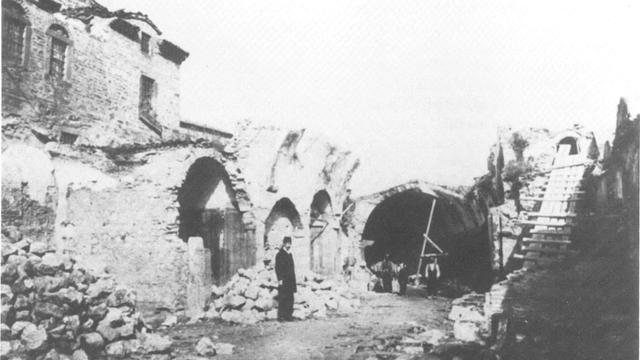
(Destructive impact source: Avlaremoz)
Aftershocks continued for approximately one month after the main shock. The main areas affected in Istanbul were Sur-içi, Üsküdar, Büyükçekmece, and Kartal. According to the 12-point Medvedev-Sponheuer-Karnik (MSK) scale, the earthquake measured 8 in intensity.
The number of fatalities was approximately 150. In addition to the Grand Bazaar, numerous public and official buildings sustained damage. After the earthquake, the state provided relief for the population’s needs for shelter and food. The state established the İane-i Musabin Commission to solicit financial assistance from wealthy citizens. Citizens who contributed above a certain amount were awarded medals. Among the structures repaired after the earthquake were waterways, mosques, schools, and hospitals.【1】
The earthquake’s impact resonated globally. Kings and queens of countries such as England, Spain, and Holland expressed condolences, and these gestures were reported in the press. Furthermore, the earthquake was reflected in Turkish Literature as two epics and one poem.
Özkılıç Küçükalioğlu, Sema. 1984 Depremi ve İstanbul. İstanbul: Kültür Yayınları, 2015.
[1]
1

No Discussion Added Yet
Start discussion for "1894 Istanbul Earthquake" article
Areas Affected by the Earthquake