


This article was automatically translated from the original Turkish version.
Feltmaking is a craft that involves the production of items through the felting of natural fibers such as sheep’s wool. Those who practice this trade are called felt master or feltmaker. Feltmaking is an ancient craft that extends from the steppes of Central Asia to the hans, bazaars, and village squares of Anatolia.
Felt is a traditional textile material formed when wool fibers cling together under the influence of moisture, heat, and pressure, resulting in a non-woven surface. Originating from the harsh climatic conditions of nomadic life, this material acquired both functional and symbolic significance in Turkish culture through its use in tents, saddle covers, rugs, headgear, and clothing. With the migration of Turkic tribes into Anatolia, this craft adapted to settled life, acquired artistic qualities, and became organized within the Ahi and guild systems.
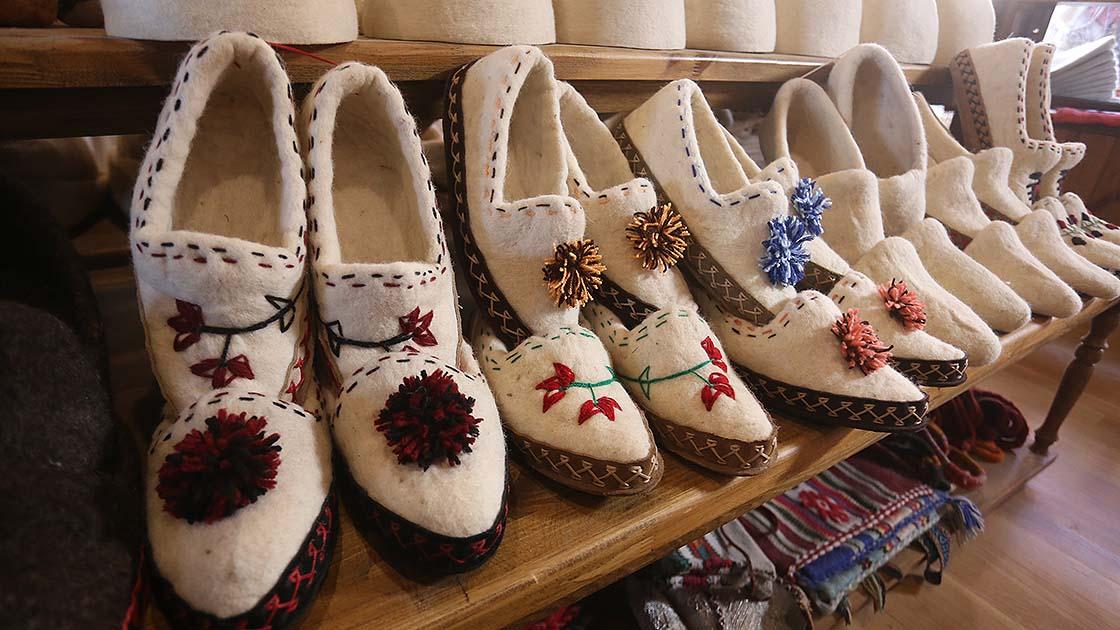
Felt Products (AA)
According to written and archaeological evidence, the history of feltmaking reaches back to the kurgan culture of Central Asia. Figured felt samples excavated from the Pazyryk Kurgan demonstrate that by the 5th century BCE, this craft had already achieved both technical and aesthetic sophistication. Huns, Göktürks, and Uyghurs used felt extensively, from tents and clothing to religious objects and ceremonial coverings. The transformation of felt into a symbolic object upon which rulers were seated during wooden burial rituals confirms that it was not merely a utilitarian item but also a potent symbol.
Following the Turkish victory at the Battle of Manzikert in 1071 and their subsequent settlement in Anatolia, feltmaking merged with local weaving traditions and became even more enriched. During the Seljuk and Ottoman periods, feltmaking acquired institutional structure through the Ahi and guild systems and served not only everyday needs but also military equipment, religious coverings, and ceremonial garments. Evliya Çelebi recorded that feltmakers participated in craft parades in Istanbul, walking on elevated platforms while tossing wool. 【1】
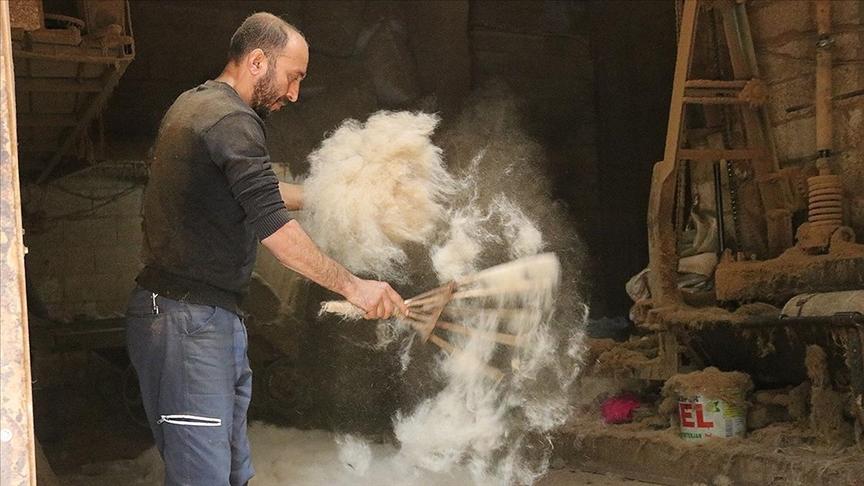
Felt Production (AA)
The Ahi organization formed the foundation of production ethics in Anatolia. Within this structure, individuals progressed through apprenticeship, journeyman, and master stages, acquiring not only professional skill but also social responsibility. To attain master status, the “Şed Kuşanma Ceremony” was performed. During the Ottoman period, feltmakers produced under their own guilds and supplied felt to state institutions. Until the 18th century, it was customary to boil felt in baths located at At Pazarı and Yenibahçe.
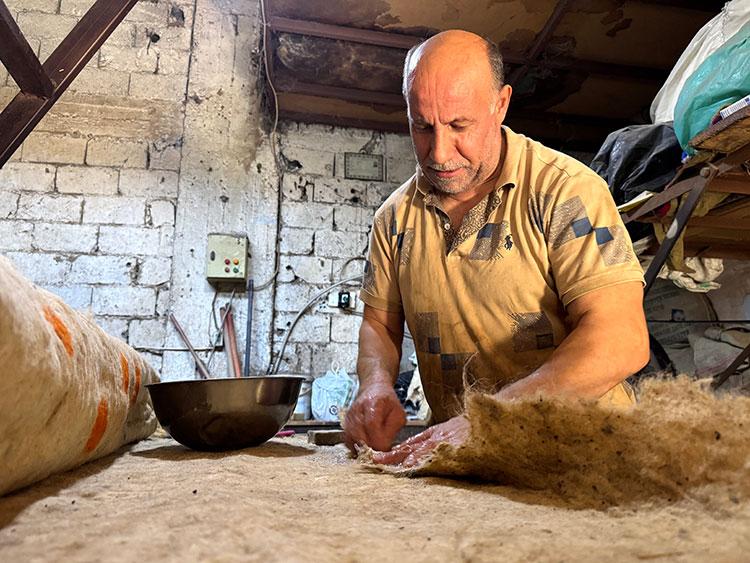
Felt Production (AA)
Felt production begins with the carding and cleaning of lamb’s wool. The wool is then fluffed and separated fiber by fiber using a hand-held hammer on a stretched string. Next, a patterned layer is prepared and motifs are arranged upon it. This process involves:
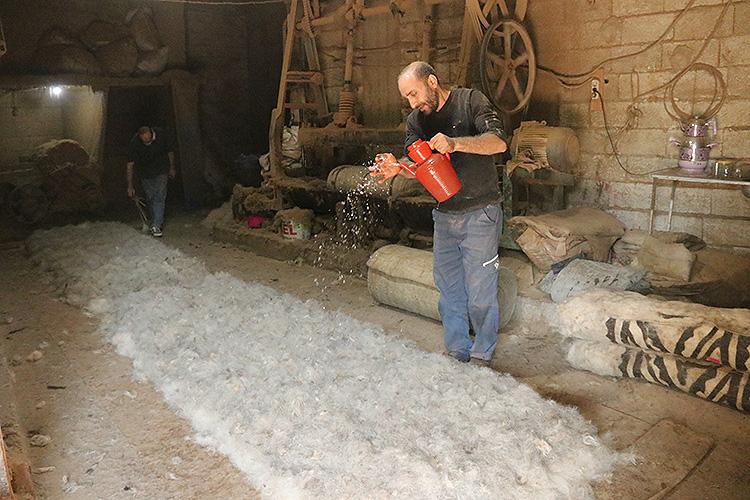
Felt Production (AA)
After motifs are arranged, the wool is wrapped in cloth and tightly bound with rope to prepare it for felting. The rolled bundle is then rolled back and forth by foot. In the second stage, the felt is beaten against the chest in a bathhouse to ensure the fibers bind tightly. This process is called “cooking.” Traditional methods do not use soap.
Some key tools used in feltmaking include:
Workshops were typically designed with earthen floors, wooden beams, no direct sunlight, and only one side facing the street. The shops in Gevraki Han in Konya and temporary production areas such as “kom” and “merek” in Ardahan reflect this traditional architecture.
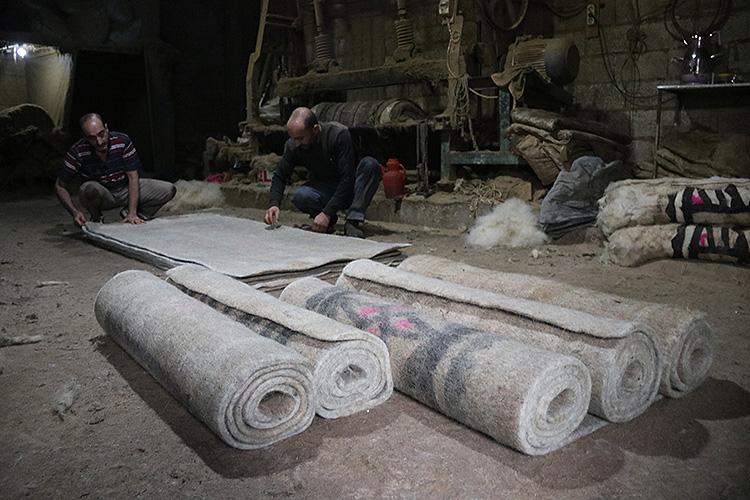
Felt Production (AA)
Felt is more than a covering; it is a cultural narrative. The motifs applied to it carry symbolic meanings:
Motifs vary according to regional aesthetics and intended use. In Şanlıurfa, color harmony is prioritized, while in Ardahan, motif placement follows symmetrical spatial principles.
Felt decoration can be applied either during production or after completion. Embroidery done during production is called “döşeme nakışı,” while decoration added to finished felt is known as “el işleme nakışı.”
Decoration techniques vary by region:
Felt production has become a ritual in many regions. In Ardahan, spreading felt is not merely a technical activity but a communal event marked by festive atmosphere. Accompanied by davul and zurna music, the “altın ömür halayı” dance is performed, inspired by the footsteps of feltmakers. In Şanlıurfa, felt has inspired folk songs and proverbs.
Women are the unseen actors in feltmaking. They play active roles in wool cleaning, dowry preparation, and motif placement. Before marriage, young girls traditionally prepared two or three patterned felt rugs as part of their dowry.
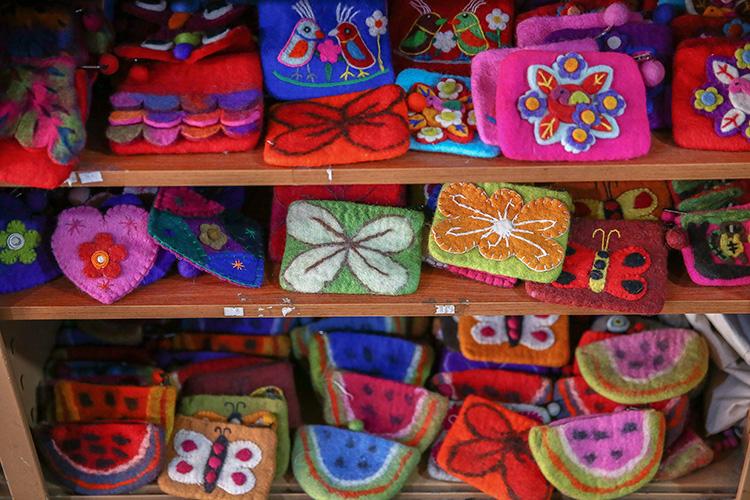
Felt Products (AA)
Felt types vary according to their intended use:
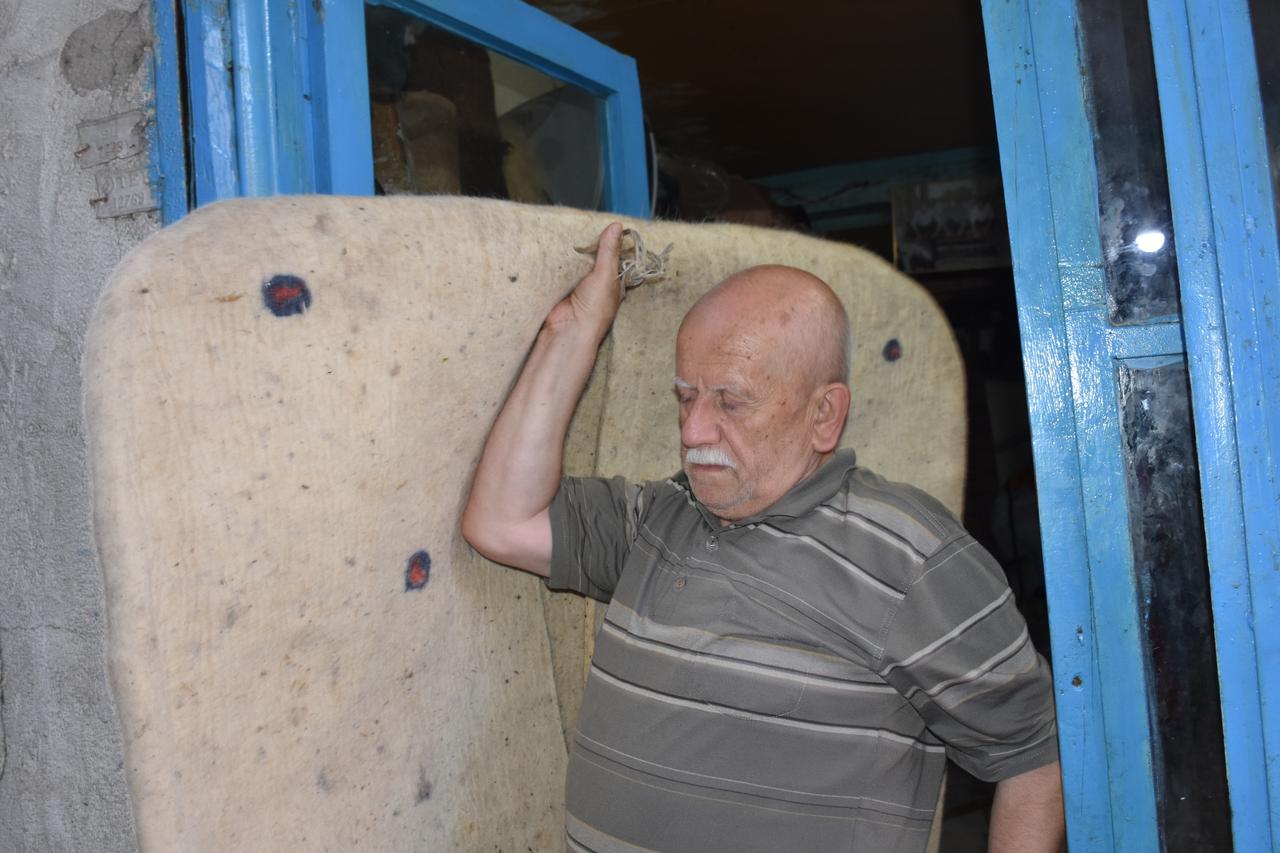
Felt Kepenek (AA)
Since the 1980s, industrialization, rural-to-urban migration, and the decline of animal husbandry have weakened feltmaking. Many workshops have closed, and masters have turned to itinerant work. In Ardahan, production has ceased entirely. However, a few workshops in Konya, Afyon, Şanlıurfa, Isparta, Manisa, and İzmir continue to preserve the tradition. These masters are valued as “living culture bearers.”
Laws enacted during the Republican era—the 1924 Trade and Industry Law and the 1949 Craft Associations Law—formalized the apprenticeship and master systems. Today, these processes continue in educational institutions under the Ministry of National Education, and vocational training programs supported by KOSGEB and local administrations contribute to the development of feltmaking.
Felt Documentary (TRT 2)
Anadolu Ajansı. "Şanlıurfalı Keçe Ustası Mesleğini Yeni Nesillere Öğretmek İstiyor." Anadolu Ajansı, December 15, 2022. Accessed June 30, 2025.https://www.aa.com.tr/tr/insana-dair/sanliurfali-kece-ustasi-meslegini-yeni-nesillere-ogretmek-istiyor/2764414
Anadolu Ajansı. “Arnavutluk'un Geleneksel Zanaatı: Keçecilik.” Accessed June 30, 2025.https://www.aa.com.tr/tr/yasam/arnavutlukun-geleneksel-zanaati-kececilik/2491577.
Anadolu Ajansı. “Bir Daha Dünyaya Gelsem Yine Keçeci Olurdum.” Accessed June 30, 2025.https://www.aa.com.tr/tr/geleneksel-sanatlarda-ustalar/bir-daha-dunyaya-gelsem-yine-kececi-olurdum/1243972.
Anadolu Ajansı. “Kadın Usta Keçeden Yaptığı Ürünleri Meraklılarına Ulaştırıyor.” Accessed June 30, 2025.https://www.aa.com.tr/tr/insana-dair/kadin-usta-keceden-yaptigi-urunleri-meraklilarina-ulastiriyor/2766727.
Anadolu Ajansı. “Kahramanmaraş'ta 41 Yıllık Keçe Ustası Mesleğin Kentteki Son Temsilcisi.” Anadolu Ajansı, October 30, 2024. Accessed June 30, 2025.https://www.aa.com.tr/tr/insana-dair/kahramanmarasta-41-yillik-kece-ustasi-meslegin-kentteki-son-temsilcisi/3378944
Aytac, A. “Yaşayan Geleneksel Sanatlara Bir Örnek: Keçecilik ve Bir Usta.” *Azerbaijan Journal of Educational Studies* 694, no. I (2021): 113–123. Accessed June 30, 2025.https://www.academia.edu/50390319/Ya%C5%9Fayan_Geleneksel_Sanatlara_Bir_%C3%96rnek_Ke%C3%A7ecilik_ve_Bir_Usta
Begiç, H. Nurgül. “Anadolu Keçeciliğinde Ustalar ve Atölyeleri.” *Arış*, no. 20–21 (2022): 97–114. Accessed June 30, 2025.https://aris.gov.tr/tam-metin/917/tur
Go Konya. "Keçecilik." Konya Deneyim Platformu. Accessed June 30, 2025.https://gokonya.com/tr/kececilik-1.
Karademir, Sibel. “Keçecilik.” *Türkiye Turizm Ansiklopedisi*, 2021. Accessed June 30, 2025.https://turkiyeturizmansiklopedisi.com/kececilik
Seyirci, Musa, and Ahmet Topbaş. “Anadolu’da Keçecilik.” *Erdem Dergisi*, Volume 10, no. 30 (1999): 577–597. Accessed June 30, 2025.https://pdfs.semanticscholar.org/bd99/935d1c6745e866502cc634ddbebea52c3a3d.pdf
Subaşı, Ebru. “Ardahan’ın Yok Olan Sanatı ‘Keçecilik’.” *Van İnsani ve Sosyal Bilimler Dergisi (ViSBiD)* 5 (2023): 76–99. Accessed June 30, 2025.https://dergipark.org.tr/tr/download/article-file/3085407
T.C. Ministry of Culture and Tourism. "Keçecilik." e-Kitap, 2025. Accessed June 30, 2025.https://ekitap.ktb.gov.tr/TR-80838/kececilik.html.
TRT 2 YouTube Channel. "Hüner Keçe Sanatı | 9. Bölüm." Accessed June 30, 2025.https://www.youtube.com/watch?v=6j-43FeZsDY.
İlden, Serkan, and Elçin Akçora. “Afyonkarahisar’da Keçecilik Sanatı.” *Akdeniz Sanat* 4, no. 7 (2011): 0–0. Accessed June 30, 2025.https://dergipark.org.tr/tr/download/article-file/275356
[1]
Ebru Subaşı, “Ardahan’ın Yok Olan Sanatı ‘Keçecilik’,” Van İnsani ve Sosyal Bilimler Dergisi (ViSBİD) 5 (2023): 79, https://dergipark.org.tr/tr/download/article-file/3085407.

Historical Background
Ahi Organization and Professional Ethics
Technical Processes and Production Environments
Motifs and Their Symbolic World
Embroidery Techniques and Regional Variations
Feltmaking in Social Life
Types of Felt and Their Uses
Feltmaking Today and Preservation Efforts