


This article was automatically translated from the original Turkish version.
Giresun Simidi
Geographic Source | Giresun, Türkiye | ||||||||
|---|---|---|---|---|---|---|---|---|---|
Materials | Boiling water (for blanching) 1 glass of grape molasses 600–700 ml water 20 grams salt 1 kg flour 10–40 grams yeast (dry or fresh) | ||||||||
Historical | Approximately 500 years | ||||||||
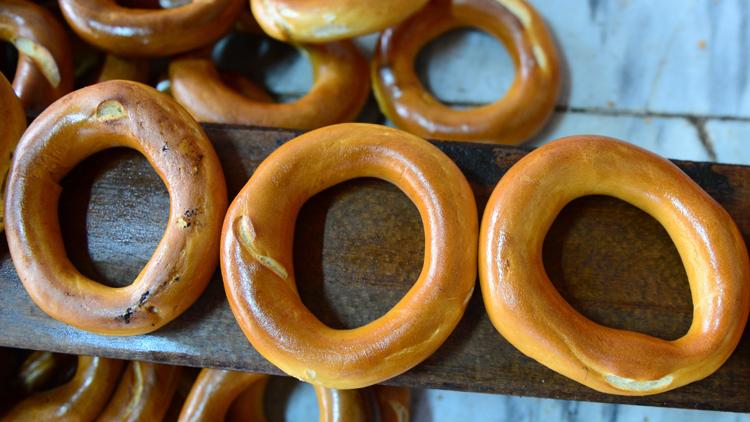
Giresun simidi is a traditional flour-based product unique to the province of Giresun in the Black Sea Region. It differs from other sesame-coated simit varieties widely known in other regions of Türkiye by the absence of sesame, low salt content, and preparation using sour yeast. Its local production technique, choice of ingredients, and baking method give it a distinctive character.
Giresun simidi is a regional flour-based product distinguished by its traditional production method and characteristic features. Due to its unique qualities, Giresun simidi has been the subject of efforts by the Giresun Provincial Directorate of Culture and Tourism to obtain geographical indication status. The product’s traditional preparation method, ingredient ratios, production technique, and local context meet the necessary criteria for geographical indication protection.
Through the geographical indication process, the aim is to ensure the preservation and traceability of the methods and ingredients used in the production of Giresun simidi, and to sustain its viability during commercialization without compromising its local identity.
The production process of Giresun simidi begins with the use of basic ingredients in specific proportions: flour, water, salt, and yeast. The yeast used is typically sour yeast, which enables prolonged fermentation and proper dough maturation. After preparation, the dough is rested for a specified period, then divided into small pieces. These pieces are hand-rolled into the characteristic simit shape.
The shaped dough pieces are first dipped in boiling water for one to two minutes, creating a firm and glossy outer surface. After boiling, the simits are immersed in a grape molasses mixture prepared according to local tradition. This step imparts a distinctive color and subtle sweetness to the simit’s exterior.
The molasses-coated simits are placed in stone ovens heated by wood fire. Baking in the stone oven ensures the development of a crisp crust while maintaining a soft interior. Baking time varies depending on the oven temperature and the size of the simits.
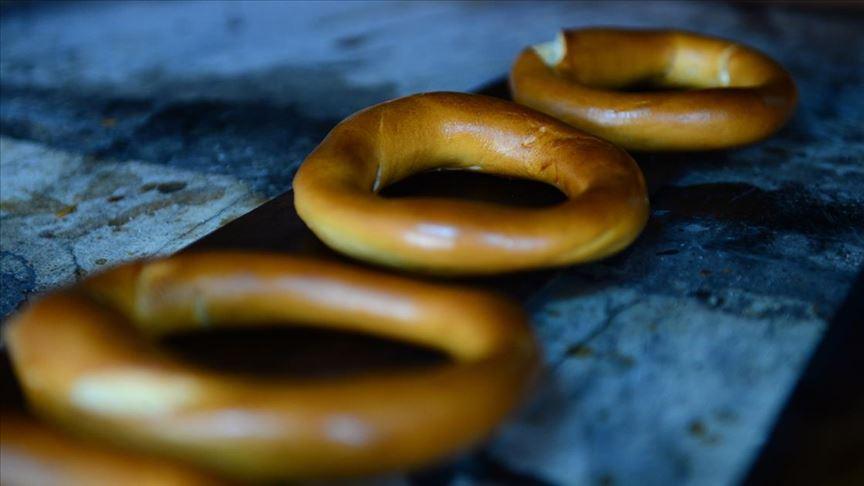
Giresun simidi (Anadolu Ajansı)
Giresun simidi is ready for immediate consumption after production and retains its qualities largely even after cooling. Unlike some other flour-based products, this simit is suitable for long-term storage. It can be kept in a refrigerator and reheated in an oven or on a pan before consumption to restore its softness and freshness. This property enhances its portability and shelf life.
The production of Giresun simidi is primarily carried out in bakeries within Giresun province and its surrounding areas. Home preparation is uncommon. This product is frequently consumed by the local population and, especially during summer months, is transported to other countries through expatriates, thereby gaining recognition abroad.
How Giresun simidi is made (YeşilGiresun Gazetesi)
Giresun İl Kültür ve Turizm Müdürlüğü. "Ne Alınır?" Giresun İl Kültür ve Turizm Müdürlüğü Resmî Web Sitesi. Accessed May 15, 2025.https://giresun.ktb.gov.tr/TR-217232/ne-alinir.html.
Karaosmanoğlu, Hasan, Arzu Karaosmanoğlu, and N. Şule Üstün. "Doğu Karadeniz Bölgesindeki Gıda Turizmi ve Geleneksel Gıdalar." *Uluslararası Doğu Karadeniz Turizm Sempozyumu*, Giresun Üniversitesi, October 7–9, 2010, pp. 176–183.https://www.researchgate.net/publication/346085068_DOGU_KARADENIZ_BOLGESINDEKI_GIDA_TURIZMI_VE_GELENEKSEL_GIDALAR
Kültür Portalı. "Giresun Simidi." Accessed May 15, 2025.https://www.kulturportali.gov.tr/turkiye/giresun/nealinir/giresun-simidi.
Yetgin, Gültekin. “Pekmezin renk ve tat verdiği asırlık lezzet: Giresun simidi.” Anadolu Ajansı. Accessed May 15, 2025.https://www.aa.com.tr/tr/turkiye/pekmezin-renk-ve-tat-verdigi-asirlik-lezzet-giresun-simidi/1424435.
YeşilGiresun Gazetesi. "Giresun’un Asırlık Lezzeti; Susamsız Pekmezli Simit." YouTube. Accessed May 15, 2025.https://www.youtube.com/watch?v=BxOmQvYZeHE

Giresun Simidi
Geographic Source | Giresun, Türkiye | ||||||||
|---|---|---|---|---|---|---|---|---|---|
Materials | Boiling water (for blanching) 1 glass of grape molasses 600–700 ml water 20 grams salt 1 kg flour 10–40 grams yeast (dry or fresh) | ||||||||
Historical | Approximately 500 years | ||||||||
Geographical Indication of Giresun Simidi
Preparation
Ingredients (for approximately 10–12 simits)
Dough Preparation
Boiling and Molasses Coating Process
Baking Method
Consumption and Storage Characteristics
Production and Distribution