This article was automatically translated from the original Turkish version.
+2 More
Location | Gaziantep Türkiye | ||||||||
|---|---|---|---|---|---|---|---|---|---|
Establishment | 1944 (First Museum Activities), 1969 (Relocation to New Building) | ||||||||
Status | Temporarily Closed (Under Renovation Due to the Earthquake of 06 February 2023) | ||||||||
Work Sources | Dülük (Doliche), Zincirli Höyük, Karkamış, Tilmen Höyük and Yesemek Open-Air Sculpture Workshop | ||||||||
Gaziantep Archaeology Museum is one of the most important archaeological centers in Southeastern Anatolia. It attracts attention with its rich collection spanning a broad chronological range from the Paleolithic period to the Roman and Byzantine eras. The museum systematically displays artifacts obtained from mounds and excavations in the region, presenting the development of Anatolian civilizations in a chronological order.
Museum activities in Gaziantep began in 1944. The first archaeological artifacts were collected within the Nuri Mehmet Pasha Mosque. However, as excavations in the region expanded—particularly at Dülük, Zincirli Höyük, Karkamış, and Tilmen Höyük—the growing number of artifacts rendered the existing space inadequate.
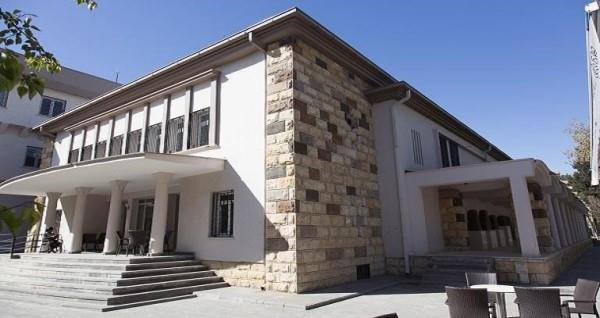
For this reason, in 1969, the Gaziantep Archaeology Museum moved into a new building constructed according to modern museum principles. With the construction of the new building, artifacts began to be displayed in chronological and thematic order, with exhibition areas organized along a timeline extending from the Paleolithic period to the Byzantine era.
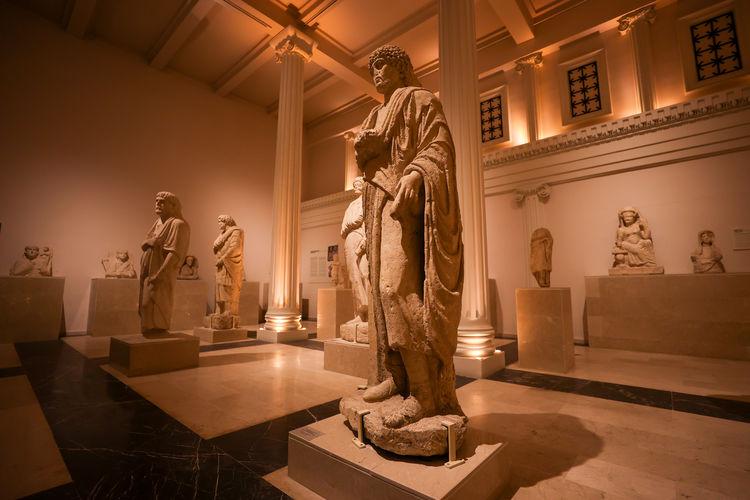
Interior of Gaziantep Archaeology Museum (AA)
In 2005, the museum building was reorganized in accordance with contemporary exhibition principles, with new exhibition halls, storage areas, and laboratories added. Through restoration work and technological innovations during this period, the museum became one of Turkey’s leading institutions in preserving and promoting the region’s archaeological heritage.
The collection of the Gaziantep Archaeology Museum consists of artifacts representing the rich archaeological heritage of Southeastern Anatolia. The museum covers a broad chronological range from the Paleolithic to the Byzantine period and displays finds from numerous mounds, excavation sites, and sacred centers in the region.
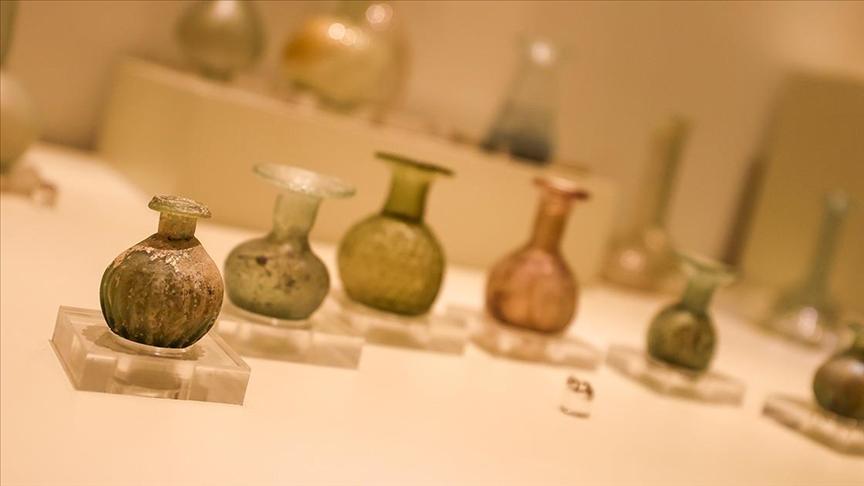
Glass Artifacts Exhibited at Gaziantep Archaeology Museum (AA)
The museum’s earliest artifacts belong to the Paleolithic, Neolithic, and Chalcolithic periods. Stone tools, obsidian blades, bone needles, flint fragments, and ceramic examples from the region’s first settled communities form the foundation of the collection. These artifacts are significant finds documenting the earliest stages of human history in the region.
Numerous artifacts have been unearthed from excavations around Gaziantep, particularly at centers such as Dülük (Doliche), Karkamış, Zincirli Höyük, Tilmen Höyük, and Yesemek Open-Air Sculpture Workshop. Stone reliefs, stelae fragments, baked clay figurines, seals, weapon tips, bronze vessels, and ceramic examples from these periods are carefully exhibited in the museum.
The partially finished basalt sculpture blanks brought from Yesemek are exemplary of Late Hittite sculptural traditions. These sculptures provide important insights into the artistic concepts and stone-working techniques of the region.
Reliefs from the Late Hittite kingdoms, stelae inscribed with hieroglyphs, bull figurines, and votive vessels dedicated to deities are among the museum’s notable pieces. Ceramics, bronze ornaments, sculptural fragments, and coin collections from the Persian and Hellenistic periods illustrate the cultural interactions in the region.
Roman-era mosaics, statues, lamps, glass artifacts, and everyday objects occupy a prominent place in the museum. Among these, figurative mosaics reflect the evolution of artistic sensibilities in the region. Glass artifacts constitute the museum’s most fragile collection. These glass finds are secured using special gel materials for preservation and displayed using modern conservation techniques.
One of the museum’s most famous finds is a small facial figurine from the Neolithic period. Made of baked clay, this figurine is known as the world’s oldest smile and is believed to represent the earliest depiction of a smiling human face. This artifact has become the museum’s symbol and has contributed significantly to its international recognition.
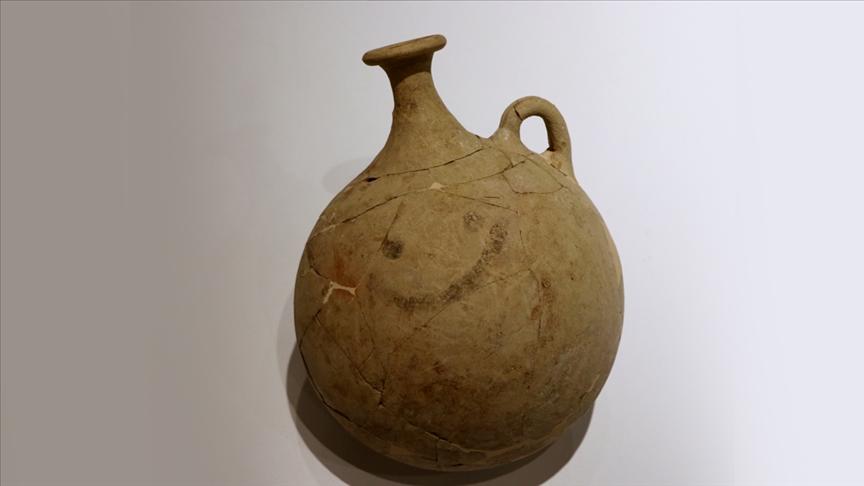
The World’s Oldest Smile (AA)
The Gaziantep Archaeology Museum is a modern structure built according to contemporary museum principles and equipped with advanced exhibition techniques. The building’s design prioritizes both functional architecture and the preservation of archaeological artifacts.
The museum building consists of two main floors. Large exhibition halls, storage areas, laboratories, and administrative units are arranged in a modern layout. The entrance foyer welcomes visitors with orientation panels and informative visuals. Natural lighting systems within the interior enhance the visibility of artifacts in display cases while creating a warm atmosphere. Natural stone and neutral tones are used for flooring and wall finishes to ensure the exhibited artifacts remain the focal point.
Climate conditions were also considered in the building’s planning. The interior has been designed to suit Gaziantep’s hot and dry climate and is equipped with humidity and temperature control systems. This ensures the long-term preservation of particularly fragile artifacts made of organic or delicate materials such as glass, ceramics, and metals.
The museum’s exhibition layout is based on a chronological narrative. Prehistoric artifacts up to the Iron Age are displayed on the ground floor, while finds from the Hittite, Persian, Hellenistic, Roman, and Byzantine periods are exhibited on the upper floors. This arrangement presents the development of Anatolian civilizations as a unified historical continuum.
Each exhibition hall is designed with color schemes and lighting arrangements that reflect the distinctive characteristics of its respective period. Display cases are equipped with security glass and specialized lighting systems. Glass artifacts are secured with special gel layers to prevent breakage—a conservation method that has become one of the museum’s exemplary practices.
The museum also features thematic sections. Notable among these are the area displaying sculpture blanks from the Yesemek Open-Air Sculpture Workshop, the Late Hittite gallery housing reliefs from Karkamış and Zincirli Höyük, and the special display case containing the Neolithic figurine known as the “world’s oldest smile”.
Gaziantep Archaeology Museum (TRT2)
The Gaziantep Archaeology Museum offers an enriched exhibition experience through digital presentations, information screens, and interactive panels. Informational labels accompanying the artifacts include descriptions in both Turkish and English. In some sections, digital touchscreens provide information about excavation sites and the contexts in which the artifacts were found.
Anadolu Ajansı. "Dünyanın 'en eski gülücüğü' Gaziantep Arkeoloji Müzesi'nde sergilenecek." Accessed October 11, 2025.https://www.aa.com.tr/tr/kultur-sanat/dunyanin-en-eski-gulucugu-gaziantep-arkeoloji-muzesinde-sergilenecek/2293913
Anadolu Ajansı. "Gaziantep Arkeoloji Müzesi'ndeki cam eserler deprem riskine karşı özel jelle sabitleniyor." Accessed October 11, 2025.https://www.aa.com.tr/tr/kultur/gaziantep-arkeoloji-muzesindeki-cam-eserler-deprem-riskine-karsi-ozel-jelle-sabitleniyor/3022779
Müze Kart. "Gaziantep Arkeoloji Müzesi." muze.gov. Accessed October 11, 2025.https://muze.gov.tr/muze-detay?SectionId=GZA01&DistId=MRK
T.C. Ministry of Culture and Tourism, General Directorate of Cultural Assets and Museums. "Gaziantep Müze Directorate." kvmgm.ktb.gov. Accessed October 11, 2025.https://kvmgm.ktb.gov.tr/TR-44089/gaziantep-muze-mudurlugu.html
TRT 2. "Gaziantep Arkeoloji Müzesi | Müzelerin Yıldızları | 52. Bölüm @trt2." YouTube Video, 5:01. Accessed October 11, 2025.https://www.youtube.com/watch?v=Vdl6y_HVVDU
Turkish Museums. "Gaziantep Arkeoloji Müzesi." *turkishmuseums*. Accessed October 11, 2025.https://www.turkishmuseums.com/museum/detail/2046-gaziantep-arkeoloji-muzesi/2046/1
Türkiye Kültür Portalı. "Gaziantep Arkeoloji Müzesi - Gaziantep." kulturportali. Accessed October 11, 2025.https://www.kulturportali.gov.tr/turkiye/gaziantep/gezilecekyer/gaziantep-arkeoloji-muzesi

Location | Gaziantep Türkiye | ||||||||
|---|---|---|---|---|---|---|---|---|---|
Establishment | 1944 (First Museum Activities), 1969 (Relocation to New Building) | ||||||||
Status | Temporarily Closed (Under Renovation Due to the Earthquake of 06 February 2023) | ||||||||
Work Sources | Dülük (Doliche), Zincirli Höyük, Karkamış, Tilmen Höyük and Yesemek Open-Air Sculpture Workshop | ||||||||
No Discussion Added Yet
Start discussion for "Gaziantep Archaeology Museum" article
Foundation and History
Collection and Artifacts
Prehistoric Artifacts
Bronze and Iron Age Artifacts
Hittite, Persian, and Hellenistic Period Artifacts
Roman and Byzantine Period Artifacts
Notable Artifact: “The World’s Oldest Smile”
Architecture and Exhibition Layout
Architectural Structure
Exhibition Layout
Exhibition Technologies and Visitor Experience