+2 More

Educational Centers | Pergamon, Smyrna, Corinth, Alexandria | ||||||||
|---|---|---|---|---|---|---|---|---|---|
Historical Impact | Byzantine medicine, Islamic medicine, Latin Middle Ages, pre-Renaissance Europe | ||||||||
Critiques | Abu Bakr al-Razi (Kitâbü’ş-Şükûk ʿalâ Câlînûs) | ||||||||
Position | Physician to Marcus Aurelius Physician to Commodus Pergamon gladiator physician Imperial physician of Rome | ||||||||
Arabic Name | Câlînûs | ||||||||
Full Name | Claudius Galenus | ||||||||
Greek Name | Γαληνός (Galenos) | ||||||||
Historical Period | Roman Empire, 2nd–3rd century AD | ||||||||
Nickname | Galenos ho Pergamenos Galen of Pergamon | ||||||||
Profession | Philosopher Physician Anatomist Physiologist | ||||||||
Birth | Around MS 129 | ||||||||
Place of Birth | Pergamon (Bergama) | ||||||||
Death | Around MS 200 (probable) | ||||||||
Father | Aelius Nicon | ||||||||
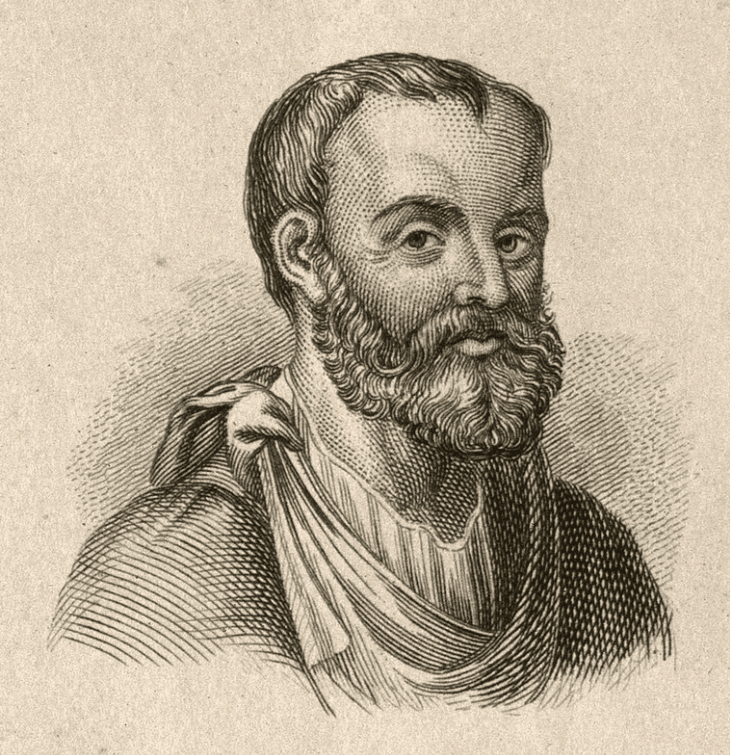
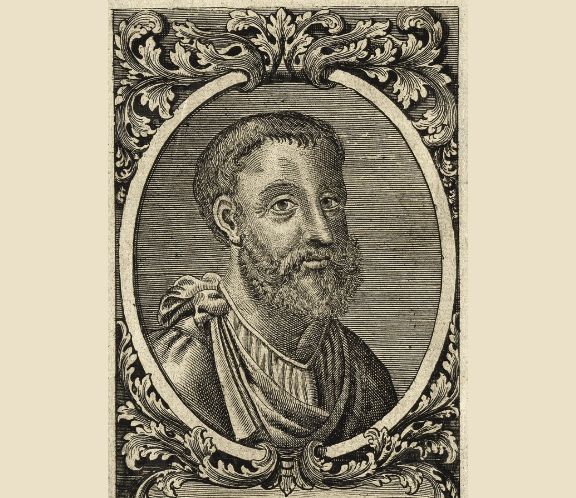
Galen (Claudius Galenus), a physician, anatomist, and philosopher who lived in the 2nd century AD, was born in Pergamon (modern-day Bergama, Türkiye). He practiced during the Roman Empire and became one of the most influential figures in ancient medicine through his extensive writings on anatomy, physiology, clinical medicine, and treatment methods. Galen’s works decisively shaped medical education and practice until the Middle Ages and the early modern period; his name continued to be associated with various anatomical structures and concepts, especially in anatomical literature.
Galen's Life (Ted-Ed)
In ancient sources, Galen is referred to by various forms depending on language and tradition. In Greek texts, his name appears as Γαληνός (Galenos), while Latin sources record it as Claudius Galenus. Some late Roman and Byzantine texts refer to him as Claudius Clarissimus Galenus.
In ancient and medieval literature, Galen was most commonly called “Galen of Pergamon” (Galen of Pergamum / Galenos ho Pergamenos). This designation served both to indicate his place of birth and to distinguish him from other individuals bearing the same name. In the Islamic world and Arabic medical literature, Galen was generally known as “Câlînûs,” and his works were transmitted under this name.【1】
Galen’s standing in medicine was regarded by his contemporaries as that of a supreme authority. Indeed, the Roman Emperor Marcus Aurelius described him as “the foremost of physicians and also a philosopher.” Galen’s name is primarily used in its Greek and Latin forms, often accompanied by references to his place of origin.
Galen was born around 129 AD in Pergamon (modern Bergama, Türkiye), located in Asia Minor. During the Roman Empire, Pergamon was an important cultural and intellectual center, particularly renowned for its Asklepieion, a major hub for medical education and healing practices. This environment provided a favorable foundation for Galen’s early intellectual and professional development.
Galen’s father, Aelius Nicon, was a wealthy architect and an intellectual deeply interested in mathematics, astronomy, philosophy, and literature. Nicon closely guided his son’s education, ensuring that Galen received comprehensive training in mathematics, logic, grammar, and philosophy from an early age.
Ancient accounts relate that Galen’s decision to pursue medicine was linked to a dream experienced by Aelius Nicon. According to this narrative, Asclepius appeared to Nicon in a dream and instructed him that his son should study medicine. This dream led to a change in the originally planned education focused on philosophy or politics and resulted in Galen beginning his medical training at the Asklepieion in Pergamon. 【3】 After his father’s death around 149–150 AD, Galen became financially independent and gained the opportunity to continue his education in other centers.
Galen’s medical and intellectual formation was shaped during extended educational journeys undertaken after his initial training in Pergamon. After becoming financially independent following his father’s death, Galen traveled to the leading scientific and medical centers of his time to deepen his knowledge. These journeys determined not only his medical knowledge but also his methodological and philosophical approach.
Galen spent time in Smyrna, Corinth, and especially Alexandria, where he encountered diverse medical traditions and teaching approaches. His work with rationalist and empiricist physicians in Smyrna and Corinth helped him develop a pluralistic attitude, evaluating competing theoretical frameworks without allegiance to a single medical school. Alexandria, one of the most important centers of anatomy and medical research in the ancient world, enabled Galen to emphasize the importance of anatomy and to highlight the possibility of direct observation of the human skeleton.
Although it remains uncertain whether Galen performed direct dissections on human cadavers in Alexandria, it is clear that he conducted intensive comparative anatomical studies. His dissections of primates and pigs formed the foundation of empirical knowledge in anatomy and physiology. The detailed anatomical descriptions found in his later works are directly linked to the experiences he gained during this period.
Galen’s educational travels were not limited to medicine; they also encompassed philosophy, logic, and natural science. His exposure to Platonic, Aristotelian, Stoic, and Epicurean traditions provided the groundwork for an approach that integrated observation with theoretical explanation. The scientific formation he developed during this time became the foundation of the medical understanding he later adopted and systematically applied in his writings.
After his educational travels, Galen returned to his native city of Pergamon around 157 AD and took up a position as a physician at a gladiator school. This role proved a decisive stage in his professional development. Gladiatorial medicine, requiring the treatment of severe traumas and repeated injuries, provided Galen with direct opportunities to observe the living human body.
During this period, Galen gained extensive clinical experience with bones, joints, and muscles. The treatment of serious traumas such as chest and abdominal wounds, fractures, dislocations, and soft tissue injuries refined his surgical skills. At the same time, observing the healing processes of injuries enabled him to make empirical inferences about the relationship between anatomy and physiology.
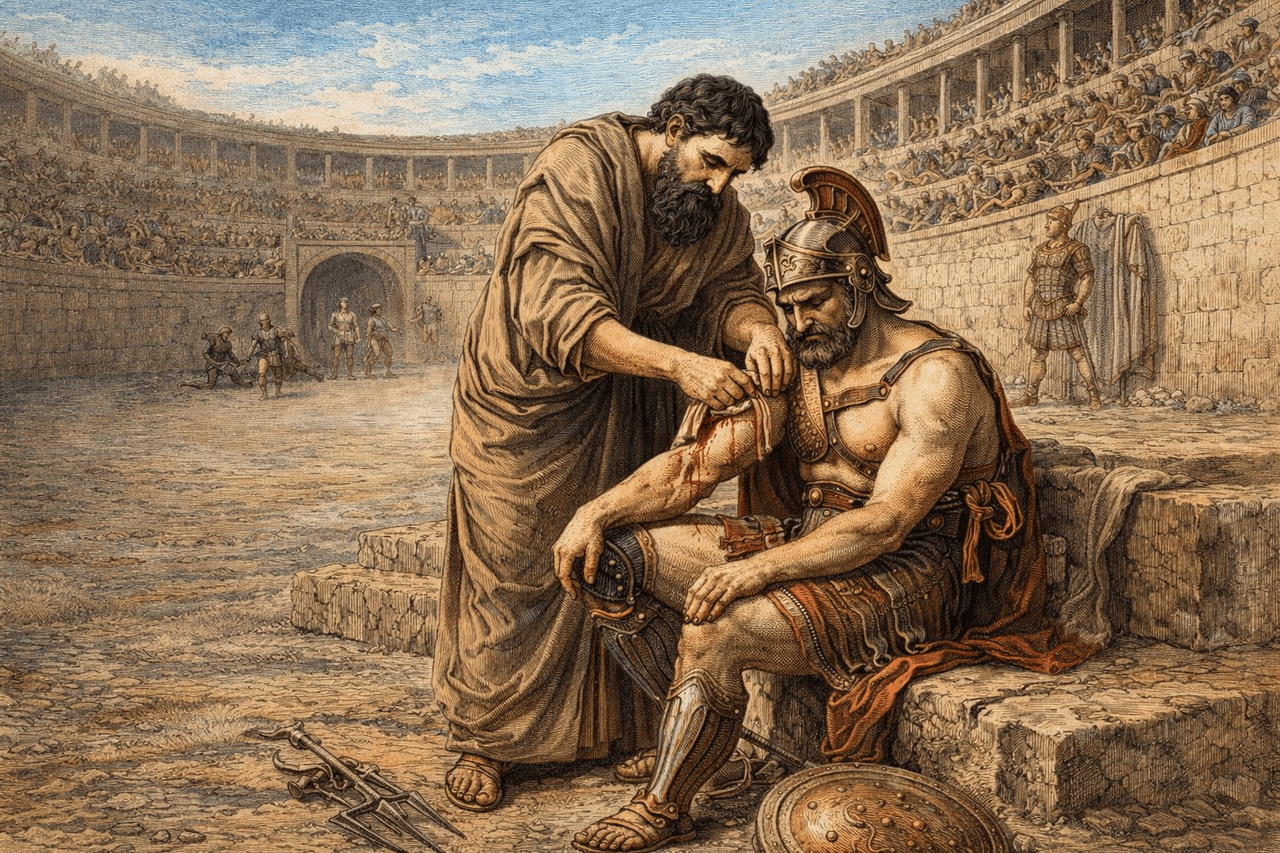
Illustration Depicting Galen’s Medical Intervention on a Wounded Gladiator (Generated by Artificial Intelligence.)
Around 162 AD, Galen left Pergamon and moved to Rome. At that time, Rome was a center where medicine was intensely practiced but also marked by fierce professional competition and clear distinctions in quality. Galen quickly attracted attention through his public lectures on anatomy, demonstrations, and clinical practices.
During his time in Rome, Galen demonstrated the functions of organs through experiments on live animals, a method that highlighted his experimental approach. These works impressed both his colleagues and elite circles, strengthening Galen’s medical authority.
However, his rapid rise in Rome also led to professional conflicts with some physicians. These disputes resulted in Galen’s temporary departure from Rome around 166 AD. This departure was not permanent; shortly afterward, Galen was recalled to Rome by imperial authority.
Between 168 and 169 AD, Galen was appointed as a physician to the army by Emperors Marcus Aurelius and Lucius Verus. He later returned to Rome, where he served as the personal physician to Marcus Aurelius, followed by Commodus and later Septimius Severus. This position provided Galen with both political protection and the opportunity to continue his scientific work. His role at court enabled him to observe a wide range of patients and to produce a large number of writings.
Galen’s scientific method is defined by his effort to combine empirical data derived from observation with theoretical explanations. He argued that medical knowledge could not rely solely on individual experiences but required their integration into general principles. In this way, Galen sought to strike a balance between pure empiricism and rationalist traditions that prioritized causal explanation.
Galen maintained that medicine was not merely an empirical field but required rational grounding through reason. While adhering to the Hippocratic tradition, he did not dismiss the importance of experience; instead, he viewed medicine as a theory continuously refined through observation and practice. In this approach, anatomical and physiological studies held a central role in the formation of medical knowledge.【4】
Anatomical data obtained through dissection played a central role in Galen’s inferences about physiological processes. He believed that the structure of organs was inherently suited to their functions, a principle that formed the basis of his medical explanations. Within this framework, Galen adopted the principle that nature produces nothing superfluous and sought to explain anatomical variations through functional causes.
The concept of balance was central to his medical approach. Health was defined as a harmonious equilibrium among the body’s components, while disease was understood as a disruption of this balance. Treatment was viewed as a rational and measured intervention aimed at restoring this equilibrium.
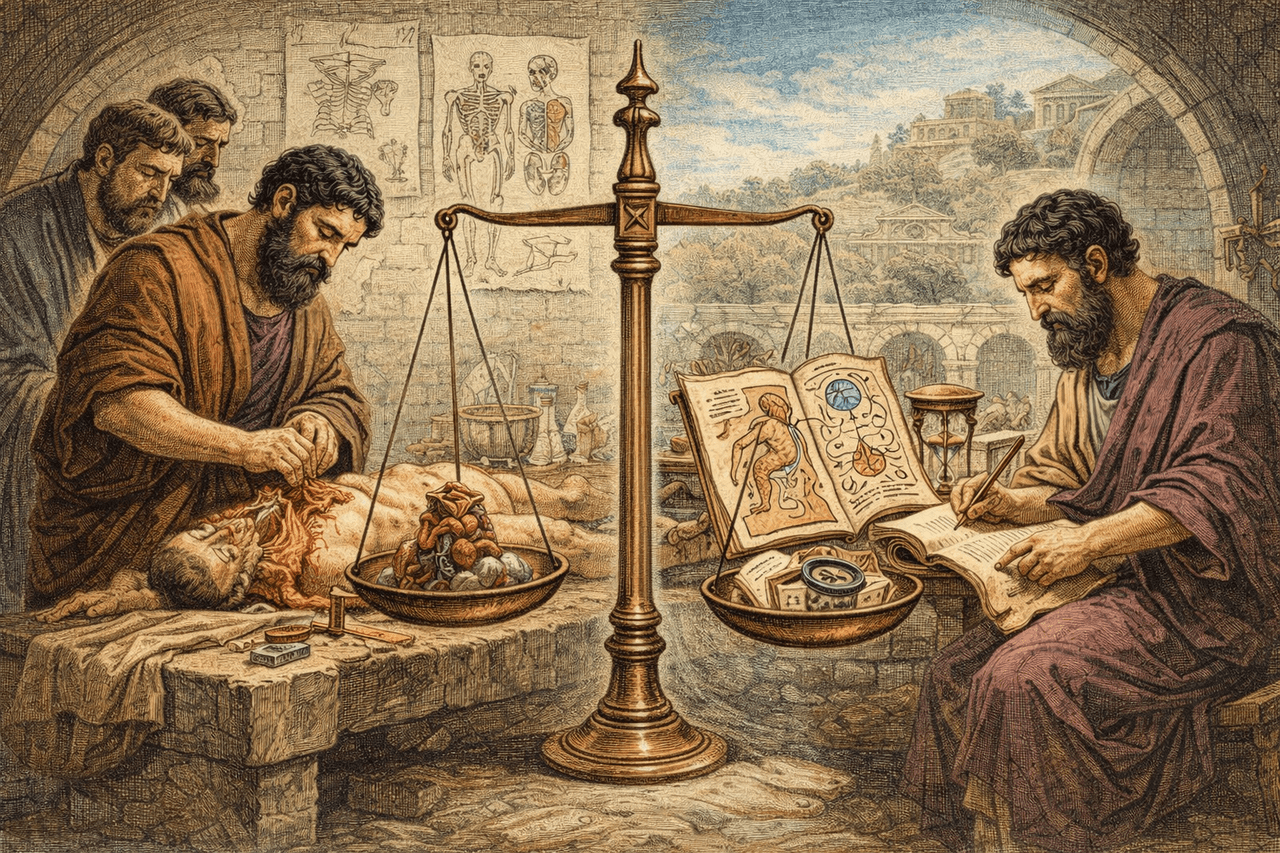
Illustration Depicting Galen’s Method of Integrating Observation and Theory in Medicine (Generated by Artificial Intelligence.)
Galen’s intellectual formation was grounded in the view that medicine and philosophy were inseparable. Although he did not explicitly identify himself with any specific philosophical school, his writings extensively engaged with philosophical concepts, methods, and debates. While critically engaging with professional philosophers of his time, Galen regarded philosophy as essential for grounding medical knowledge.
His philosophical background is particularly linked to Platonic and Aristotelian traditions. From Plato, he adopted the model of the soul’s divisions and moral psychology; from Aristotle, he embraced methodological principles concerning logic, causality, and the study of nature. However, Galen did not treat these thinkers as absolute authorities but rather as sources to be consulted insofar as their ideas aligned with medical observations.
The relationship between medicine and philosophy in Galen’s thought also carried an ethical dimension. He argued that a physician must possess not only technical knowledge but also sound judgment and moral responsibility. Thus, for Galen, medicine was not merely a practice aimed at treating bodily ailments but a field of knowledge seeking a holistic understanding of human nature.
Galen’s work in anatomy and physiology occupies a central place in the medical heritage. These studies aimed to explain the relationship between organ structure and function, based on the understanding that anatomy was an indispensable foundation for comprehending physiological processes. Galen did not view anatomy merely as a descriptive discipline but as an essential tool for causal explanation.
In an era when human cadaver dissection was limited, Galen relied heavily on animal dissections to obtain anatomical knowledge. His comparative studies on primates and pigs enabled him to make inferences about the human body. Although this method led to some anatomical errors, it facilitated the development of detailed descriptions of the nervous system, muscles, blood vessels, and internal organs.
Galen demonstrated that nerves originate from the brain and that the brain is the center of sensation and voluntary movement. He also distinguished between the vascular and nervous systems, rejecting the view that arteries carried only air and proposing instead that blood and pneuma circulated together. His functional distinctions among the heart, liver, and brain were based on the idea that different vital processes were governed by different centers in the body.
In physiology, Galen adopted a teleological approach, arguing that organs were organized with specific purposes. This perspective is clearly evident in his explanations linking structural features to their functions. The principle that nature creates nothing without purpose formed the foundational assumption of Galen’s anatomical and physiological studies.
The Galenic medical system integrates Galen’s views on anatomy, physiology, pathology, and treatment into a coherent theoretical framework. This system emerged from the combined use of empirical clinical experience and conceptual tools drawn from natural philosophy. Galen positioned medicine not merely as a practical discipline but as a rational science aiming to explain causes.
The central concept of this system is balance. Health was defined as a harmonious equilibrium among the body’s components, while disease was understood as a disruption of this balance. This approach explained bodily conditions through combinations of opposing qualities—hot and cold, dry and moist—in specific proportions.
The humoral theory is one of the central elements of the Galenic system. The four humors—blood, phlegm, yellow bile, and black bile—were associated with bodily and psychological processes. The quantitative and qualitative balance of these humors was regarded as a primary determinant of an individual’s health. Galen interpreted diseases not as isolated organ dysfunctions but as systemic imbalances affecting the entire body.
His approach to treatment was based on the principle of opposites: if a disease was caused by a particular quality, treatment should employ its opposite. This principle was systematically applied in dietary regimens, drug use, and other therapeutic interventions. While acknowledging general rules, Galen emphasized that each patient’s bodily constitution and medical history must be considered; he regarded the adaptation of theoretical knowledge to clinical conditions as one of medicine’s fundamental responsibilities.
Galen’s establishment as a fundamental authority in medieval medicine was decisively shaped by the activities of study, epitomization, and commentary in the Islamic world. Before the emergence of Islam, scholars of the Alexandrian school had extensively studied Galen’s works; this tradition was known in the Islamic world as Cevâmiʿu’l-İskenderâniyyîn and in the West as Summaria Alexandrinorum.【5】 This tradition served as an intermediary corpus that facilitated the circulation of Galen’s texts and supported their standardization in medical education.
Translation efforts played a central role in strengthening Galen’s authority in the Islamic world. Hunayn ibn Ishaq’s Risâle, which cataloged Galen’s works translated into Arabic, is among the key sources of this process. Hunayn had seen the original version of Galen’s Pinax, a catalog of his works, and translated it into Syriac and Arabic. He also added a third list containing works not included in the original catalog. It is known that Hunayn and his collaborators translated 129 of Galen’s works from Syriac manuscripts into Arabic. This activity ensured the systematic classification and continued circulation of Galen’s corpus within Islamic scholarly circles.
Galen’s influence in the Islamic world was evident at both the theoretical and practical levels of medicine. While maintaining fidelity to the Hippocratic tradition, he adopted an approach that did not reject the importance of experience; he viewed medicine as a theory continually refined through observation and practice. Muslim physicians did not treat Galen merely as a transmitter of knowledge but as a source from which new insights in pharmacology, anatomy, and treatment could be derived. It is known that Galen’s anatomical observations remained authoritative for anatomists of the 16th and 17th centuries, and that his insight—correcting the view that arteries carried air by asserting they carried blood—constituted a partial understanding of the pulmonary circulation.
Nevertheless, Galen was not accepted as an absolute and unquestionable authority in the Islamic world. The work of Abu Bakr al-Razi, known as “the Galen of the Islamic world,” titled Kitâbü’ş-Şükûk ʿalâ Câlînûs, is among the earliest critiques directed at Galen’s medical and philosophical views. These critiques claimed that certain clinical findings contradicted Galen’s corpus. Medical circles seeking to preserve Galen’s authority responded with refutations. The most famous example is the refutation by Ali ibn Ridwan; it is also known that students of Ibn Sina and Ibn Zuhr wrote refutations under the same title.
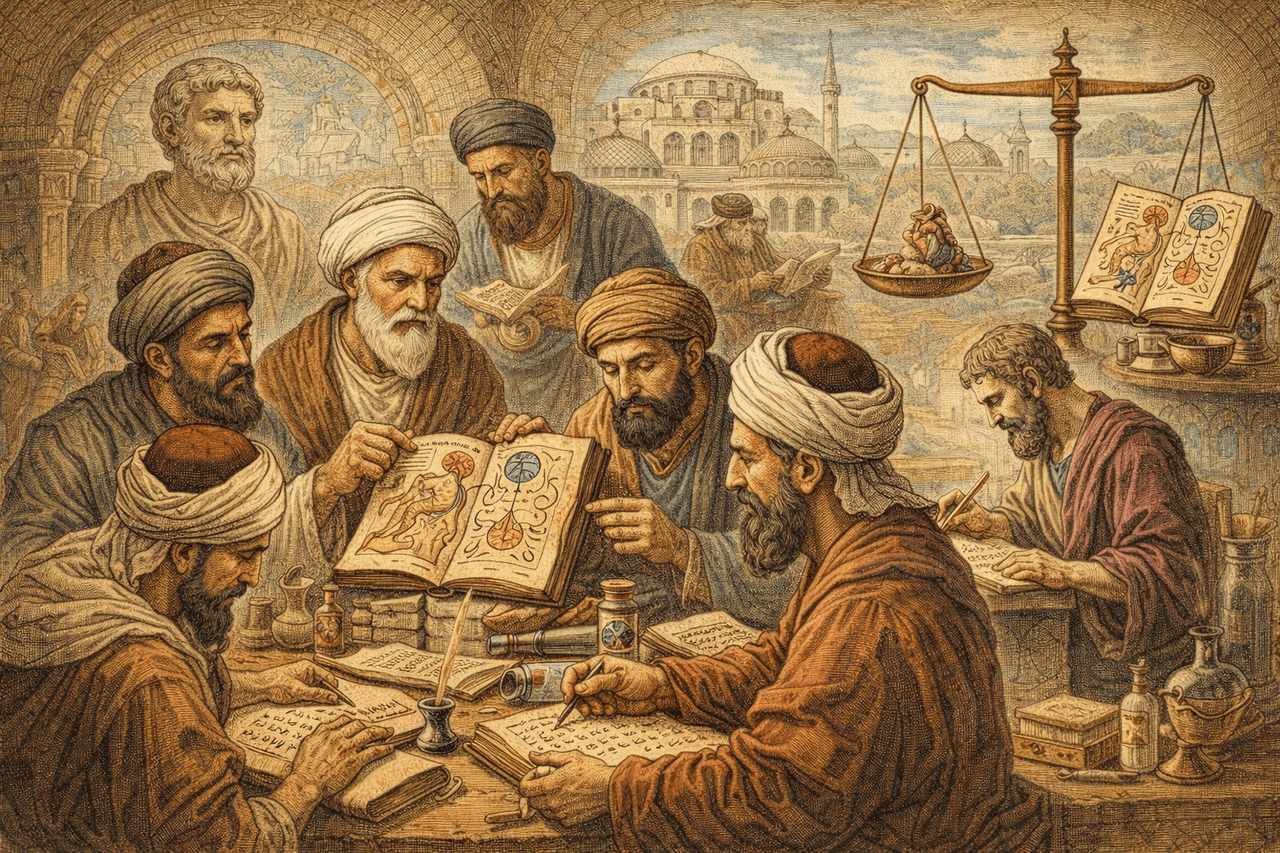
Illustration Depicting the Translation and Commentary of Galen’s Works in the Islamic World and Their Transmission to Medieval Medicine (Generated by Artificial Intelligence.)
With the Renaissance, Galen’s authority in medicine was reevaluated; the direct reading of ancient texts in their original languages enabled scholars to examine Galen’s works through their original Greek manuscripts. This process facilitated both a more accurate understanding and a critical reassessment of his views.
In particular, human cadaver dissections conducted during the Renaissance revealed that some of Galen’s explanations, based on animal anatomy, were incorrect. Renaissance anatomists, while maintaining respect for Galen, developed new anatomical descriptions grounded in direct observation. These criticisms were directed not at Galen’s method per se but at the consequences of limited observational conditions.
Nevertheless, Galen’s scientific approach—integrating observation with rational reasoning—continued to influence the development of medicine after the Renaissance. His integration of medicine with philosophical foundations contributed to the positioning of medicine as an intellectual discipline in the early modern period. The Galenic system was adapted and utilized in light of new scientific discoveries, serving as a critical reference point in the development of modern science.
Galen is regarded as one of the most important figures in whom ancient medicine achieved theoretical coherence. His significance in the history of science is not limited to specific anatomical or physiological views; his defining contribution lies in his effort to transform medical knowledge into a systematic, rational, and justified field. His approach of integrating observation with theoretical reasoning helped medicine transcend its status as a mere practical craft.
Building on the Hippocratic tradition, Galen expanded this legacy through philosophical concepts, logical inferences, and physiological explanations. His functional analysis of organs, causal explanations, and holistic model of the body rendered ancient medical knowledge more consistent and teachable than in previous eras.
Galen’s influence endured for centuries in Byzantine, Islamic, and Latin medieval worlds; his works formed the theoretical backbone of medical education. Although some of his views were abandoned during the Renaissance and early modern period, his writings retained their importance as a necessary reference point in the development of modern science. In this context, Galen is not merely a figure who was criticized but a central figure who offered a lasting model for how knowledge is constructed.
Information regarding Galen’s death is limited. Ancient biographical accounts generally accept that he died in the late 2nd century or early 3rd century AD. Traditional chronology places his death around 200 AD, a view that gained widespread acceptance through Byzantine sources and medieval compilations.
However, modern research indicates that this dating is not certain. Studies by modern historians such as Vivian Nutton suggest that Galen may have lived longer. Some indirect evidence in late antique and early medieval Arabic and Byzantine sources implies that Galen may have lived until the 210s AD. Accordingly, it is plausible that his death coincided with the final years of Emperor Septimius Severus or the reign of his son Caracalla.
There is no clear or reliable information regarding the place or cause of Galen’s death. No account links his death to a sudden illness or specific event. This absence is often associated with the likelihood that the final years of his life were devoted primarily to writing and intellectual production. Indeed, his later works contain personal reflections on aging, material losses, and the destructive passage of time; however, there is no direct autobiographical record of his death.
Galen is considered one of the most prolific writers of antiquity. According to his own statements and ancient catalogs, he authored over 300 works; although a significant portion has not survived, approximately 120 works have been preserved in whole or in part through Greek, Latin, Arabic, and Syriac transmissions.【6】 The total volume of surviving Galenic texts exceeds four million words.
Galen’s works cover a broad range of subjects, including medicine, anatomy, physiology, pharmacology, clinical practice, methodology, logic, ethics, and philosophy. A significant portion of his writings are didactic, while others are polemical, offering critiques of contemporary medical schools, particularly the Empiricists and Methodists.
Galen’s most influential works concern medical theory and clinical practice. In these texts, the causes, symptoms, diagnosis, and treatment of diseases are systematically addressed.
Galen’s anatomical studies are largely based on animal dissections and shaped by a comparative anatomy perspective.
Galen wrote extremely detailed works on drugs and natural substances.
The approach developed in these works formed the foundation of the pharmaceutical tradition later known as “galenic preparations.”
Galen’s philosophical works aim to ground his understanding of medicine, nature, and humanity.
Galen’s works were preserved in Byzantium through Greek manuscripts and in the Islamic world through Arabic translations made in the 9th and 10th centuries. The translations by Hunayn ibn Ishaq and his circle established Galen’s central role in medieval Islamic medicine. During the Renaissance, his works were translated into Latin and became foundational texts in European universities.
Duchan, Judith Felson. “Summary of Ancient History.” *A History of Speech-Language Pathology*. Accessed January 27, 2026.https://www.acsu.buffalo.edu/~duchan/new_history/ancient_history/summary.html
Glazov, Ramon. "Ancient Rome’s most notorious doctor." YouTube, 5:10. Accessed January 28, 2026.https://www.youtube.com/watch?v=r1BhsWsmjco
Hankinson, R. J. “Galen.” *Stanford Encyclopedia of Philosophy.* Accessed January 27, 2026.https://plato.stanford.edu/entries/galen/
Internet Encyclopedia of Philosophy. "Galen." Internet Encyclopedia of Philosophy. Accessed January 27, 2026.https://iep.utm.edu/galen/
Kutluer, İlhan. “Câlînûs.” *TDV İslâm Ansiklopedisi*, January 28, 2026.https://islamansiklopedisi.org.tr/calinus
Pasipoularides, Ares. "Galen, Father of Systematic Medicine: An Essay on the Evolution of Modern Medicine and Cardiology." International Journal of Cardiology (2014). Accessed January 27, 2026.
Rawpixel. "Galen. Line Engraving by G. P. Busch." Rawpixel. Accessed January 27, 2026.https://www.rawpixel.com/image/13973031/galen-line-engraving-busch
Shoja, Mohammadali M., R. Shane Tubbs, Kamyar Ghabili, Christoph J. Griessenauer, Margaret Wood Balch, and Mariana Cuceu. “The Roman Empire Legacy of Galen (129–200 AD).” *Child’s Nervous System* 31, no. 1 (2015): 1–5. Accessed January 27, 2026.https://link.springer.com/article/10.1007/s00381-014-2467-7
Shoja, Mohammadali M., R. Shane Tubbs, Kamyar Ghabili, Christoph J. Griessenauer, Margaret Wood Balch, and Mariana Cuceu. “The Roman Empire Legacy of Galen (129–200 AD).” *Child’s Nervous System* 31, no. 1 (2015): 1–5. Accessed January 27, 2026.https://link.springer.com/article/10.1007/s00381-014-2467-7
Ustun, Cagatay. “Galen and His Anatomic Eponym: Vein of Galen.” *Clinical Anatomy* 17, no. 6 (September 2004): 454–457. Accessed January 27, 2026.https://pubmed.ncbi.nlm.nih.gov/15300863/
Uzel, İlter. “Galen ve Deneysel Tıp.” *Çukurova Üniversitesi Diş Hekimliği Fakültesi Dergisi* 9, no. 25 (1996): 435–442. Accessed January 27, 2026.https://dergipark.org.tr/tr/download/article-file/688915
Wellcome Collection. "Galen. Line Engraving. Wellcome L0012587." Wellcome Collection. Accessed January 27, 2026.
[1]
İlter Uzel, “Galen ve Deneysel Tıp,” Çukurova Üniversitesi Diş Hekimliği Fakültesi Dergisi 9, no. 25 (1996): syf 435, https://dergipark.org.tr/tr/pub/erdem/article/549833
[3]
A.e., syf 1
[4]
İlhan Kutluer, “Câlînûs”, TDV İslâm Ansiklopedisi, Erişim Tarihi: 29 Ocak 2026, https://islamansiklopedisi.org.tr/calinus
[5]
İlhan Kutluer, “Câlînûs”, TDV İslâm Ansiklopedisi, Erişim Tarihi: 29 Ocak 2026, https://islamansiklopedisi.org.tr/calinus
[6]
Mohammadali M. Shoja, Shane R. Tubbs, Kamyar Ghabili, Christoph J. Griessenauer, Margaret W. Blach ve Mariana Cuceu. “The Roman Empire legacy of Galen (129–200 AD).” Child's Nervous System 31, 1 (2015): syf 2, https://link.springer.com/article/10.1007/s00381-014-2467-7
Çağatay Üstün, “Galen and his anatomic eponym: Vein of Galen,” Clinical Anatomy 17, 6 (2004): syf 456, https://pubmed.ncbi.nlm.nih.gov/15300863/

Educational Centers | Pergamon, Smyrna, Corinth, Alexandria | ||||||||
|---|---|---|---|---|---|---|---|---|---|
Historical Impact | Byzantine medicine, Islamic medicine, Latin Middle Ages, pre-Renaissance Europe | ||||||||
Critiques | Abu Bakr al-Razi (Kitâbü’ş-Şükûk ʿalâ Câlînûs) | ||||||||
Position | Physician to Marcus Aurelius Physician to Commodus Pergamon gladiator physician Imperial physician of Rome | ||||||||
Arabic Name | Câlînûs | ||||||||
Full Name | Claudius Galenus | ||||||||
Greek Name | Γαληνός (Galenos) | ||||||||
Historical Period | Roman Empire, 2nd–3rd century AD | ||||||||
Nickname | Galenos ho Pergamenos Galen of Pergamon | ||||||||
Profession | Philosopher Physician Anatomist Physiologist | ||||||||
Birth | Around MS 129 | ||||||||
Place of Birth | Pergamon (Bergama) | ||||||||
Death | Around MS 200 (probable) | ||||||||
Father | Aelius Nicon | ||||||||
His Name and Epithets
Birth and Family
Educational Travels and Scientific Formation
Pergamon Period and Gladiatorial Medicine
Move to Rome and Professional Ascendancy
Scientific Method and Medical Approach
Philosophical Background and the Relationship Between Medicine and Philosophy
Anatomical and Physiological Studies
The Galenic Medical System
Galen in the Middle Ages and the Islamic World
Influence in the Renaissance and Beyond
His Place and Significance in the History of Science
His Death
His Works
Medical and Clinical Works
Anatomical and Physiological Works
Pharmacology and Materia Medica
Philosophical and Methodological Works
Ethics and Theory of the Soul
Transmission and Influence of the Texts