

`philosophyofscience` Related Article Results

Self-Actualizing Prophecy
Self-fulfilling prophecy is a psychosocial phenomenon in which the expectations of individuals or societies regarding a particular event lead them to behave in ways that make the expected event actually occur. Concept was first introduced in the mid-20th century by American sociologist Robert K. Merton, who explained how the expectations of an individual or group can unconsciously alter their behavior, ultimately causing those expectations to become reality. Self-fulfilling prophecy manifests in
EN
Şule Bozkurt

After It Appears in Writing, Don't Say "Sir, We Didn't Cover This Area": The Sokal Affair
In 1996, a physics professor pulled a prank on the academic world whose echoes still resonate today. Moreover, this was not a joke told in a conference hall or a witty remark among colleagues. It was a serious-looking academic article, filled with footnotes, adorned with elaborate titles, and published in a respected journal. Even the title alone was eye-catching: “Transgressing the Boundaries: Towards a Transformative Hermeneutics of Quantum Gravity.” The author was physicist Alan Sokal from Ne
EN
Ayşe Aslıhan Yoran

Seeking the Lost Link in the History of Science: George Sarton and Fuat Sezgin
In the historiography of science, Eurocentric narratives for a long historical period have evaluated scientific development as a linear and progressive trajectory extending from Ancient Greece to the European Renaissance. This approach confined the production of scientific knowledge to specific geographic and cultural centers, often positioning the Islamic scientific tradition as merely an intermediate stage responsible for transmitting ancient knowledge.George Saliba, How Did the Islamic Scient
EN
Emrullah Köker
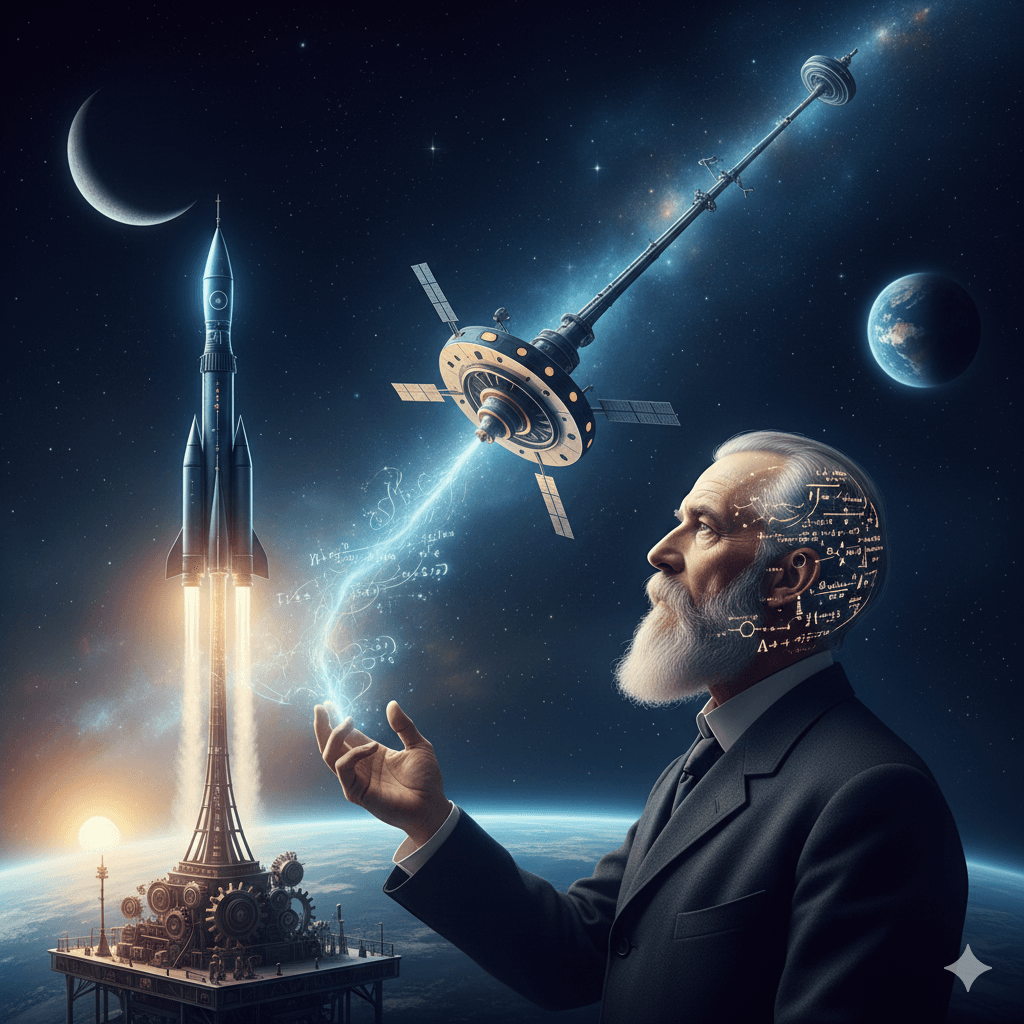
Konstantin Eduardovich Tsiolkovsky
Konstantin Eduardovich Tsiolkovsky (17 September 1857, Izhevskoye, Ryazan Oblast; 19 September 1935, Kaluga) was a Russian scientist and teacher who worked on rocket dynamics and spaceflight theory, as well as aerodynamic experiments, airship designs, science fiction and philosophical texts. His work centered on the application of variable mass motion to rocket flight, the implications of the reaction propulsion principle in space environments, the concept of multistage rockets and systemic assu
EN
Ömer Said Aydın
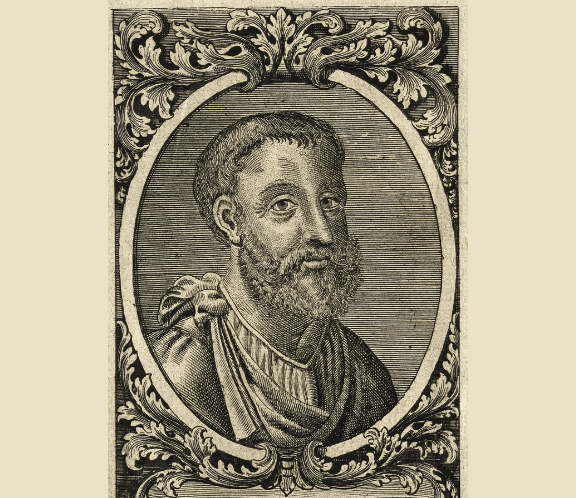
Galen
Galen (Claudius Galenus), a physician, anatomist, and philosopher who lived in the 2nd century AD, was born in Pergamon (modern-day Bergama, Türkiye). He practiced during the Roman Empire and became one of the most influential figures in ancient medicine through his extensive writings on anatomy, physiology, clinical medicine, and treatment methods. Galen’s works decisively shaped medical education and practice until the Middle Ages and the early modern period; his name continued to be associate
EN
Emine Nur ERDEM