This article was automatically translated from the original Turkish version.
+2 More
Purpose | Celebration and Ceremony | ||||||||
|---|---|---|---|---|---|---|---|---|---|
Scheduled Time | Evening and Night Hours | ||||||||
Days Held | National and Religious Special Days, Ceremonies | ||||||||
The lantern parade is a ceremonial and festive event conducted collectively on specific days and nights such as holidays and celebrations, in which participants walk through public spaces carrying light sources (lanterns, torches, etc.). It is defined as a nocturnal communal activity held to mark occasions related to celebration, commemoration, or the religious-cultural calendar. The lantern parade functions both as a ritual repeated annually at fixed times within local traditions and as an element of official holiday and ceremonial programs.
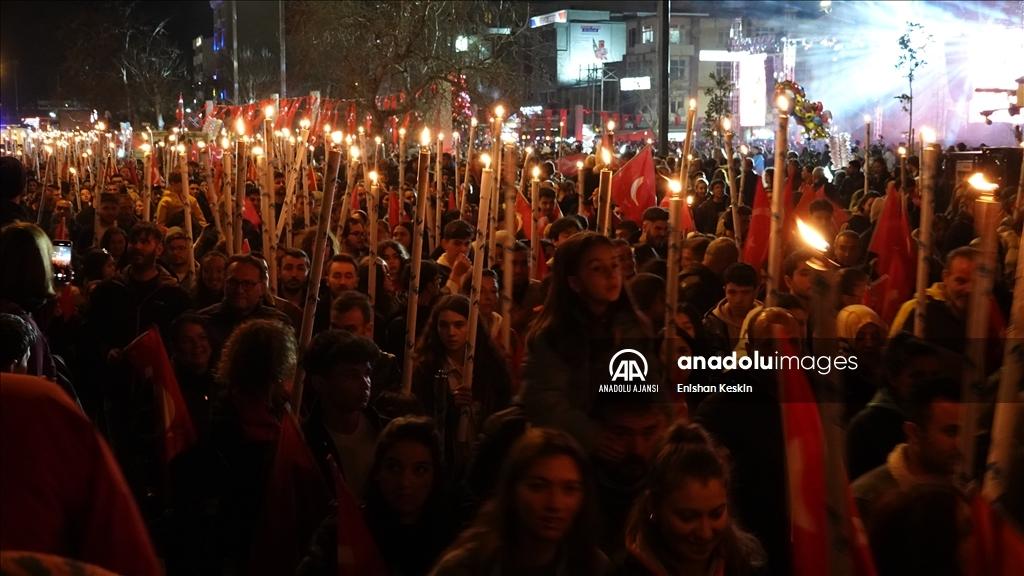
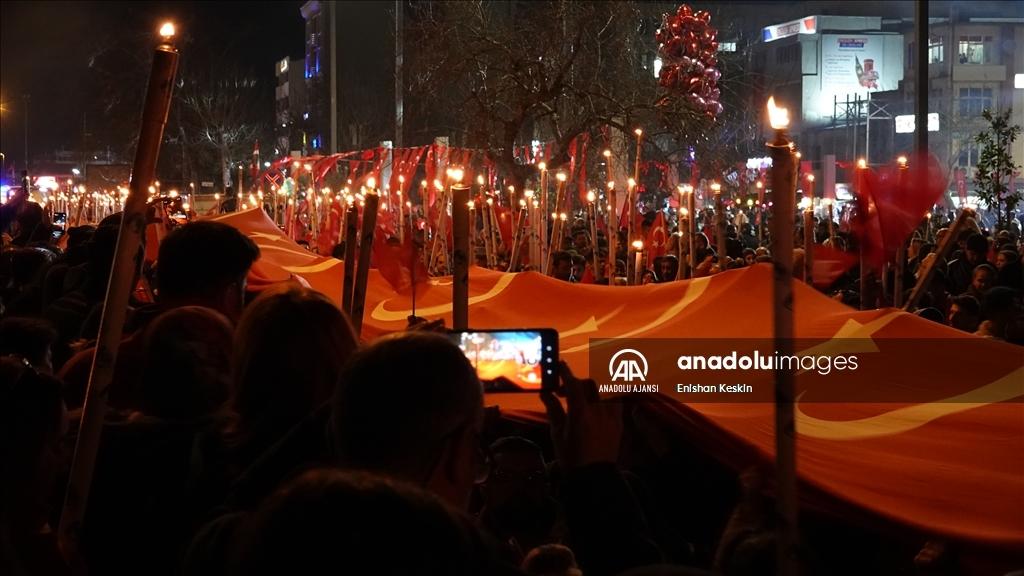
Lantern Parade Held on the 109th Anniversary of Martyrs’ Day and the Battle of Çanakkale Naval Victory in Çanakkale (AA)
The lantern parade cannot be reduced to a single historical context; it has been practiced across different periods and for various purposes. The existence of nighttime processions associated with palace festivities and major ceremonies during the Ottoman period demonstrates that light and fire elements were used in public celebrations from early times. During the Republican era, the lantern parade became part of official programs, particularly during national holidays and victory celebrations, typically held at night.
The common features of lantern parades include the following elements:
Lantern parades are conducted in the evening or nighttime hours. In Republican-era urban programs, lantern parades typically begin around 8:00 PM, following daytime official ceremonies as part of the evening program. In local traditions, the lantern parade is described as an event that begins after the evening call to prayer.
The lantern parade:
In Konya, the lantern parade is directly linked to the şivlilik tradition and is observed within the religious calendar at the beginning of the three months. Within the context of the şivlilik tradition, the lantern parade:
In this context, the lantern parade in Konya is not merely a procession but a comprehensive tradition encompassing practices such as lighting fires, carrying lanterns, and community-wide participation. Historically, lanterns were prepared in homes or neighborhoods; today, pre-made lanterns have become widespread. Additionally, practices such as lighting fires and jumping over them accompany the lantern parade. After the evening call to prayer, neighborhood residents emerge onto the streets, walk with lanterns, light fires in open and spacious areas, and jump over the flames.
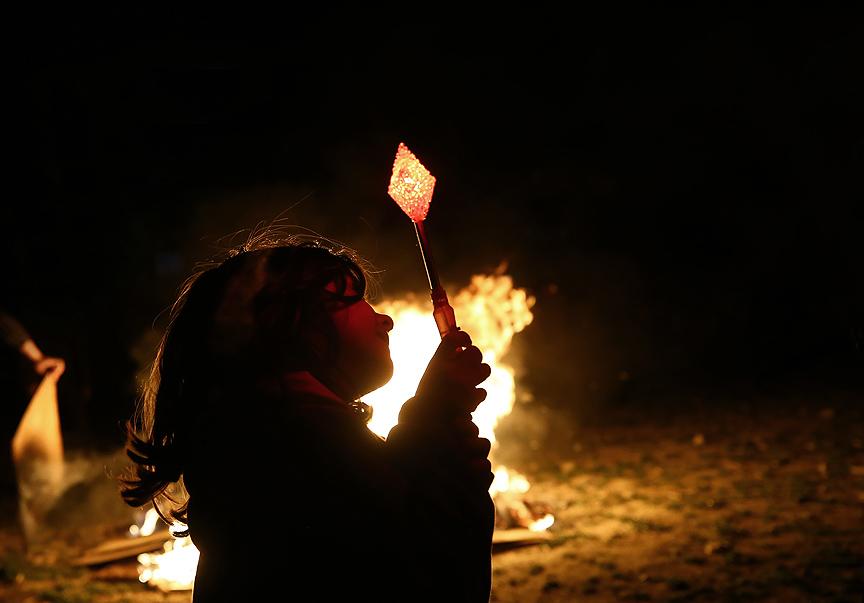
Lantern Parade the Night Before Şivlilik in Konya (AA)
Lantern parades have been organized during national holidays and significant official days. During the War of Independence, lantern parades were held to commemorate victories and events such as the liberation of Istanbul from occupation. This tradition continues to the present day.
During the War of Independence years, the lantern parade became part of celebrations following military successes. Sources indicate that after the Battle of Sakarya, nighttime lantern parades were organized in various cities, with streets illuminated and crowds participating in collective processions. In this context, the lantern parade served as one of the means to visibly manifest victory in the public sphere.
Istanbul Liberation Day, 6 October 1923 included the lantern parade as a planned nighttime event. The program anticipated processions departing from different districts, marching at designated times, and converging at specific points.
During the Republican era, the lantern parade frequently featured in the nighttime program of 29 October Republic Day celebrations. Organized by People’s Houses, the lantern parade served as a nighttime activity that complemented the daytime ceremonies.
30 August Victory Day celebrations also include the lantern parade among nighttime commemorative activities. In this context, the lantern parade emerges as a ceremonial element that sustains military achievements in the collective social memory.
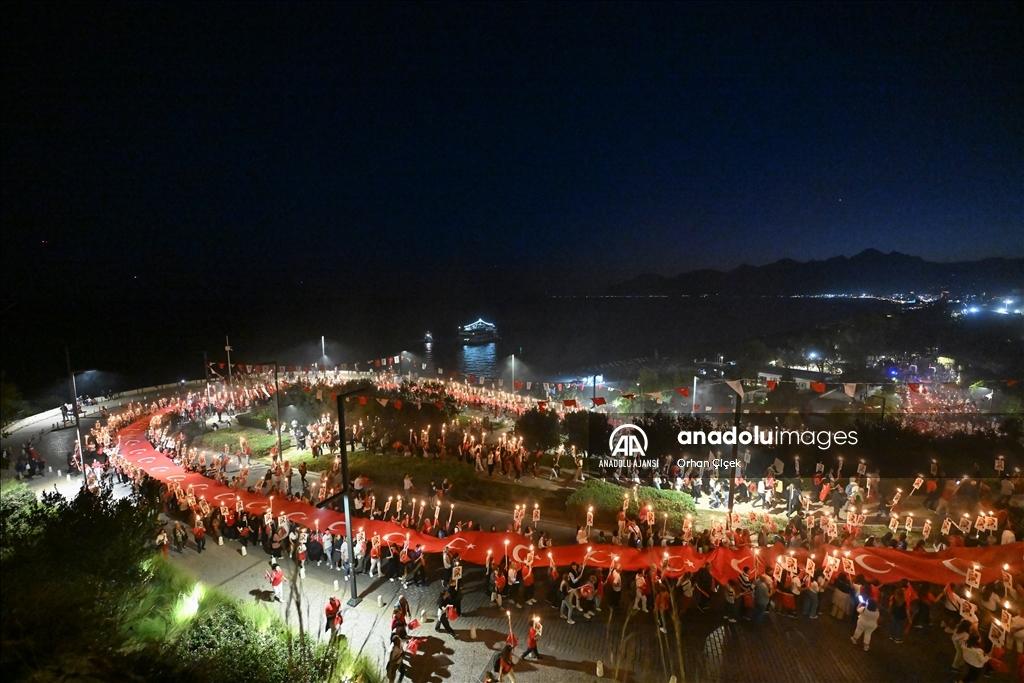
Republic Day Lantern Parade in Antalya on the 101st Anniversary of the Republic (AA)
The lantern parade is not merely an entertainment or walking activity; it also functions as a practice that:
In particular, the lantern parade within the context of the Konya şivlilik tradition is described as an activity that actively involves children and facilitates the learning of traditional culture.
The lantern parade is not unique to Türkiye; similar nighttime processions occur in other societies during holidays, ceremonies, and festivals. In western Anatolia, lantern parades organized in cities and towns under Greek occupation as of 1921 formed an integral part of official celebrations planned and implemented by the Greek administration. These processions, particularly held on the occasion of King Constantine XII’s name day, were elaborate multi-stage ceremonies incorporating military, religious, and civil elements.
Anadolu Ajansı. "Yurtta Cumhuriyet'in 101. yılı 'fener alayları' ile kutlandı." Accessed December 25, 2025.https://www.aa.com.tr/tr/pg/foto-galeri/yurtta-cumhuriyetin-101-yili-fener-alaylari-ile-kutlandi/146
Anadolu Ajansı. "Çanakkale Deniz Zaferi'nin 109. yıl dönümünde fener alayı düzenlendi." Accessed December 25, 2025.https://www.aa.com.tr/tr/pg/foto-galeri/canakkale-deniz-zaferinin-109-yil-donumunde-fener-alayi-duzenlendi/0
Anadolu Ajansı. "Çocukların mutluluk kervanı: Şivlilik." Accessed December 25, 2025.https://www.aa.com.tr/tr/yasam/cocuklarin-mutluluk-kervani-sivlilik/1097086
Aydın, Nermin Zahide. "Atatürk Dönemi Zafer Bayramı Kutlamaları (1929-1938)." *Afyon Kocatepe Üniversitesi Sosyal Bilimler Dergisi* 24 (100. Yılında Kocatepe-Büyük Taarruz Özel Sayısı) (November 2022): 54–73. Accessed December 25, 2025.https://dergipark.org.tr/en/download/article-file/2537825
Can, İslam, and Hüseyin Özil. "Konya’nın Sosyal İşareti: Şivlilik." *Selçuk Üniversitesi Sosyal Bilimler Enstitüsü Dergisi* 54 (2024): 489–507. Accessed December 25, 2025.https://dergipark.org.tr/en/download/article-file/3897103
Demirelma, Betül. "Konya'da Unutulmayan Bir Gelenek 'Fener Alayı ve Şivlilik' Üzerine." *Motif Akademi Halkbilimi Dergisi* 17, no. 46 (2024): 600-611. Accessed December 25, 2025.https://dergipark.org.tr/tr/download/article-file/3625497
Erdem, Nilüfer. "İzmir ve Çevresinde Yunan Kralı Konstantin'in İsim Günü Kutlamaları." *Mütarekeden İstiklâle 1921 Yılında Millî Mücadele*. Ed. Cezmi Eraslan, Nilüfer Erdem, Umut Dere, Özlem Arslan. Türk Ocağı Yayınları, December 2021, pp. 93-106. Accessed December 25, 2025.https://www.academia.edu/66692710/%C4%B0zmir_ve_%C3%87evresinde_Yunan_Kral%C4%B1_Konstantinin_%C4%B0sim_G%C3%BCn%C3%BC_Kutlamalar%C4%B1
Görgülü, Dilan. "Konya'da Aşure, Şivlilik ve Fener Alayı Geleneği." *Avrasya Sosyal ve Ekonomi Araştırmaları Dergisi* (ASEAD) 5, no. 12 (2018): 66–82. Accessed December 25, 2025.https://dergipark.org.tr/en/download/article-file/612584
Kalemli, Hüseyin. "İstanbul'da İlk 'Kurtuluş Bayramı' Kutlamaları." *Ankara Üniversitesi Türk İnkılâp Tarihi Enstitüsü Atatürk Yolu Dergisi* 62 (Spring 2018): 109–142. Accessed December 25, 2025.https://dergipark.org.tr/en/download/article-file/676154
Çakmak, Fevzi. "Bursa'da On Beşinci Yıl Cumhuriyet Bayramı Kutlamaları." U.Ü. Fen-Edebiyat Fakültesi Sosyal Bilimler Dergisi 11, no. 18 (2010/1): 87–109. Accessed December 25, 2025.https://dergipark.org.tr/en/download/article-file/214406
Özkan, Nevin. "Bir İtalyan Arşiv Belgesine Göre Şehzade Mehmet'in Sünnet Düğünü (1582)." *U.Ü. Fen-Edebiyat Fakültesi Sosyal Bilimler Dergisi* 4, no. 4 (2003/1): 89–110. Accessed December 25, 2025.https://dergipark.org.tr/en/download/article-file/214763
Şanal, Mustafa. "Atatürk Döneminde Kayseri Halkevi Tarafından Düzenlenen Cumhuriyet Bayramı Kutlama Törenleri." *Erdem* 56 (2010): 164–173. Accessed December 25, 2025.https://dergipark.org.tr/en/download/article-file/670038

Purpose | Celebration and Ceremony | ||||||||
|---|---|---|---|---|---|---|---|---|---|
Scheduled Time | Evening and Night Hours | ||||||||
Days Held | National and Religious Special Days, Ceremonies | ||||||||
Historical Background
Timing and Organization of the Lantern Parade
Lantern Parade in the Context of Local Traditions
Lantern Parade in National and Official Celebrations
Social and Cultural Functions