


This article was automatically translated from the original Turkish version.
+1 More
Dünya’s oceans' uppermost layer, the Epipelagic Zone, extends to a depth of approximately 200 metres below the surface. This region is also known as the "sunlight zone" because it is the layer where sunlight penetrates the ocean most effectively. The majority of photosynthesis in the oceans occurs in this zone, making it critically important for marine life.
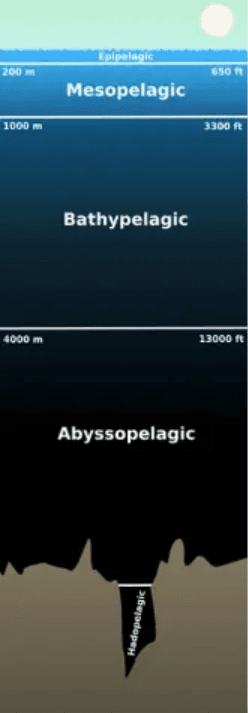
Ocean layers
The epipelagic zone is distinctly different from other ocean layers in terms of its physical and chemical characteristics. Thanks to sunlight penetration, water temperature is relatively high and continuous mixing occurs due to surface currents.
This zone receives the greatest amount of sunlight penetration into the ocean. However, light intensity decreases with depth. Beyond approximately 100 to 150 metres, light becomes significantly diminished and insufficient for photosynthesis. Phytoplankton, the primary producers in this zone, play a major role in oxygen production.
Surface temperature in the epipelagic zone varies by region. Near the Equator, surface temperatures can reach up to 30°C, while in polar regions they can drop to 0°C. These temperature differences play an important role in the formation of ocean currents.
Salinity in the epipelagic zone averages around 3.5% but can vary due to regional factors such as rainfall, evaporation, and freshwater inputs. Due to photosynthetic organisms and continuous gas exchange with the atmosphere, this is the zone with the highest oxygen levels.
This zone is the ocean layer with the greatest biological diversity. Due to the abundance of nutrients, a large proportion of marine life inhabits this region.
Commercially important fish such as tuna, mackerel, swordfish, sardines and anchovies are common in this zone. Additionally, predatory fish such as sharks, barracudas and marlins hunt here. Flying fish also inhabit this zone.
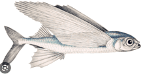
Flying fish Exocoetus volitans

Green sea turtle Cheloniidae
One of the most important ecosystems in the epipelagic zone is coral reefs. Corals thrive in shallow, sunlit areas and provide habitat for numerous marine species. However, climate change and ocean acidification are causing coral bleaching and widespread damage to these ecosystems.
This zone is critically important for the carbon cycle, oxygen production and food chain.
The epipelagic zone faces numerous threats due to human activities:
The Epipelagic Zone is one of the most critical regions of the ocean ecosystem. This layer, where sunlight reaches, is home to photosynthetic organisms that produce oxygen and provide habitat for countless marine species. However, threats such as global warming, overfishing and pollution are endangering this delicate ecosystem. Protecting this zone is vital not only for marine life but for the ecological balance of the entire planet.
Lalli, C. M., and Parsons, T. R. Biological Oceanography: An Introduction. Elsevier. 1997.
Mann, K. H., and Lazier, J. R. N. Dynamics of Marine Ecosystems: Biological-Physical Interactions in the Oceans. Wiley-Blackwell. 2006.
National Oceanic and Atmospheric Administration (NOAA). "Epipelagic Zone: The Sunlit Ocean." 2024. Accessed [Month Day, Year].https://www.noaa.gov/
Pinet, P. R. Invitation to Oceanography. Jones & Bartlett Learning. 2014.

Physical and Chemical Properties of the Epipelagic Zone
Light Availability and Photosynthesis
Temperature
Salinity and Oxygen Levels
Organisms Living in the Epipelagic Zone
Phytoplankton and Zooplankton
Fish Species
Marine Mammals and Sea Turtles
Coral Reefs
Role of the Epipelagic Zone in the Ecosystem
Threats to the Epipelagic Zone