


This article was automatically translated from the original Turkish version.
+1 More
Space Shuttle Discovery (OV-103) was one of the five orbiters developed and operated by NASA and stood out as one of the longest-serving vehicles in the American Space Shuttle Program. Its first flight took place on 30 August 1984, and by 2011 it had completed 39 missions, making significant contributions to space exploration.

Artificial Intelligence-Generated Visualization of the Space Shuttle Discovery Launch.
Discovery was 37.24 meters long with a wingspan of 23.79 meters and a launch weight of approximately 2,000 tons. It was launched using three main engines and solid rocket boosters, achieving orbit, then returning to Earth for a controlled atmospheric landing. The shuttle was designed to carry both crewed and uncrewed cargo missions. Discovery featured a large cargo bay and advanced navigation systems, optimized for long-duration space missions.
The missions conducted by Discovery hold great importance for space exploration and scientific research:
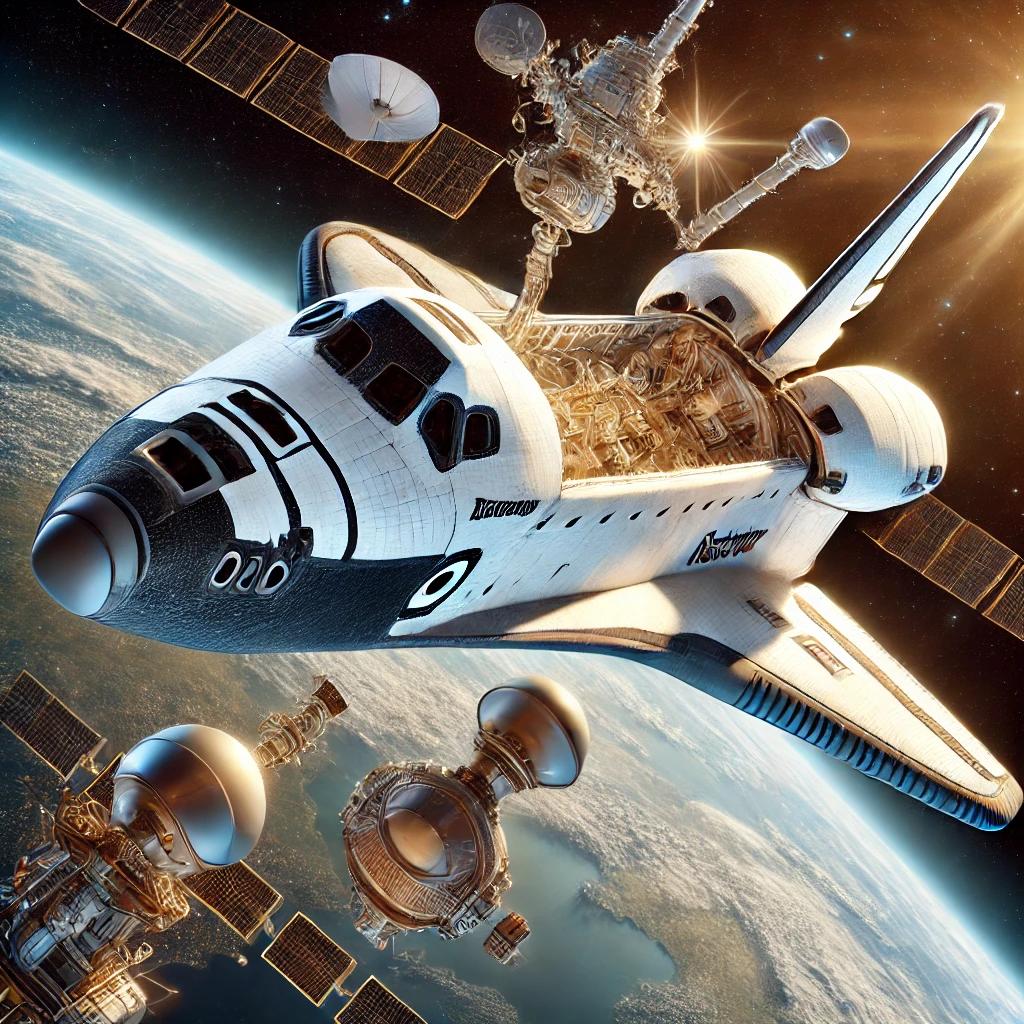
Artificial Intelligence-Generated Visualization of the Space Shuttle Discovery During Mission Operations.
Discovery spent a total of 365 days in space and traveled 238,539,663 kilometers. After retirement, it was transferred to the Smithsonian National Air and Space Museum where it is now on public display. Discovery is regarded as one of the most important spacecraft in carrying forward the technological and scientific legacy of the Space Shuttle Program. Visitors can examine Discovery up close and bear witness to the history of human spaceflight.
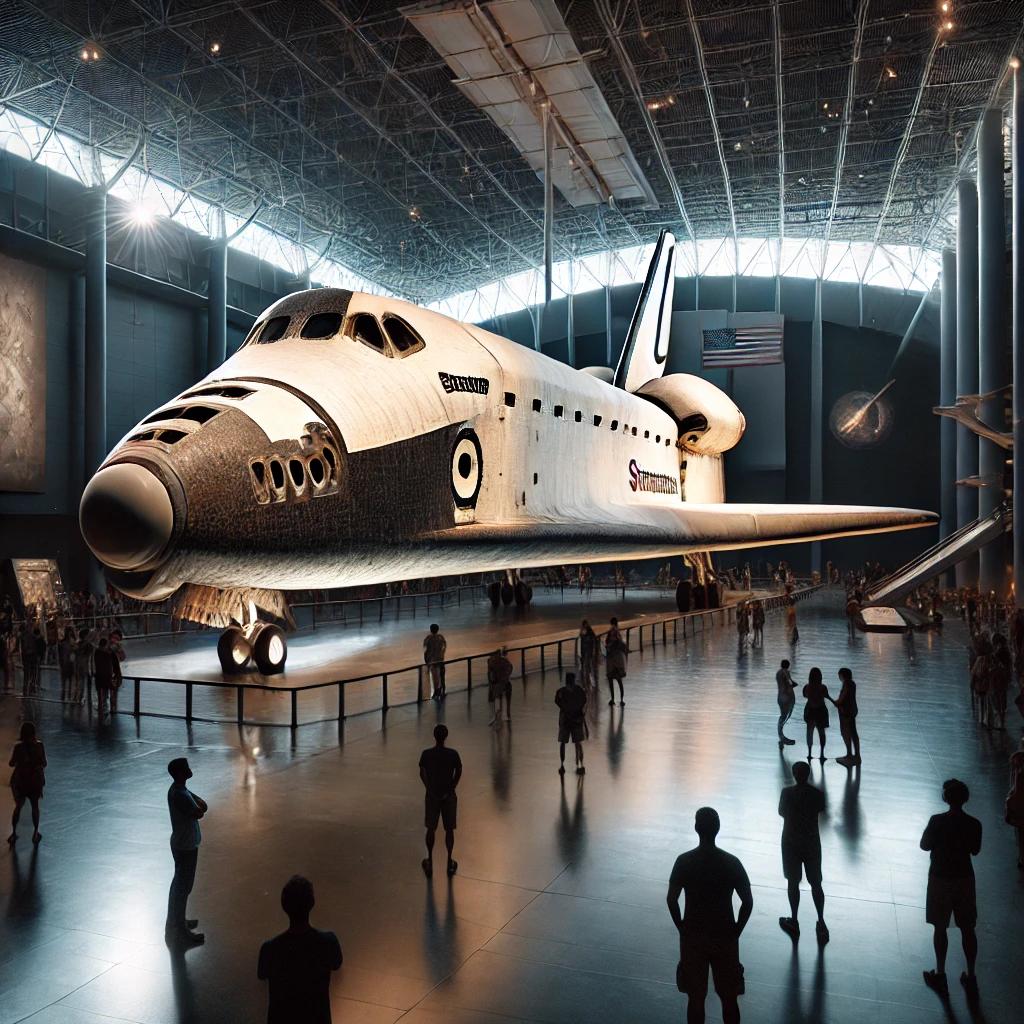
Artificial Intelligence-Generated Visualization of the Retired Space Shuttle Discovery.
Discovery’s legacy extends far beyond its missions. The next-generation spacecraft developed after the Space Shuttle Program have drawn heavily on the experience gained from Discovery and its sister orbiters. NASA’s Artemis program and commercial spaceflight initiatives continue to build upon the legacy left by the Shuttle Program.
The Space Shuttle Discovery played a critical role in space research, made major contributions to the advancement of human spaceflight, and led numerous scientific discoveries. Today, this shuttle, on display at the Smithsonian Institution, continues to serve as a source of inspiration for future space exploration. The achievements of Discovery remain a vital reference point for scientists and engineers who continue to push the boundaries of space exploration.
NASA. "International Space Station Assembly Missions." 1999.
NASA. "STS-114 Mission Overview." 2005.
NASA. "STS-133 Mission Summary." 2011.
NASA. "STS-31 Mission Report." 1990.
NASA. "Space Shuttle Discovery OV-103 Technical Data." 2008.
Smithsonian. "Discovery's Journey to the National Air and Space Museum." 2011.

No Discussion Added Yet
Start discussion for "Discovery Space Shuttle" article
Technical Specifications
Notable Missions
Legacy and Current Status