


This article was automatically translated from the original Turkish version.
+1 More
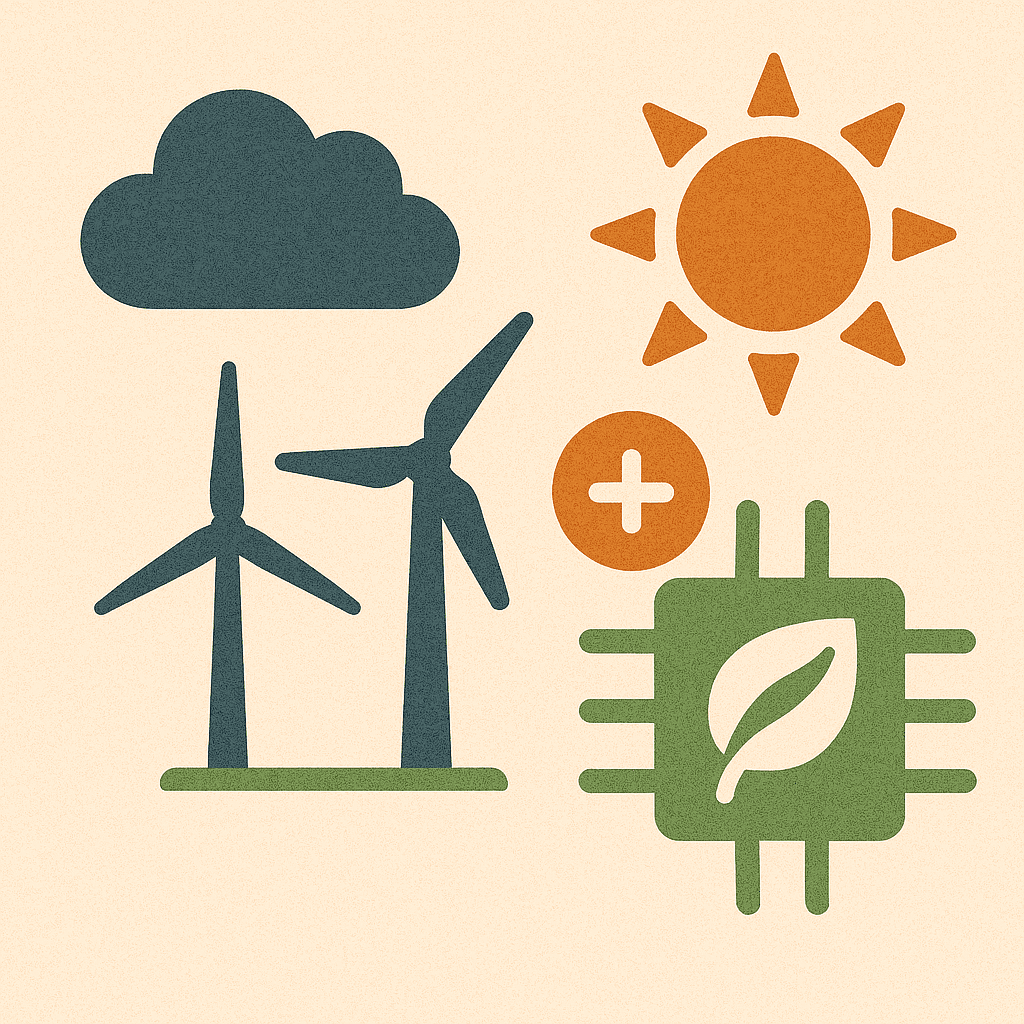
Generated with artificial intelligence.
Climate Technologies
Subheadings | Mitigation, Adaptation, Nature-based Solutions, Digital and Data-based Systems | ||||||||
|---|---|---|---|---|---|---|---|---|---|
Main Areas | Early warning systems and climate modeling Carbon capture and storage (CCS) Climate-friendly technologies in agriculture Smart city systems Renewable energy | ||||||||
Climate technologies are systems, products, services, and infrastructure solutions developed to reduce the impacts of human-induced climate change, adapt to these changes, and promote sustainable development. These technologies encompass not only energy production but also agriculture, transportation, industry, water management, the construction sector, disaster management, and digital infrastructure. Climate technologies focus on reducing greenhouse gas emissions (mitigation), adapting to the impacts of climate change (adaptation), and supporting environmental, social, and economic sustainability.
Within this scope, a wide range of tools are employed, including renewable energy systems, low-carbon transportation, carbon capture and storage (CCS), AI-assisted climate modeling systems, green infrastructure, and nature-based solutions.
Climate technologies do not merely provide environmental benefits; through their multidimensional structures and interdisciplinary impacts, they also contribute to social justice, economic growth, and technological transformation processes. Below are the prominent features of these technologies explained in detail:
Climate technologies are not confined to a single scientific or engineering discipline. They integrate the following fields:
This interdisciplinary structure requires collaborative development of climate technologies by diverse actors in both public and private sectors.
Climate technologies support both emission reduction (mitigation) and adaptation processes. Examples of mitigation include solar panels, electric vehicles, and energy-efficient production systems. Examples of adaptation include drought-resistant agricultural techniques, flood barrier systems, and green infrastructure projects such as vertical gardens and green roofs. This dual impact not only reduces environmental risks but also forms the foundation for building a society resilient to climate crises.
Climate technologies are not merely “technical solutions”; they are tools that transform social structures and economic systems:
This transformative potential demonstrates that climate technologies generate not only “ecological” but also “political-economic” effects.
Modern climate technologies rely heavily on data-driven and automated systems:
Thanks to these technologies, decision-making processes become faster, verifiable, and transparent.
Climate technologies are designed to be adaptable to geography and local needs. In developed countries, advanced solutions such as smart grids, carbon trading, and green hydrogen are implemented, while in developing countries, simple yet effective solutions like low-cost solar cookers and passive cooling systems are deployed. This flexibility enables climate technologies to support a just transition.
Climate technologies are reshaping the direction of global innovation and capital flows. For instance, investments in green technologies exceeded 1.6 trillion dollars in 2022.【1】 ESG initiatives and climate ventures have become the new focus of venture capital funds, giving rise to new sectors such as climate fintech, digital carbon calculators, and waste analytics. In this regard, climate technologies form the infrastructure of the green growth concept.
The origins of climate technologies trace back to the 1970s, when awareness of climate change began to rise. During this period, scientists presented evidence that fossil fuels were increasing atmospheric carbon dioxide (CO₂) levels and contributing to global warming.
This period was characterized by climate crisis discussions primarily at the scientific level, with the need for technological intervention only beginning to be defined.
With the 1990s, climate technologies became more clearly defined, and binding international regulations emerged. Climate finance, technology transfer, and clean production methods were first concretized.
During this period, technologies such as wind turbines, photovoltaic panels, LED lighting, hybrid vehicles, and energy efficiency measures began to gain prominence.
During this period, the private sector assumed a more active role. ESG investments, sustainability reporting, and carbon neutrality targets became norms in the business world.
This phase represents a process in which climate technologies are no longer viewed merely as environmental tools but also as instruments of economic transformation.
Bilbay, Ömer Faruk. "İklim Krizi ve Dijitalleşme." Yönetim Bilimleri Dergisi, Volume: 22 (1544–1568). Accessed July 10, 2025.https://dergipark.org.tr/tr/download/article-file/4072826
European Commission. *Clean Energy for All Europeans*. Brussels: European Union, 2019. Accessed July 10, 2025.https://energy.ec.europa.eu/topics/energy-strategy/clean-energy-all-europeans_en
Göl, Bünyamin, and Tarhan Çiğdem. "Tarımda Dijitalleşmenin Zorlukları ve AB İklim Politikasında Dijital Tarım." *Bilişim Sistemleri ve Yönetim Araştırmaları Dergisi* 6, no. 2 (2024): 12–23. Accessed July 10, 2025.https://dergipark.org.tr/tr/download/article-file/4021331
Intergovernmental Panel on Climate Change (IPCC). *Climate Change 2023: Synthesis Report*. Geneva: IPCC, 2023. Accessed July 10, 2025.https://www.ipcc.ch/report/ar6/syr
TÜBİTAK MAM. "İklim Değişikliği Araştırmaları." Accessed May 27, 2025.https://mam.tubitak.gov.tr/tr/iklim
United Nations Framework Convention on Climate Change (UNFCCC). *Paris Agreement.* New York: United Nations, 2015. Accessed July 10, 2025. Accessed Linki:https://unfccc.int/process-and-meetings/the-paris-agreement.
World Bank. *Carbon Markets and Climate Finance*. Washington, DC: World Bank, 2022. Accessed July 10, 2025. Accessed Linki:https://www.worldbank.org/en/topic/climatechange/brief/carbon-pricing
[1]
IEA. “Rapid Progress of Key Clean Energy Technologies Shows the New Energy Economy Is Emerging Faster than Many Think - News - IEA,” July 12, 2023. Son Erişim Tarihi: 10 Temmuz 2025. Erişim Linki: https://www.iea.org/news/rapid-progress-of-key-clean-energy-technologies-shows-the-new-energy-economy-is-emerging-faster-than-many-think.
[2]
Net Sıfır Türkiye. “2053 Net-Sıfır Hedefi ve Türkiye’nin Uzun Dönemli İklim Değişikliği Stratejisi – Net Sıfır Türkiye,” İklim Değişikliği Başkanlığı. Son Erişim Tarihi: 10 Temmuz 2025. Erişim Linki: https://netsifirturkiye.org/2053-net-sifir-hedefi-ve-turkiyenin-uzun-donemli-iklim-degisikligi-stratejisi/.

Generated with artificial intelligence.
Climate Technologies
Subheadings | Mitigation, Adaptation, Nature-based Solutions, Digital and Data-based Systems | ||||||||
|---|---|---|---|---|---|---|---|---|---|
Main Areas | Early warning systems and climate modeling Carbon capture and storage (CCS) Climate-friendly technologies in agriculture Smart city systems Renewable energy | ||||||||
No Discussion Added Yet
Start discussion for "Climate Technologies" article
Key Characteristics
Interdisciplinary Structure
Reduction of Environmental Impact
Transformative Potential
Data and Digital Foundation
Applicability at Local and Global Scales
Investment and Innovation Orientation
Historical Development
1970–1990: Scientific Awareness and Conceptual Foundations
1990–2010: Global Agreements and Initial Applications
2010–2020: The Era of Transformation
2020–Present: Digitalization and Systemic Transformation