


This article was automatically translated from the original Turkish version.
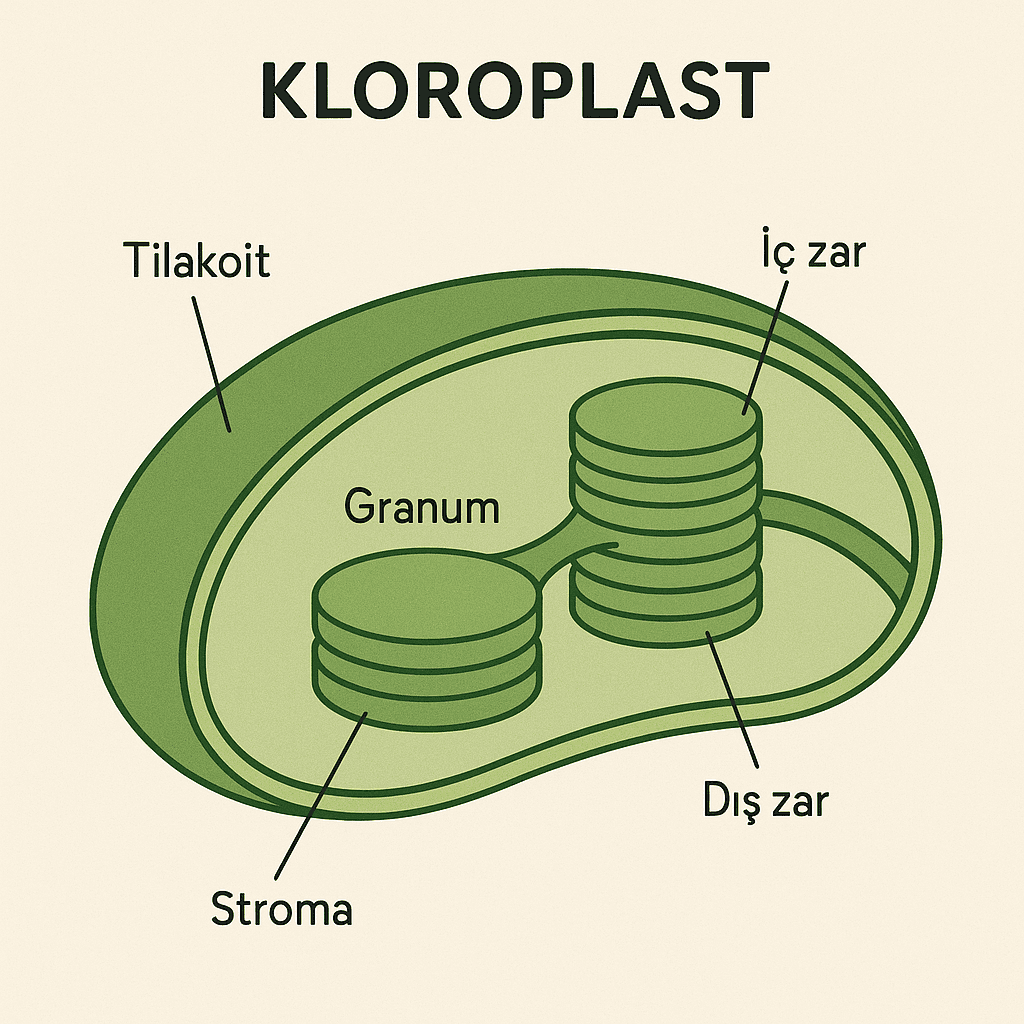
Chloroplast
What is a Chloroplast? | Organel that performs photosynthesis in plant and algal cells | ||||||||
|---|---|---|---|---|---|---|---|---|---|
Structure | Consists of thylakoids Double membrane Stroma | ||||||||
Stages of Photosynthesis | Dark reactions (carbohydrate synthesis) Light reactions (ATP/NADPH production) | ||||||||
Genetics | Has its own DNA and ribosomes | ||||||||
Function | Produces organic matter Converts light energy into chemical energy | ||||||||
Chloroplast is an important organelle found in plant, algal, and some protist cells where photosynthesis occurs. This organelle converts light energy into chemical energy to enable the synthesis of organic compounds. Chloroplasts in eukaryotic cells are surrounded by a double membrane and contain their own genetic material and protein synthesis machinery.
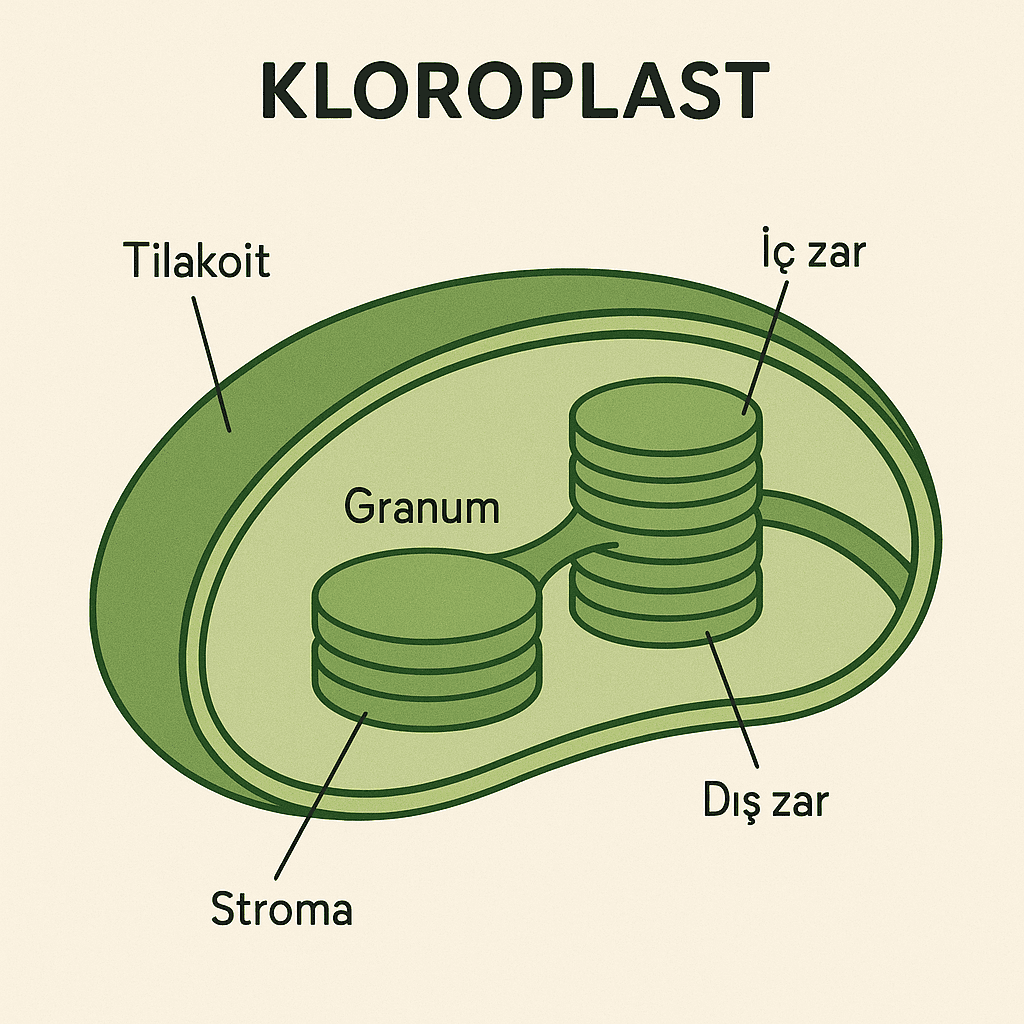
Kloroplast Organeli ( Yapay Zeka Tarafından Oluşturulmuştur.)
Chloroplasts are typically oval or disc-shaped with diameters ranging from approximately 5 to 10 micrometers. They are enclosed by an outer and inner double membrane with an intermembrane space between them. Inside the inner membrane lies the stroma, a semi-fluid matrix containing DNA, ribosomes, and various enzymes.
The stroma contains enzymes that function in the Calvin cycle, where the dark reactions of photosynthesis take place. The stroma may also contain lipid droplets and starch granules. Within the stroma, thylakoid membranes house chlorophyll pigments and the complexes where light reactions occur.
Thylakoids are flattened sacs formed by the inner membrane and are arranged in stacks called grana. Intergranal lamellae connect the grana. The thylakoid membranes contain photosystem I and II, the electron transport chain, and the ATP synthase complex that capture light energy.
Photosynthesis is a biochemical process occurring in chloroplasts that enables plants and other photosynthetic organisms to convert light energy into chemical energy for the production of organic compounds. Photosynthesis generally consists of two main stages: light reactions and dark reactions (Calvin cycle). Both stages occur in different regions of the chloroplast and complement each other.
Light reactions occur in the thylakoid membranes and directly utilize the energy of sunlight. In this stage, chlorophyll and other pigment molecules absorb sunlight, exciting electrons. These excited electrons enter a series of electron transport reactions initiated at photosystem II.
Dark reactions or the Calvin cycle occur in the stroma fluid outside the thylakoid membranes. This stage does not directly require light but depends on ATP and NADPH generated during the light reactions.
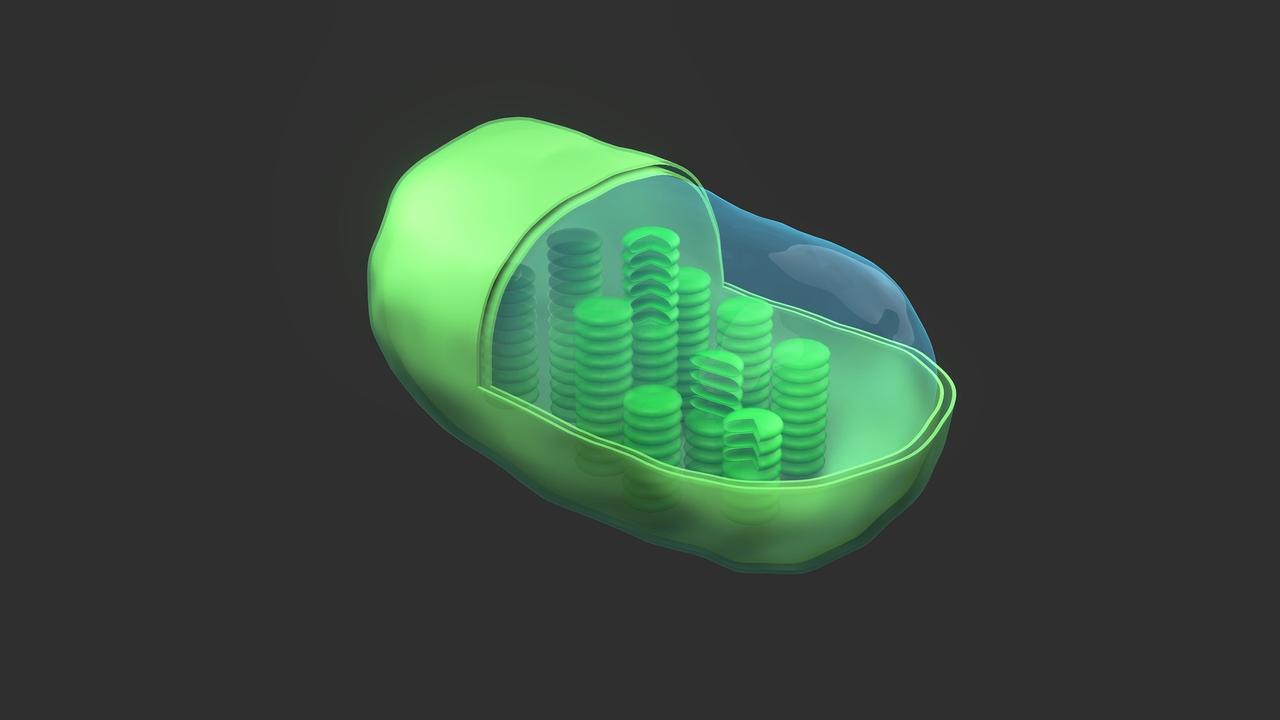
Kloroplast Organeli (Pixabay)
Chloroplasts contain their own DNA, which has a circular structure. Chloroplast DNA encodes some genes related to photosynthesis and genes that regulate its own replication. However, most chloroplast proteins are synthesized in the nucleus and transported into the chloroplast. This gene exchange is evidence of intracellular coordination.
Chloroplast ribosomes resemble prokaryotic ribosomes. Their independent genetic system demonstrates that chloroplasts can divide autonomously and synthesize certain proteins.
Chloroplasts are central to plant energy metabolism. Through photosynthesis, they convert atmospheric carbon dioxide into organic compounds. This process plays a critical role in the carbon cycle of Earth’s ecosystems.
Additionally, chloroplasts participate in the synthesis of important metabolites such as fatty acids, amino acids, and vitamins. Healthy chloroplast function is essential for plant growth and development.
The conversion of light energy into chemical energy in the chloroplast occurs through the electron transport chain and ATP synthesis. Energy transfer is mediated by photosystems in the thylakoid membranes. The ATP synthase enzyme catalyzes ATP production using the proton gradient.
Chloroplasts interact metabolically and genetically with other organelles such as mitochondria and the nucleus. Organic compounds produced during photosynthesis serve as substrates for cellular respiration in mitochondria. Furthermore, coordination between chloroplast and nuclear genes is vital for regulating cellular functions.
Aksu, Fatih. “Fotosentez.” Nevşehir Hacı Bektaş Veli Üniversitesi.https://sistem.nevsehir.edu.tr/bizdosyalar/0193398843737a538a134e0ba0b641e8/6.%20fotosentez.pdf.
Ankara Üniversitesi. *Moleküler Biyolojiye Giriş – 1. Hafta*. Açık Ders Malzemeleri.https://acikders.ankara.edu.tr/pluginfile.php/209273/mod_resource/content/0/MDF%20%201.%20HAFTA.pdf.
Hatipoğlu, Merve. *Bitki Biyolojisi – Fotosentez*. Mustafa Kemal Üniversitesi.https://www.mku.edu.tr/files/898-184a5d0b-2a7b-4419-843f-9d2a8b682805.pdf.
Pixabay. "Kloroplast – Biyoloji Organelleri." Image.https://pixabay.com/tr/photos/kloroplast-biyoloji-organelleri-6886714/.
TÜBİTAK Bilim ve Teknik. "Fotosentez Nedir? Fotosentez Nasıl Gerçekleşir? Fotosentezin Aşamaları ve Mekanizması."https://bilimteknik.tubitak.gov.tr/makale/fotosentez-nedir-fotosentez-nasil-gerceklesir-fotosentezin-asamalari-ve-mekanizmasi.
TÜBİTAK Bilim ve Teknik. "Hücre Nedir?" Accessed [Date].https://bilimteknik.tubitak.gov.tr/makale/hucre-nedir.
Önel, Arzu, Zeynep Yüce, and Dilek Yeşilyurt. “Öğrenci Çizimleri Yoluyla Ortaöğretim Öğrencilerinin Hücre Konusundaki Kavramsal Bilgi Düzeylerinin Belirlenmesi.” Caucasian Journal of Science 1, no. 1 (2015): 6–16.https://dergipark.org.tr/en/download/article-file/409225.

Chloroplast
What is a Chloroplast? | Organel that performs photosynthesis in plant and algal cells | ||||||||
|---|---|---|---|---|---|---|---|---|---|
Structure | Consists of thylakoids Double membrane Stroma | ||||||||
Stages of Photosynthesis | Dark reactions (carbohydrate synthesis) Light reactions (ATP/NADPH production) | ||||||||
Genetics | Has its own DNA and ribosomes | ||||||||
Function | Produces organic matter Converts light energy into chemical energy | ||||||||
Morphology and Structure of the Chloroplast
Stages of Photosynthesis in the Chloroplast
Light Reactions
Dark Reactions (Calvin Cycle)
Chloroplast Genetics and Protein Synthesis
Cellular and Ecological Role of the Chloroplast
Energy Conversion Mechanisms in the Chloroplast
Relationship Between the Chloroplast and Other Intracellular Organelles