This article was automatically translated from the original Turkish version.
Location | Selçuk / İzmir Ephesus Ancient City | ||||||||
|---|---|---|---|---|---|---|---|---|---|
Date | 110–135 CE | ||||||||
Commissioned by | Gaius Julius Aquila | ||||||||
In honor of | Tiberius Julius Celsus Polemaeanus | ||||||||
Size | 17 m height 21 m width | ||||||||
Statues | Sophia, Arete, Ennoia, Episteme (originals in Vienna) | ||||||||
Inscription | 25,000 denarii donation for books and maintenance | ||||||||
Restoration | 1970–1978 | ||||||||
Status | UNESCO World Cultural Heritage | ||||||||
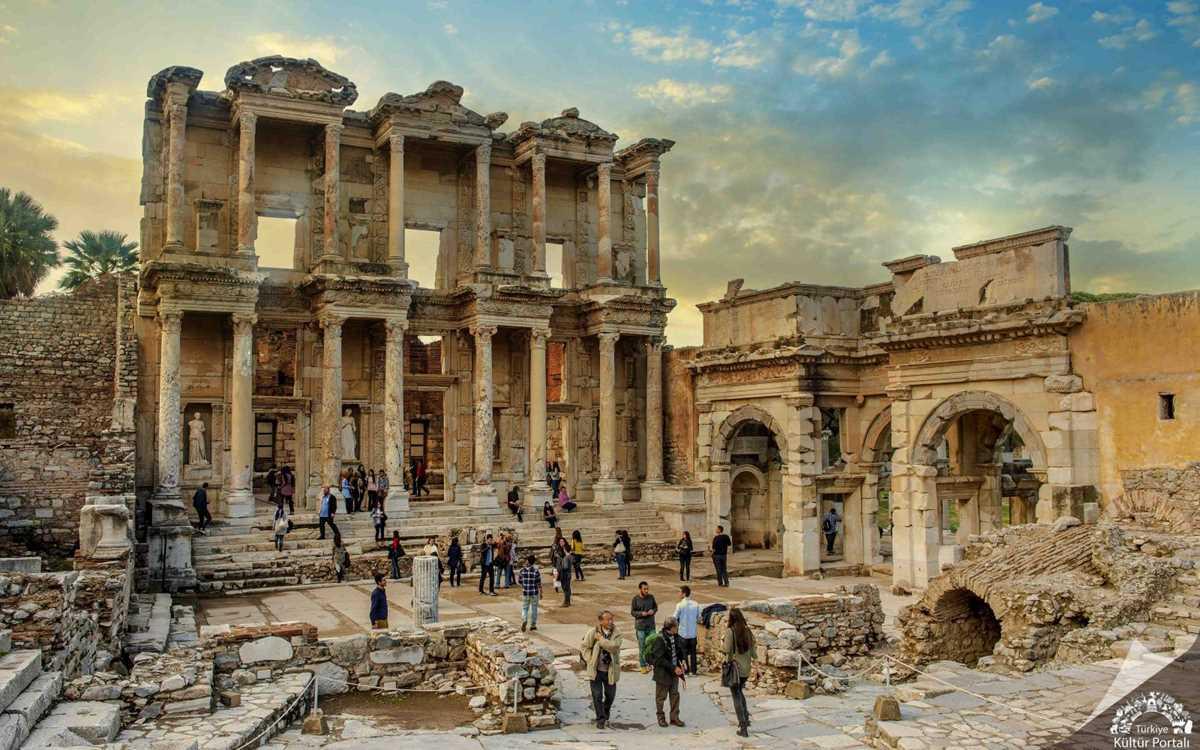
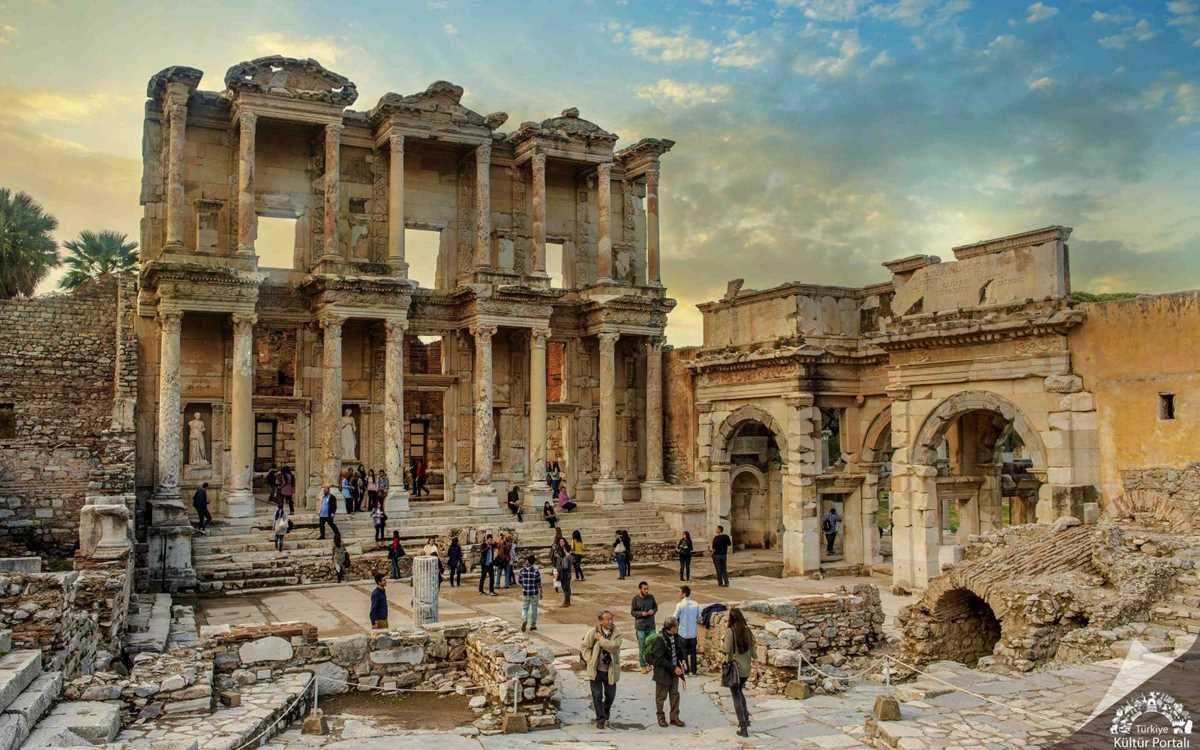
The Library of Celsus is one of the most striking structures in the Ancient City of Ephesus. Built during the Roman Imperial period, this library served both as a public information center and as a monumental tomb. The structure, one of the most magnificent libraries of the ancient world, stands out for its architectural embellishments and historical significance.
Library of Celsus (Culture Portal)
The Library of Celsus was constructed between AD 110 and 135. It was commissioned by Gaius Julius Aquila in honor of his father, Tiberius Julius Celsus Polemaeanus, who served as proconsul of the province of Asia. The library also functions as a heroon—a hero shrine—built over Celsus’s tomb.
Library of Celsus (Culture Portal)
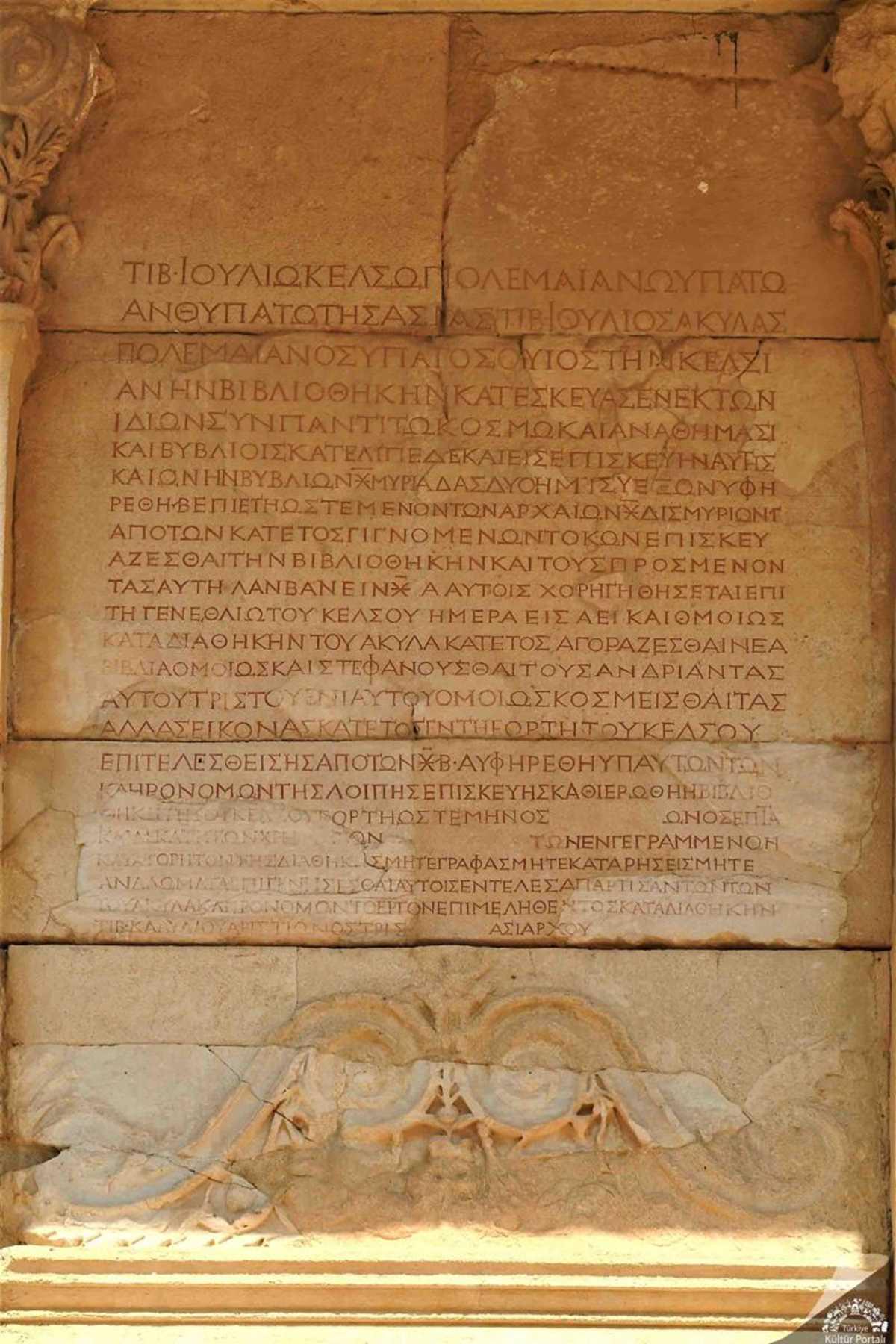
Information about the library is derived from inscriptions on the structure. The inscription on the eastern façade states the following:
Similar information is repeated on the inscriptions above the architrave on the first floor of the façade.
Library of Celsus (Culture Portal)
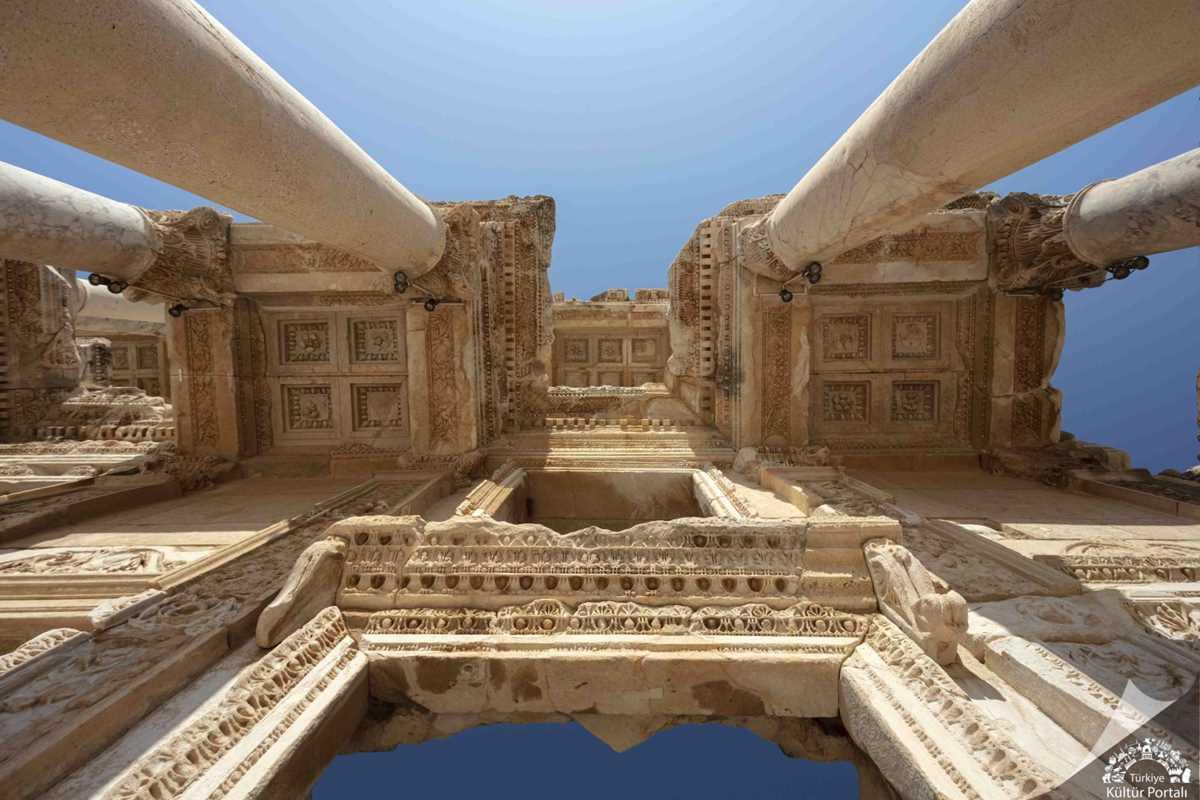
The library measures 21 meters in width and 17 meters in height. It is accessed via a nine-step staircase and rises on a vaulted substructure. The façade is richly decorated. Inside, there are two rows of rectangular niches, one above the other, along the rear and side walls.
The exterior façade is clad in marble, while the interior was constructed using brickwork. The architectural design of the façade is notable for its aedicule arrangement.
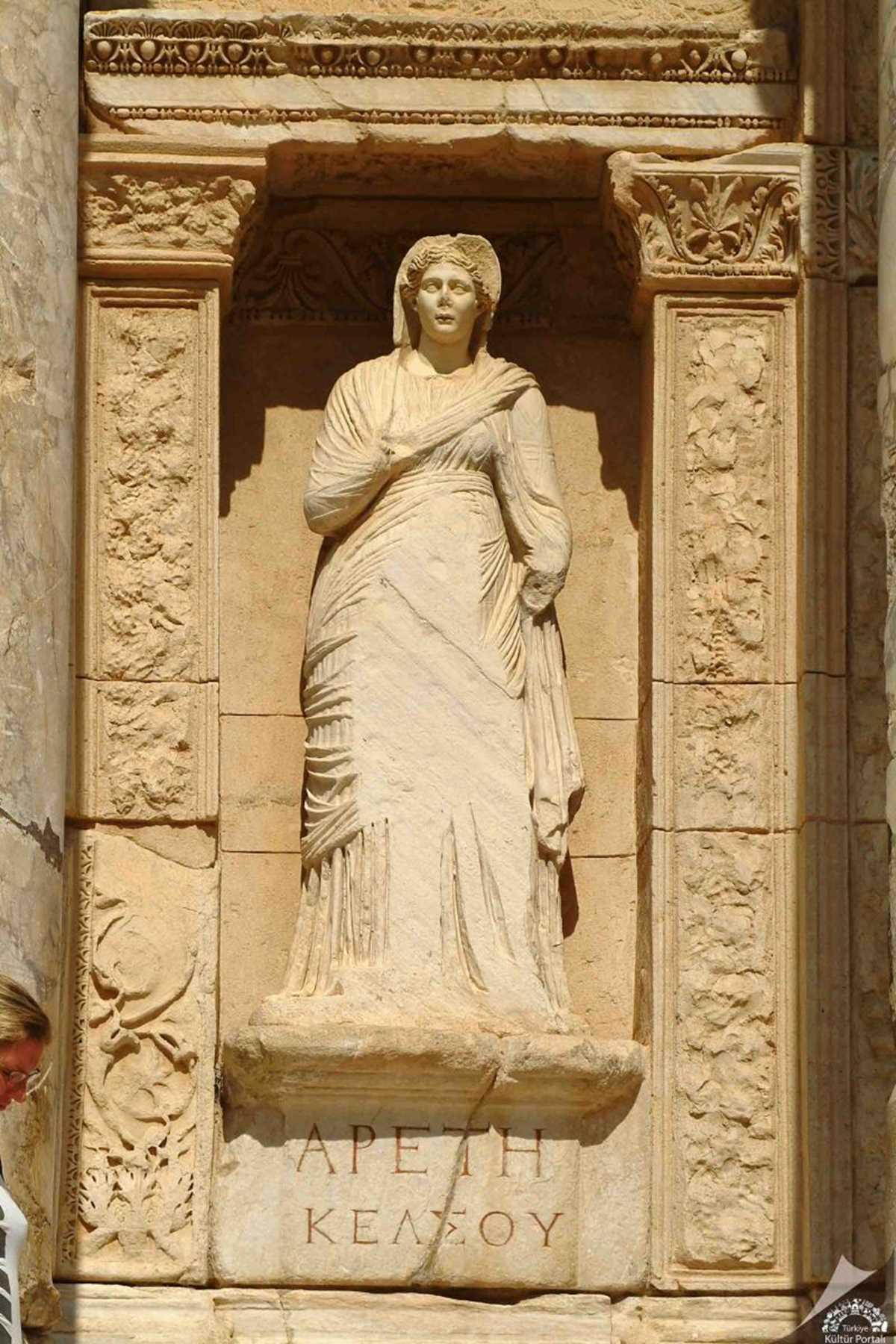
Arete (virtue, character) (Culture Portal)
On the lower level of the library’s façade, there were four female statues representing Sophia (wisdom), Arete (virtue, character), Ennoia (thought, fate), and Episteme (knowledge, science). The original statues are now displayed at the Museum of Vienna.
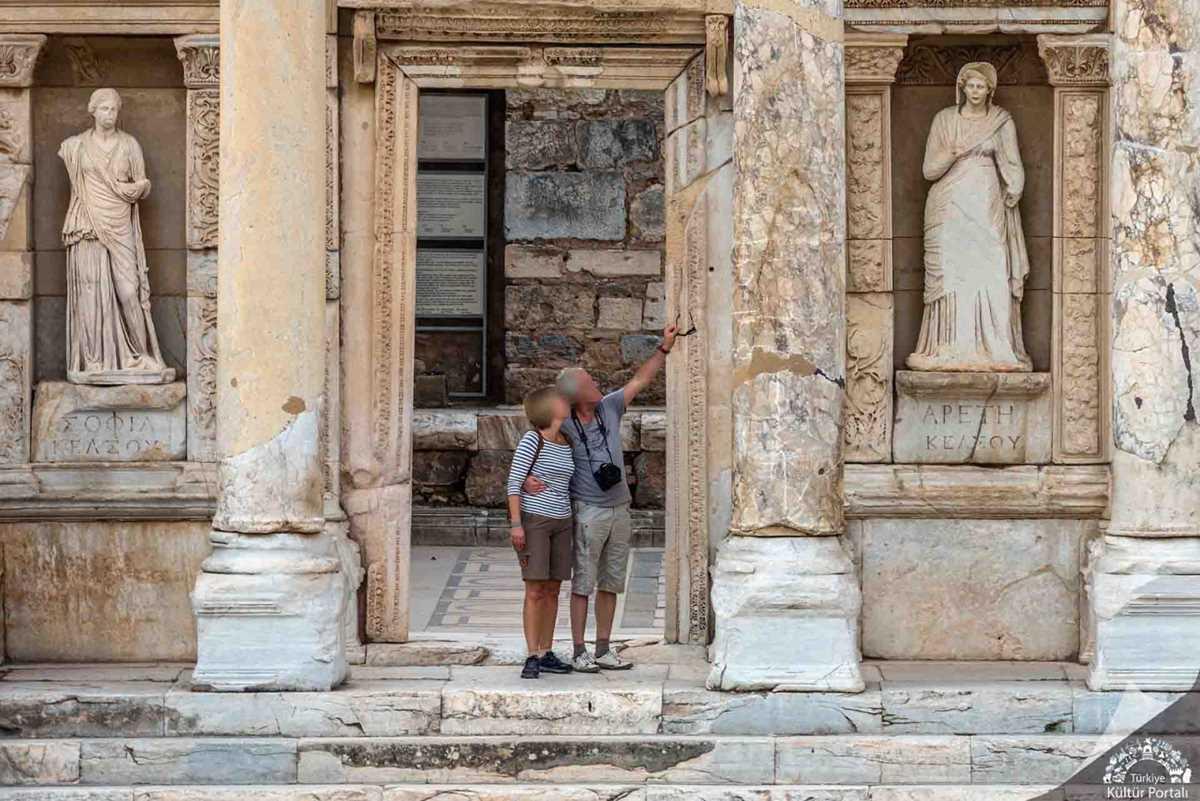
Library of Celsus (Culture Portal)
The Library of Celsus was destroyed by an earthquake around AD 270 and was never rebuilt. During Late Antiquity, the remains of the façade were reused as the back wall of a street fountain. Between 1970 and 1978, the library was restored with financial support from A. Kallinger-Prskawetz.
The Library of Celsus is located within the Ancient City of Ephesus, near the town of Selçuk, along the Izmir-Aydın highway, between the Aydın-Kuşadası routes. Ephesus is listed on the UNESCO World Heritage List.
Anadolu Images. “Efes Antik Kentinde Yer Alan Celsus Kütüphanesi.” Accessed August 16, 2025.https://www.anadoluimages.com/p/efes-antik-kentinde-yer-alan-celsus-kutuphanesi/26645506
Culture Portal. "Celsus Kütüphanesi." Ministry of Culture and Tourism Culture Portal. Accessed August 16, 2025.https://www.kulturportali.gov.tr/portal/celsus-kutuphanesi
Kültür Portalı. "Efes Celsus Kütüphanesi (Fotoğraf)." Kültür ve Turizm Bakanlığı Kültür Portalı. Accessed August 16, 2025.https://www.kulturportali.gov.tr/medya/fotograf/fotodokuman/3979/efes-celsus-kutuphanesi
Selçuk Belediyesi. "Celsus Kitaplığı." Selçuk Municipality Official Website. Accessed August 16, 2025.https://www.selcuk.bel.tr/celsus-kitapligi

Location | Selçuk / İzmir Ephesus Ancient City | ||||||||
|---|---|---|---|---|---|---|---|---|---|
Date | 110–135 CE | ||||||||
Commissioned by | Gaius Julius Aquila | ||||||||
In honor of | Tiberius Julius Celsus Polemaeanus | ||||||||
Size | 17 m height 21 m width | ||||||||
Statues | Sophia, Arete, Ennoia, Episteme (originals in Vienna) | ||||||||
Inscription | 25,000 denarii donation for books and maintenance | ||||||||
Restoration | 1970–1978 | ||||||||
Status | UNESCO World Cultural Heritage | ||||||||
Founding of the Library
Inscriptions
Architectural Features
Statues
Historical Development
Location