


This article was automatically translated from the original Turkish version.
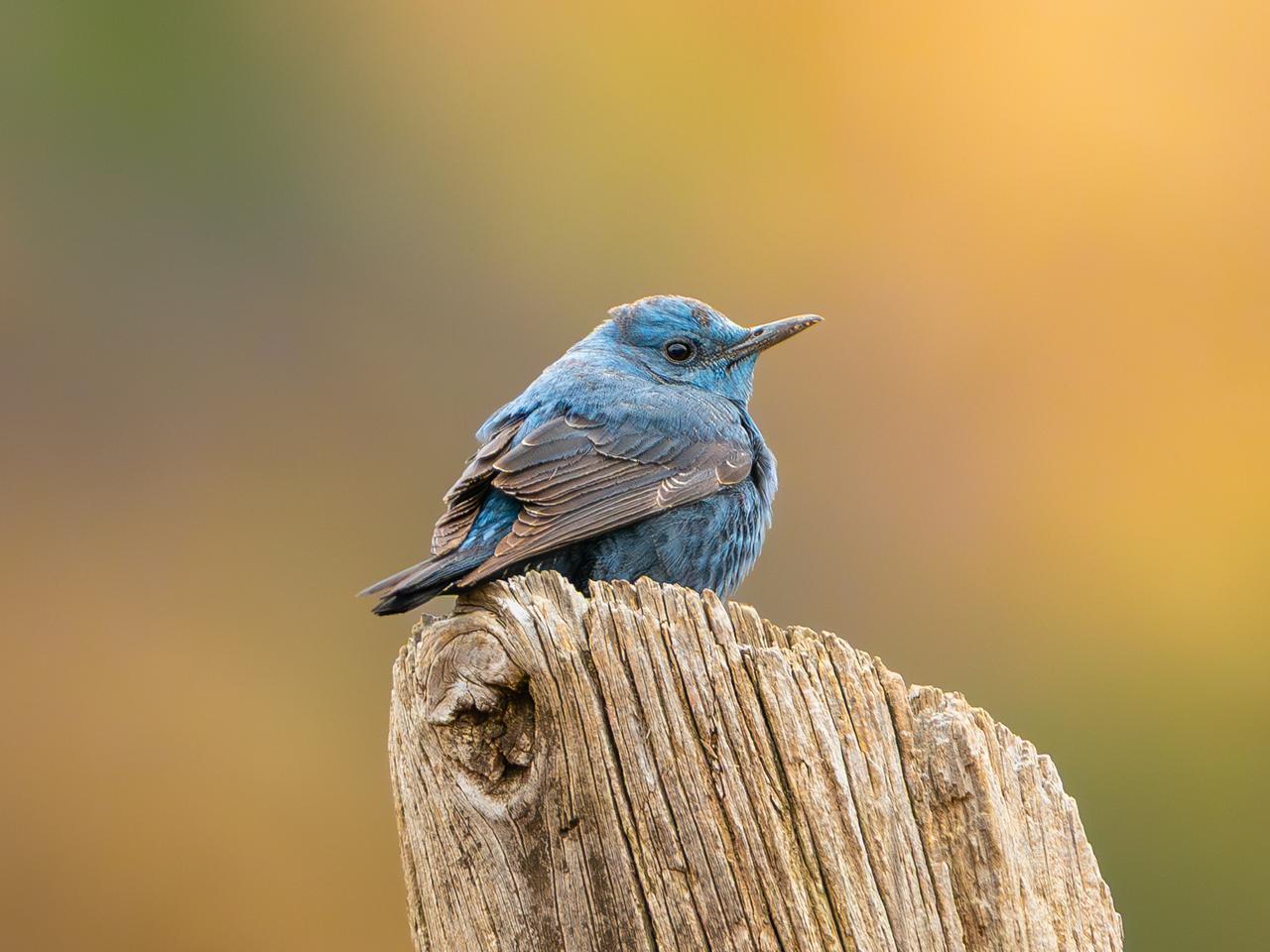
Mehmet Çağlar
Gökardıç (Monticola solitarius)
Phylum | Chordata | ||||||||
|---|---|---|---|---|---|---|---|---|---|
Class | Aves | ||||||||
Wingspan | 33-37 cm | ||||||||
Incubation Period | 12-13 days | ||||||||
Conservation Status | LC - Least Concern (IUCN) | ||||||||
Species | Monticola solitarius | ||||||||
World | Animalia | ||||||||
Tribe | 21-23 cm | ||||||||
Family | Muscicapidae | ||||||||
Team | Passeriformes | ||||||||
The Blue Rock Thrush (Monticola solitarius) is a lithophilic (rock-dwelling) bird species belonging to the Muscicapidae (flycatcher) family within the Passeriformes (songbirds) order. It is distributed across the rocky and mountainous ecosystems of the Palearctic region. Males are distinguished by their characteristic slate-blue plumage and exhibit high adaptability to human-made structures such as ancient ruins and isolated stone buildings, in addition to natural cliffs and canyons. The Blue Rock Thrush occurs in both resident and migratory populations across a wide geographic range and is ecologically associated with high-altitude rocky habitats.
The Blue Rock Thrush (Monticola solitarius) is a bird species in the Muscicapidae family of the Passeriformes order. Its scientific name is of Latin origin: the genus name Monticola derives from the root mons or montis meaning “mountain” and the suffix -cola meaning “inhabitant” or “dweller.”【1】 The specific epithet solitarius means “solitary” or “lonely.”【2】 The species was first described by Carolus Linnaeus in 1758 in his work Systema Naturae under the name Turdus solitarius on page 170.【3】 In the original description, the bird’s size was compared to that of the starling, and its physical features were noted as a blue-brown body with white spots on the head.
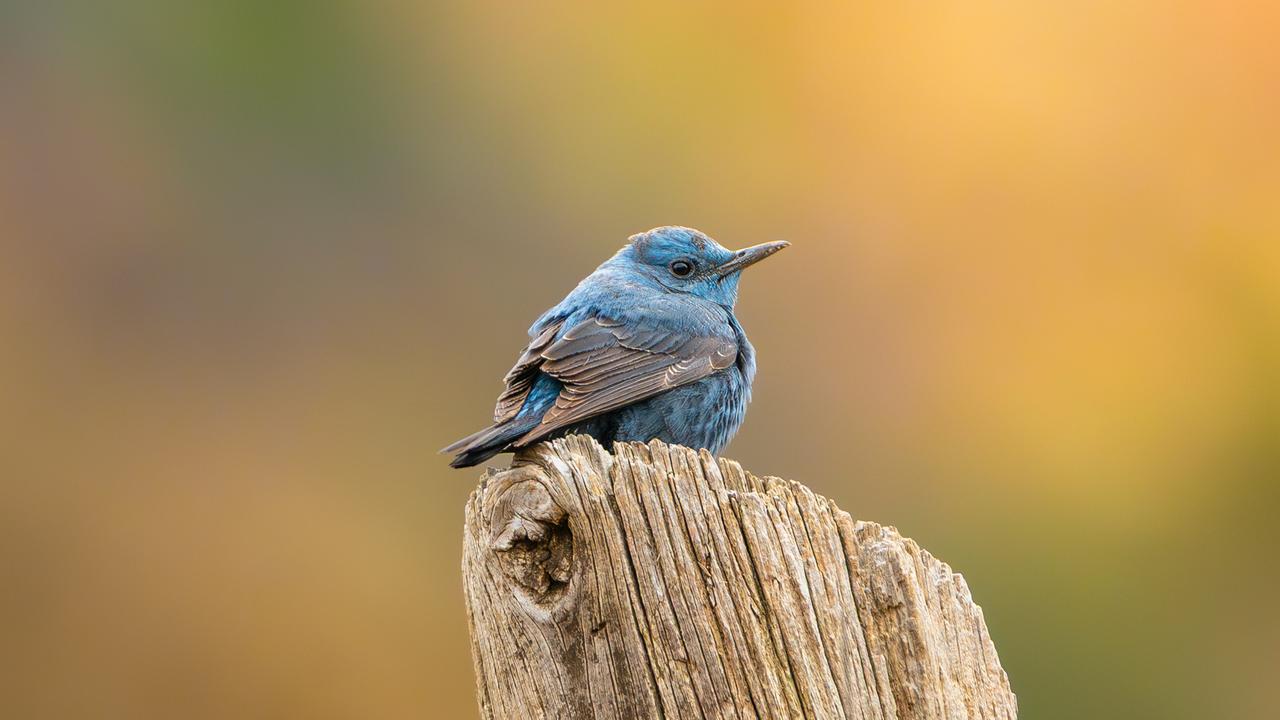
Blue Rock Thrush "Monticola solitarius" - (Mehmet Çağlar)
The Blue Rock Thrush measures 21–23 cm in total length, has a wingspan of 33–37 cm, and weighs between 37 and 54 grams.【4】 The species exhibits pronounced sexual dimorphism. Adult males during the breeding season have predominantly dark slate-blue plumage. The wings and tail are black, with the outer edges of the tail feathers bordered in slate-blue. In winter, males’ plumage becomes duller, taking on a sandy-grey appearance. Females are generally brown with more muted tones. The underparts, including the breast, belly and undertail coverts, display a pattern of brown transverse bars on a pale buff background. Juvenile birds resemble females but have more pronounced spotting and a scaly feather texture. The bird’s bill is black, slender and relatively long; the iris is dark brown; and the legs and feet are greyish-black. The species is recognized to have five main subspecies in the literature.【5】
Blue Rock Thrush "Monticola solitarius" (Mehmet Kıran)
The global extent of occurrence (EOO) of the Blue Rock Thrush is estimated at approximately 66,600,000 km².【6】 Its range extends from southern Europe and northwestern Africa through Central Asia to northern China, the Korean Peninsula, Japan and southward to Malaysia and Sumatra. Resident populations are found year-round throughout Türkiye in suitable habitats. Populations in southern Europe, North Africa and South Asia are generally resident. Birds breeding in northern Asia migrate during winter to sub-Saharan Africa, the Arabian Peninsula, India and Southeast Asia. The species has been recorded as a rare vagrant in regions such as Canada, Australia, the United Kingdom, Sweden, Belgium and Germany. Its preferred habitat consists of steep cliffs, vertical rocky valleys, canyons, rocky coastlines and shorelines. It also utilizes human-made structures such as ancient ruins, castles, stone quarries, abandoned mines and isolated rural stone buildings for nesting. The vertical distribution of the species ranges from sea level up to 2,700 meters; in the Himalayas, it has been recorded at elevations up to 4,000 meters.【7】
The feeding strategy of the species is omnivorous and varies seasonally and according to life stage. During the breeding season, chicks are primarily fed invertebrates and soft-bodied insects. Adults consume a variety of arthropods including grasshoppers, beetles, flies, spiders, black snails and earthworms. Vertebrates such as small lizards, frogs and occasionally small rodents have also been recorded as prey.【8】 In autumn and winter, the diet shifts predominantly to plant-based foods such as fruits and seeds. Breeding occurs in nests built in rock crevices, building cavities and ruins. Two broods are raised per year, each containing 4–5 eggs.【9】 Incubation lasts 12–13 days, and chicks fledge after approximately 16–17 days.【10】
According to IUCN Red List data, the Blue Rock Thrush is classified globally as “Least Concern” (LC).【11】 The global population is very large and its rate of decline does not meet the thresholds for conservation concern. Local population declines were recorded in Spain and Italy between 1970 and 1990.【12】 Environmental threats associated with these declines include tourism development along coastlines, dam construction, sealing of nesting cavities during restoration of historic structures, and the encroachment of matorral shrubland following the abandonment of pastoral grazing.
International Union for Conservation of Nature (IUCN). “Monticola solitarius.” *The IUCN Red List of Threatened Species*. 2024. Accessed May 9, 2026. https://www.iucnredlist.org/species/pdf/264530308
Jobling, James A. The Helm Dictionary of Scientific Bird Names. Londra: Christopher Helm, 2010. Accessed May 9, 2026.
Linnaei, Caroli. Systema Naturae (Holmiae: Impensis Direct. Laurentii Salvii, 1758), Internet Archive, Accessed May 9, 2026.
Ornito.org. “Gökardıç (Blue Rock Thrush) - Monticola solitarius.” Last updated May 9, 2026. Accessed May 9, 2026. https://ornito.org/Bird/Detail/184
https://archive.org/download/Helm_Dictionary_of_Scientific_Bird_Names_by_James_A._Jobling/Helm_Dictionary_of_Scientific_Bird_Names_by_James_A._Jobling.pdf
https://archive.org/download/carolilinnisys00linn/carolilinnisys00linn.pdf
[1]
James A. Jobling, The Helm Dictionary of Scientific Bird Names (London: Christopher Helm, 2010), p. 259.
[2]
James A. Jobling, The Helm Dictionary of Scientific Bird Names (London: Christopher Helm, 2010), p. 356.
[3]
Carolus Linnaeus, Systema Naturae per Regna Tria Naturae, Secundum Classes, Ordines, Genera, Species, cum Characteribus, Differentiis, Synonymis, Locis, 10th edition, vol. 1 (Holmiae: Laurentii Salvii, 1758), p. 170.
[4]
Ornito.org, “Blue Rock Thrush (Monticola solitarius),” last updated 9 May 2026, (https://ornito.org/Bird/Detail/184) (Accessed: 9 May 2026).
[5]
Ornito.org, “Blue Rock Thrush (Monticola solitarius),” last updated 9 May 2026, (https://ornito.org/Bird/Detail/184) (Accessed: 9 May 2026).
[6]
International Union for Conservation of Nature (IUCN), “Monticola solitarius,” The IUCN Red List of Threatened Species (2024), p. 9.
[7]
Ornito.org, “Blue Rock Thrush (Monticola solitarius),” last updated 9 May 2026, (https://ornito.org/Bird/Detail/184) (Accessed: 9 May 2026).
[8]
Ornito.org, “Blue Rock Thrush (Monticola solitarius),” last updated 9 May 2026, (https://ornito.org/Bird/Detail/184) (Accessed: 9 May 2026).
[9]
Ornito.org, “Blue Rock Thrush (Monticola solitarius),” last updated 9 May 2026, (https://ornito.org/Bird/Detail/184) (Accessed: 9 May 2026).
[10]
Ornito.org, “Blue Rock Thrush (Monticola solitarius),” last updated 9 May 2026, (https://ornito.org/Bird/Detail/184) (Accessed: 9 May 2026).
[11]
International Union for Conservation of Nature (IUCN), “Monticola solitarius,” The IUCN Red List of Threatened Species (2024), p. 2.
[12]
International Union for Conservation of Nature (IUCN), “Monticola solitarius,” The IUCN Red List of Threatened Species (2024), p. 2.


Mehmet Çağlar
Gökardıç (Monticola solitarius)
Phylum | Chordata | ||||||||
|---|---|---|---|---|---|---|---|---|---|
Class | Aves | ||||||||
Wingspan | 33-37 cm | ||||||||
Incubation Period | 12-13 days | ||||||||
Conservation Status | LC - Least Concern (IUCN) | ||||||||
Species | Monticola solitarius | ||||||||
World | Animalia | ||||||||
Tribe | 21-23 cm | ||||||||
Family | Muscicapidae | ||||||||
Team | Passeriformes | ||||||||
No Discussion Added Yet
Start discussion for "Blue Rock Thrush (Monticola solitarius)" article
Taxonomy, Morphology and Ecological Data
Taxonomic Features
Morphological Features
Geographic Distribution and Habitat
Feeding and Reproductive Biology
Conservation Status and Threats