


This article was automatically translated from the original Turkish version.
Bloody Christmas is a chain of events that began on 21 December 1963 in Cyprus, initiated by Greek Cypriots against Turkish Cypriots and remembered in history as a period of massacre. These events led to the collapse of the Republic of Cyprus, established in 1960 under the guarantorship of Türkiye, Greece and the United Kingdom, and resulted in systematic attacks against the Turkish community on the island. During this period, the Akritas Plan, implemented by Greek Cypriots in line with their goal of Enosis (union with Greece), emerged as a strategy aimed at eliminating the Turkish community.
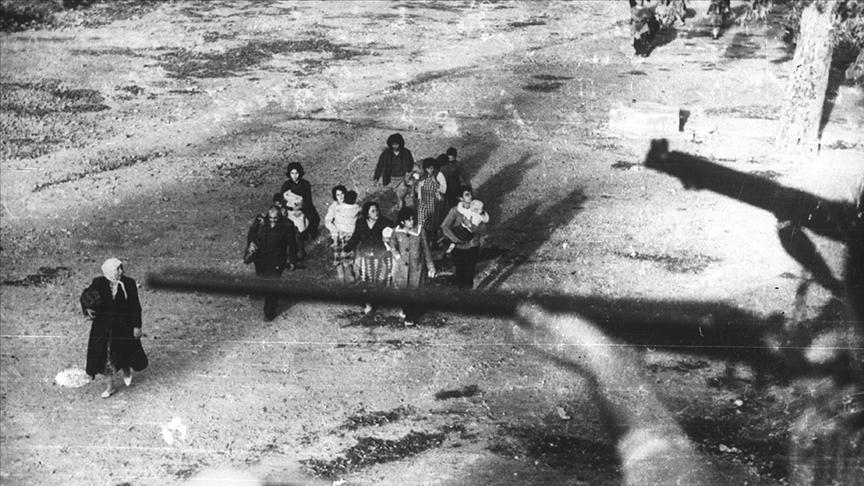
Bloody Christmas (AA)
Cyprus has held strategic geopolitical importance throughout history due to its location. Its proximity to the coasts of Anatolia and Syria, its influence over the entrance and exit of the Aegean Sea, and its position relative to the Suez Canal led to its transfer from the Ottoman Empire to the United Kingdom in 1878. During this period, Greek Cypriots adopted the goal of Enosis within the framework of the Megali Idea and launched various initiatives toward this end in 1912, 1931 and the 1950s.
In 1931, Greek Cypriots launched a revolt against British rule. In 1947, Greece submitted a formal application to the United Nations (UN) for union with Cyprus, and in 1950 a plebiscite was held to advance Enosis demands onto the international stage. However, this plebiscite took place without the participation of the Turkish community and lacked legal validity.
In 1955, the EOKA (Ethniki Organosis Kypriakon Agoniston), established under the leadership of Greek Army officer Georgios Grivas, launched an armed struggle for Enosis and plunged the island into a state of chaos that lasted until 1974.
Although the British administration was aware of EOKA’s activities, it struggled to infiltrate the Turkish Resistance Organization (TMT) due to its disciplined structure. In response to EOKA’s attacks, Turkish Cypriots formed defense organizations such as Karaçete, Volkan, 9 Eylül, and ultimately the TMT, established in 1958. These organizations operated within the framework of self-defense and made deliberate efforts to prevent harm to Greek Cypriot civilians.
The Republic of Cyprus, established on 16 August 1960 through the Zurich and London Agreements, aimed to include both Turkish and Greek Cypriot communities in a shared government. However, the Greek Cypriot leadership, particularly President Makarios, viewed this republic as a “stepping stone” toward achieving Enosis.
Between 1960 and 1963, tensions escalated due to constitutional disputes, tax issues, and the failure to provide the Turkish community with the constitutionally guaranteed 30 percent representation in public services. Makarios’s proposed “Thirteen Points” constitutional amendments on 30 November 1963 sought to reduce the Turkish community to minority status and were rejected by Turkish Cypriot leadership on 6 December 1963. This proposal became the primary justification for implementing the Akritas Plan.
The Akritas Plan is a secret strategy document prepared by the Greek Cypriot leadership with the aim of eliminating the Turkish community on the island. Named after a 9th-century Byzantine epic, the plan first surfaced in the Athens-based newspaper Agonitis / The Fighter following the 1959 Zurich and London Agreements, and was published in full in 1966 in the pro-Grivas newspaper Patris.
The Akritas Plan was based on two main strategies: external and internal fronts. On the external front, the goal was to convince world public opinion that the Zurich and London Agreements were unjust, that Turks were a minority on the island, and that Greek Cypriots had the right to self-determination.
On the internal front, the plan called for the use of violence to break down the Turkish community, force its displacement, and change the constitution that blocked Enosis. The plan aimed to eliminate Turkish leaders, gather intelligence on the TMT, undermine Turkish-Greek Cypriot goodwill under the guise of defending it, and weaken the bonds between Türkiye and Turkish Cypriots. EOKA’s weapons were supplemented by arms remaining from previous operations, those smuggled in by Grivas, and those supplied by countries such as Greece and Egypt.
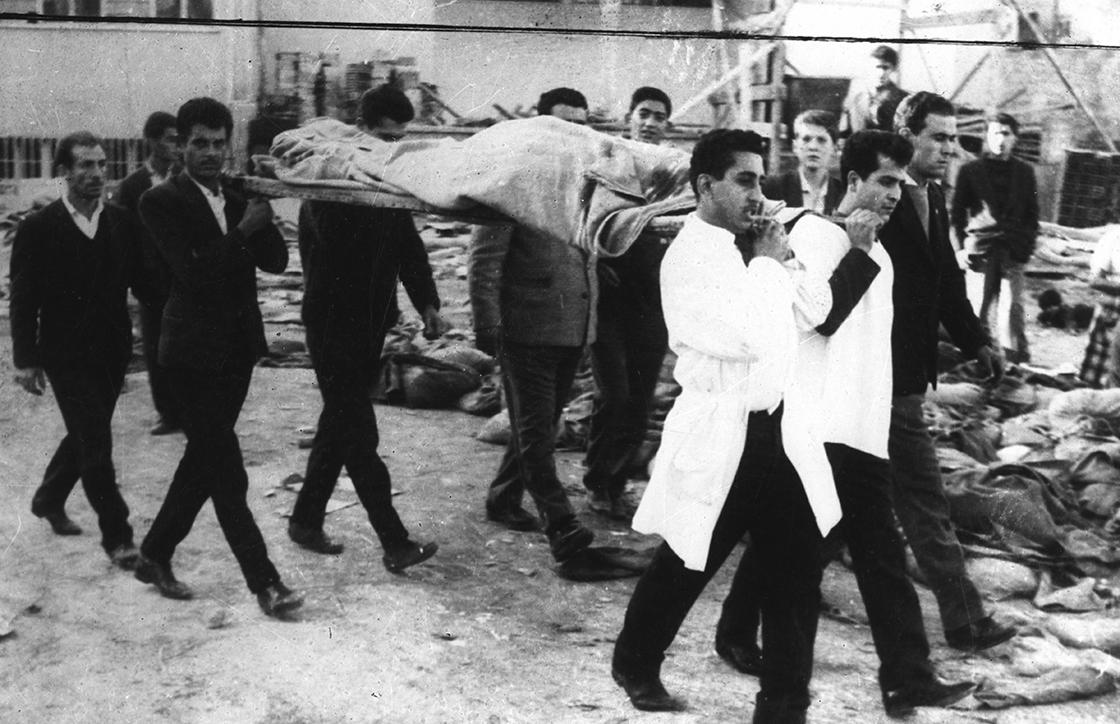
Bloody Christmas (AA)
Bloody Christmas began at approximately 02:00 on Friday, 21 December 1963, in the Tahtakale neighborhood of Nicosia. Greek Cypriot security forces and EOKA militants stopped two vehicles returning from Kyrenia to Nicosia and attempted to conduct a search under the pretext of identity checks. The request by the female passengers for female officers to carry out the search was denied. When resistance was encountered, the Greek Cypriots opened fire, killing Zeki Halil and Cemaliye Emirali. This incident ignited Bloody Christmas.
Following the incident, on 22 December, Turkish Cypriots organized a protest march along the Nicosia-Kyrenia road, threw stones at Greek Cypriot vehicles, and set some on fire. On the same day, Greek Cypriot police opened fire on the Nicosia Turkish Boys’ High School and the statue of Atatürk, and attacked the Turkish Embassy. On 23 December, clashes intensified; five Turkish gendarmes in the village of Aysezomo were shot at, with one seriously wounded.
Greek Cypriots imposed blockades on Turkish villages, creating food shortages, and refused to provide blood transfusions to wounded Turkish Cypriots in hospitals. On 24 December, Greek Cypriot police set up ambushes targeting Turkish Cypriots in the Aspava Bar area of Nicosia, while attacks continued in Kukli with support from a force of 1,000 Greek soldiers. Turkish resistance continued with limited weapons left over from World War I: six rifles, five Sten guns, and two Bren machine guns.
The most tragic event of Bloody Christmas occurred on 24 December 1963 in the Kumsal neighborhood of Nicosia. Greek Cypriots considered Kumsal a “dead zone” and left it undefended. After being informed by Avragami, an Armenian-origin Greek Cypriot, that there was no Turkish resistance in the area, they launched an attack. Over 150 Greek Cypriots under the command of Greek officer Terezepulos entered Kumsal with fire support from the Severis Factory.
In the house at 2 İrfan Bey Street, where Major Nihat İlhan, serving as a doctor in the Cyprus Turkish Forces Regiment, lived, the attackers killed his wife Mürüvet (aged 37) and their children Murat (aged 6), Kutsi (aged 5), and Hakan (10 months old) as they hid in the bathtub. At the time of the attack, Major İlhan was with his unit, transporting wounded to a hospital in Gönyeli, which had been converted from a school.
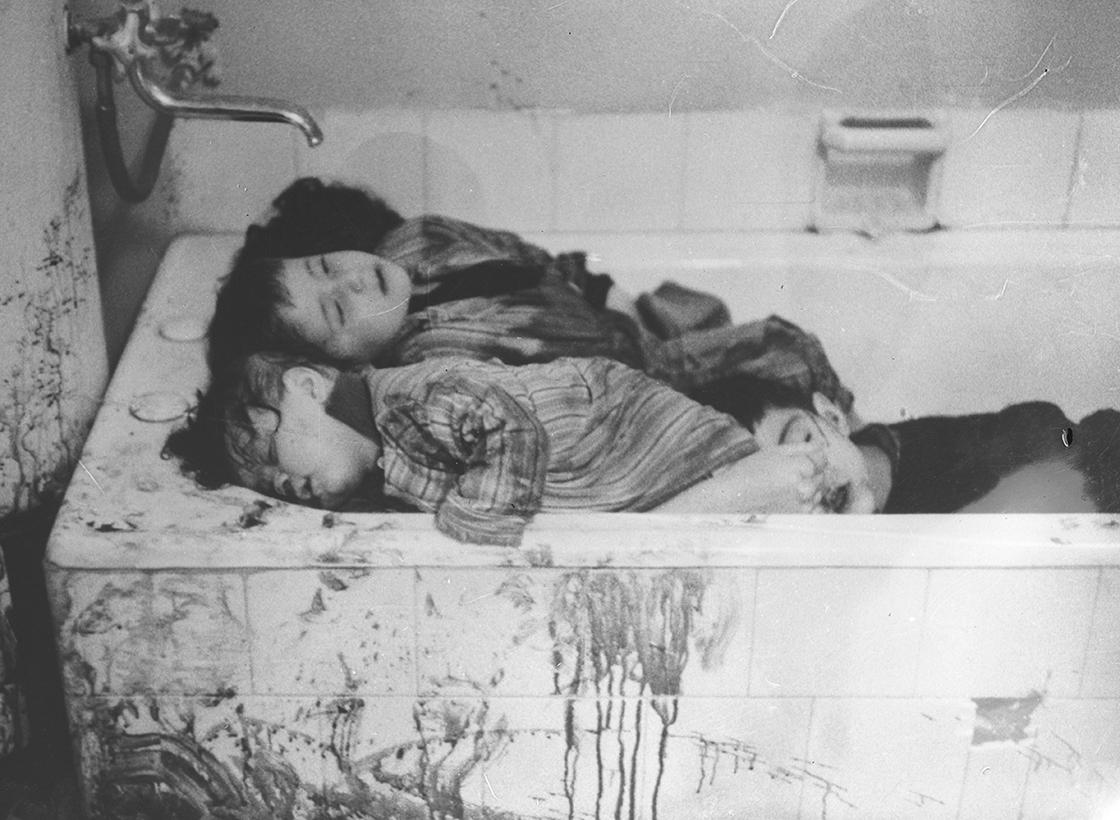
The wife and three children of Major Nihat İlhan were killed in the bathroom. (AA)
The house where the massacre occurred was later converted by its owner Hasan Yusuf Kudum into the “Museum of Barbarity”. A Daily Mail correspondent reported that the bathroom was “drenched in blood like a slaughterhouse” and that a woman and three children were found dead, clutching each other. In the same area, TMT fighter Yılmaz Bora was seriously wounded and taken to Dr. Necdet Ünel’s Adiloğlu Clinic. Turkish sources emphasize that the massacre was planned and executed systematically as part of the Akritas Plan to break down and force the displacement of the Turkish community.
In the Greek Cypriot press (İ Mahi), these events were portrayed as a response to the Turkish Cypriots’ “illegal resistance.” However, the Turkish side stated that the attacks were organized and carried out under state control by EOKA-B, Grivas’s “I Organosi” organization, and other paramilitary groups.
The TMT, established on 1 August 1958, was a clandestine defense organization formed to protect Turkish Cypriots. Prior to Bloody Christmas, the TMT closely monitored Greek Cypriot harassment of Turks and EOKA’s activities.
On 4 December 1963, an attack on the statue of “hero” Markos Drakos at Baf Gate was used by Greek Cypriots as a pretext to launch attacks against Turks and initiate the implementation of the Akritas Plan. In response to the attacks beginning on 21 December, the TMT emerged from underground and moved to defend Turkish areas, retrieving buried weapons in Alevkaya, Bozdağ, and other locations. However, most of these weapons were old and rusted, with limited ammunition.
As a disciplined and loyal organization, the TMT strived to prevent harm to Greek Cypriot civilians. For example, on 9 December 1963, some Turkish Cypriots protested a construction job given to a Greek Cypriot in Kumsal; the TMT intervened and halted the action.
The TMT’s resistance, particularly in Nicosia, successfully thwarted Greek Cypriot plans to seize the city. On 25 December, when Turkish jets flew over Nicosia, Makarios was forced to accept a ceasefire. However, clashes continued until 1974.
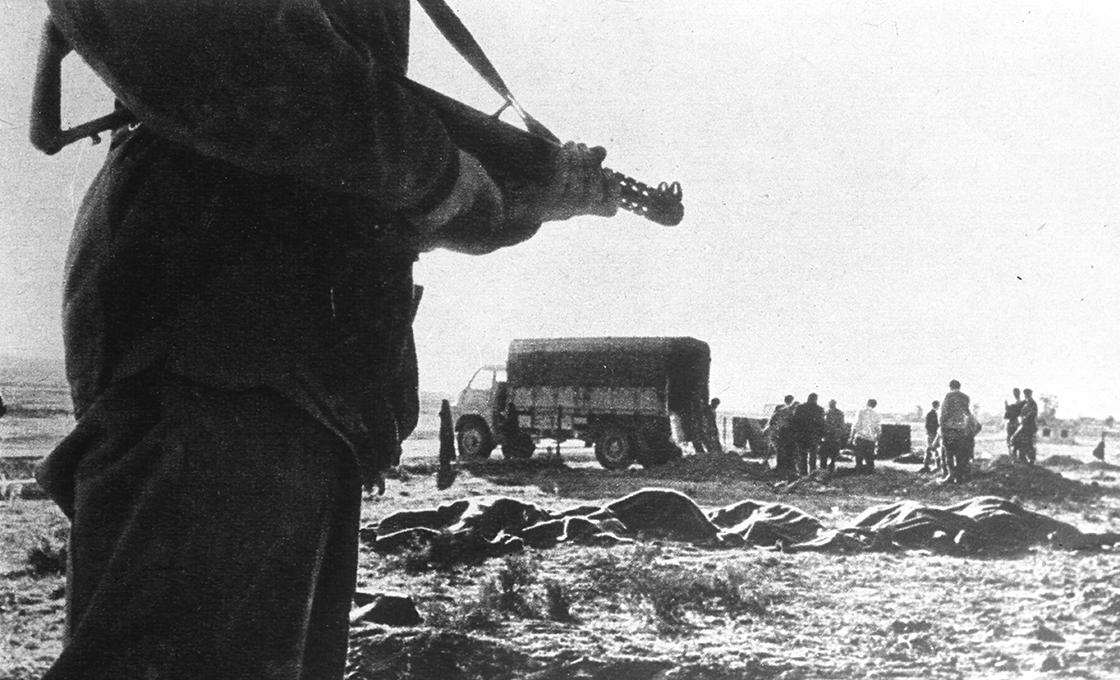
Bloody Christmas (AA)
After Bloody Christmas, Turkish Cypriots were forced to abandon their villages and live in tent cities and schools. The Turkish Red Crescent Society began delivering aid to the island on 28 December 1963. The wounded were evacuated to Ankara, and, on the recommendation of Dr. Necdet Ünel, documents and photographs were smuggled into Türkiye hidden within the bandages of the injured.
Greek Cypriots refused to allow Turkish aircraft to land at Nicosia Airport, but permitted a Red Cross-monitored plane to evacuate the wounded. During this process, the injured were sent to Ankara; some who completed treatment returned to Cyprus on 29 January 1964.
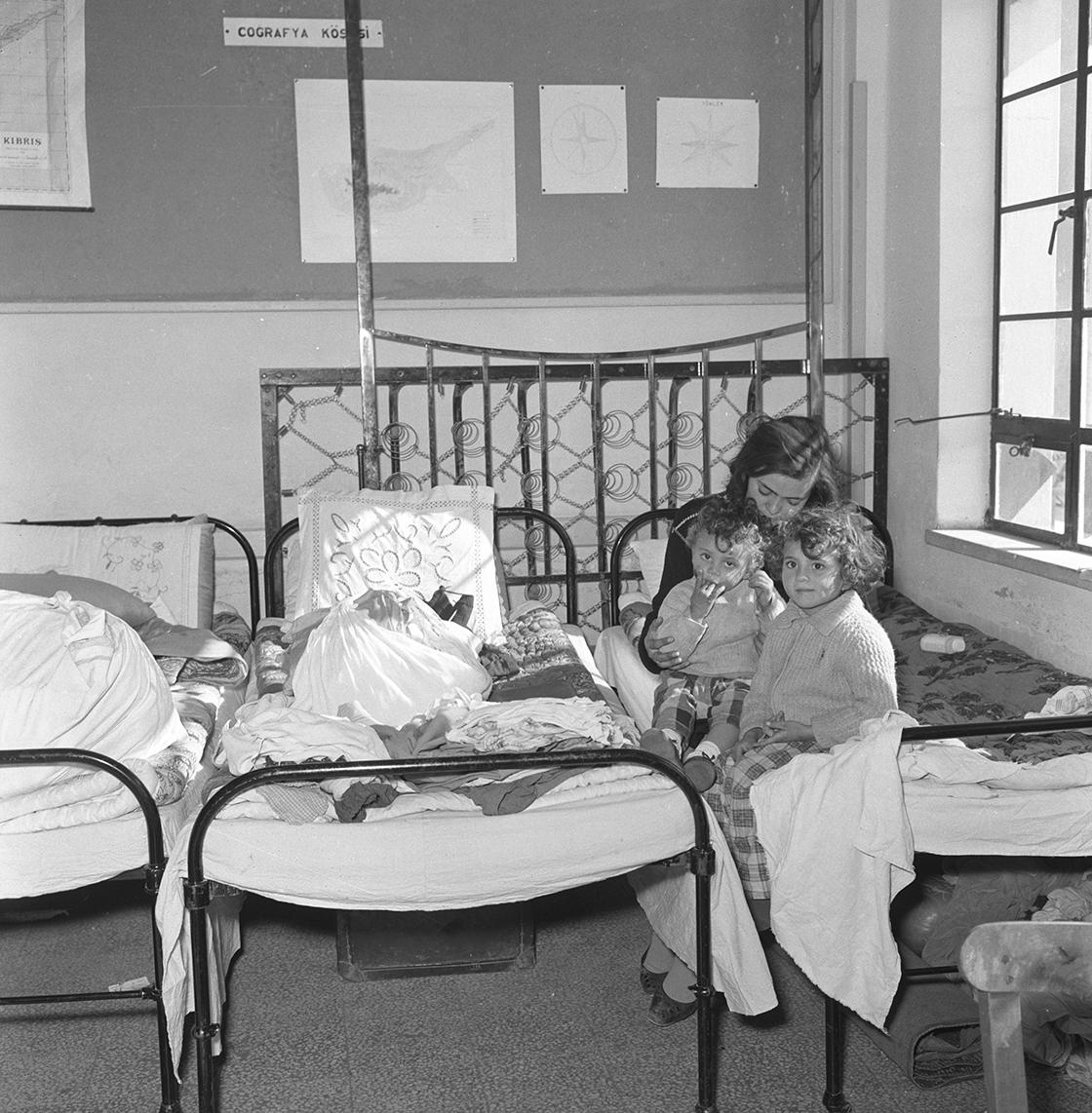
Bloody Christmas (AA)
Bloody Christmas effectively collapsed the Republic of Cyprus and confined the Turkish community to just 3 percent of the island’s territory. At a meeting on 25 December 1963, Makarios and Dr. Fazıl Küçük discussed a ceasefire, but the Greek Cypriot press claimed that Turkish Cypriots were “rebels” continuing violence. Greek Cypriots imposed blockades on Turkish villages to force displacement; 103 villages were emptied and 25,000 to 30,000 people were displaced.
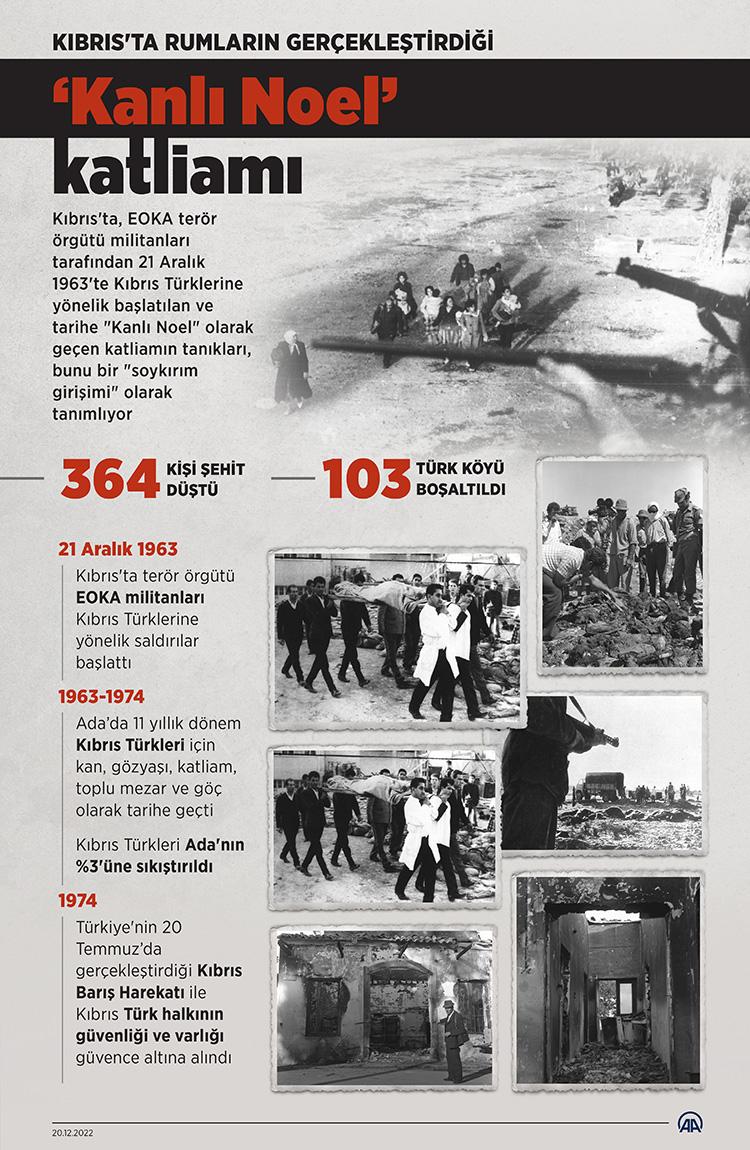
Bloody Christmas (AA)
Türkiye sought to resolve the issue through diplomatic channels, but the UN and other international actors proved ineffective. Neither the United Kingdom nor Greece, as guarantor states, made any meaningful effort to stop the massacres. The Turkish side viewed Türkiye as the only reliable actor. The Bloody Christmas events and subsequent attacks paved the way for Türkiye’s 1974 Cyprus Peace Operation and laid the foundation for the establishment of the Turkish Republic of Northern Cyprus (TRNC).
Bloody Christmas (Turkish Armed Forces)
Alan, Simge. "Yeni Belgelerin Işığında Kıbrıs’ta Kanlı Noel." *Tarih Tetkikleri Dergisi* 2, no. 3 (June 2024): Accessed August 10, 2025.https://tarihtetkikleri.com/index.php/pub/article/view/39/18
Anadolu Ajansı. "KKTC'deki 'Kanlı Noel' katliamının tanıklarına göre yaşanan soykırım denemesiydi." Anadolu Ajansı, December 20, 2022. Accessed August 10, 2025.https://www.aa.com.tr/tr/dunya/kktcdeki-kanli-noel-katliaminin-taniklarina-gore-yasanan-soykirim-denemesiydi/2768002
Anadolu Ajansı. "Kıbrıs'ta Rumların gerçekleştirdiği 'Kanlı Noel' katliamının üzerinden 58 yıl geçti." Anadolu Ajansı, December 20, 2021. Accessed August 10, 2025.https://www.aa.com.tr/tr/dunya/kibrista-rumlarin-gerceklestirdigi-kanli-noel-katliaminin-uzerinden-58-yil-gecti/2452203
Keser, Ulvi. "21 Aralık 1963 Kanlı Noel, Kumsal Faciası ve Bugüne Yansımaları." *Çağdaş Türkiye Tarihi Araştırmaları Dergisi* 11, no. 23 (2011): 93–121. Accessed August 10, 2025.https://dergipark.org.tr/tr/pub/cttad/issue/25244/266937
Keser, Ulvi. "Kıbrıs'ta 21 Aralık 1963 Kanlı Noel'i ve Kızılay." *Çağdaş Türkiye Tarihi Araştırmaları Dergisi* 12, no. 24 (2012): 255-304. Accessed August 10, 2025.https://dergipark.org.tr/tr/pub/cttad/issue/25245/266952
SETA. "58'inci Yıl Dönümünde 'Kanlı Noel' Saldırıları." SETA, December 20, 2021. Accessed August 10, 2025.https://www.setav.org/20-aralik-1963-kibris-kanli-noel-katliami/58inci-yil-donumunde-kanli-noel-saldirilari

Historical Background
Akritas Plan
Beginning of the Bloody Christmas Events
Kumsal Massacre
Role of the Turkish Resistance Organization (TMT)
Turkish Red Crescent Relief Efforts
International Dimension and Consequences