


This article was automatically translated from the original Turkish version.
The Atkins Diet, developed by American cardiologist Dr. Robert C. Atkins and published in 1972, is a low-carbohydrate, high-protein, and high-fat diet. Its primary goal is to induce ketosis by restricting carbohydrate intake and enhancing fat metabolism. Ketosis enables the body to use fat as its primary energy source instead of glucose, leading to rapid weight loss.
The Atkins Diet consists of four phases:
Daily carbohydrate intake is limited to 20 grams. Foods to avoid include fruit, bread, pasta, grains, starchy vegetables, and milk, while cheese and butter are permitted. The aim is to shift the body from using glucose to using fat as fuel, thereby inducing ketosis. The duration varies between 2 and 36 weeks depending on the individual.
Carbohydrate intake is gradually increased, with net carbohydrates calculated as "Total carbohydrates − (fiber + glycerin + sugar alcohols)". The goal is to continue weight loss while maintaining ketosis. Protein and fat intake remain high, and carbohydrate tolerance is determined individually.
This phase begins after a weight loss of more than 10 kilograms. Carbohydrate intake is adjusted to a level that stabilizes body weight. The aim is to maintain weight loss and sustain low-level ketosis.
This phase can be followed long term. Carbohydrate intake is limited according to the individual’s metabolic tolerance. At this stage, the diet is supported by healthy food choices and lifestyle habits.
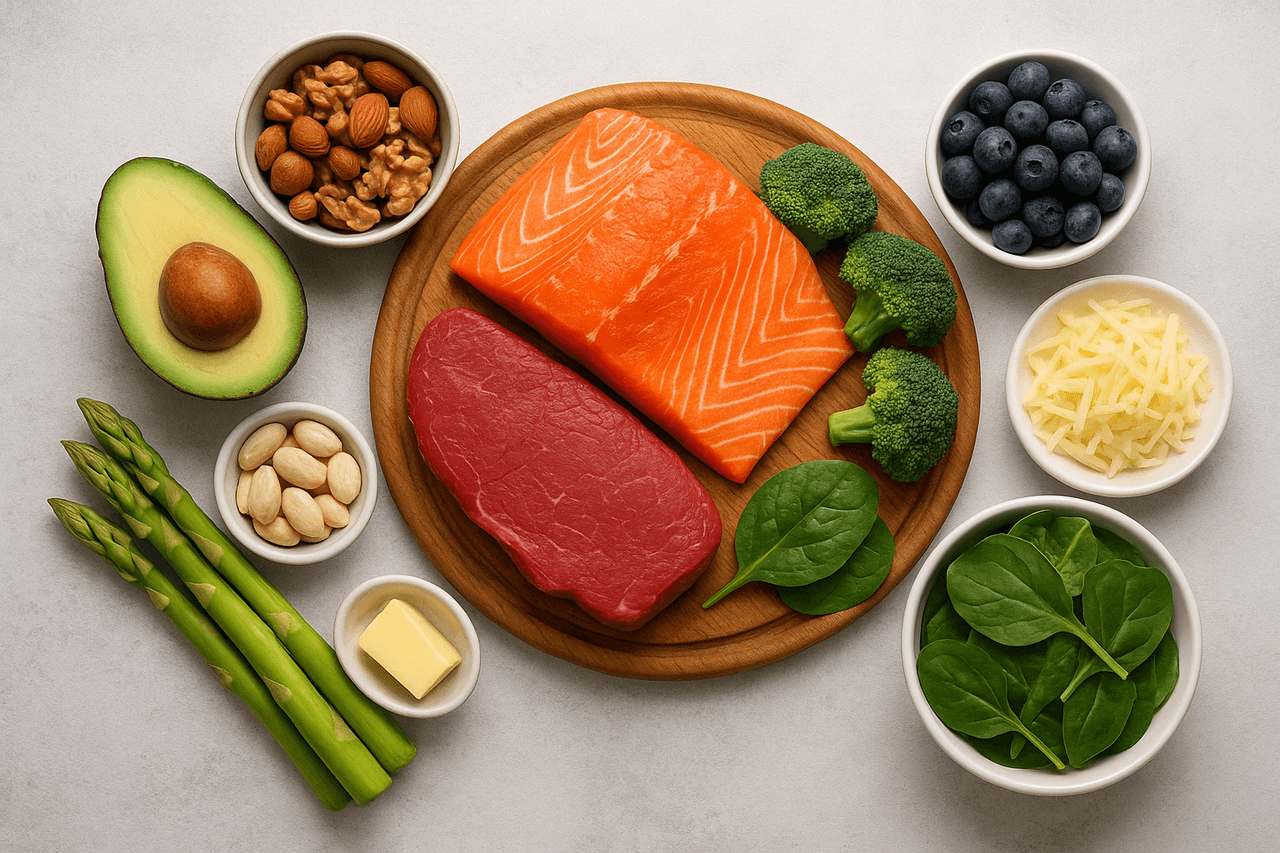
Foods in the Atkins Diet (Generated by Artificial Intelligence)
Low carbohydrate intake increases lipolysis and promotes rapid weight loss through glycogen depletion. The loss of 1 gram of glycogen in muscle is associated with approximately 3 grams of water loss. Carbohydrate deficiency triggers ketone production in the body and shifts metabolism toward fat utilization.【1】
According to the Atkins Diet, protein increases satiety, helps stabilize blood sugar levels, supports calorie burning, and elevates amino acid levels in the blood.【2】
Comparison of Standard Diet and Atkins Diet in Terms of Energy and Nutrient Content (Ercan and Arslan, 2013)【3】
The physiological effects of the Atkins Diet illustrate how it influences energy production, fat and protein metabolism, and fluid-electrolyte balance in the body. These effects may manifest as weight loss, changes in lipid profiles, and certain side effects.
The body uses fat and ketones instead of glucose for energy production. Although rapid energy conversion occurs, some individuals may experience headaches, fatigue, and dizziness.
Rapid weight loss results from glycogen and water depletion. Long-term weight control is achieved through low carbohydrate intake and a high fat-protein balance.
Increases in LDL and total cholesterol may occur. HDL cholesterol levels typically rise, and some studies report reductions in triglycerides. The diet may place additional strain on kidney and liver function.
Fluid and electrolyte balance changes during ketosis. Potassium, sodium, and magnesium levels should be closely monitored.
Due to its low carbohydrate and high fat-protein content, the Atkins Diet has been studied in relation to various diseases.
The Atkins Diet, with its low carbohydrate and high protein content, can lead to rapid reductions in body weight due to the rapid utilization of glycogen stores.【4】Clinical studies have observed that individuals following the Atkins Diet lose more weight compared to those on conventional diets.【5】
The Atkins Diet forces the body to use fat as its primary energy source, inducing ketosis. In this state, the brain uses ketone bodies instead of glucose for energy, which may cause side effects such as nausea, dizziness, constipation, and headaches.【6】
The high fat content in the Atkins Diet may increase free radical production and elevate oxidative stress in organs. Additionally, reduced fiber intake may increase oxidative stress, potentially raising the risk of gastrointestinal and lung cancers.【7】
Individuals following the Atkins Diet often experience reductions in serum triglycerides and increases in HDL cholesterol. However, LDL cholesterol concentration may rise during the first three months of the diet, though it typically returns to baseline levels over the long term. Nevertheless, low-carbohydrate, high-fat diets may elevate LDL cholesterol due to increased saturated fat intake, and the American Heart Association has warned that such diets may increase the risk of heart disease.【8】
High-protein diets often lead to hyperuricemia and hypercalciuria, which may cause joint pain, gout, kidney stones, hypocalcemia, and osteoporosis. In individuals with impaired kidney function, high-protein diets may lead to permanent loss of kidney function.【9】
Side effects may include headache, fatigue, constipation, bad breath, dizziness, and nausea. Due to insufficient intake of vegetables and fruits, the Atkins Diet may fail to meet requirements for fiber, vitamin D, thiamin, pantothenic acid, copper, magnesium, manganese, potassium, and calcium. Consequently, long-term use may result in vitamin and mineral deficiencies. Cardiovascular risks, kidney load, and electrolyte imbalances must be carefully monitored. The diet’s sustainability depends on the individual’s metabolic tolerance and medical supervision.
Individual differences such as age, gender, physical activity, and health status must be considered. The diet should be implemented under medical supervision with regular blood and lipid panel tests. Multivitamin and mineral supplementation may be necessary to prevent nutritional deficiencies. Carbohydrate intake should be derived from natural, unprocessed foods.
The Modified Atkins Diet (MAD) is a dietary therapy used primarily for drug-resistant epilepsy in children and adults. It was first introduced in 2001 as an adaptation of the Atkins Diet for epilepsy treatment and entered the literature in 2003 through a case series of six patients. MAD was developed to reduce some of the strict limitations of the classic ketogenic diet (KD) and features a more flexible implementation protocol.【10】
MAD limits net carbohydrate intake to 20 grams per day. Fiber is subtracted from total carbohydrate counts, but sugar alcohols are restricted. High-fat foods are preferred; protein is neither measured nor restricted, but fat intake remains the priority. Ketogenic formulas, medium-chain triglyceride (MCT) oil, or cream may be added during the first month if needed. Daily fluid intake should be generous, and multivitamin and calcium supplementation are recommended. Medication changes are avoided during the first month, and urinary ketones are regularly monitored.
Warning: The content in this article is provided solely for general encyclopedic informational purposes. This information must not be used for diagnosis, treatment, or medical advice. Before making any decisions regarding health, you must consult a physician or qualified healthcare professional. The author and KÜRE Encyclopedia assume no responsibility for any consequences arising from the use of this information for diagnosis or treatment.
Ceylan, Arzu. "Atkins Diyeti." *Sağlık & Bilim 2023 Beslenme-I Kitabı*, edited by Hatice Baygut, (2023): 63-78. Accessed August 15, 2025.https://www.researchgate.net/profile/Mehmet-Ucar-17/publication/369899415_SAGLIK_BILIM_2023_BESLENME_I/links/6431d82f4e83cd0e2f9d3ae7/SAGLIK-BILIM-2023-BESLENME-I.pdf#page=80
Ercan, Aydan, and Serra, Arslan. "Günümüzdeki Moda Diyetlerin Enerji ve Besin Ögeleri Açısından Değerlendirilmesi." *Beslenme ve Diyet Dergisi* 41, no. 1 (2013): 55-57. Accessed August 15, 2025.https://www.beslenmevediyetdergisi.org/index.php/bdd/article/view/202
Kossoff, Eric H. "The Modified Atkins Diet for Epilepsy: Two Decades of an "Alternative" Ketogenic Diet Therapy." Pediatric Neurology 147, (2023): 82-87. Accessed August 15, 2025.
[1]
Ercan, Aydan, ve Serra, Arslan. "Günümüzdeki Moda Diyetlerin Enerji ve Besin Ögeleri Açısından Değerlendirilmesi." Beslenme ve Diyet Dergisi 41, no. 1. (2013): 55. Erişim 15 Ağustos 2025. https://www.beslenmevediyetdergisi.or
[2]
Arzu, Ceylan. "Atkins Diyeti." Sağlık & Bilim 2023 Beslenme-I Kitabı Ed. Hatice Baygut. (2023): 68. Erişim 15 Ağustos 2025. https://www.researchgate.net/profile/Mehmet-Ucar-17/publication/369899415_SAGLIK_BILIM_2023_BESLENME_I/links/6431d82f4e83cd0e2f9d3ae7/SAGLIK-BILIM-2023-BESLENME-I.pdf#page=80
[3]
Ercan, Aydan, ve Serra, Arslan. "Günümüzdeki Moda Diyetlerin Enerji ve Besin Ögeleri Açısından Değerlendirilmesi." Beslenme ve Diyet Dergisi 41, no. 1. (2013): 55. Erişim 15 Ağustos 2025. https://www.beslenmevediyetdergisi.org/index.php/bdd/article/view/202
[4]
Ercan, Aydan, ve Serra, Arslan. "Günümüzdeki Moda Diyetlerin Enerji ve Besin Ögeleri Açısından Değerlendirilmesi." Beslenme ve Diyet Dergisi 41, no. 1. (2013): 55. Erişim 15 Ağustos 2025. https://www.beslenmevediyetdergisi.org/index.php/bdd/article/view/202
[5]
Arzu, Ceylan. "Atkins Diyeti." Sağlık & Bilim 2023 Beslenme-I Kitabı Ed. Hatice Baygut. (2023): 69-70. Erişim 15 Ağustos 2025. https://www.researchgate.net/profile/Mehmet-Ucar-17/publication/369899415_SAGLIK_BILIM_2023_BESLENME_I/links/6431d82f4e83cd0e2f9d3ae7/SAGLIK-BILIM-2023-BESLENME-I.pdf#page=80
[6]
Arzu, Ceylan. "Atkins Diyeti." Sağlık & Bilim 2023 Beslenme-I Kitabı Ed. Hatice Baygut. (2023): 71. Erişim 15 Ağustos 2025. https://www.researchgate.net/profile/Mehmet-Ucar-17/publication/369899415_SAGLIK_BILIM_2023_BESLENME_I/links/6431d82f4e83cd0e2f9d3ae7/SAGLIK-BILIM-2023-BESLENME-I.pdf#page=80
[7]
Arzu, Ceylan. "Atkins Diyeti." Sağlık & Bilim 2023 Beslenme-I Kitabı Ed. Hatice Baygut. (2023): 71. Erişim 15 Ağustos 2025. https://www.researchgate.net/profile/Mehmet-Ucar-17/publication/369899415_SAGLIK_BILIM_2023_BESLENME_I/links/6431d82f4e83cd0e2f9d3ae7/SAGLIK-BILIM-2023-BESLENME-I.pdf#page=80
[8]
Arzu, Ceylan. "Atkins Diyeti." Sağlık & Bilim 2023 Beslenme-I Kitabı Ed. Hatice Baygut. (2023): 69-71. Erişim 15 Ağustos 2025. https://www.researchgate.net/profile/Mehmet-Ucar-17/publication/369899415_SAGLIK_BILIM_2023_BESLENME_I/links/6431d82f4e83cd0e2f9d3ae7/SAGLIK-BILIM-2023-BESLENME-I.pdf#page=80
[9]
Arzu, Ceylan. "Atkins Diyeti." Sağlık & Bilim 2023 Beslenme-I Kitabı Ed. Hatice Baygut. (2023): 71. Erişim 15 Ağustos 2025. https://www.researchgate.net/profile/Mehmet-Ucar-17/publication/369899415_SAGLIK_BILIM_2023_BESLENME_I/links/6431d82f4e83cd0e2f9d3ae7/SAGLIK-BILIM-2023-BESLENME-I.pdf#page=80
[10]
Eric H., Kossoff. "The Modified Atkins Diet for Epilepsy: Two Decades of an “Alternative” Ketogenic Diet Therapy." Pediatric Neurology 147, (2023): 82-87. Erişim 15 Ağustos 2025. https://www.sciencedirect.com/science/article/pii/S0887899423002217?casa_token=AkvyUByn5WQAAAAA:XpKRWh5e4mQ0vo3kcnbAsENN7TX71qt1kmKfNx0o9wG7cVpPkFg5d7JT3UBJxgeFFqj1hi5oDg

Phases of the Diet
Induction Phase
Weight Loss Phase
Pre-Maintenance Phase
Lifetime Maintenance Phase
Evaluation in Terms of Energy and Nutrients
Physiological Effects
Ketosis and Energy Metabolism
Weight Loss
Lipid and Metabolic Effects
Electrolyte and Fluid Balance
Association with Diseases
Obesity
Metabolic Effects
Oxidative Stress and Cancer
Cardiovascular Diseases
Gout and Kidney Stones
Side Effects and Risks
Clinical Application
Modified Atkins Diet (MAD)
MAD Diet: Application and Protocol