This article was automatically translated from the original Turkish version.
+1 More
Official Name | Arpacı Hayrettin Camii | ||||||||
|---|---|---|---|---|---|---|---|---|---|
Location | Istanbul Province, Eyüpsultan District, Nişanca Neighborhood | ||||||||
Type | Mosque / Prayer Hall | ||||||||
Architectural Period | Ottoman / 16th Century | ||||||||
Founder | Hayreddin Ağa | ||||||||
Construction Material | The building and its minaret are entirely made of wood | ||||||||
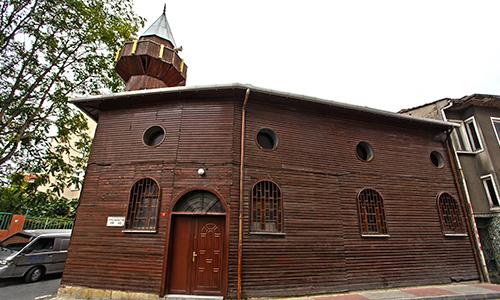
Arpacı Hayrettin Camii is a 16th-century Ottoman religious structure located at the corner where Abdurrahman Şeref Bey Caddesi intersects with Arpacı Hayreddin Sokağı in the Nişanca neighbourhood of Eyüpsultan district, Istanbul.【1】
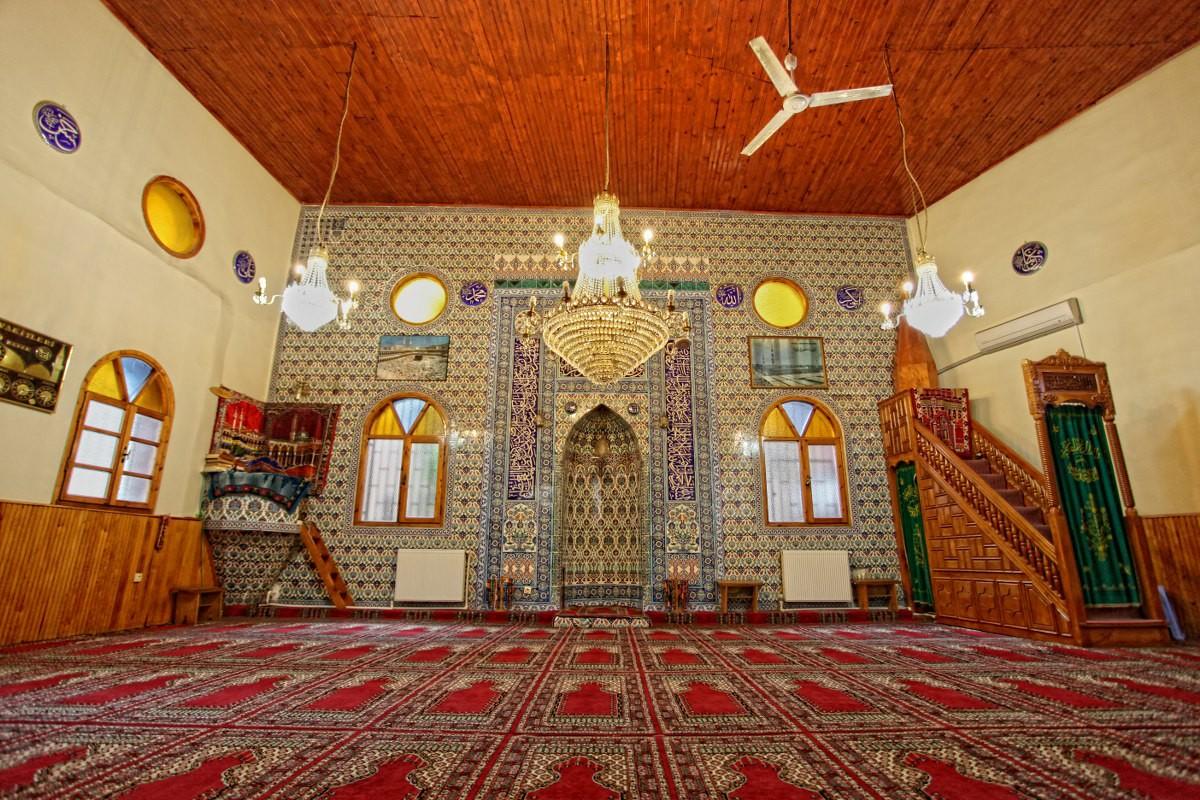
İç Kısım (Eyüpsultan Belediyesi)
It is reported that Hayreddin Ağa, the founder of the structure, was the official responsible for supplying barley to the army during the conquest of Istanbul. The mosque is recorded in Tezkiret'ül-ebniye, a list of works by Mimar Sinan, as "Arpacıbaşı Mescidi in Eyübü’l-Ensari".【2】
This data indicates that the structure was either built or underwent major restoration during the reign of Kanuni Sultan Süleyman. However, it is not listed in the work Fatih Devri Mimarisi. The building underwent restoration in 1319 (1901) and was completely renovated in its current form in 1986.【3】
The current structure has no architectural connection to the period of Mimar Sinan. The main body and minaret of the building were constructed entirely of wood. The mosque’s courtyard has a polygonal plan and the interior ceiling is kept low.【4】
The minaret is of the "asma minare" type, situated at the corner where two roads meet. It features a closed balcony crowned with a fringed dome. The exterior façade includes both rectangular windows and round windows on the upper sections.【5】
The ceiling inside the mosque is made of plain wooden paneling. The qibla wall, including the mihrab, is entirely covered with ceramic tiles. The mihrab itself is richly decorated with ceramic ornamentation, emphasizing the niche’s form. The interior also contains a wooden minbar and a pulpit for sermons. Lighting is provided by a central large chandelier and wall-mounted sconces.【6】
On the side of the mosque, along Arpacı Hayreddin Sokağı, there is a tomb with a wishing window. The epitaph on the tombstone reads: "Fatiha for the soul of the late Arpacıbaşı of Hazreti Ebü’l-Feth, 890 (1456)". However, the author of Hadika notes this site as "unknown", suggesting that the current tombstone was erected at a later date. The structure and its surroundings are currently protected under the cultural inventory.【7】
Culture Inventory. "Arpacı Hayrettin Camii." Accessed July 10, 2026.https://kulturenvanteri.com/yer/arpaci-hayrettin-camii/
Eyüpsultan Belediyesi. "Arpacı Hayrettin Camii." Accessed July 10, 2026.https://www.eyupsultan.bel.tr/tr/main/pages/arpaci-hayrettin-camii/937
[1]
Kültür Envanteri. "Arpacı Hayrettin Camii." Erişim Tarihi 10 Temmuz 2026. https://kulturenvanteri.com/yer/arpaci-hayrettin-camii/
[2]
Eyüpsultan Belediyesi. "Arpacı Hayrettin Camii." Erişim Tarihi 10 Temmuz 2026. https://www.eyupsultan.bel.tr/tr/main/pages/arpaci-hayrettin-camii/937
[3]
Eyüpsultan Belediyesi. "Arpacı Hayrettin Camii."
[4]
Eyüpsultan Belediyesi. "Arpacı Hayrettin Camii."
[5]
Eyüpsultan Belediyesi. "Arpacı Hayrettin Camii."
[6]
Eyüpsultan Belediyesi. "Arpacı Hayrettin Camii."
[7]
Eyüpsultan Belediyesi. "Arpacı Hayrettin Camii."

Official Name | Arpacı Hayrettin Camii | ||||||||
|---|---|---|---|---|---|---|---|---|---|
Location | Istanbul Province, Eyüpsultan District, Nişanca Neighborhood | ||||||||
Type | Mosque / Prayer Hall | ||||||||
Architectural Period | Ottoman / 16th Century | ||||||||
Founder | Hayreddin Ağa | ||||||||
Construction Material | The building and its minaret are entirely made of wood | ||||||||
No Discussion Added Yet
Start discussion for "Arpacı Hayrettin Camii" article
History and Records
Architectural Features
Interior Design
Arpacı Hayrettin Türbesi