


This article was automatically translated from the original Turkish version.
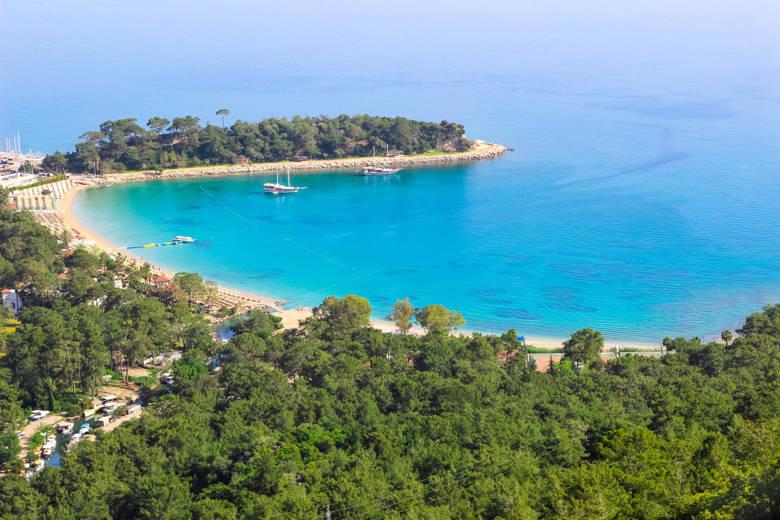
Antalya
Country | Türkiye | ||||||||
|---|---|---|---|---|---|---|---|---|---|
Region | Mediterranean Region | ||||||||
Population | 2,722,103 | ||||||||
Area | 20,723 km² | ||||||||
Climate | Mediterranean climate | ||||||||
Local Government | Governor: Hulusi Şahin, Metropolitan Mayor: Muhittin Böcek | ||||||||
Important Places | Aspendos Side Ancient City Hadrian Gate Alanya Castle Phaselis Bay Temple of Apollo Kaleiçi Myra Ancient City Yivliminare Camisi Olympos Archaeological Site | ||||||||
Area Code(s) | 242 | ||||||||
License Plate Code | 07 | ||||||||
Antalya is a tourism center located on the southern coast of Türkiye along the Mediterranean Sea, known for its natural and cultural heritage. To the north, it is bordered by Burdur, Isparta and Konya; to the east by Karaman and Mersin; and to the west by Muğla. To the south, Antalya shares a coastline with the Mediterranean Sea. The length of Antalya’s coast, known as the “Turkish Riviera,” reaches 630 kilometers. The city is built on a flat terrain approximately 30 meters high, descending perpendicularly into the bay of the same name. The city’s vehicle license plate code is 07. It has 19 districts and a total of 914 neighborhoods.
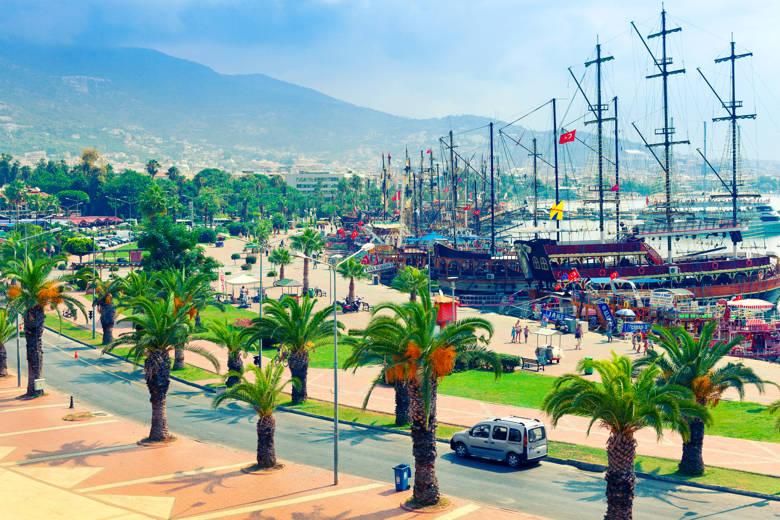
View of the Harbor in Alanya District, Antalya.
In addition to its natural beauty, Antalya is an important tourist center due to its rich historical past. Throughout history, it has been home to various civilizations. Antalya also has a well-developed transportation infrastructure. Thanks to its road, air and sea connections, the city is an accessible destination for both domestic and international tourists, with Antalya Airport playing a key role in international air traffic. Antalya Province, together with its central district, consists of a total of 19 districts including Akseki, Alanya, Finike, Kaş, Kemer, Manavgat and Serik.
Districts, District Governors and Populations of Antalya;
Total Population (2024): 2,722,103
Area: 20,723 km²
Population Density: 130/km²
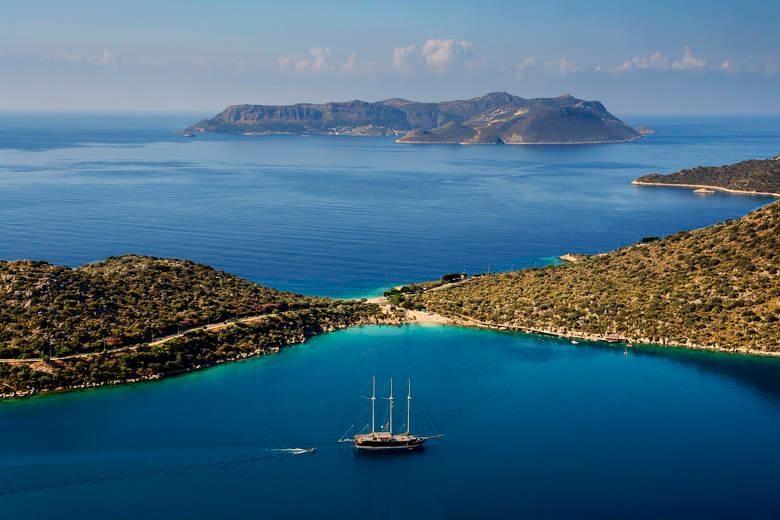
View of the Çukurbağ Peninsula in Kaş District, Antalya, with the Greek island of Meis.
The name Antalya derives from King Attalus II of Pergamon. In antiquity, the city was known as “Attaleia” and later took on various names such as “Atalia” and “Adalia.” The Turks referred to it as “Antâliyye” or “Adalya.” The name, meaning “Land of Attalus,” evolved over time into the modern “Antalya.” After the fall of the Kingdom of Pergamon, the city remained independent for a time before falling under the control of pirates. In 77 BCE, it was incorporated into Roman territory by the Roman commander Servilius Isauricus and served as a naval base for Pompey’s fleet in 67 BCE.
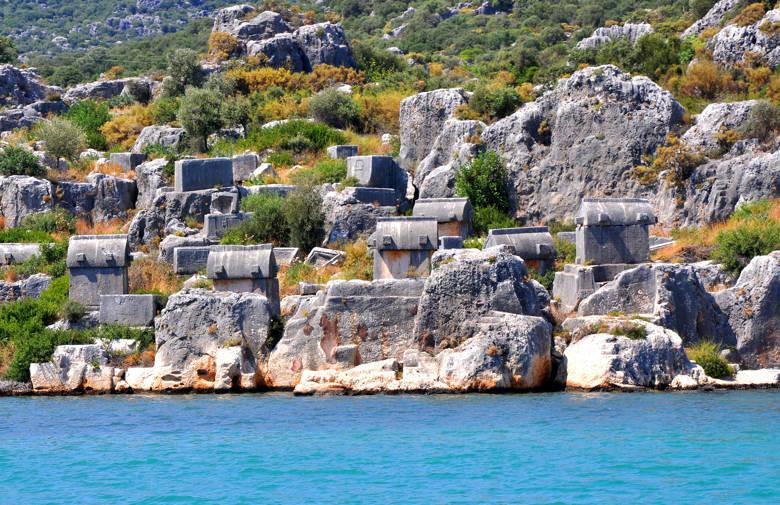
Kekova Ancient City/Antalya.
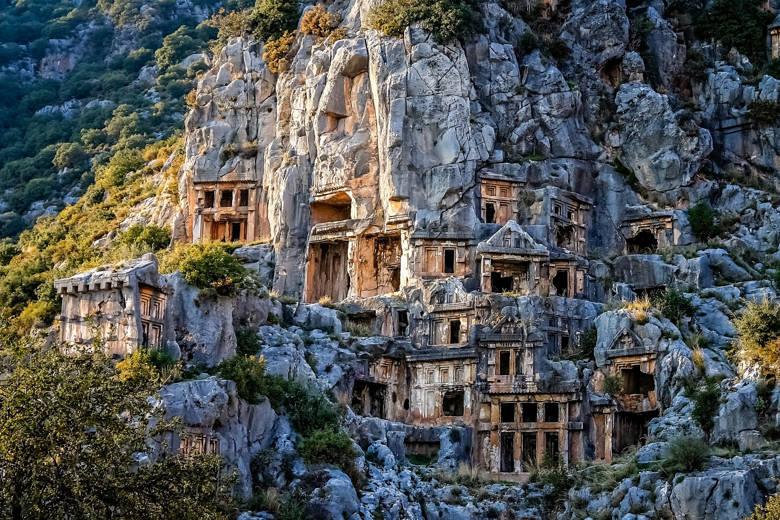
Myra Ancient City, Demre/Antalya.
In 130 CE, Emperor Hadrian’s visit to Attaleia accelerated the city’s development. During the Byzantine period, it became a bishopric center. In 1207, the city was conquered by the Seljuks and incorporated into Turkish lands. In antiquity, the region of Antalya was known as “Pamphylia,” while its western part was called “Lycia.” Archaeological research has revealed human settlements in Antalya dating back approximately 40,000 years. The region came under the rule of various states from around 2000 BCE, including the Hittites, Pamphylians, Lycians, Cilicians, Persians, Alexander the Great and his successors Antigonus, Ptolemy and Seleucus. Later, the city became part of the Kingdom of Pergamon and experienced its golden age under Roman rule, particularly during the 2nd and 3rd centuries CE.
During the Byzantine period, the city became a center for bishoprics. Another important feature of Antalya during Byzantine rule was its status as one of the major and busy ports of the Mediterranean. Due to its strategic location, it was repeatedly targeted by Arab raids from the 7th century onward. Although captured in 860 by the caliph Mutawakkil’s admiral Fazl b. Kārin, this control was not long-lasting. During the Turkish advance into Anatolia, Süleyman Şah captured the city and held it under Seljuk rule until 1103. However, in 1103, Byzantine Emperor Alexios Komnenos successfully recaptured Antalya for the Byzantine Empire. In subsequent years, the city changed hands several times between Byzantines and Turks, experiencing both cultural conflict and cultural enrichment. In 1120, John Komnenos reasserted Byzantine control over the city, reaffirming Byzantine determination to retain Antalya.
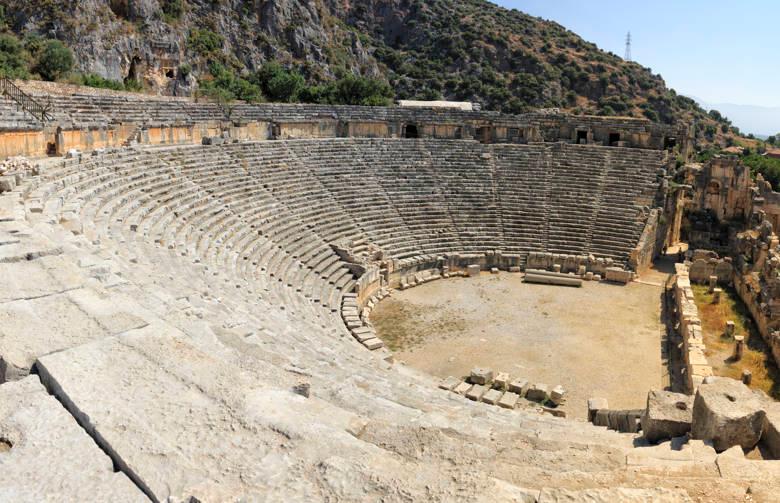
Aspendos Theater/Antalya.
During this period, Antalya served as a vital port for trade ships from Europe and Egypt, and a colony of Muslim merchants existed in the city. During the Second Crusade in 1148, Crusader forces used the city as a base. In 1181, II. Kılıçarslan attempted to incorporate Antalya into Seljuk territory but failed. After the Latin conquest of Constantinople in 1204, Byzantine territories were divided and Antalya passed under the administration of an Italian named Aldobrandini.
I. Gıyaseddin Keyhüsrev attempted to besiege the city but was unable to conquer it due to aid arriving from Cyprus; only a blockade was imposed. On 5 March 1207, with the support of local Greeks dissatisfied with Latin rule, the city came under Seljuk control. Keyhüsrev appointed Mübârizüddin Ertokuş as governor and subaşı. He appointed a judge, imam, muezzin and preacher to organize governance. He also repaired the city walls and commissioned the construction of a mosque, which played a significant role in fostering a positive perception of Seljuk rule among the local population.
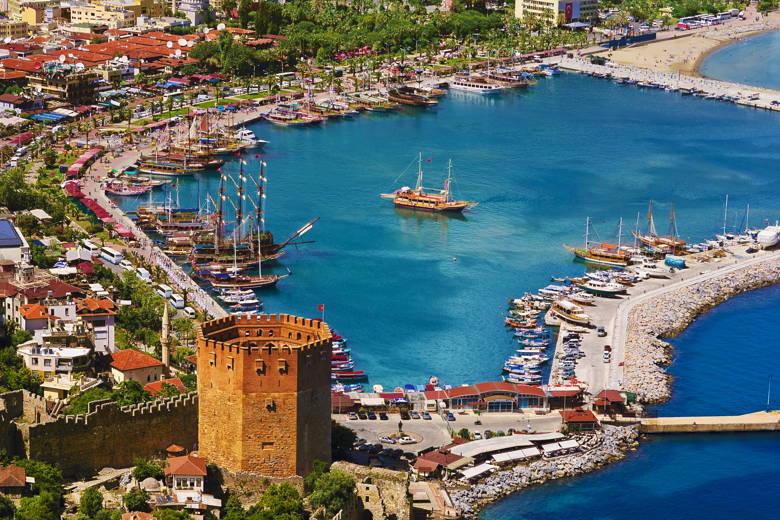
Alanya Castle/Antalya.
After its conquest by the Seljuks, Antalya became one of the settlement areas of the Teke Turkmen and remained the center of the Teke Sanjak under the Ottoman Empire, which was attached to the Anatolia Eyalet. In the late Ottoman period, Antalya was established as an independent sanjak and later attained provincial status during the Republican era.
The district of Kaleiçi, where structures and cultures from civilizations dating from prehistory to the present can be observed in layered form, is one of Antalya’s most important historical areas. Although largely in ruins, the inner and outer city walls visible today are a shared heritage of the Hellenistic, Roman, Byzantine, Seljuk and Ottoman periods. The historic houses in Kaleiçi not only possess architectural value but also illuminate the region’s cultural life. Designated as a SIT (Protected Cultural Heritage Area) by the High Council for Immovable Monuments and Antiquities in 1972, Kaleiçi was awarded the Golden Apple Tourism Award by the International Federation of Travel Writers (FİJET) in 1984 following restoration efforts led by the Ministry of Tourism. Today, Kaleiçi, with its preserved historical fabric, has become a major attraction featuring tourist hotels, restaurants and entertainment venues.
According to current data, the province has an area of 20,723 km². According to 2024 TÜİK data, its population is 2,722,103. The province’s coastline along the Mediterranean Sea extends for 640 kilometers. As a province in the Mediterranean region, Antalya experiences mild and mostly rainy winters and hot, dry summers. Intense rainfall during the summer months contributes to a vibrant and developed agricultural sector. Antalya’s most important natural attractions include its rivers and lakes. These water bodies are integral components of Antalya’s natural and historical landscape and also serve as key tourist destinations. The waters of Antalya are predominantly turquoise in color, attracting millions of domestic and international tourists each year. In 2024, Antalya welcomed a total of 17,278,103 domestic and international tourists, setting a new record in the tourism sector.
The rainy winters in Antalya play a significant role in attracting both local residents and domestic and international tourists to the region’s agricultural and food production. Typical local dishes are listed below.
Antalya Büyükşehir Municipality. (2020). *Fotoğraflarla Antalya.* Accessed February 17, 2025.
Emecen, Feridun. "Antalya." *Türkiye Diyanet Vakfı İslam Ansiklopedisi*. Accessed February 17, 2025.https://islamansiklopedisi.org.tr/antalya
T.C. Antalya Valiliği. (2025). *Antalya Tarihçesi*. Accessed February 17, 2025.http://www.antalya.gov.tr/tarih---nufus-yapisi
T.C. Antalya Valiliği. (2025). *İlçelerimiz*. Accessed February 17, 2025.http://www.antalya.gov.tr/ilcelerimiz
T.C. Antalya Valiliği. *Şehrimiz*. Accessed February 17, 2025.http://www.antalya.gov.tr/sehrimiz
T.C. Kültür ve Turizm Bakanlığı. (2025). *Antalya-Genel Bilgiler*. Antalya İl Kültür ve Turizm Müdürlüğü. Accessed February 17, 2025.
Türkiye Kültür Portalı. (2025). *Antalya-Genel Bilgiler*. Accessed February 17, 2025.https://www.kulturportali.gov.tr/turkiye/antalya/genelbilgiler
Antalya
Country | Türkiye | ||||||||
|---|---|---|---|---|---|---|---|---|---|
Region | Mediterranean Region | ||||||||
Population | 2,722,103 | ||||||||
Area | 20,723 km² | ||||||||
Climate | Mediterranean climate | ||||||||
Local Government | Governor: Hulusi Şahin, Metropolitan Mayor: Muhittin Böcek | ||||||||
Important Places | Aspendos Side Ancient City Hadrian Gate Alanya Castle Phaselis Bay Temple of Apollo Kaleiçi Myra Ancient City Yivliminare Camisi Olympos Archaeological Site | ||||||||
Area Code(s) | 242 | ||||||||
License Plate Code | 07 | ||||||||
Population
History and Culture
Prehistoric Period
Post-Classical Period
Byzantine Empire Period
Turkish/Muslim Rule Periods
Geography and Natural Features
Rivers, Streams and Lakes
Mountains
Tourism and Culture
Tourist Sites
Social and Official Events
Cuisine