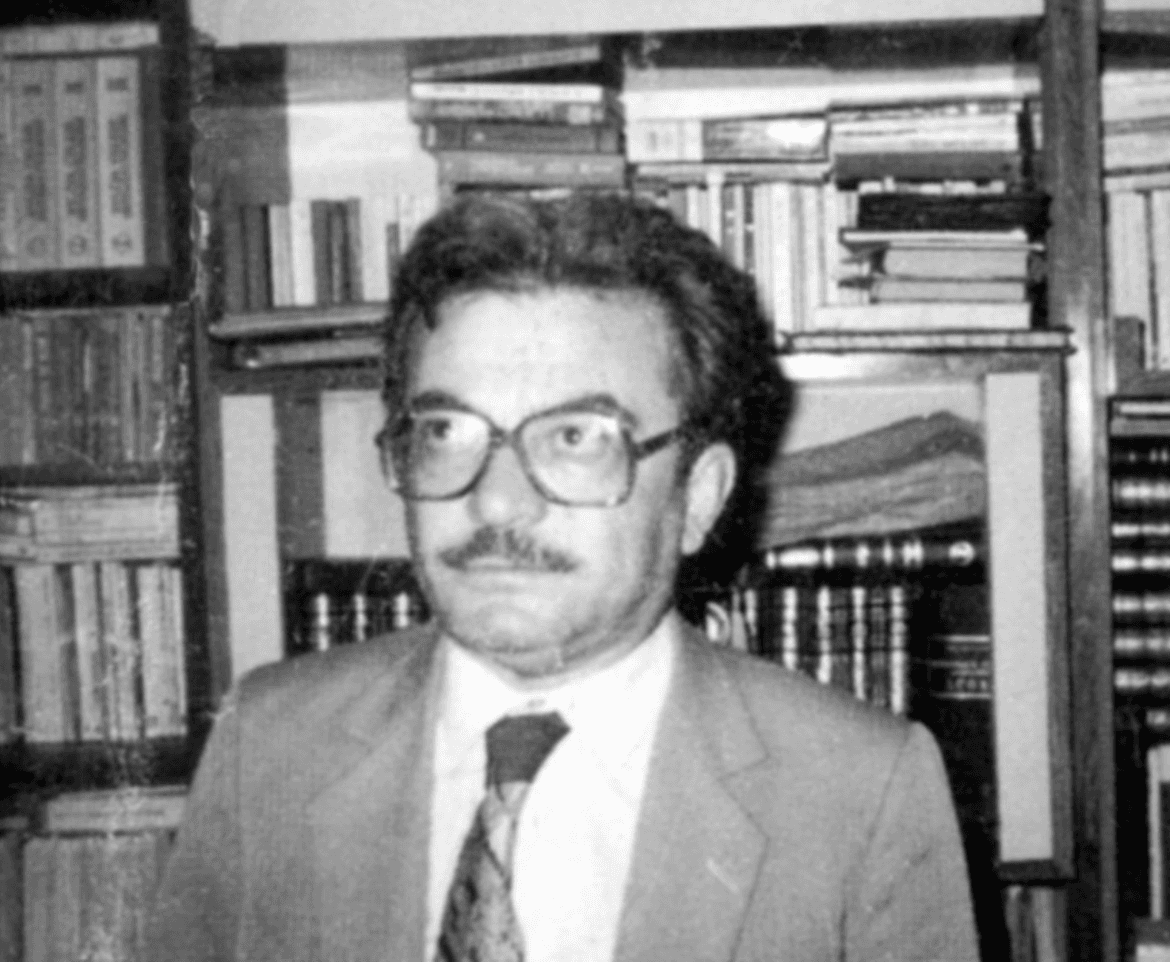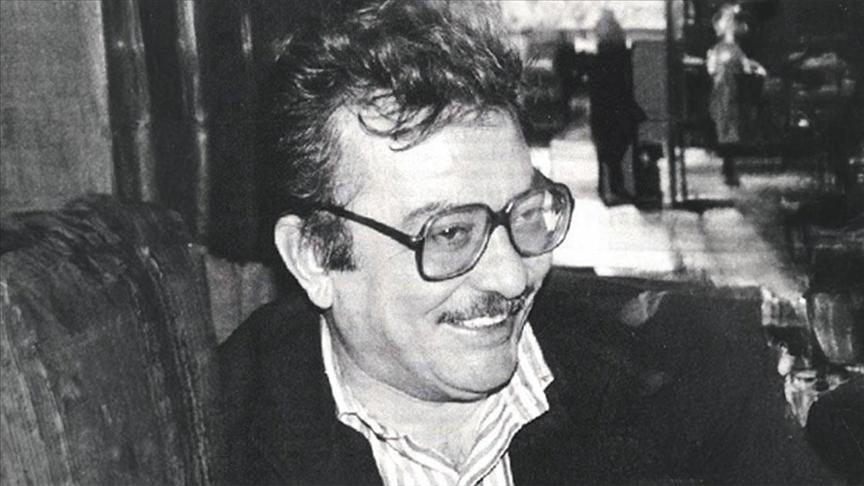
+1 More

Alaeddin Özdenören
Notable works | Sun Fleet On Westernization Loneliness Gradually | ||||||||
|---|---|---|---|---|---|---|---|---|---|
Profession | writer philosophy teacher Poet | ||||||||
Literary movement | Mavera/ Seven Good Men | ||||||||
Date of death | 2003-06-26 | ||||||||
Date of birth | 1940-05-20 | ||||||||
Alaeddin Özdenören (20 May 1940, Kahramanmaraş – 26 June 2003, Balıkesir) was a Turkish poet, writer and philosophy teacher. He was among the leading figures of the literary group that emerged in the Republic period centered on Kahramanmaraş and known as "Yedi Güzel Adam".
Known for his works in poetry, essays, critiques and memoirs, Özdenören left a mark on Turkish cultural life not only through his lyrical and spiritually sensitive poetry but also through his intellectual writings on cultural Westernization, the Islamic world and civilizational issues. He began his literary career alongside his twin brother Rasim Özdenören and played an active role in shaping the canon of the new generation of Islamic thought and literature that developed around the journals Diriliş, Edebiyat and Mavera, of which he was a founding contributor.
Alaeddin Özdenören was born on 20 May 1940 in Kahramanmaraş. He was the son of Hakkı Bey, a civil engineer assigned to Kahramanmaraş from the Eyüpsultan district of Istanbul, and Ayşe Nezahat Hanım, from the established Kısakürek family of Kahramanmaraş. He was the twin brother of the storyteller and writer Rasim Özdenören, who was born on the same day.
The local culture and geographical character of Kahramanmaraş, where he was born and raised, along with his father’s emphasis on preserving his Istanbul identity, linguistic sensibility and literary heritage, were fundamental in shaping Özdenören’s childhood and personality.
Özdenören began his primary education in Kahramanmaraş but continued his schooling in various cities due to his father’s civil service postings. He spent his elementary and middle school years in Malatya and Tunceli. After his father retired, the family returned to Kahramanmaraş.
He continued his secondary education at Kahramanmaraş High School. However, when his family moved back to Istanbul in 1958, he completed his high school education in 1962 at Eyüp High School in Istanbul. In the same year, he enrolled in the Department of Philosophy at the Faculty of Letters of Istanbul University and graduated in 1966.
The philosophy and logic education he received during university formed the foundation for his later theoretical, cultural and literary studies.
After graduating from university, Alaeddin Özdenören embarked on a career as a philosophy teacher and served for many years in educational institutions across Turkey. He taught philosophy at Atatürk High Schools in Kahramanmaraş, Çorum and Mersin. Later, he was transferred to Ankara, where he taught at prestigious institutions such as Gazi Education Institute, Halide Edip Adıvar High School, Başkent High School and Ankara Science High School.
In the later stages of his teaching career, he was appointed as an advisor (chief advisor) to the Ministry of Culture. After retiring from this administrative position, he settled in Balıkesir and continued his literary work there until the end of his life.
His first poem was published in 1958 in the journal Hamle. Throughout his career, he presented his poetry and writings to readers through the journals Diriliş, Edebiyat and Mavera. He also wrote columns for newspapers such as Yeni Devir, Milli Gazete, Zaman and Sağduyu.
Alaeddin Özdenören, known for his consistent literary contributions and original poetic language, was named "Poet of the Year" in 1996 by the Turkish Writers’ Union (TYB) for his poetry collection Yalnızlık Gide Gide, published by Hece Yayınları. This award stands as one of the most significant institutional recognitions of his literary career. Additionally, his poetic writings in literary journals have left a lasting theoretical impact on younger generations of poets.
Özdenören contributed to the construction of a literary school in Turkish literature that united local sensibilities with universal spiritual values.
During his high school years at Kahramanmaraş High School, alongside his twin brother Rasim Özdenören, Cahit Zarifoğlu, Erdem Bayazıt and Mehmet Akif Inan, he formed a literary circle known in Turkish literary history as "Yedi Güzel Adam". Within this group, they revived the previously published journal Hamle and produced art and literature supplements for local newspapers.
His meeting with Sezai Karakoç upon moving to Istanbul marked a historic turning point in the development of his own distinctive voice.
Throughout his writing career, he published poetry and essays in literary journals such as Diriliş, Edebiyat, Kayıtlar, Hece, Edebiyat Ortamı, Yedi İklim, Ay Vakti and Simya. In December 1976, together with Cahit Zarifoğlu, Rasim Özdenören, Erdem Bayazıt and Mehmet Akif İnan, he co-founded the monthly journal Mavera, which continued publication until 1990 and fulfilled the role of an intellectual and literary school in Turkish literature. Özdenören also wrote contemporary, cultural and political columns for newspapers such as Yeni Istiklal, Yeni Devir, Milli Gazete, Zaman, Sağduyu and Tutanak, often using the pseudonym "Bilal Davut".
Alaeddin Özdenören held a deep interest in classical Turkish poetry and philosophical texts. He closely studied the poetic aesthetics of Fuzûlî, Şeyh Galib, Ahmed Hâşim and Sezai Karakoç, arguing in his article "Divan Şiiri Savunma İstemez" that the essence of classical poetry must be reinterpreted through contemporary sensibility. Özdenören, who believed that the artist must reflect his own personality in his work, made the exploration of themes such as childhood innocence, spiritual heart, melancholy and solitude—treated with philosophical and metaphysical depth—his personal preoccupation and way of life.
Özdenören maintained lifelong, extremely close and inseparable friendships with his twin brother Rasim Özdenören and the other members of the "Yedi Güzel Adam" circle. The most pivotal and tragic event in his family life was the loss of his eight-year-old son, Kerem Özdenören, in a traffic accident in 1984. After this loss, the writer withdrew further from social life and adopted a more introspective lifestyle. The profound grief and melancholy he experienced directly deepened the tone of his subsequent poetry and essays, which increasingly centered on themes of sorrow, solitude and death.
After completing his advisory role at the Ministry of Culture and retiring, Alaeddin Özdenören moved to Balıkesir seeking a quieter life. There, while leading a reclusive existence, he maintained his connection with literary journals and continued his writing and poetry from his home in Balıkesir.
Alaeddin Özdenören died on 26 June 2003 in Balıkesir at the age of 63. His funeral was held with ceremonies and he was buried at Balıkesir Başçeşme Cemetery.
Following his death, Alaeddin Özdenören’s contributions to Turkish literature and intellectual life have been examined by various academic and literary circles. Major Turkish literary journals have published special issues and sections dedicated to him. In this regard, Hece (April and September 2003, Issues 76 and 81), Yedi İklim (June–July–August 2003, Issues 159–161) and Ay Vakti (July–August 2003, Issues 34–35) published special sections on Özdenören, offering comprehensive analyses of his poetics and intellectual world.
Özdenören inspired generations of young poets and writers, both through his years as a philosophy teacher and through his contributions to the journals Mavera and Edebiyat, with a lyrical and spiritually infused poetic language. His method of blending the possibilities of the Second New poetry movement—with particular reference to the influence of Cemal Süreya—with traditional and Islamic sensibility provided a methodological model for a new generation of conservative and reflective poets seeking to establish a connection between tradition and modernity in Turkish poetry.
Anadolu Ajansı. "Yedi Güzel Adam’ın Usta Kalemlerinden Alaeddin Özdenören” (İnfografik). Accessed June 23, 2026. https://www.aa.com.tr/tr/info/infografik/40002
Anadolu Ajansı. “Yedi Güzel Adam’ın Usta Kalemlerinden Alaeddin Özdenören Vefatının 21. Yılında Anılıyor.” Accessed June 23, 2026. https://www.aa.com.tr/tr/kultur/yedi-guzel-adamin-usta-kalemlerinden-alaeddin-ozdenoren-vefatinin-21-yilinda-aniliyor/3257521
Kahraman, Alim. “Özdenören, Alaeddin.” *TDV İslâm Ansiklopedisi*. Accessed June 2026. https://islamansiklopedisi.org.tr/ozdenoren-alaeddin.
Tonga, Necati. "Özdenören, Alaeddin." *Türk Edebiyatı İsimler Sözlüğü*. Ahmet Yesevi Üniversitesi, 2019. Accessed June 23, 2026. http://teis.yesevi.edu.tr/madde-detay/ozdenoren-alaeddin
Özger, Mehmet. "Aşkın Hâllerini: Alâeddin Özdenören Şiirinde Aşk." International Journal of Turkish Academic Studies Volume 5, Issue 1, pp. 1–10. Accessed June 23, 2026. https://dergipark.org.tr/tr/download/article-file/3972404
Öztürk, Hüseyin. “Alâeddin Özdenören’de Şiir ve Felsefe.” *Kahramanmaraş Sütçü İmam Üniversitesi Sosyal Bilimler Dergisi* 16, no. 2 (2019): 671–685. https://doi.org/10.33437/ksusbd.609458

Alaeddin Özdenören
Notable works | Sun Fleet On Westernization Loneliness Gradually | ||||||||
|---|---|---|---|---|---|---|---|---|---|
Profession | writer philosophy teacher Poet | ||||||||
Literary movement | Mavera/ Seven Good Men | ||||||||
Date of death | 2003-06-26 | ||||||||
Date of birth | 1940-05-20 | ||||||||
Childhood and Youth
Educational Life
Career Path
Literary Career
Notable Achievements
Key Works and Contributions
Contributions
Works and Projects
Poetry Books
Essays, Critiques and Memoir Books
Personal Life
Hobbies and Interests
Private Life
Final Years and Death
Final Period
Death
Legacy and Influence
Aftermath
Source of Inspiration