This article was automatically translated from the original Turkish version.
+1 More
Official Name | Aşçıbaşı Ahmet Ağa Camii | ||||||||
|---|---|---|---|---|---|---|---|---|---|
Type | Mosque | ||||||||
Location | İstanbul, Eyüpsultan, Nişanca (Otakçılar) Neighborhood | ||||||||
Founder | Aşçıbaşı Mehmet Ağa | ||||||||
Construction Date | 16th century | ||||||||
Foundation Deed Date | Hijri 999 / Gregorian 1589 | ||||||||
Burials | Aşçıbaşı Mehmet Ağa, Pir Ali Efendi, Hafız Mehmet Arif Efendi | ||||||||
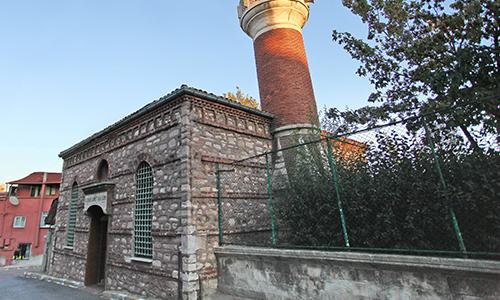
Aşçıbaşı Ahmet Ağa Camii is a place of worship from the 16th century Ottoman period, located at the corner where Aşhane Street intersects with Aşçıbaşı Camii Street, in the Nişanca (Otakçılar) neighborhood of the Eyüpsultan district, Istanbul.【1】
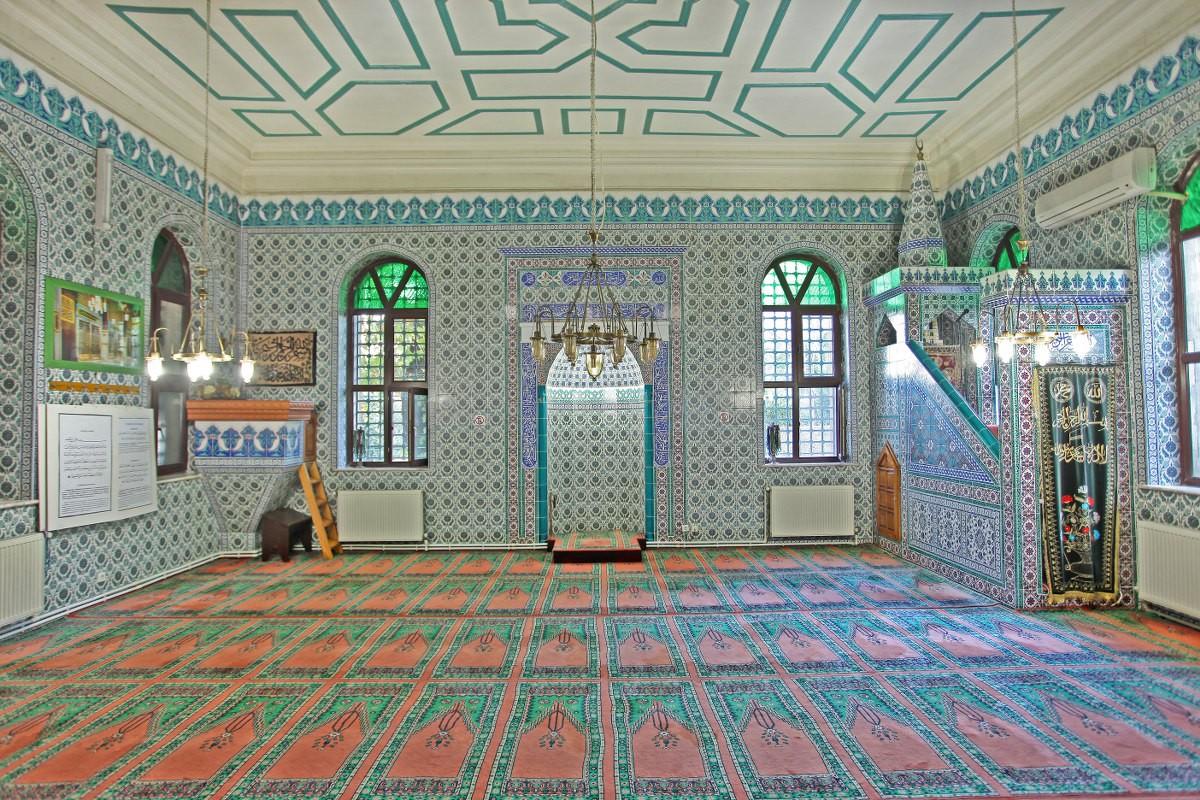
İç Kısım (Eyüpsultan Belediyesi)
The structure was commissioned by Aşçıbaşı Mehmet Ağa. The official foundation deed of the mosque is dated 999 AH (1589 CE), corresponding to the reign of Sultan Murad III.
However, gravestones in the cemetery provide evidence that the building may be older. A gravestone dated 960 AH (1552 CE) belonging to Imam Ömer bin Ahmed, along with other documents referencing the era of Kanuni Sultan Süleyman, suggest that the mosque was likely constructed around 950 AH (1543 CE), during the reign of Kanuni Sultan Süleyman. No construction inscription has survived from the building to the present day.【2】
The mosque has a square plan and was constructed using rubble stone techniques. Its roof consists of a wooden structure covered with clay tiles. Four wooden columns rising from the women’s gallery support the roof construction. The minaret, located on the right side of the mosque, is built of fine brick, and its cupola is made of cut stone. The mihrab is designed with an outward-projecting form.【3】
The interior walls of the building are decorated with ceramic tiles up to a certain height. The ceiling features wooden ornamentation composed of geometric forms and penwork details. The mihrab and minbar are designed in harmony with the ceramic decoration on the surrounding walls.【4】
The founder of the mosque, Aşçıbaşı Mehmet Ağa, is buried in front of the mihrab; however, his unmarked gravestone is located on the side of the minaret, within a walled enclosure. Adjacent to the left wall, facing Aşhane Street, lies the large four-sided gravestone of Pir Ali Efendi, who is believed to have been the trustee of Nurbanu Sultan Camii and to have expanded this mosque in 1588. Additionally, the gravestones of Hadice Sultan Mektebi’s haces and the mosque’s imam, Hafız Mehmet Arif Efendi, are also present in the cemetery.【5】
In the courtyard on the left side of the mosque, there is a well with a pulley system and a small ablution fountain. Behind the mosque, Aktürbe is located, and further ahead lies the grave of the miniaturist Levni, whose gravestone was damaged in 1976. The building is currently accessible and open for worship.【6】
Culture Inventory. "Aşçıbaşı Camii, Eyüpsultan." Accessed July 13, 2026.https://kulturenvanteri.com/yer/ascibasi-camii-eyupsultan/
Eyüpsultan Belediyesi. "Aşçıbaşı Ahmet Ağa Camii." Accessed July 13, 2026.https://www.eyupsultan.bel.tr/tr/main/pages/ascibasi-ahmet-aga-camii/935
[1]
Kültür Envanteri. "Aşçıbaşı Camii, Eyüpsultan." Erişim Tarihi 13 Temmuz 2026. https://kulturenvanteri.com/yer/ascibasi-camii-eyupsultan/
[2]
Eyüpsultan Belediyesi. "Aşçıbaşı Ahmet Ağa Camii." Erişim Tarihi 13 Temmuz 2026. https://www.eyupsultan.bel.tr/tr/main/pages/ascibasi-ahmet-aga-camii/935
[3]
Eyüpsultan Belediyesi. "Aşçıbaşı Ahmet Ağa Camii."
[4]
Eyüpsultan Belediyesi. "Aşçıbaşı Ahmet Ağa Camii."
[5]
Eyüpsultan Belediyesi. "Aşçıbaşı Ahmet Ağa Camii."
[6]
Eyüpsultan Belediyesi. "Aşçıbaşı Ahmet Ağa Camii."

Official Name | Aşçıbaşı Ahmet Ağa Camii | ||||||||
|---|---|---|---|---|---|---|---|---|---|
Type | Mosque | ||||||||
Location | İstanbul, Eyüpsultan, Nişanca (Otakçılar) Neighborhood | ||||||||
Founder | Aşçıbaşı Mehmet Ağa | ||||||||
Construction Date | 16th century | ||||||||
Foundation Deed Date | Hijri 999 / Gregorian 1589 | ||||||||
Burials | Aşçıbaşı Mehmet Ağa, Pir Ali Efendi, Hafız Mehmet Arif Efendi | ||||||||
History and Foundation Deed
Architectural Features
Interior Space and Decoration
Cemetery and Surrounding Elements