


This article was automatically translated from the original Turkish version.
+1 More
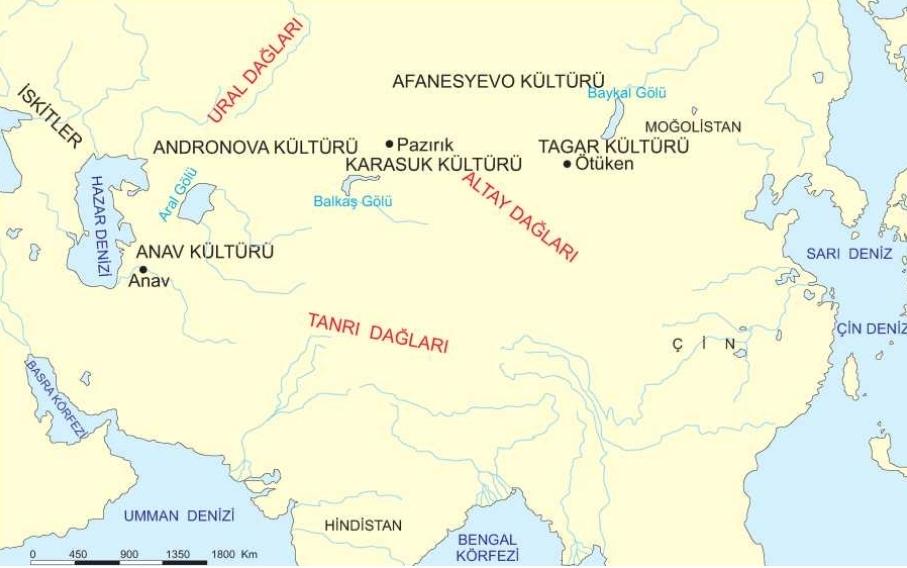
Afanasievo Culture
Geographical Location | Southern Siberia and the Altai Mountains region | ||||||||
|---|---|---|---|---|---|---|---|---|---|
History | 3500–2500 BCE | ||||||||
The Afanasyevo Culture is an archaeological culture that flourished between 3500 and 2500 BCE in southern Siberia and the Altai Mountains region. This culture is particularly associated with early Indo-European communities and holds significant historical importance as it contains some of the earliest evidence of steppe nomadic life. Its advancements in horse domestication and metallurgy are especially notable.
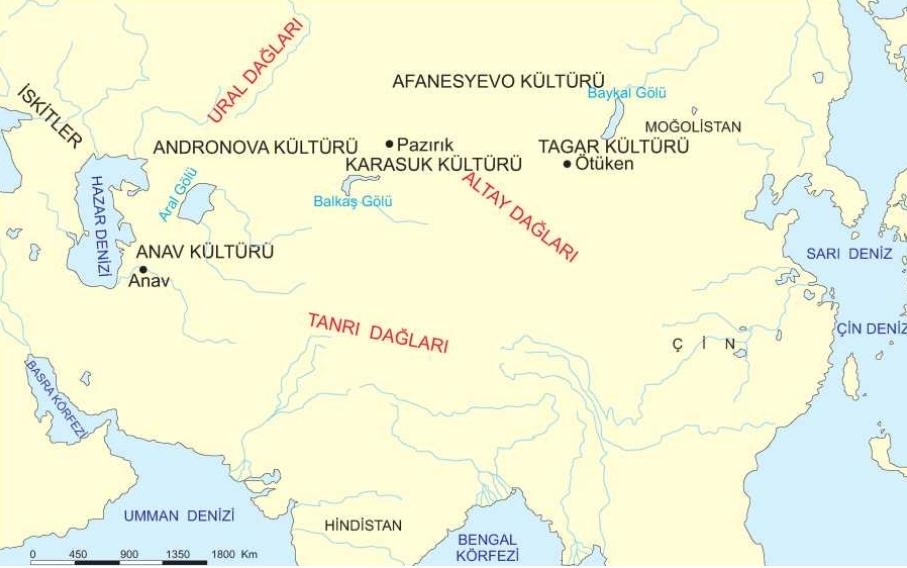
Afanesyevo culture - Geographical location
The Afanasyevo Culture was discovered in the early 20th century by Russian archaeologists and was first identified through excavations in the Afanasyevo region of Siberia. The culture extended over a vast area from the Altai-Sayan Mountains to the Yenisey River basin. Excavations revealed stone cairn burials (kurgans), copper and bronze artifacts, ceramics decorated with geometric patterns, and various remains related to animal husbandry.
The Afanasyevo people followed a semi-nomadic lifestyle characteristic of steppe cultures. Animal husbandry, especially the raising of sheep, goats, cattle, and horses, formed the basis of their subsistence. DNA analyses indicate that the Afanasyevo communities originated from Western Eurasia and were related to early Indo-European populations. Hunting and fishing also played an important role in their economy.
The most significant archaeological findings of the Afanasyevo Culture include:
Burial Structures: The Afanasyevo people buried their dead in stone cairn kurgans. The graves were typically single-person burials, accompanied by copper axes, knives, ceramic vessels, and animal bones.
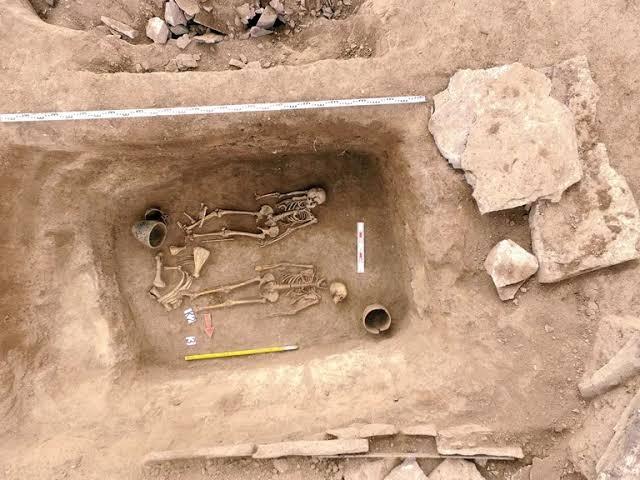
Afanesyevo culture - burial structures
Metallurgy: The Afanasyevo communities achieved a high level of metallurgical skill, producing tools from copper and bronze. Copper axes, knives, and ornaments are among the most commonly found metal artifacts.
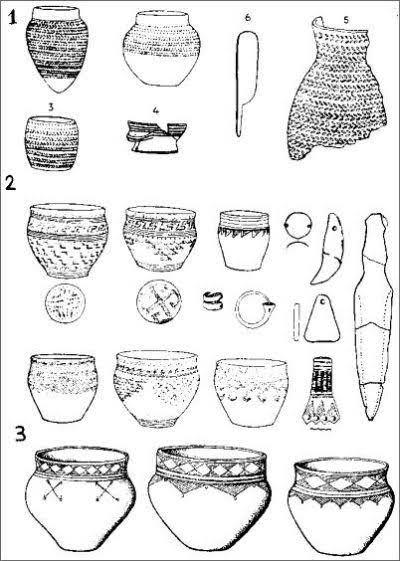
Afanesyevo culture - artifacts
Ceramic Production: The culture’s ceramics were handmade and decorated with geometric patterns. These vessels generally consisted of simple, functional forms.
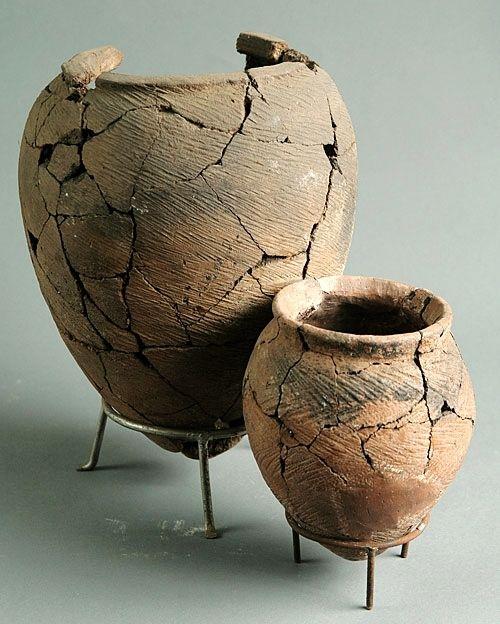
Afanesyevo culture - Ceramics
Although the Afanasyevo Culture is not directly linked to the Turks, it has been suggested that the Andronovo Culture, which succeeded it, may have been connected to the ancestors of the Turks. In particular, the animal husbandry and nomadic lifestyle of the Andronovo Culture formed the foundation for the subsequent steppe societies.
The Afanasyevo Culture represents one of the earliest examples of nomadic societies in the Eurasian steppes. Later steppe cultures such as the Andronovo, Karasuk, and Tagar cultures were influenced by it and became part of the cultural continuity across the Eurasian steppes. The Western Eurasian origins of the Afanasyevo people indicate that this region served as an important center for Indo-European migrations.
Durmuş, İsmail. “Maddi Kalıntılara Göre Doğu Avrupa’dan Türkistan’a Kültürel Etkileşimler.” *Journal of Asian Studies* 5, no. 3 (2018): 66–75. Accessedhttps://dergipark.org.tr/en/download/article-file/1070294
Mallory, J.P. “ALTAYLAR: Türk Atlı Bozkır Uygarlığının Doğuşu.” *21. Yüzyıl Türkiye Enstitüsü*, 2022. Accessedhttps://21yyte.org/tr/merkezler/altaylar-turk-atli-bozkir-uygarliginin-dogusu.
Yelken, Kenan. “Orta Asya Türk Kültürü: Anav, Afanasyevo ve Andronovo Kültürleri.” Kenan Yelken Resmi Web Sitesi, 2019. Accessedhttps://www.kenanyelken.com/anav-afenesyova-andronova-kulturu
Ögel, Bahaeddin. *Türk Kültür Tarihine Giriş*. Ankara: Kültür Bakanlığı Yayınları, 1984. Accessedhttps://dergipark.org.tr/tr/download/article-file/469656
Özkan, Yusuf. “Türk Etnogenezi Meselesinde Neolitik-Tunç ve Demir Çağları’ndaki Kültürler Üzerine Bir Değerlendirme.” Academia.edu, 2020. Accessedhttps://www.academia.edu/75234054/T%C3%BCrk_Etnogenezi_Meselesinde_Neolitik-Tun%C3%A7_ve_Demir_%C3%87a%C4%9Flar%C4%B1_ndaki_K%C3%BClt%C3%BCrler_%C3%9Czerine_Bir_De%C4%9Ferlendirme.

Afanasievo Culture
Geographical Location | Southern Siberia and the Altai Mountains region | ||||||||
|---|---|---|---|---|---|---|---|---|---|
History | 3500–2500 BCE | ||||||||
Discovery and Research
Lifestyle
Archaeological Findings
Afanasyevo Culture and the Turks
Significance and Legacy