

+1 More

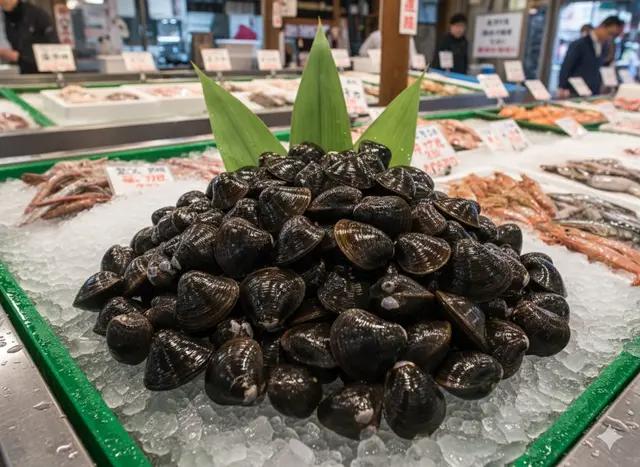
Abashirikosan Shijimigai ( Created with Artificial Intelligence. )
Geographical Indication Name | Abashirikosan Shijimigai | ||||||||
|---|---|---|---|---|---|---|---|---|---|
Class | Fish and Shellfish | ||||||||
Production Area | Abashiri City and Ozora Town, Abashiri District | ||||||||
Type(s) | Yamato Shijimi (Corbicula japonica) | ||||||||
Applicant | Nishi-Abashiri Fishing Cooperative | ||||||||
Abashirikosan Shijimigai is the trade name for Yamato shijimi (Corbicula japonica), a large-sized fresh/saltwater clam native to Hokkaido Prefecture. These clams are typically grown for seven years or longer in the climate of Hokkaido's Abashiri region. Prices are traded at approximately 1.5 times the national average for brackish water clams.
Abashirikosan shijimigai are Yamato shijimi clams that inhabit Lake Abashiri and parts of the Abashiri River in Hokkaido Prefecture. Lake Abashiri is a brackish water lake fed by the Abashiri River, which originates in Mount Ahorodake and flows through the mountains and plains to join the Bihoro River. The lake is Hokkaido's largest freshwater clam production area, representing over 90 percent of Hokkaido's catch in recent years. The production area encompasses Abashiri City and Ozora Town in Abashiri District.
101 Abashirikosan Shijimigai (Youtube-地理的表示産品情報発信サイト)
Mussels are caught by dredging the bottom of water bodies using a hydraulic jet scoop called "joren" in Japanese. Harvested mussels are mechanically sorted onboard the boat by shell length; small stones and mussels with damaged shells are also removed by visual inspection. After unloading from the boats, they undergo another sorting process for empty shells and additional quality control. Shipping standards require shell length (the widest part of the shell) to be 14 mm or more, and the total allowable catch to fall within the range established by the Nishi-Abashiri Fisheries Cooperative. To improve quality and resource management, a size restriction was introduced in 1994 with the goal of harvesting only large brackish-water mussels.
Cooperative sales began in 1972 and the Abashirikosan Shijimigai distribution system was established. Beginning in 1985, research institutes and administrative agencies conducted surveys on the abundance and growth status of brackish water mussels. The Nishi-Abashiri Fisheries Cooperative uses these survey results to develop an annual production plan. Furthermore, by adhering to annual and daily allowable catch standards, the annual catch has remained stable at approximately 800 tons. As of 2019, there were 38 Abashirikosan Shijimigai mussel fishers, with an annual catch of approximately 606 tons.
Information Website on Japan Geographical Indication Products. '"Abashirikosan Shijimigai" Information Website on Japan Geographical Indication Products. Last access date: 23 October 2025. https://pd.jgic.jp/en/register/entry/101.html
地理的表示産品情報発信サイト. "101 Abashirikosan Shijimigai" Youtube. Accessed 23 October 2025. https://www.youtube.com/watch?v=C1Y3eeasfyQ

Abashirikosan Shijimigai ( Created with Artificial Intelligence. )
Geographical Indication Name | Abashirikosan Shijimigai | ||||||||
|---|---|---|---|---|---|---|---|---|---|
Class | Fish and Shellfish | ||||||||
Production Area | Abashiri City and Ozora Town, Abashiri District | ||||||||
Type(s) | Yamato Shijimi (Corbicula japonica) | ||||||||
Applicant | Nishi-Abashiri Fishing Cooperative | ||||||||
No Discussion Added Yet
Start discussion for "Abashirikosan Shijimigai" article
Production Area and Features
Harvesting and Quality Control
Resource Management and History
This article was created with the support of artificial intelligence.