

+1 More

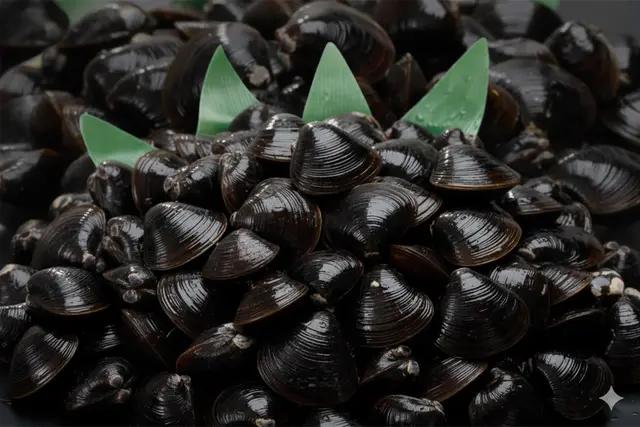
Jusankosan Yamato Shijimi (Generated by Artificial Intelligence)
Geographical Indication Name | Jusankosan Yamato Shijimi | ||||||||
|---|---|---|---|---|---|---|---|---|---|
Class | Fish and Shellfish | ||||||||
Production Area | Aomori | ||||||||
Special Environment | Lake Jusanko | ||||||||
Applicant Organizations | Jusan Fisheries Cooperative, Shariki Fisheries Cooperative | ||||||||
Jusankosan Yamato Shijimi is a variety of Yamato shijimi (Asian oyster) grown in Lake Jusanko, Aomori Prefecture, Japan. This seafood is registered under Japan's Geographical Indications (GI) system and is protected by registration number 23.
Yamato shijimi is obtained by dredging the lake bottom using fishing nets with a mesh size of 12 mm or larger. The catch is sifted by machine or by hand to ensure that any smaller than the minimum size for transport are released back into the lake. Dead shellfish are separated by sight and sound, and the remaining products are graded according to quality.
Recordings of shijimi catches in Lake Jusanko date back to Aomori Prefectural fisheries research documents from 1891. Since the 1980s, operational restrictions on catch duration, area, and quantity have been implemented based on the results of research institutes' annual resource surveys. To ensure year-round availability, even during winter when fishing restrictions are in place or the lake freezes over, shijimi caught in season are transported to controlled areas and raised.
About Jusankosan Yamato Shijimi (地理的表示産品情報発信サイト)
Jusankosan Yamato Shijimi is marketed not only for its high quality standards, but also for its uninterrupted supply throughout the year. The best time for oysters is during the spawning season in July and August, when the shells are most developed and the water is most succulent. Oysters caught in the winter months, on the other hand, firm up their flesh and develop a more pronounced flavor. The product is in demand both within Aomori Prefecture and beyond. Long a favorite local product, this oyster is known as the "city's shellfish" in Goshogawara City. It's popular in dishes like ramen, soup, or sautéed in butter; it's also available in processed food forms like frozen shijimi, extracts, or powders.
The production area for this product includes Goshogawara City (including Lake Jusanko) in Aomori Prefecture, Tsugaru City, and Nakadomari Town in Kitatsugaru District. Lake Jusanko is the terminus of the Iwaki River, which originates in the Shirakami Mountains and is listed as a World Natural Heritage Site. The shallow, brackish lake, only one meter deep, is located where the river flows through the Tsugaru Plain and into the Sea of Japan. The lake has a consistent salty environment year-round and a sandy sediment containing less than 50% mud. Dissolved oxygen levels are maintained at 3.5 mg/L to support oyster survival.
Information Website on Japan Geographical Indication Products. 'Jusankosan Yamato Shijimi'. Information Website on Japan Geographical Indication Products. Accessed October 25, 2025. https://pd.jgic.jp/en/register/entry/23.html.
Ministry of Agriculture, Forestry and Fisheries (Japan). “GI 登録産品一覧 – s23.” MAFF.go.jp. Accessed October 25, 2025. https://www.maff.go.jp/e/policies/intel/gi_act/register/s23.html.
地理的表示産品情報発信サイト" 23 Jusankosan Yamato Shijimi." April 19, 2019.Youtube Video. 1:35. Accessed October 25, 2025. https://www.youtube.com/watch?v=c18dOvSTshc&t=22s.

Jusankosan Yamato Shijimi (Generated by Artificial Intelligence)
Geographical Indication Name | Jusankosan Yamato Shijimi | ||||||||
|---|---|---|---|---|---|---|---|---|---|
Class | Fish and Shellfish | ||||||||
Production Area | Aomori | ||||||||
Special Environment | Lake Jusanko | ||||||||
Applicant Organizations | Jusan Fisheries Cooperative, Shariki Fisheries Cooperative | ||||||||
No Discussion Added Yet
Start discussion for "Jusankosan Yamato Shijimi" article
History and Management
Features and Usage
Production Area and Geographical Features
This article was created with the support of artificial intelligence.