`space-technologies` Related Article Results
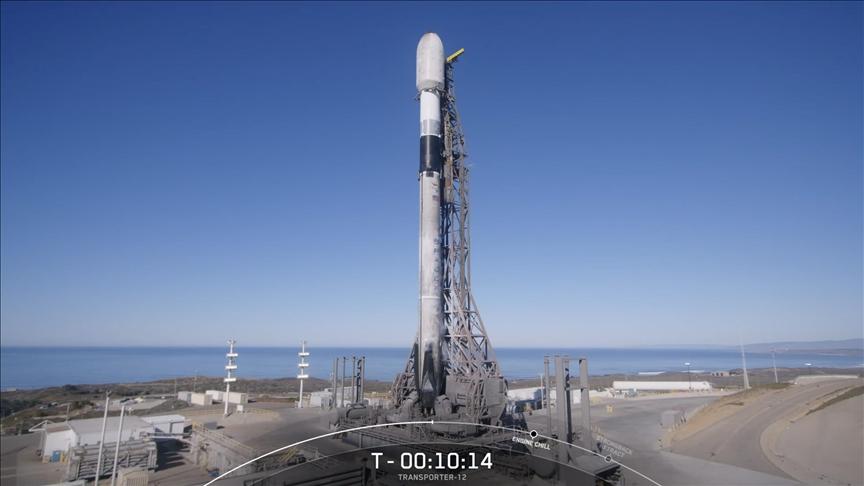
Low Earth Orbit (LEO)
Low Earth Orbit (LEO) is a region of space located at a distance of approximately 160 km to 2,000 km from the surface of World. This region is a critical area for space research and communication like modern space missions. Due to its proximity to Earth, LEO enables satellites to establish and maintain their orbits more efficiently and operate with greater effectiveness. Satellites launched into space operate in different orbits depending on their intended applications. " image-element-format="
EN
Doğan Eşkinat
 Al
AlAluminum Alloys in Aviation and Space Technologies
Aluminum alloys play a critical role in the aerospace industry. Aluminum has become an indispensable material in these sectors due to its lightness high strength and corrosion resistance like. In aviation it is used in airplane structures engine components and interior fittings while in space technologies it is frequently preferred for rocket engines spacecraft and structural elements. Key Properties of Aluminum Alloys Aluminum is a metal known for its lightness and high durability. However pure
EN
Mehmet Eren Yolcu

Tekever
Tekever is a defense and technology company founded in Portugal in 2001. The company operates in the fields of unmanned aerial vehicles (UAVs), AI-powered data processing systems, and space technologies. Headquartered in Lisbon, Tekever also has operational offices in the United Kingdom and France. The company is known for its dual-use systems developed for both civilian and military applications. Its UAV systems are used by European Union and UK institutions for border security, environmental m
EN
Ömer Said Aydın

Bilge Demirköz
Bilge Demirköz is a Turkish physicist renowned for her pioneering research in cosmic rays, space radiation, and astroparticle physics. A faculty member in the Department of Physics at Middle East Technical University (METU), Demirköz has made significant scientific contributions at both national and international levels. She is particularly recognized for her work on high-energy space particles, dark matter research, and space technologies. Life and Education Bilge Demirköz’s interest in science
ENSeviye Nur Gönülölmez
T3T3 Podcast | Hasan Hüseyin Ertok – Service from Space to Earth
On the T3 Podcast, we examine the conversation titled "Service from Space to Earth" with Hasan Hüseyin Ertok, General Manager of Türksat. The discussion explores Türksat’s rich history, ongoing critical projects, and its vision for younger generations within the framework of the National Technology Initiative. The History and Development of Türksat Türksat’s experience in satellite communications dates back to the 1970s during the PTT era. This expertise was solidified with the launch of the fir
EN
T3 Akademi
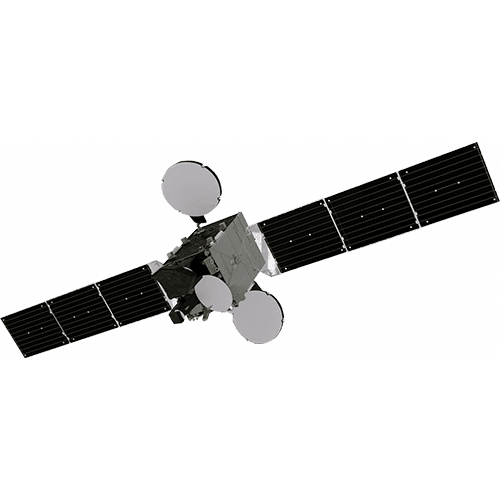
TÜRKSAT 6A
TÜRKSAT 6A is Türkiye’s first fully domestic and national communication satellite. It was developed through a collaboration between TUSAŞ, ASELSAN, and CTech under the project management of TÜBİTAK UZAY. With a launch mass of approximately 4.2 tons and a 16-year operational lifespan, the satellite operates in a geostationary orbit at 42° East. TÜRKSAT 6A provides communication and broadcasting services covering large parts of Türkiye, Europe, Asia, and Africa, featuring more than 20 transponders
EN
Zelal Çakar
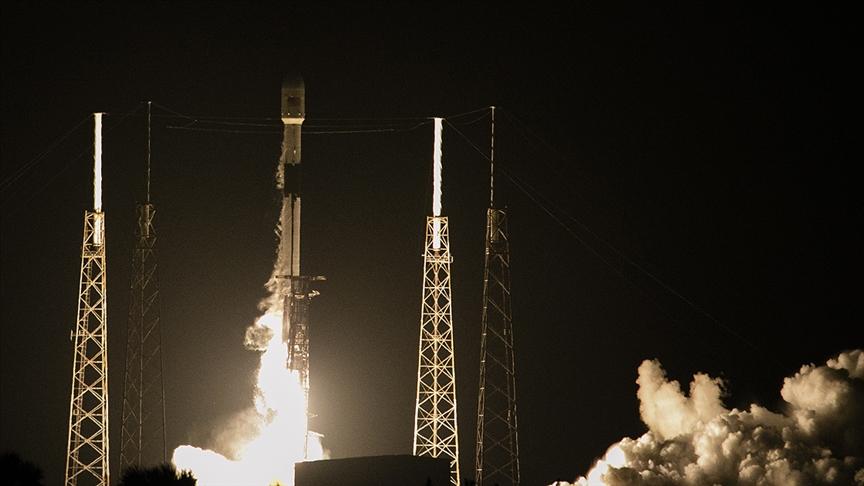
Türksat 5A
Türksat 5A is one of the communication satellites operated by Türkiye. The satellite is designed to operate in the Ku band to provide television broadcasting and data communication services. Equipped with a fully electric propulsion system, Türksat 5A operates in a geostationary orbit at 31° East longitude. Thanks to its wide coverage area, it serves not only Türkiye but also parts of Europe, the Middle East, North Africa, and Asia. Developed with the goal of long-term operational use, the satel
EN
Yunus Emre Sağlam
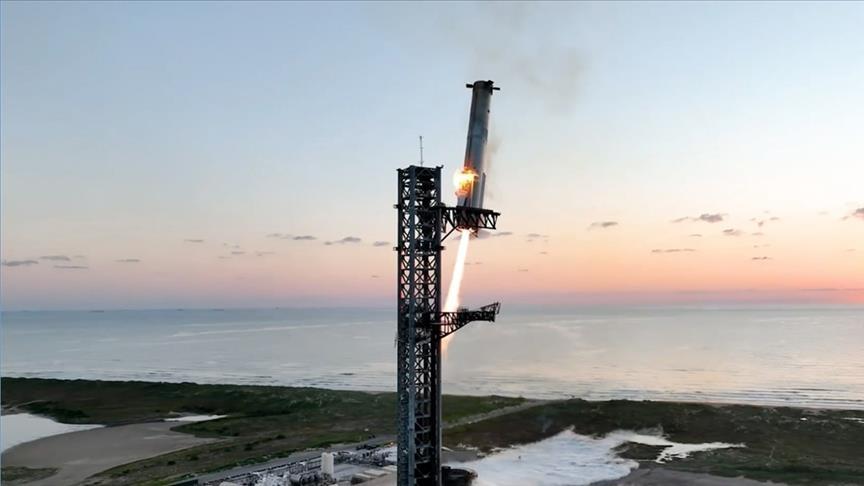
SpaceX Starship
SpaceX Starship is a fully reusable super heavy-lift launch vehicle and spacecraft system developed by the American aerospace company SpaceX. It is designed to enable human travel to the Moon, Mars and beyond, as well as to transport cargo and crew into orbit. It is the largest and most powerful rocket system ever built. The system is configured for both cargo and crew missions and is based on the principle of full reusability. Technical Specifications and Design The Starship system is an integr
EN
Aykut Laçın
Space Resources
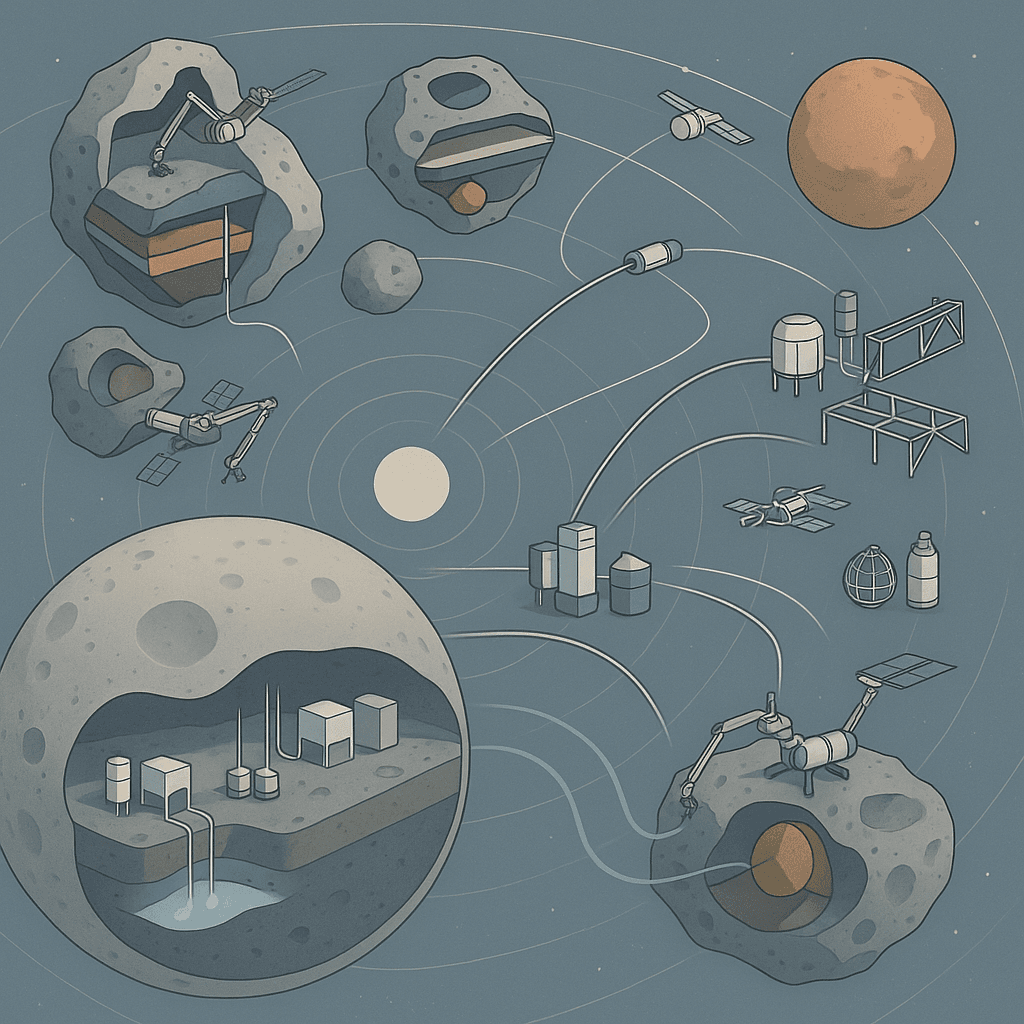
Space resources refer to the utilization of natural materials and physical conditions found on the Moon, asteroids, Mars, and other celestial bodies for the production of products and services in space missions. The primary objective of this field is to reduce dependence on materials transported from Earth and to mitigate the logistical vulnerabilities of long-duration operations. In practice, space resources encompass a broad range of technologies and operational processes including the extract
ENÖmer Said Aydın
NASA Artemis
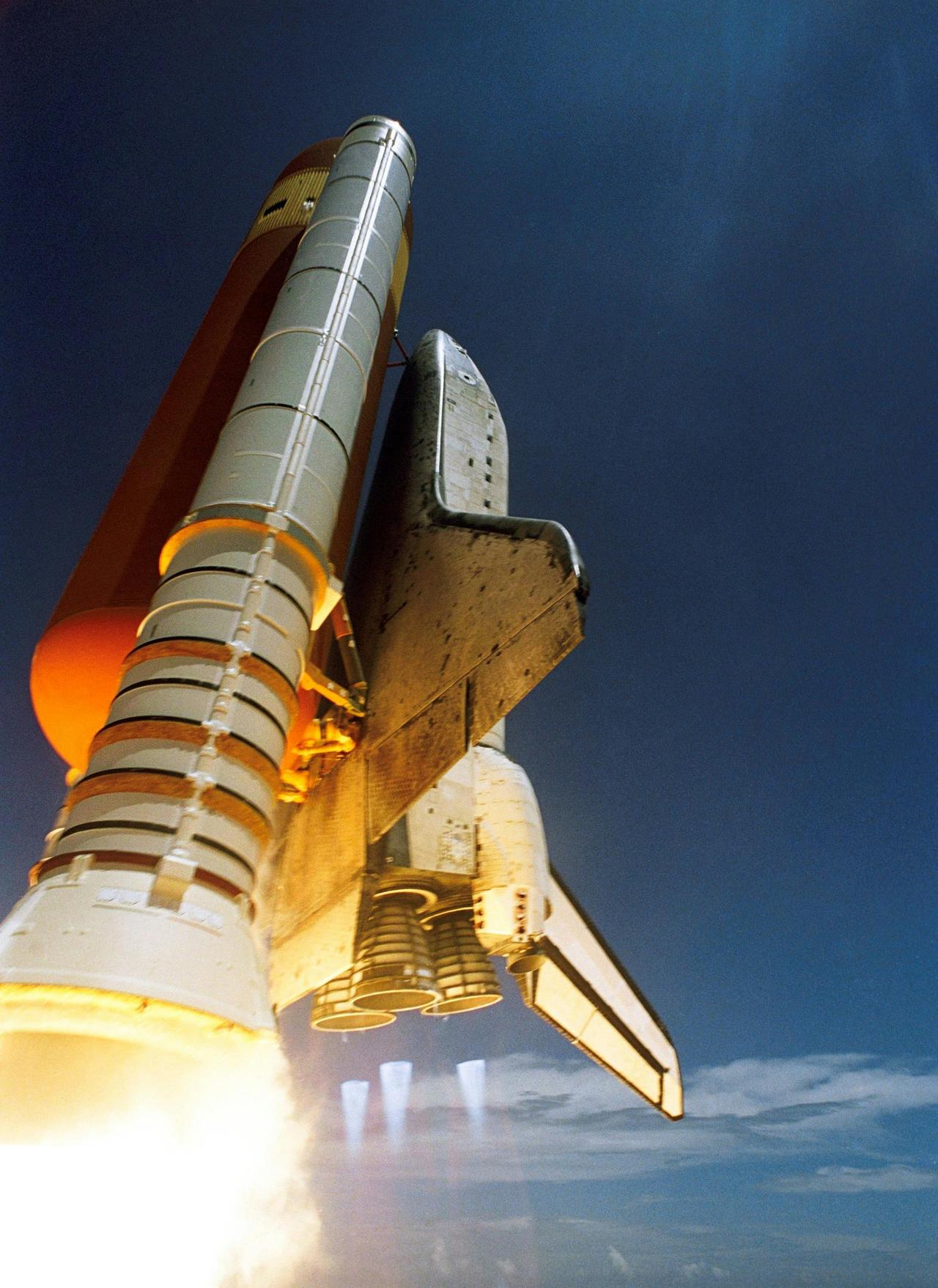
NASA’s Artemis program is an international space exploration initiative aimed at returning humanity to the lunar surface for the first time since the 1970s Apollo missions and establishing a permanent presence there. The program plans to use the Moon as a stepping stone and testing ground for future crewed missions to Mars. To this end, it seeks to build a sustainable exploration infrastructure through modern launch systems, deep space vehicles, and a station in lunar orbit. The program’s core p
ENAykut Laçın