


This article was automatically translated from the original Turkish version.

In 1996, a physics professor pulled a prank on the academic world whose echoes still resonate today. Moreover, this was not a joke told in a conference hall or a witty remark among colleagues. It was a serious-looking academic article, filled with footnotes, adorned with elaborate titles, and published in a respected journal.
Even the title alone was eye-catching: “Transgressing the Boundaries: Towards a Transformative Hermeneutics of Quantum Gravity.” The author was physicist Alan Sokal from New York University. You can access the article here.
The text, accompanied by a torrent of references ranging from quantum mechanics to chaos theory and from Derrida to Lacan, claimed that physical reality is nothing more than a social and linguistic construct. Most readers’ inner monologue became:
“I don’t understand it… but clearly it’s profound.”
The real surprise came immediately after the article’s publication. Sokal revealed in another journal that the entire piece had been deliberately fabricated as a parody. He had intentionally embedded scientific errors, nonsensical conclusions, and sentences that sounded impressive but were empty inside.
His goal was simple: If a text is complex enough, jargon-filled enough, and appears sufficiently aligned with the editors’ worldview, could it be published in an academic journal regardless of whether it made any sense?
The answer was “yes”.
This admission triggered a small earthquake in the academic world. Newspapers put the story on their front pages. Some praised Sokal as a courageous critic; others labeled him an unethical provocateur. But everyone agreed on one thing: There was a situation that was simultaneously hilarious and deeply unsettling. Because this prank did not just fool one journal—it exposed certain habits within academic culture.
Isn’t it funny? In an environment where no one dared openly say “I don’t understand this,” a meaningless text was accepted as “profound.” Jargon had overtaken substance. Even the title was nearly more complex than the article itself…
Why did this prank work so easily?
Not because it was funny, but because it was arguably the best joke the academy has ever seen—it opened the door to one of the most heated intellectual debates of the 1990s: the Science Wars.
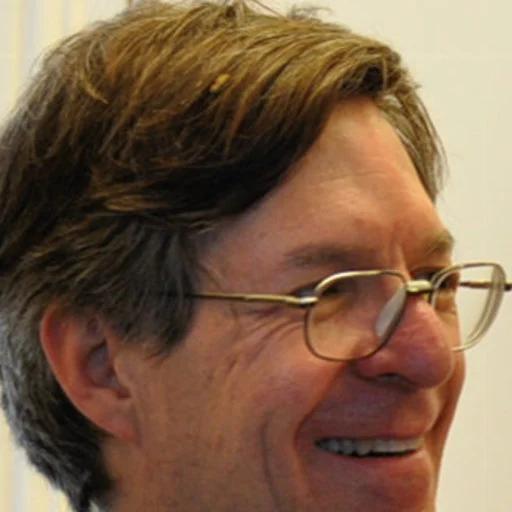
Alan Sokal (ResearchGate)
When Alan Sokal’s “prank” surfaced, no one thought it would remain just a funny anecdote. But few could have predicted how large it would grow. Suddenly, the issue moved beyond a single article and became a symbol of one of the fiercest intellectual debates of the 1990s: the Science Wars.
On one side were physicists, mathematicians, and biologists who argued that the natural sciences could reveal an objective reality. To them, science, however incomplete or provisional, remained the best method for generating reliable knowledge about the real world. On the other side were postmodern approaches emerging especially from the fields of humanities and cultural studies. These approaches claimed that science was not independent of social, historical, and ideological contexts; that even the claim of “objectivity” itself was a product of power relations.
Sokal’s article was precisely crafted to appeal to this second camp. He blended physics concepts with claims that drew political and cultural conclusions, making grand assertions linking quantum gravity to patriarchy and structures of power. The journal’s editors interpreted it as “a scientist’s contribution to postmodern critique.”
But as you can guess, they accepted the text not because it was correct, but because it aligned ideologically with their views. Let’s be honest.
Those who supported Sokal saw the use of scientific concepts as mere decoration, with no regard for their actual meaning, as a serious intellectual problem. Critics, however, took a different stance. They accused Sokal of unethical behavior—deliberately deceiving well-intentioned editors and caricaturing an entire intellectual tradition. Some even argued this was an example of “scientists’ arrogance”: an attitude of “we understand, you don’t” toward the humanities.
The debate deepened further. Were postmodern thinkers genuinely misunderstanding science, or was science not as “pure” and “neutral” as it claimed? Sokal and Jean Bricmont’s later book, Fashionable Nonsense, intensified this tension. The book demonstrated how some renowned thinkers had misused and randomly applied mathematical and physical concepts.
Despite all the noise, neither side convinced the other. Scientists said, “Look, we exposed the nonsense.” Postmodernists replied, “This is a power play; you’re missing the real point.”
I believe there was a more fundamental issue beneath all this philosophical posturing. Because at the heart of the debate still lay an unanswered, simpler question:
If this article was truly meaningless, why did no one loudly say, “I don’t understand this”?
Explaining the Sokal Affair merely as “editors were fooled” oversimplifies the matter. Because this was not just a single mistake—it revealed ingrained habits and reflexes within academic culture.
In academia—especially in theory-heavy fields—there is a common psychology: If you don’t understand a text, the fault is rarely seen as lying in the text itself, but in your own insufficient preparation.
Sokal’s article was deliberately written to trigger this exact feeling. Complex sentences, familiar yet intimidating names, trendy concepts… The reader becomes more inclined to think, “This is hard for me, so it must be profound.” Who dares openly say, “I don’t understand a thing”? To say so feels like admitting intellectual inadequacy.
Moreover, every discipline has its own jargon—that is inevitable. But the problem begins when jargon ceases to be a tool and becomes the goal itself. The more complex the language, the more “sophisticated” the text is perceived to be.
Sokal’s text was built not on meaning but on effect. Sentences sound important, but when you simplify them, what remains is often either weak claims or outright nonsense. In daily life too, we often automatically assume that what is hard to understand must be clever.
Also, the author was not anonymous. Alan Sokal was a professor at New York University with an impressive academic background. This gave the text instant credibility. Although academia claims to value critical thinking, in practice, reputation carries enormous weight. Names, institutions, and titles can overshadow content.
Another dimension was the journal’s own operations. Social Text had dedicated that issue to the “Science Wars” and was seeking texts critiquing science. Sokal’s article fit perfectly. Moreover, the journal did not follow a rigorous peer-review process. So the article was accepted not only for its content but because it landed at the right time and place.
This shows us:
Everyone is a little suspicious, but no one wants to be the first to speak up.
Because saying “the emperor has no clothes” is difficult in any era and on any issue.
Today we live in a world where texts are produced and circulated far more rapidly. Sokal’s deception took place in 1996, when the internet was still in its infancy and academic publishing was dominated largely by print journals…
What if the same experiment were conducted today?
Exactly the same—probably even easier.
The academic world is now faster than ever. The pressure of “publish or perish,” the thousands of journals, the flood of “special issue invitations” into email inboxes, predatory publishers charging fees for publication… Writing and publishing texts has become far more “apparently cheap” and “rapid” than before.
Moreover, a new player has entered the game: Artificial intelligence.
With just a few correct prompts, we can now generate texts that sound academic, are full of references, flow smoothly, yet are extremely superficial. Tools we have today can produce Sokal’s parody—once the product of days of effort—in minutes.
If it is this easy to produce meaningless but “impressive-looking” texts, how will we now distinguish meaning from appearance?
Editors must work much more carefully, and no one should believe everything they read!
Most importantly, when we encounter something we don’t understand, we must have the courage to ask—not to remain silent.
“Could you explain this a bit more?”
“What exactly are you trying to say here?”
“What is this claim based on? Can you show me your source?”
These questions are neither rude nor ignorant. On the contrary, they are the beginning of intellectual honesty.
Critical thinking must apply not only to ideas we oppose but also to those we find ideologically appealing. Automatically accepting a text as profound and true because it aligns with our beliefs is precisely the trap Sokal exposed.
We laughed at this incident at the beginning, but I think this laughter was also a nervous one. Because the issue is not just about a few editors being fooled. It is about how seriously we take our ability to distinguish meaning from performance…
A physicist getting a meaningless, jargon-filled text published in a respected journal, then saying, “It was a joke”…
It is hard to imagine a better intellectual joke than this one.
Sokal, Alan D. “Alan Sokal.” ResearchGate. Accessed December 23, 2025.https://www.researchgate.net/profile/Alan-Sokal
Sokal, Alan D. “Transgressing the Boundaries: Towards a Transformative Hermeneutics of Quantum Gravity.” *Social Text*, no. 46/47 (1996): 217–252. New York University Physics Department. Accessed December 23, 2025.https://physics.nyu.edu/sokal/transgress_v2/transgress_v2_singlefile.html
Weinberg, Steven. "Sokal Aldatmacası." New York Review of Books. Translated by Google Translate. New York University Physics Department. Accessed December 23, 2025.https://physics-nyu-edu.translate.goog/sokal/weinberg.html?_x_tr_sl=en&_x_tr_tl=tr&_x_tr_hl=tr&_x_tr_pto=tc.
“Bilim Savaşları Ve Alan Sokal’ın Parodi Makale Deneyi.” Matematiksel. August 26, 2017. Accessed December 23, 2025.https://www.matematiksel.org/bilim-savaslari-ve-alan-sokalin-parodi-makale-deneyi/.
“Bilim Tarihi Sahtekarlıkları 3: Alan Sokal Vakası.” Suffagah. Accessed December 23, 2025.https://suffagah.com/bilim-tarihi-sahtekarliklari-3-alan-sokal-vakasi.
“If It’s Funny, Tell Us So We Can Laugh.”
“For the Last Time: Is There Anything You Don’t Understand, Kids?”
“I’m Telling You Again, Listen Carefully!”
“I’ll Stay Quiet Since You Clearly Know So Much—You Explain It Then.”
“Those Who Don’t Want to Listen Can Leave—Otherwise I Won’t Write It…”