


This article was automatically translated from the original Turkish version.
+1 More
World
Order from the Sun | 3rd Planet | ||||||||
|---|---|---|---|---|---|---|---|---|---|
Age (Estimated) | ~4.54 Billion Years | ||||||||
Average Distance from the Sun | ~150 Million km (1 AU) | ||||||||
Time for Sunlight to Reach | ~8.3 Minutes | ||||||||
Orbital Period (1 Year) | ~365.25 Days | ||||||||
Rotation on Axis (1 Day) | ~24 Hours | ||||||||
Axial Tilt | ~23.5 Degrees | ||||||||
Equatorial Diameter | ~12,756 km | ||||||||
Average Density | ~5.51 g/cm³ (Densest terrestrial planet) | ||||||||
Atmosphere (Main Components) | ~78% Nitrogen (N₂), ~21% Oxygen (O₂) | ||||||||
Average Surface Temperature | ~15 °C | ||||||||
Estimated Number of Active Artificial Satellites (April 2025) | ~11,000 - 12,000+ | ||||||||
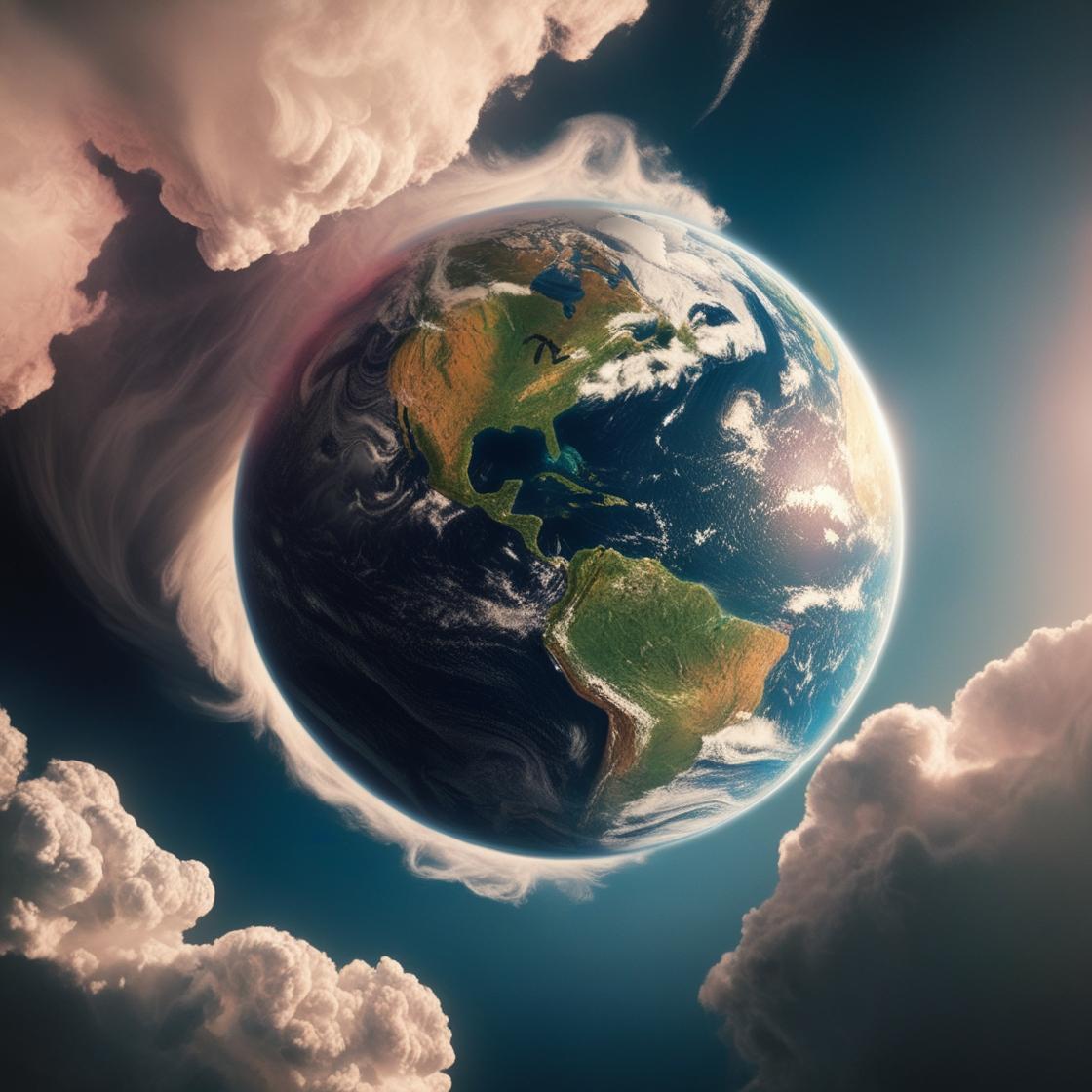
Earth is the third planet from the Sun and the largest of the terrestrial (inner) planets. It is distinguished from all other planets in the Solar System by its dense atmosphere, vast liquid water covering most of its surface, and the complex life forms it supports. Known as the Blue Planet, Earth has a dynamic structure shaped by the interaction of constantly changing geological, atmospheric, hydrological, and biological systems.
Earth orbits the Sun at an average distance of 1 Astronomical Unit (AU) (approximately 149.6 million kilometers). It takes sunlight about 8 minutes to travel this distance and reach Earth. This distance places Earth within the "habitable zone" where surface temperatures allow water to remain liquid; Mars lies closer to the outer edge of this zone. Among the terrestrial planets, Earth has the greatest mass and highest density (~5.51 g/cm³). It completes one rotation on its axis in approximately 23 hours 56 minutes 4 seconds and one elliptical orbit around the Sun in 365.25 days. Although the difference between Earth’s closest and farthest distances from the Sun is about 5 million kilometers, the primary cause of seasons is not this distance variation but Earth’s ~23.5-degree axial tilt. Due to this tilt, different hemispheres receive sunlight at more direct or more oblique angles throughout the year, creating temperature differences and seasonal variations. Earth’s elliptical orbit causes its orbital speed to vary. For scale, if the Sun were 2 meters wide, Earth would be about the size of a small coin.
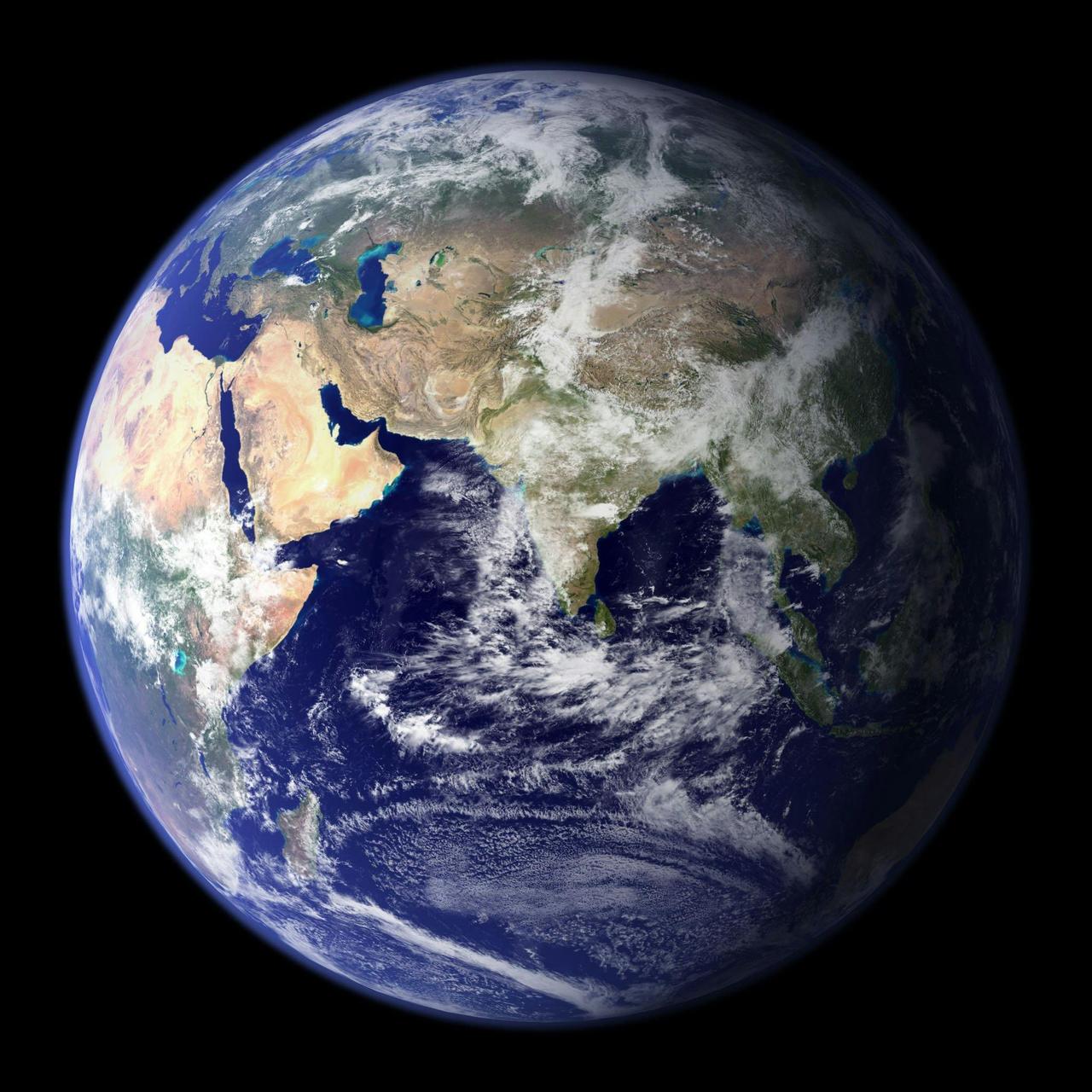
Earth formed approximately 4.6 billion years ago through the accretion of gas and dust clouds during the formation of the Solar System. In its early stages, intense collisions and radioactivity kept it molten. Over time, as it cooled, differentiation occurred: heavier elements such as iron and nickel sank to form the core, while lighter silicates rose to form the mantle and crust. Our moon, the Moon, formed approximately 4.5 billion years ago when a Mars-sized celestial body named "Theia" collided with Earth (Giant Impact Hypothesis), and debris ejected into space coalesced to form the Moon. This theory is supported by rock samples brought back from the Moon. Earth’s multi-billion-year history is studied through the geological time scale, during which major climatic, geological, and biological events occurred.
Seismic data reveal Earth’s layered internal structure: a solid inner core surrounded by a liquid outer core (iron-nickel alloy), above which lies a viscoelastic silicate mantle, and finally a thin, solid crust (continental and oceanic). Earth’s shape is not a perfect sphere but a unique geoid—flattened at the poles and bulging at the equator. Convection currents in the liquid outer core generate the dynamo effect that produces Earth’s magnetic field. Earth’s solid outer shell (lithosphere) is divided into tectonic plates that move over the mantle. The Plate Tectonics Theory explains how the movement of these plates drives geological phenomena such as earthquakes, volcanism, and mountain formation among others.
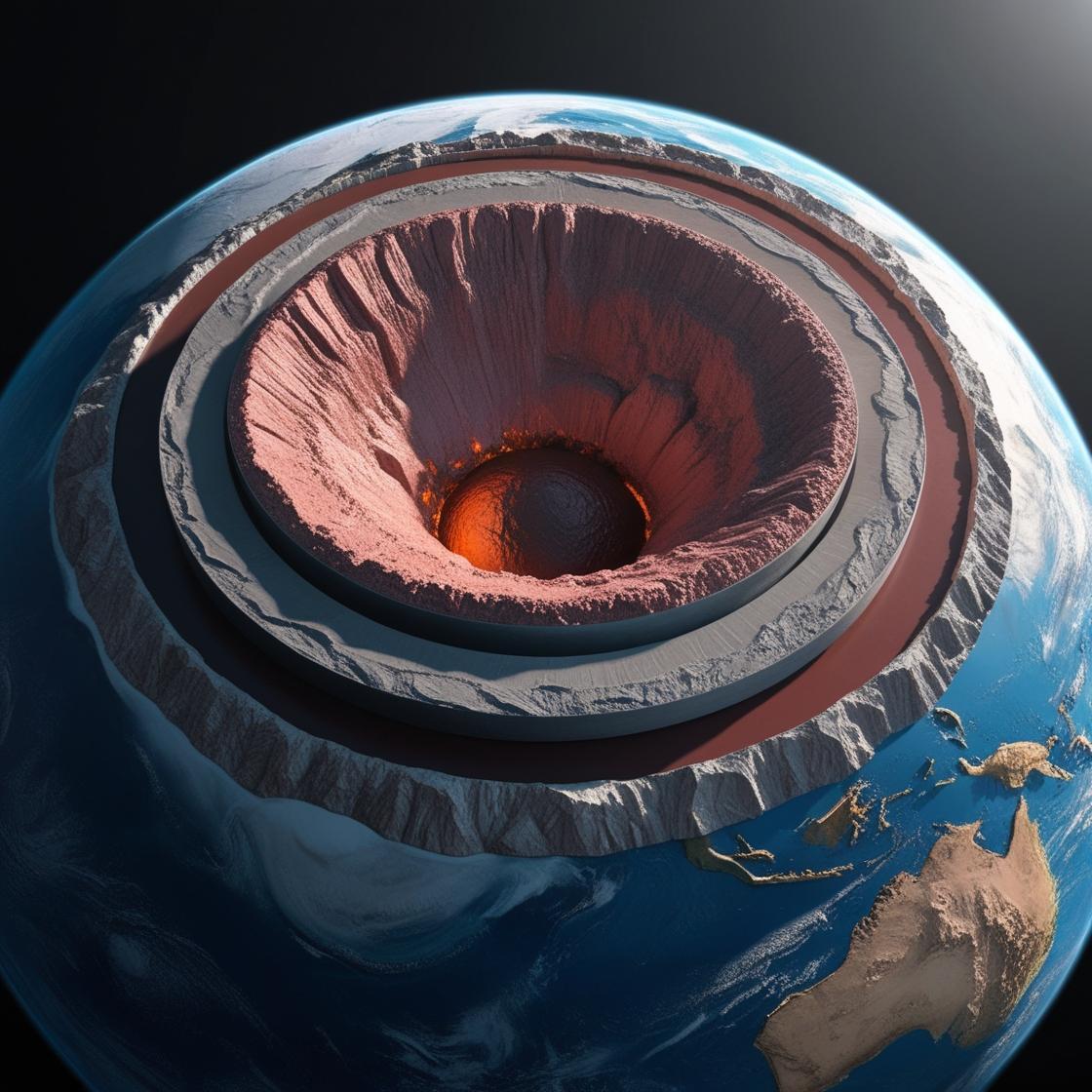
Earth's internal structure, (Generated by artificial intelligence)
Earth’s atmosphere, critical for life, consists of approximately 78% nitrogen (N2), 21% oxygen (O2), and 1% other gases (argon, CO2, trace gases). This composition provides conditions suitable for life. The atmosphere is divided into layers based on temperature changes: troposphere, stratosphere (which contains the ozone layer), mesosphere, thermosphere, and exosphere. Greenhouse gases in the atmosphere, primarily CO2 and water vapor, maintain the planet’s average temperature within a habitable range through the natural greenhouse effect. The ozone layer in the stratosphere protects life by absorbing harmful ultraviolet radiation. Additionally, the atmosphere’s density acts as an extra protective layer by causing small meteoroids to burn up before reaching the surface.
The gaseous envelope surrounding Earth, essential for life—the atmosphere—is not a single uniform layer; it is distinctly stratified from the surface upward according to physical and chemical properties, primarily temperature changes. These layers and their key characteristics are as follows:
Troposphere:
Stratosphere:
Mesosphere:
Thermosphere (Ionosphere):
Exosphere:
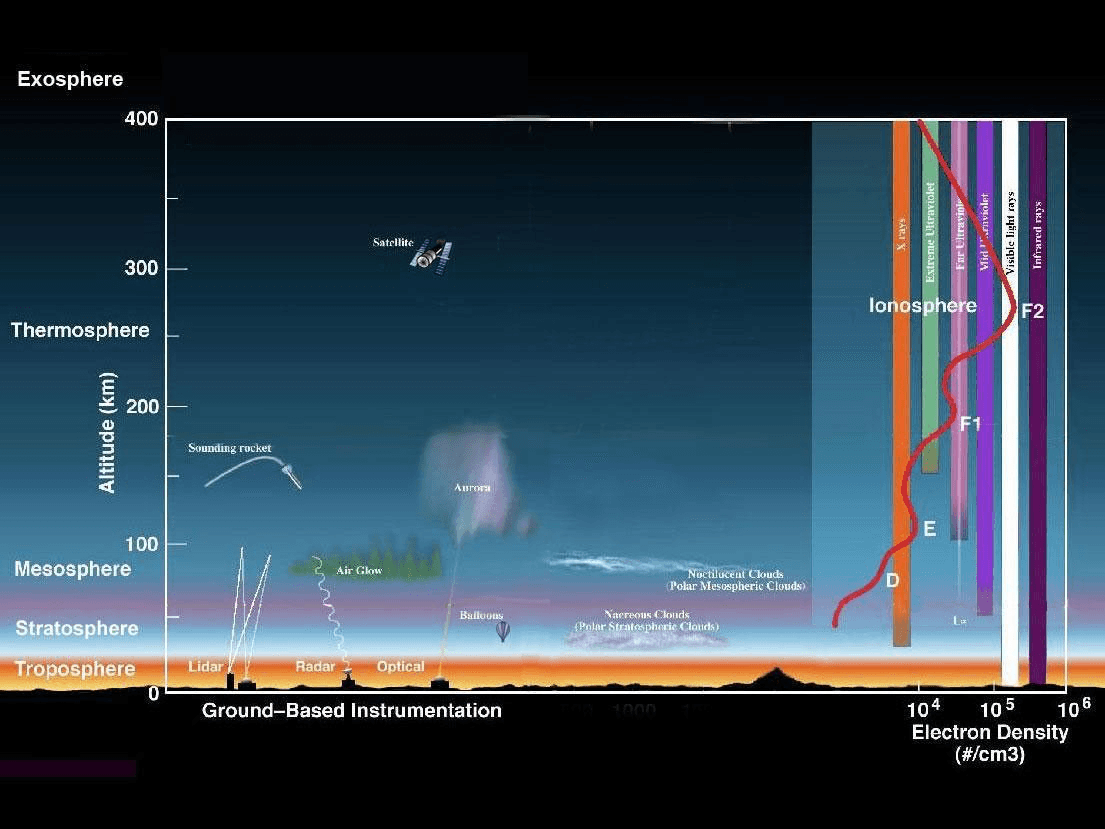
Atmospheric layers, NASA
Approximately 71% of Earth’s surface is covered by liquid water, making it the only "Blue Planet" in the Solar System—a condition unique among terrestrial planets. The hydrosphere encompasses all water bodies and the water cycle. The water cycle and oceans play a central role in regulating climate and supporting life.
The magnetic field generated by the liquid outer core (magnetosphere) protects Earth from the stream of high-energy particles from the Sun, known as the solar wind, and from cosmic rays. This shield safeguards both the atmosphere and life. Magnetic poles are thought to reverse on average every 250,000 years, but this slow process has no known adverse effects on life. The interaction between the magnetosphere and the solar wind creates auroras.
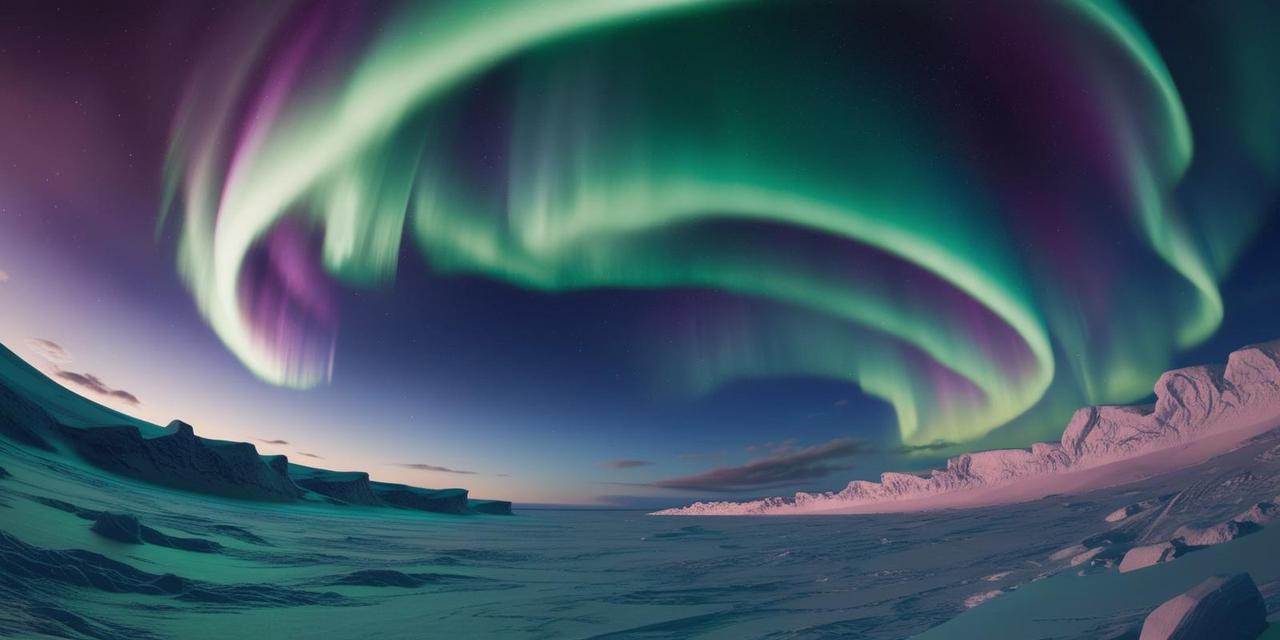
Auroras, (Generated by artificial intelligence)
Earth’s most distinctive feature in the Solar System and known universe is its biosphere—the global envelope encompassing all ecosystems and supporting life. The biosphere is a dynamic region extending from the lower layers of the atmosphere to the deepest ocean trenches and several kilometers into the Earth’s crust, where living organisms interact with their non-living environments (lithosphere, hydrosphere, atmosphere). The fundamental conditions and factors enabling Earth’s unique capacity to support life as we know it are as follows:
Under these favorable conditions, how life emerged on Earth from non-living matter approximately 3.8 to 4 billion years ago (abiogenesis) remains an active research topic. Supported by experiments such as the Miller-Urey experiment, the "primordial soup" hypothesis, the theory of deep-sea hydrothermal vents, and the RNA World hypothesis are among the proposed models. After the emergence of simple prokaryotic (nucleus-free) cells, natural selection enabled organisms to adapt to their environments, diversify, and evolve over billions of years into today’s complex eukaryotic (nucleus-containing) cells, multicellular organisms, and immense biological diversity (plants, animals, fungi, protists, bacteria, archaea). This diversity includes extremophiles—organisms adapted to the most extreme terrestrial and aquatic conditions (high temperature, pressure, salinity, etc.).
The study of Earth’s unique life-supporting conditions forms the foundation of astrobiology. In the search for life within the Solar System and on exoplanets, Earth serves as a model. Scientists seek evidence of Earth-like conditions on other celestial bodies—particularly signs of liquid water—and potential biosignatures (chemical traces indicating the presence of life).
Understanding why Earth became habitable is a critical step toward answering the question of how common life might be in the universe. It is also important to remember that the biosphere itself is in constant interaction with other planetary systems—for example, the majority of atmospheric oxygen is produced by photosynthetic organisms, and life plays a key role in the carbon cycle—shaping the planet itself.
The Moon, Earth’s only natural satellite, is unusually large relative to its planet (its diameter is about 27% of Earth’s; if Earth were a watermelon, the Moon would be an apple). Its average distance from Earth is ~384,400 km. Believed to have formed via the Giant Impact Hypothesis, the Moon always shows the same face to Earth (tidal locking). The Moon’s gravity causes tides on Earth (2.2 times stronger than the Sun’s effect) and significantly contributes to stabilizing Earth’s axial tilt, leading to more stable climates. A total of 382 kg of rock samples were brought back from the Moon during the Apollo missions, and the Moon remains the only celestial body beyond Earth on which humans have walked.
As of April 2025, according to the most recent data:
In summary: As of now (April 2025), there are approximately 11,000 to more than 12,000 active artificial satellites orbiting Earth.
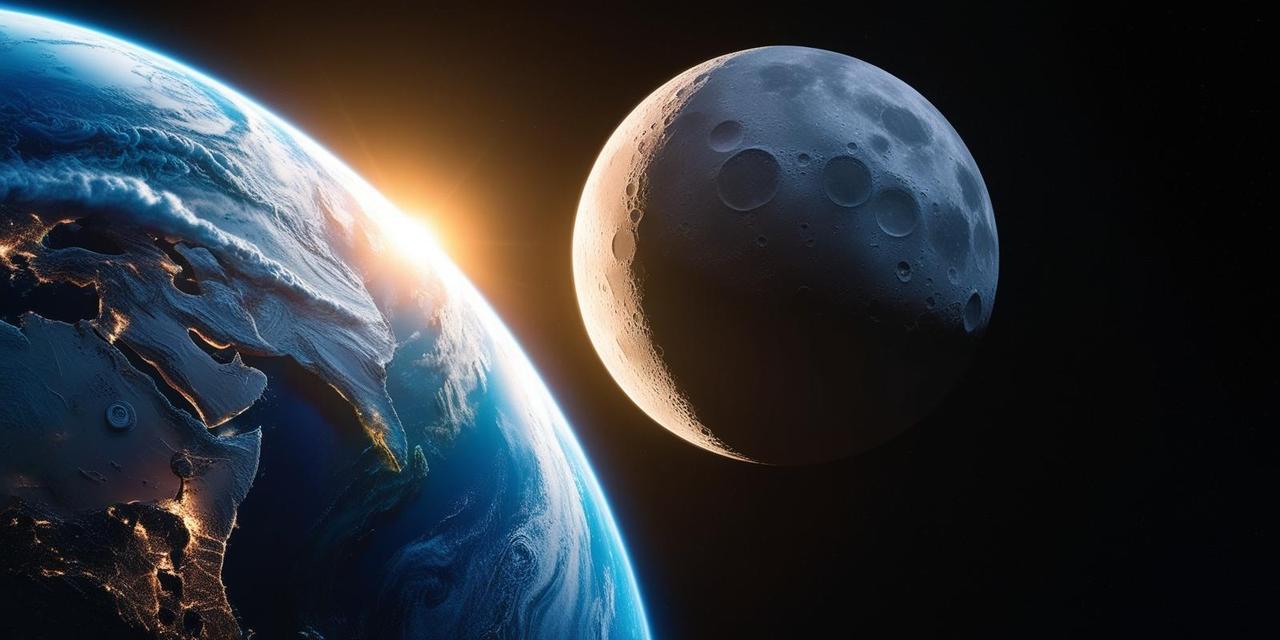
Representation of Earth’s satellite, the Moon, (Generated by artificial intelligence)
NASA. "Dünya'nın Atmosferi: Çok Katmanlı Bir Pasta." NASA Science. Accessed April 19, 2025.https://science-nasa-gov.translate.goog/earth/earth-atmosphere/earths-atmosphere-a-multi-layered-cake/?_x_tr_sl=en&_x_tr_tl=tr&_x_tr_hl=tr&_x_tr_pto=wa.
TÜBİTAK Bilim Genç. "Güneş Sistemi'ni Tanıyalım: Dünya." TÜBİTAK Bilim Genç. October 26, 2023. Accessed April 19, 2025.https://bilimgenc.tubitak.gov.tr/makale/gunes-sistemini-taniyalim-dunya
UCAR Center for Science Education. "Dünya Atmosferinin Katmanları." UCAR Center for Science Education. Accessed April 19, 2025.https://scied-ucar-edu.translate.goog/learning-zone/atmosphere/layers-earths-atmosphere?_x_tr_sl=en&_x_tr_tl=tr&_x_tr_hl=tr&_x_tr_pto=wa.

World
Order from the Sun | 3rd Planet | ||||||||
|---|---|---|---|---|---|---|---|---|---|
Age (Estimated) | ~4.54 Billion Years | ||||||||
Average Distance from the Sun | ~150 Million km (1 AU) | ||||||||
Time for Sunlight to Reach | ~8.3 Minutes | ||||||||
Orbital Period (1 Year) | ~365.25 Days | ||||||||
Rotation on Axis (1 Day) | ~24 Hours | ||||||||
Axial Tilt | ~23.5 Degrees | ||||||||
Equatorial Diameter | ~12,756 km | ||||||||
Average Density | ~5.51 g/cm³ (Densest terrestrial planet) | ||||||||
Atmosphere (Main Components) | ~78% Nitrogen (N₂), ~21% Oxygen (O₂) | ||||||||
Average Surface Temperature | ~15 °C | ||||||||
Estimated Number of Active Artificial Satellites (April 2025) | ~11,000 - 12,000+ | ||||||||
Position in the Solar System and Fundamental Physical Properties
Formation and Geological History
Internal Structure and Plate Tectonics
Atmosphere and Climate System
Hydrosphere: The Water World
Magnetosphere: The Protective Shield
Biosphere and Conditions for Life
Origin of Life (Abiogenesis) and Evolution:
Astrobiological Significance:
Earth’s Satellites